
The Black Forest in Germany: a complete travel guide
By Eva Alkemade
Aug 31, 2026
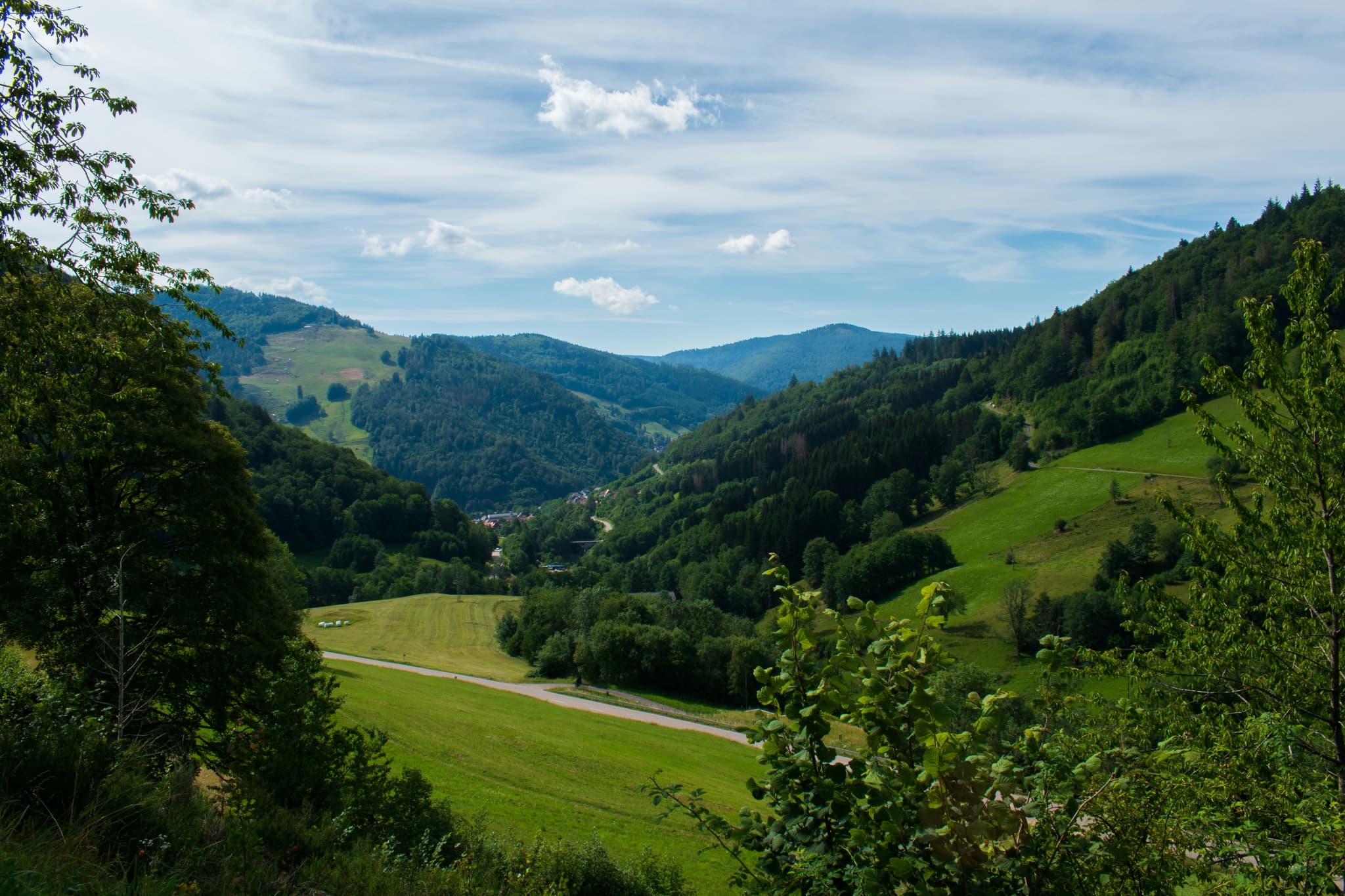
Picture dense evergreen hillsides, half-timbered villages tucked into valleys, and a lake so clear it looks painted on. That's the Black Forest, or Schwarzwald as Germans call it, and it sits quietly in the southwest corner of the country. The driving routes through it are some of the best in Germany. Here's exactly how to plan a trip to Germany's Black Forest.
What to know about the Black Forest region in Germany?
Nearest major airports: Baden-Baden/Karlsruhe, Stuttgart, and Basel-Mulhouse-Freiburg, just across the Swiss border.
Main train hub: Freiburg Hauptbahnhof, with regular Deutsche Bahn connections to the rest of Germany.
Best base for a car-based trip: Freiburg in the south, Baden-Baden in the north.
Trip length: three to five days covers the highlights without feeling rushed.
Where is the Black Forest in Germany?
The Black Forest of Germany sits in the state of Baden-Württemberg, in Germany's southwest corner, running roughly 160km north to south along the French and Swiss borders. It stretches from Karlsruhe and Baden-Baden in the north down to Basel and Lake Constance in the south, with the Rhine Valley marking its western edge. Freiburg im Breisgau, the region's largest city, makes the most practical base if you want easy transport connections alongside your forest days.
Fun fact: The Schwarzwald covers roughly 6,000 square kilometres, making it Germany's largest continuous forest area, and its highest peak, the Feldberg, rises to 1,493 metres, tall enough for skiing in winter.
Why is it called the Black Forest?
You might wonder why such a green part of Germany ended up with a name like the Black Forest. The story goes all the way back to Roman times, when the thick fir and spruce trees made the forest look so dark that barely any sunlight reached the ground. The Romans called the area Silva Nigra, meaning black forest, while today you'll hear the German name Schwarzwald. Pretty dramatic for a forest, but once you're standing between those towering trees, the name suddenly makes a lot more sense.
The forest that inspired fairy tales
That dark, mysterious quality didn't just earn the region its name, it also shaped its folklore. The Brothers Grimm drew on the Schwarzwald's shadowy woodland for several of their stories, including elements of Hansel and Gretel, and locals will happily point you towards the half-timbered villages that still feel like they've stepped straight out of one. Today the forest is far more open and manageable than the Romans' description suggests, with well-marked trails throughout, but the atmosphere on a misty morning still makes it easy to see where the stories came from.
Freiburg: the region's sunniest gateway city
Freiburg im Breisgau is where most Black Forest trips start, and it's worth a day on its own before you head into the countryside. It's consistently ranked as one of Germany's sunniest cities, and the compact old town makes it easy to explore on foot in an afternoon.
What to actually do in Freiburg
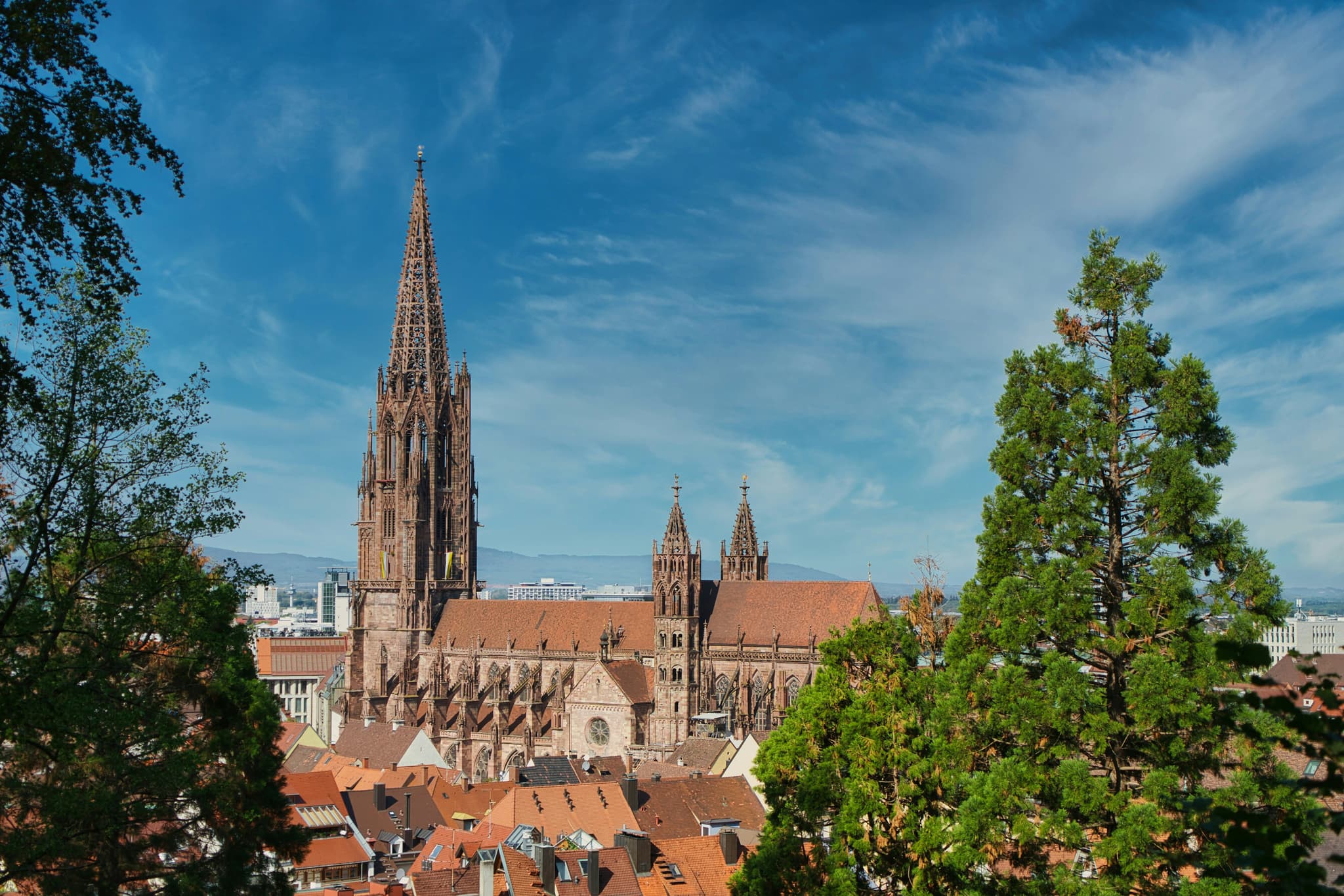
The Freiburg Münster, a Gothic cathedral with one of the tallest spires in Germany, anchors the main square, which hosts a lively market most mornings. Look down as you wander and you'll spot the Bächle, narrow water channels running through the streets that date back centuries and were originally used to fight fires and water livestock. Local superstition says stepping in one means you'll marry a Freiburger, so watch your footing if that's not part of the plan. For a view over the whole city and the forest beyond, the walk or funicular up Schlossberg hill is worth the detour, particularly around sunset.
Triberg and the German Clock Route
If Freiburg gives you the city fix, Triberg gives you the postcard version of the Black Forest, and it's an easy day trip or overnight stop from either Freiburg or Titisee.
Germany's highest waterfall
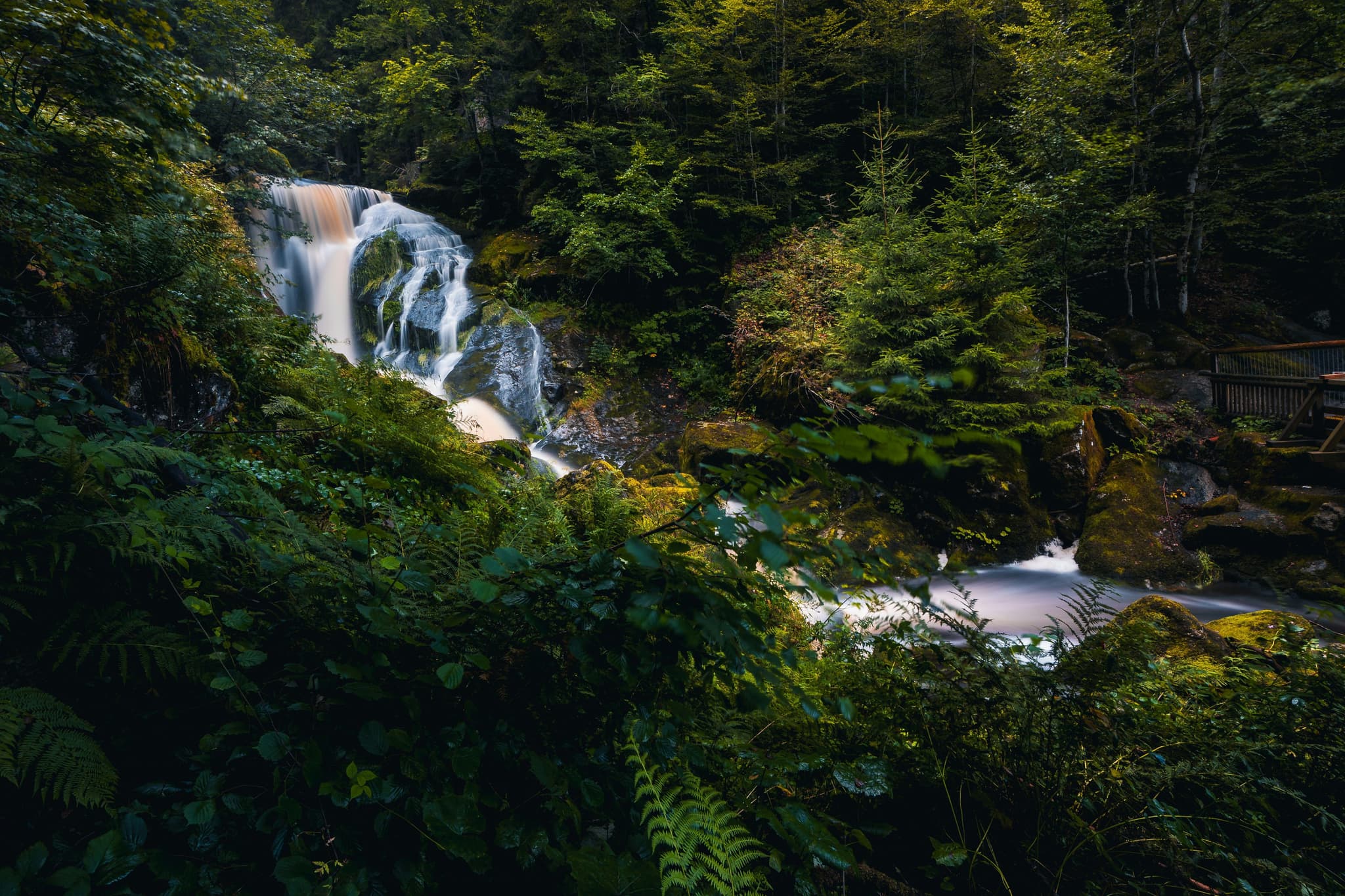
The Triberg Waterfalls drop 163 metres over several tiers, making them the highest in Germany, and multiple viewing trails let you see them from different angles without needing serious hiking gear. Allow around an hour if you want to walk the main path properly rather than just glancing from the entrance.
For trail maps, ranger-led walks and current conditions inside the protected core area, the Black Forest National Park's official site is the most reliable source, particularly for the Ruhestein visitor centre near Baden-Baden.
Black Forest rivers in Germany
Between all those forests and mountain roads, quite a few rivers have their beginnings in the Black Forest too. The Danube starts near Donaueschingen, where the Brigach and Breg rivers meet, while the Kinzig cuts right through the region past small towns and forested valleys. Another river in the Black Forest worth knowing is the Murg, which flows through the northern part of the region near places like Gernsbach. If you're driving around, you'll often end up following these river valleys without even planning to.
What are cuckoo clocks?
Triberg is also the unofficial capital of the cuckoo clock, a craft that started here in the 18th century among farmers looking for winter income once the harvest was in. The House of 1000 Clocks and the Black Forest Museum both dig into that history properly, and you can watch the world's largest cuckoo clock in action at a workshop just outside town. If you're going to buy one souvenir on this trip, this is where to do it properly rather than at an airport gift shop.
Guided tip: Visit Triberg's waterfalls first thing in the morning if you can. Tour buses arrive from around 11am, and the path gets considerably busier once they do.
Titisee, Schluchsee and the southern lakes
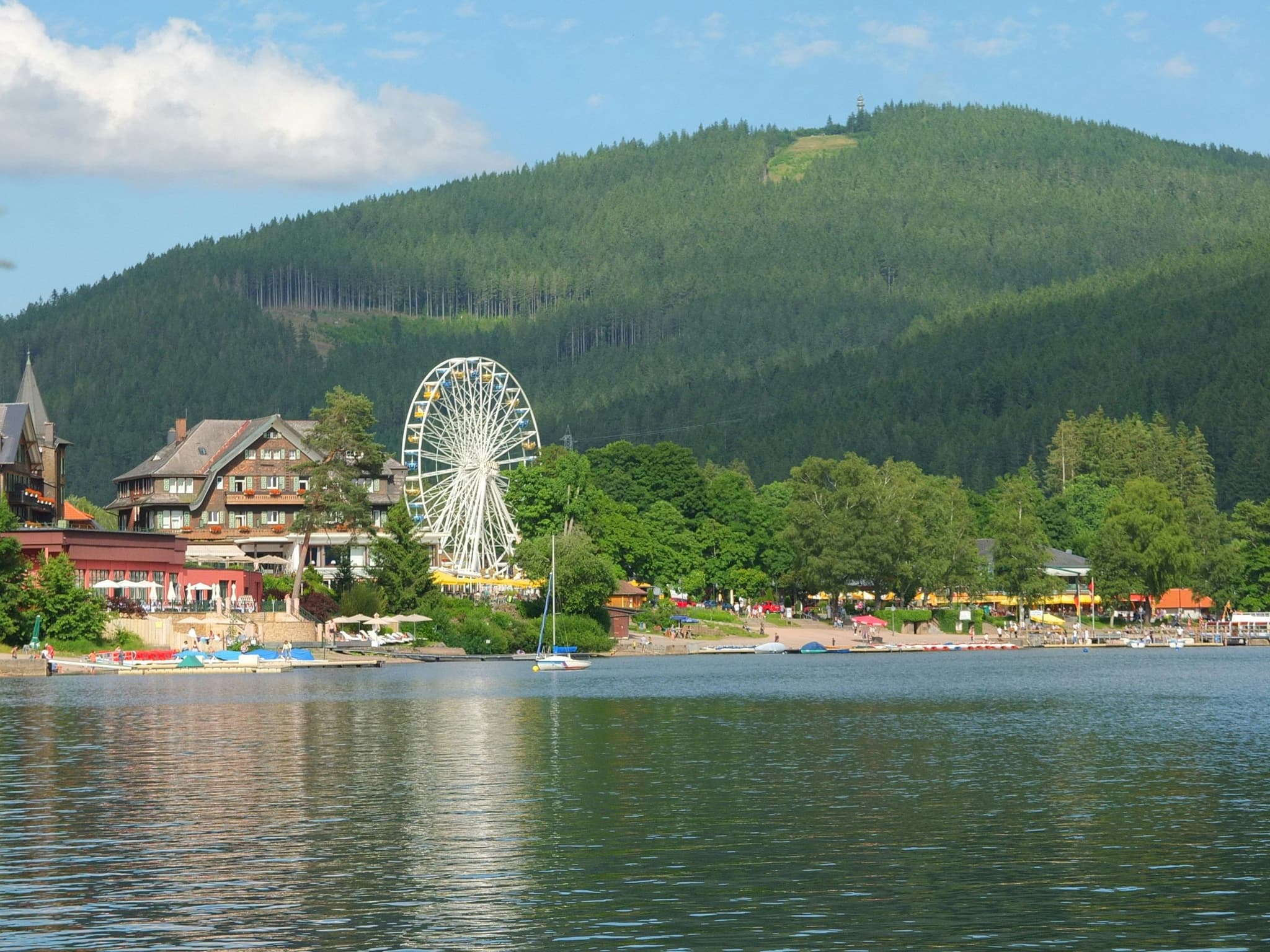
The southern Black Forest trades waterfalls for lakes, and Titisee is the one everyone's heard of, largely thanks to its glacier-carved basin and very clear water.
Titisee: busy, but for good reason
Titisee gets crowded in summer, with the lakeside promenade lined with cuckoo clock shops and ice cream stalls that can feel a bit touristy if you're expecting total wilderness. Look past that though and the lake itself delivers, with paddle boats, swimming spots, and short forest walks around the shoreline that thin out the crowds within ten minutes of walking.
Schluchsee: the quieter alternative
If Titisee feels too busy for your taste, Schluchsee, a twenty minute drive further into the hills, is the Black Forest's largest lake and considerably calmer. It's popular with locals for swimming and sailing rather than day-trippers, which makes it the better choice if you're travelling solo and want a peaceful afternoon rather than a crowded one.
Baden-Baden: a relaxing spa town
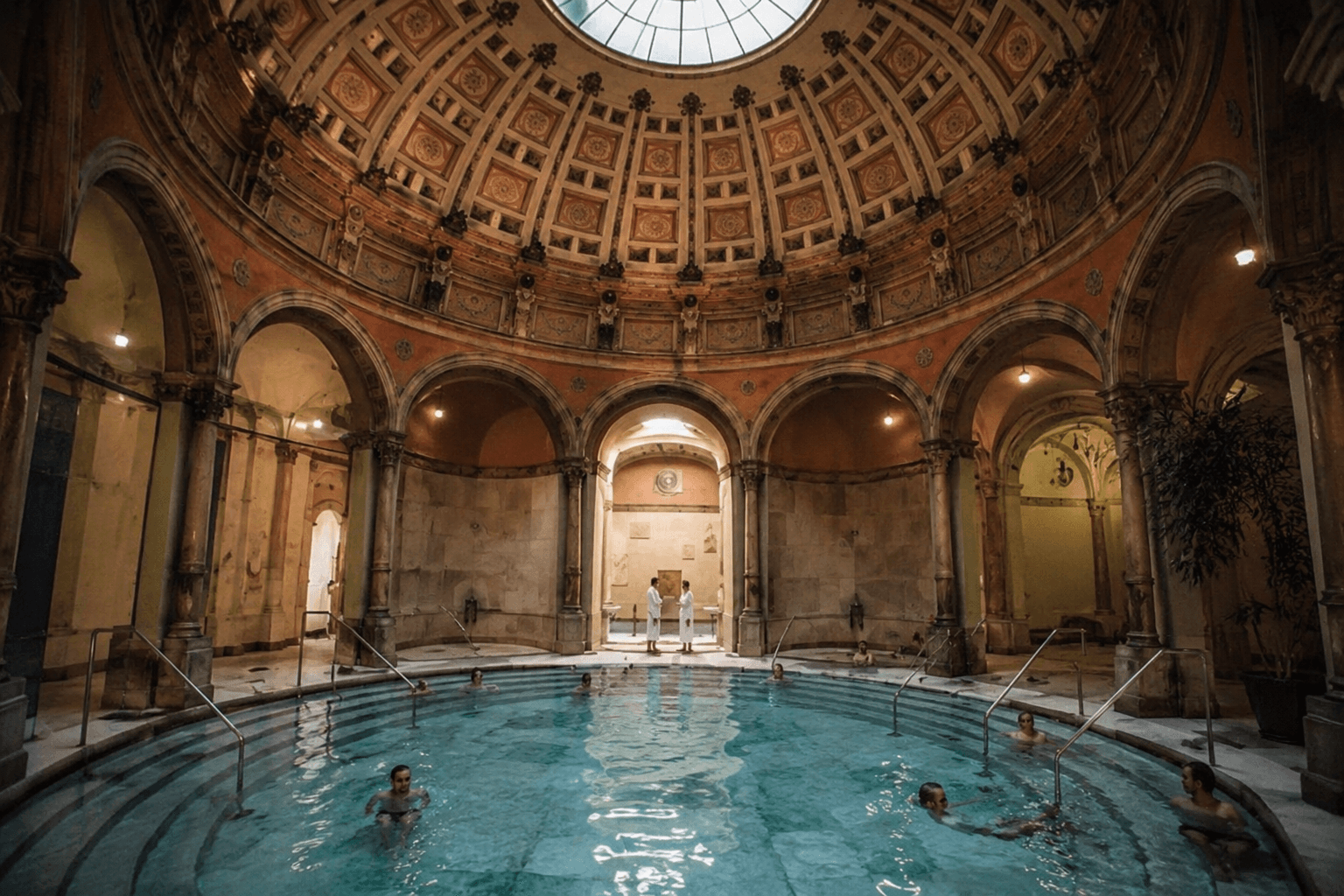
Right at the northern edge of the Black Forest in Germany, Baden-Baden feels a little different from the forest towns you'll find further south. People have been coming here for the thermal springs since Roman times, and that spa history is still very much part of the town today. Between the historic bathhouses, grand buildings and cafés, it has that slightly fancy old-world feel, without losing the relaxed pace you'd expect from a spa town.
The Friedrichsbad experience
The Friedrichsbad bathhouse is the headline attraction, an ornate 19th century building where a structured bathing ritual takes you through a sequence of pools, steam rooms and showers over about two hours. Note that mixed-gender areas are typically nude, following local spa custom, so it's worth checking the schedule if that's not for you. Baden-Baden is also the natural starting point for the Schwarzwaldhochstrasse, Germany's oldest driving route, which climbs from the town up into the northern Black Forest's high ridges.
Baden-Baden's official tourism site has current Friedrichsbad opening times and the mixed versus single-sex bathing schedule, which is worth checking in advance.
Guided tip: Gengenbach, a smaller half timbered town in the Kinzig Valley, is a quieter stop worth adding if your route passes nearby.
Getting around the Black Forest in Germany
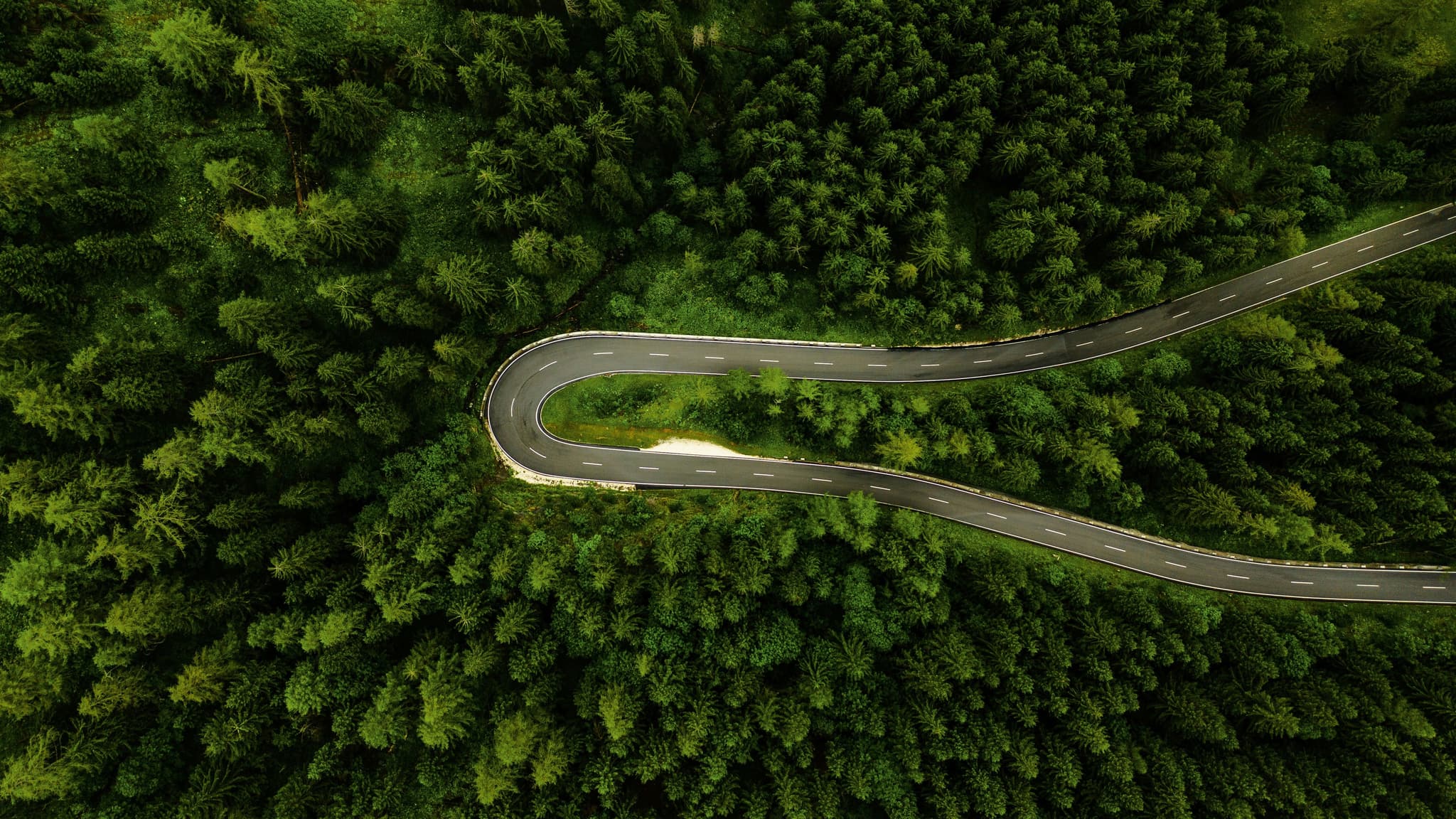
A car is the most practical way to explore this region properly, since several of the best villages and viewpoints sit well away from the rail line.
Driving versus public transport
If you'd rather not drive, the region is still reasonably well connected by train and bus, particularly between Freiburg, Titisee and Triberg, and many hotels issue a free Konus guest card covering local public transport for the length of your stay. That said, reaching quieter spots like Schluchsee or the smaller villages along the Kinzig Valley is considerably easier with your own car, and it lets you build in stops at viewpoints along routes like the Schwarzwaldhochstrasse that a bus simply won't pause for.
If you're still debating if a car fits your trip, read our blog about travelling Germany by train or car. It covers Autobahn rules, what documents to carry, and when the train is genuinely the better option instead.
How long to spend in the Black Forest region?
Three days covers Freiburg, Triberg and Titisee comfortably without rushing. Stretch it to five and you can add Baden-Baden and the full Schwarzwaldhochstrasse drive, plus a proper hike rather than just the short waterfall trails. If hiking is a priority, the Wutachschlucht gorge trail near Schluchsee is one of the best full-day routes in the region and considerably less crowded than the main tourist stops.
Guided tip: Base yourself in Freiburg for the southern half of your trip and Baden-Baden for the north, rather than trying to cover the whole 160km stretch from one hotel. It roughly halves your daily driving time.
When to visit and what to pack for the Black Forest in Germany?
The Black Forest works differently depending on the season, and it's worth timing your trip around what you actually want to do rather than just picking the warmest months by default.
Black Forest in Germany weather per season:
Summer (June to August): warm days, the best hiking conditions, but also the busiest period at Titisee and Triberg.
Autumn (September to October): fewer crowds, golden forest colour, and comfortable walking temperatures.
Winter (December to February): skiing around the Feldberg, plus Christmas markets in Freiburg and Baden-Baden.
Spring (April to May): quieter than summer, with waterfalls often at their fullest after winter snowmelt.
Whatever season you land in, pack layers and a proper waterproof, since weather in the hills shifts faster than in the surrounding lowlands, and mist can roll in with very little warning at higher elevations like the Schwarzwaldhochstrasse.
Wondering when to plan your Germany trip? Read our guide to the best time to visit Germany, including what to expect throughout the year in different regions.
Schwarzwald Tourismus, the region's official tourism board, keeps an up to date events calendar covering everything from Christmas markets to summer hiking festivals across all 250 or so Black Forest towns.
Food worth trying while you're there
You can't talk about food in the Black Forest without mentioning the cake. Schwarzwälder Kirschtorte, or Black Forest cake, layers chocolate sponge with cream, cherries and kirsch, a cherry spirit that gives the cake its distinctive flavour. You'll find versions of it all over the region, so trying a slice in a local café is almost obligatory.
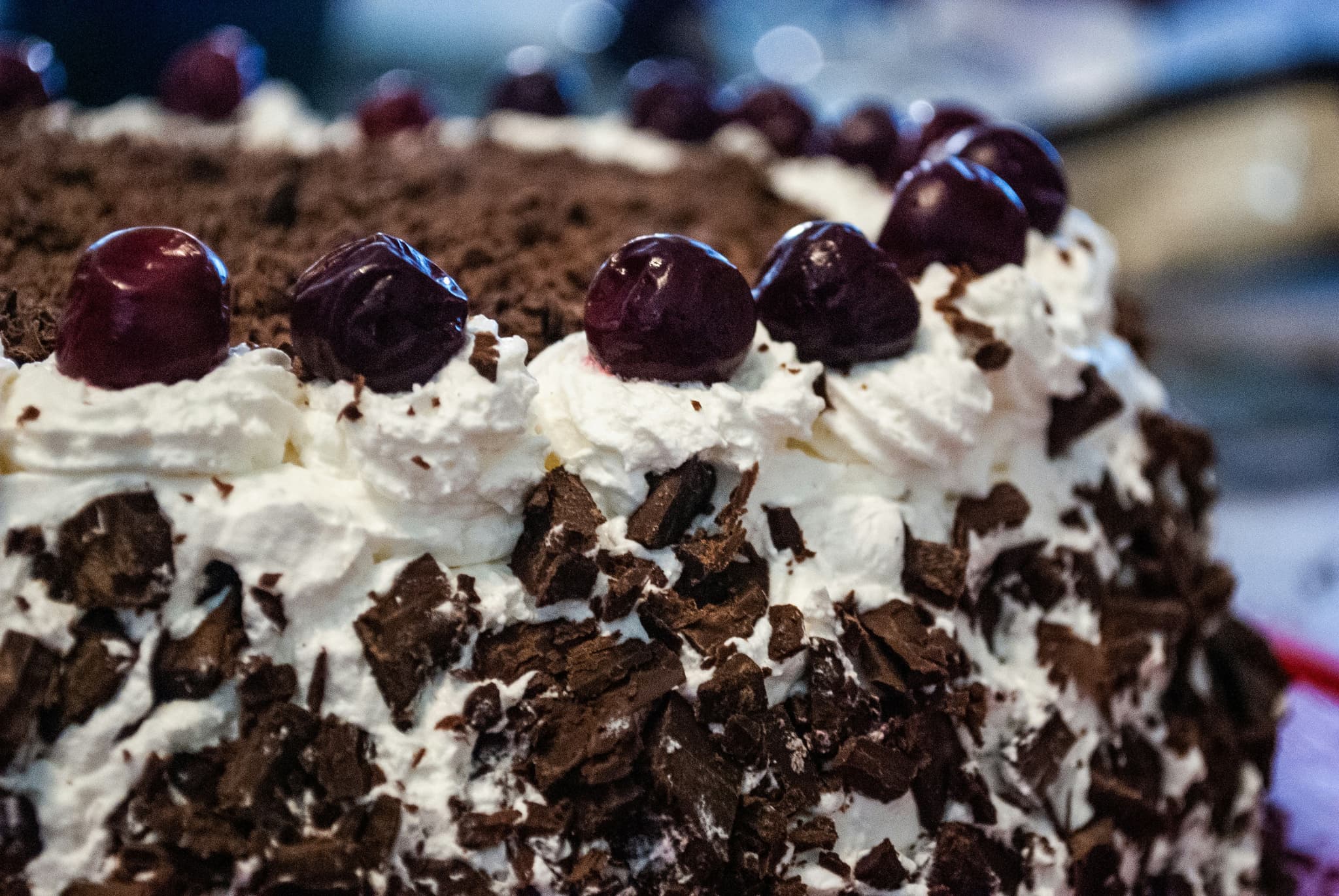
Beyond the cake, there's plenty more to try. Black Forest ham is known for its smoky flavour, while Flammkuchen is another one worth ordering when you spot it on a menu. Think very thin, crispy dough topped with crème fraîche, onions and bacon, with flavours that show just how close this part of Germany sits to Alsace.
Curious how the rest of the country's food compares? Our full Germany travel guide runs through regional dishes worth trying elsewhere, from schnitzel in the south to seafood along the northern coast.
Ready to plan your Black Forest trip?
The Black Forest rarely gets as much attention as Berlin or Munich, and that's actually part of the appeal. You'll find smaller towns, quiet lakes, forest roads and plenty of places where you can slow things down for a few days. Once you know which stops you want to see, add them to the Guided app and map out your route before booking your stays. You can check the distances between places, avoid unnecessary driving and browse routes other travellers have already shared. Freiburg, Triberg and Baden-Baden, for example, can all fit nicely into the same Black Forest trip.
Enjoyed This Blog? Continue Reading!
There is more travel inspiration waiting for you on our blog. You can take a look below and start mapping out your next travel adventure!


