
15 Cities in Northern Germany to Visit for a Weekend Trip
By Eva Alkemade
Jun 24, 2026
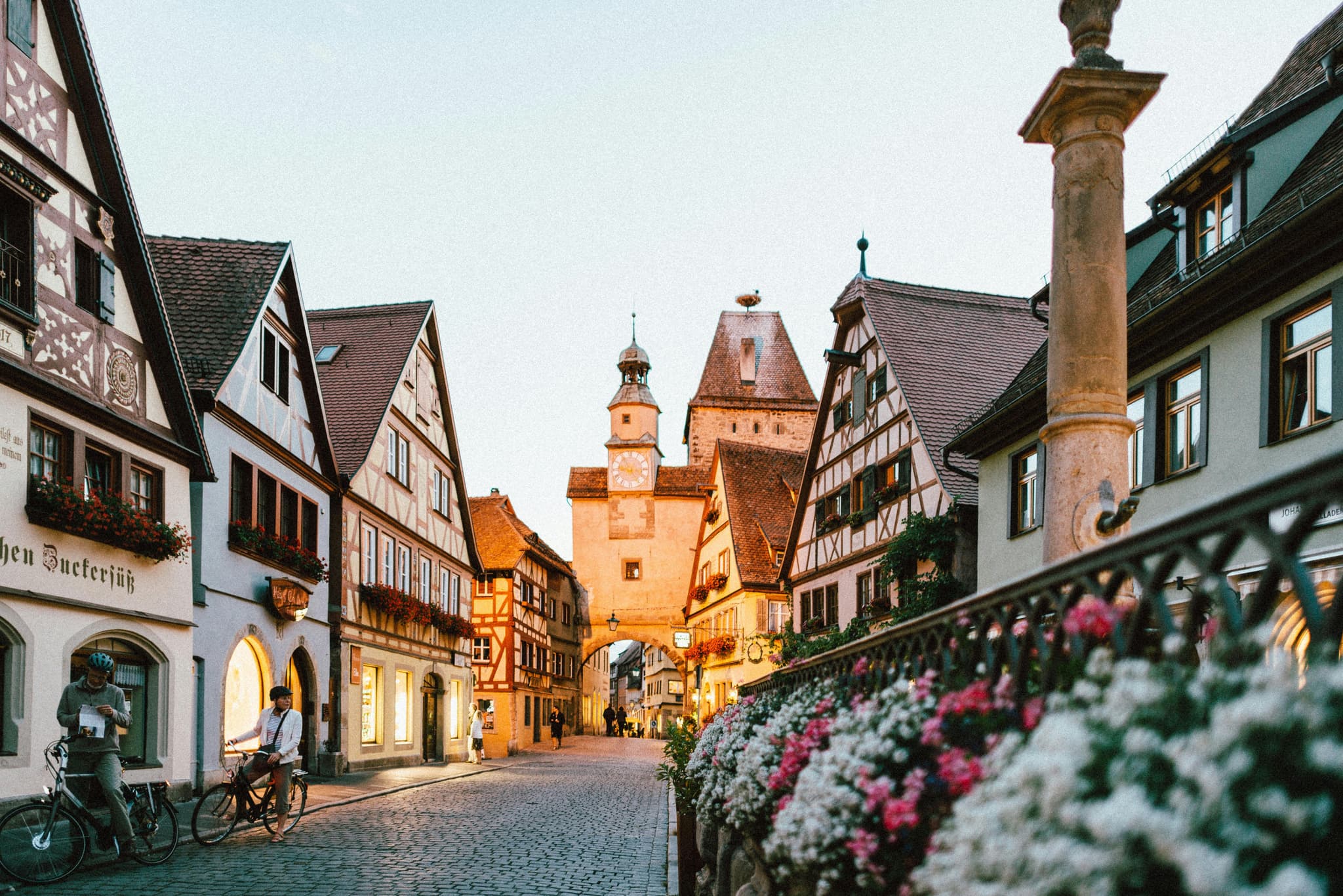
Five federal states stitched together by two coastlines: that's the short version of what people call northern Germany. Cities like Hamburg get most of the attention, yet a short train ride away, you'll find lake-ringed castles, herring sandwiches handed over straight from a fishing boat, and islands where horse carts still beat cars down the road. Every city in northern Germany on this list earns its place for a different reason, and the same goes for the islands and coastal stops between them. This guide covers the towns and coastal spots worth building a route around!
What counts as "northern Germany," and how do you get around?
Before you start mapping out stops, it helps to know what we actually mean by north Germany. These five states make up what most people mean by the term: Hamburg, Bremen, Schleswig-Holstein, Lower Saxony and Mecklenburg-Vorpommern, all hugging the North Sea or the Baltic coast. The capital belongs to a different stretch of the map, so we've left it out of this list, though a separate Berlin itinerary further down covers it in case you're continuing that direction.
If you're curious how this region compares with the rest of the country, our guide to the best cities to travel to in Germany covers the bigger picture, from Munich's beer halls to Cologne's cathedral.
Getting around between cities
Hamburg to Lübeck: about 45 minutes by train
Hamburg to Bremen: just over an hour
Hamburg to Schwerin: around an hour and a half
Stralsund to Rügen: a short hop over the causeway, no ferry required
Nearly everything connects by train here, and Deutsche Bahn's regional lines link most of these towns in under two hours. A car gives you more freedom for smaller stops like Schwerin or Lüneburg, but you really don't need one if you're sticking to the bigger cities.
Hamburg, the harbour city that started it all
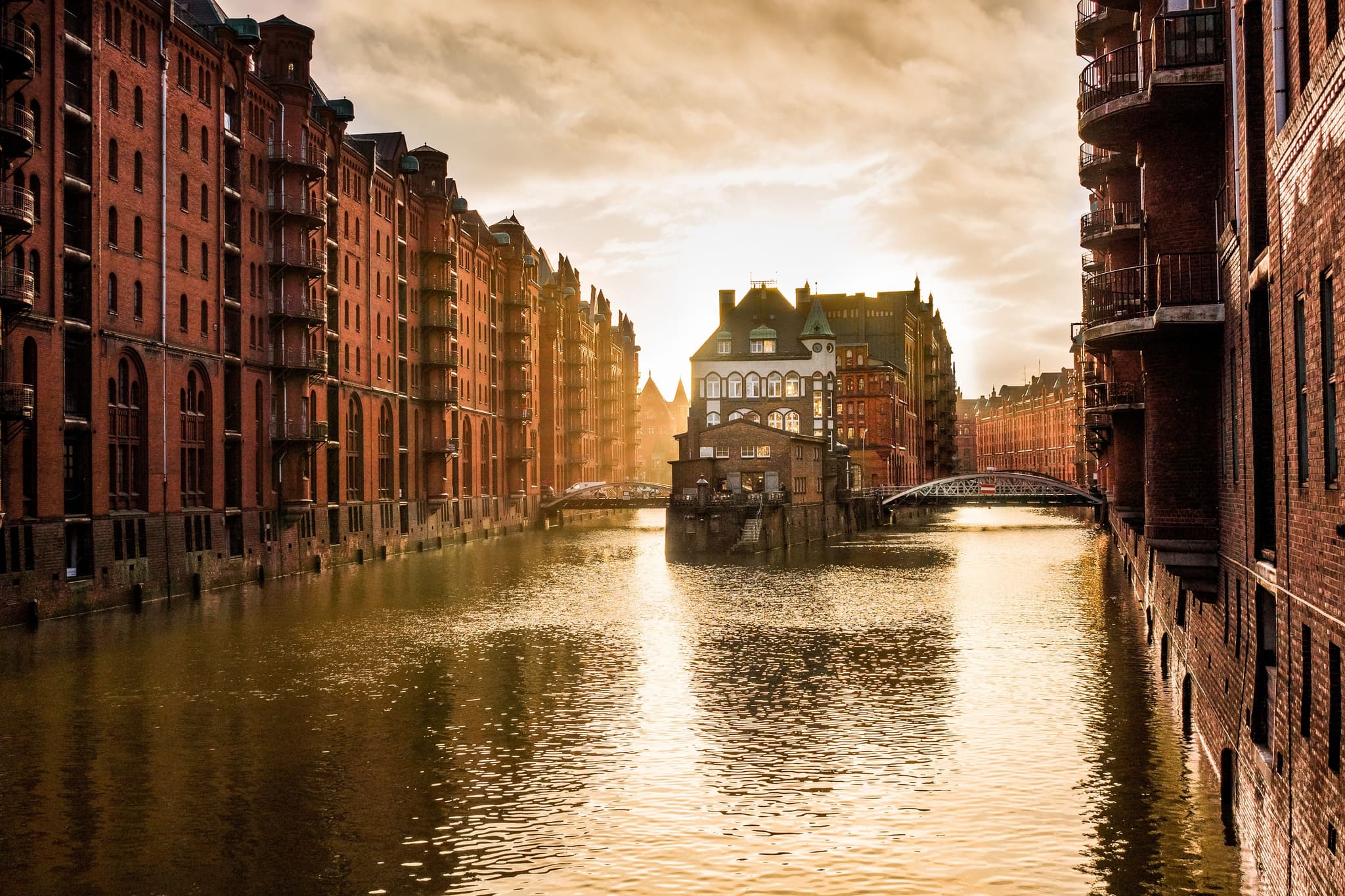
For most people, Hamburg is the easiest place to start, mostly because it's where most international flights land anyway. As Germany's second-largest city, it built its fortune on shipping, and that history is everywhere you look, from the warehouse canals downtown to the cargo ships still passing through the port today. Hamburg's official tourism site keeps an updated list of current exhibitions and ticket prices. You might need it since the Elbphilharmonie's viewing platform slots fill up fast in summer.
Fun things to do in Hamburg
Walk through Speicherstadt, the red brick warehouse district along the canals, now a UNESCO World Heritage Site
Ride the elevator up to the Elbphilharmonie's free viewing platform for a panorama over the harbour, and book a time slot online a day ahead since walk-ins often get turned away
Spend a Sunday morning at the Fischmarkt, where vendors have been shouting over fish stalls since the 1700s, then grab a Fischbrötchen and watch the auctioneers work the crowd
Explore HafenCity for a look at how the old port turned into new restaurants and apartment blocks
Walk the Reeperbahn by day if nightlife isn't your thing, the old fish auction hall and St Pauli's street art are worth seeing without the late-night crowd
Did you know: Speicherstadt is the largest warehouse district anywhere, built entirely on timber piles driven into the riverbed.
Lübeck, the unofficial capital of the Hanseatic League
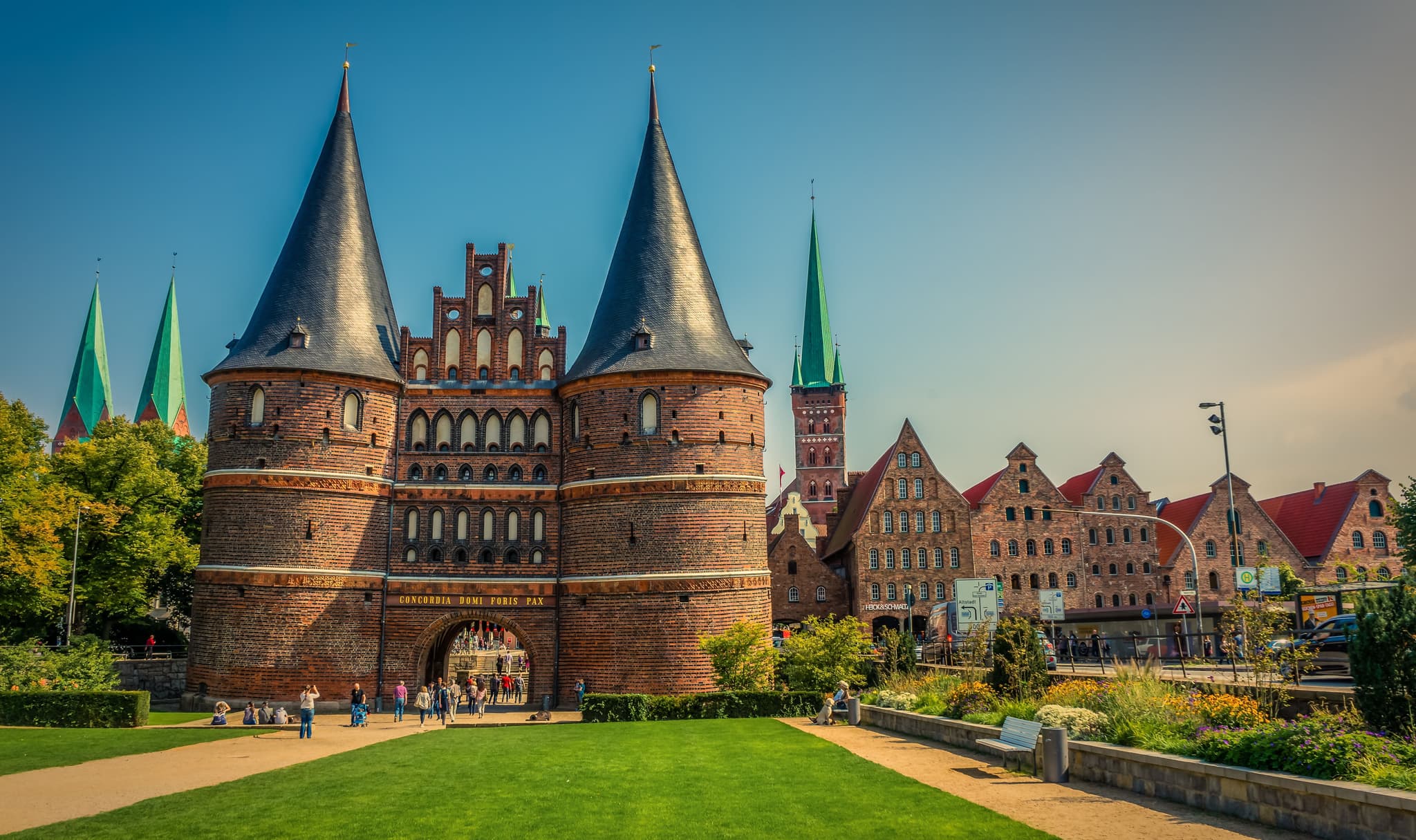
Lübeck is a small city in northern Germany. This Baltic city doesn't get the same buzz as Hamburg, which is exactly why we like it. For roughly three centuries, it ran the Hanseatic League's trade network, and its old town still looks the part: twin brick towers, narrow lanes, and church spires you can spot from the train platform. Germany's national tourism board keeps a running list of Hanseatic cities worth pairing with a Lübeck stop, handy if you want to string together a longer Baltic route.
Fun things to do in Lübeck
Walk under the Holstentor, the fortified gate that's basically Lübeck's logo
Pick up a box of marzipan at Café Niederegger, where the recipe hasn't changed much since the 1800s
Climb the tower of St Mary's Church for a view across the old town's rooftops
Taste Rotspon, a French red wine aged in Lübeck's cellars since Hanseatic merchants started importing it centuries ago
Did you know: Lübeck's old town earned UNESCO World Heritage status in 1987, making it one of the first city centres in Germany to receive the title.
Bremen and the fairy tale in the market square
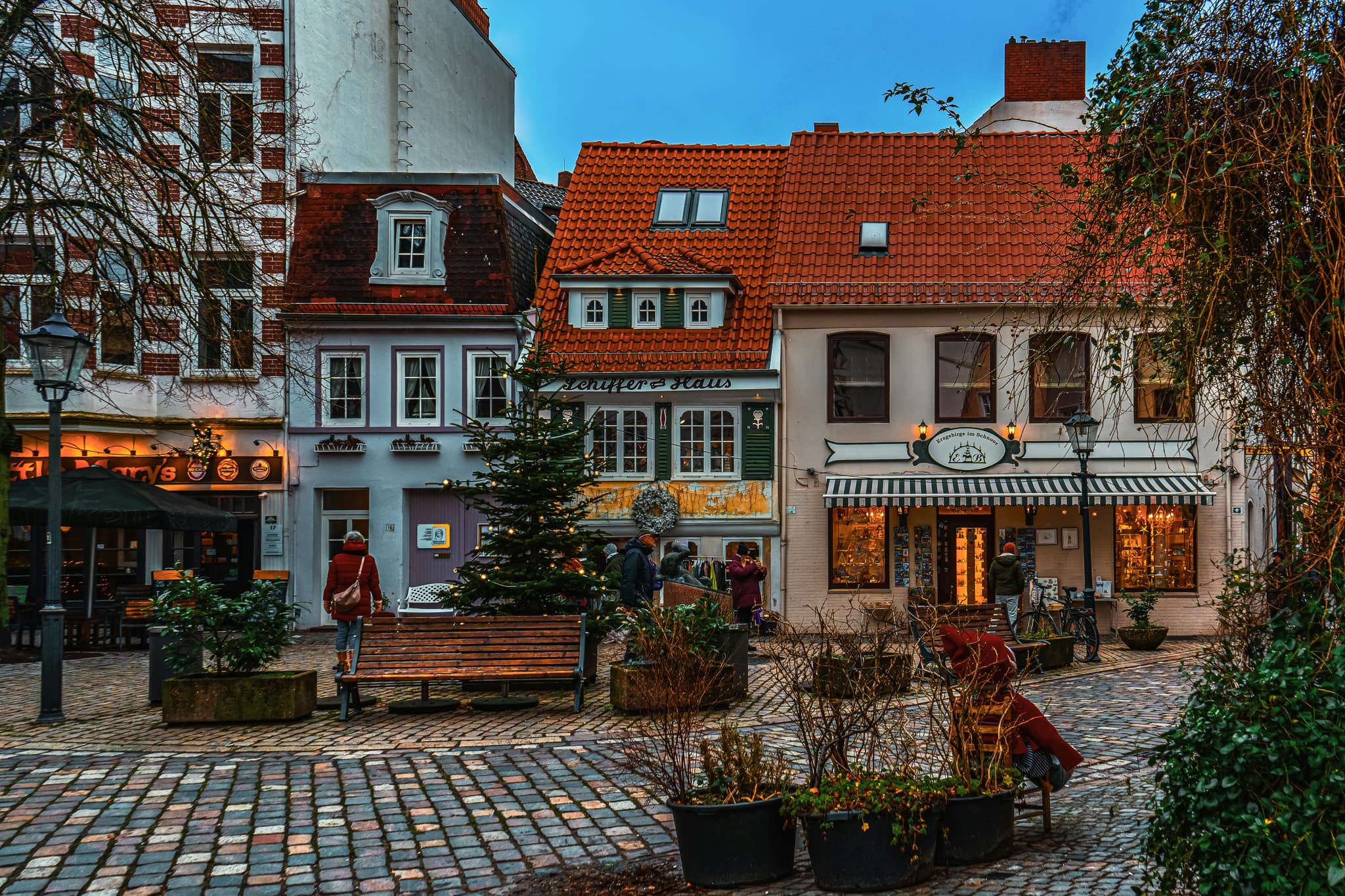
This Hanseatic city is small enough to cover on foot but packed with enough history to fill an afternoon twice over. The market square alone holds a UNESCO-listed town hall, a 600-year-old statue, and the bronze donkey, dog, cat and rooster from the Brothers Grimm story that gave the city its nickname.
Fun things to do in Bremen
Rub the donkey's legs on the Town Musicians statue, said to bring good luck
Step inside St Peter's Cathedral for a painted ceiling brighter than most churches this old
Lose an hour in the Schnoor Quarter's narrow lanes and independent shops
Listen for the Böttcherstraße carillon, which plays a tune on Meissen porcelain bells three times a day
Guided tip: Visit the market square on a weekday before mid-morning if you want photos of the Town Hall without dozens of tour groups blocking the shot.
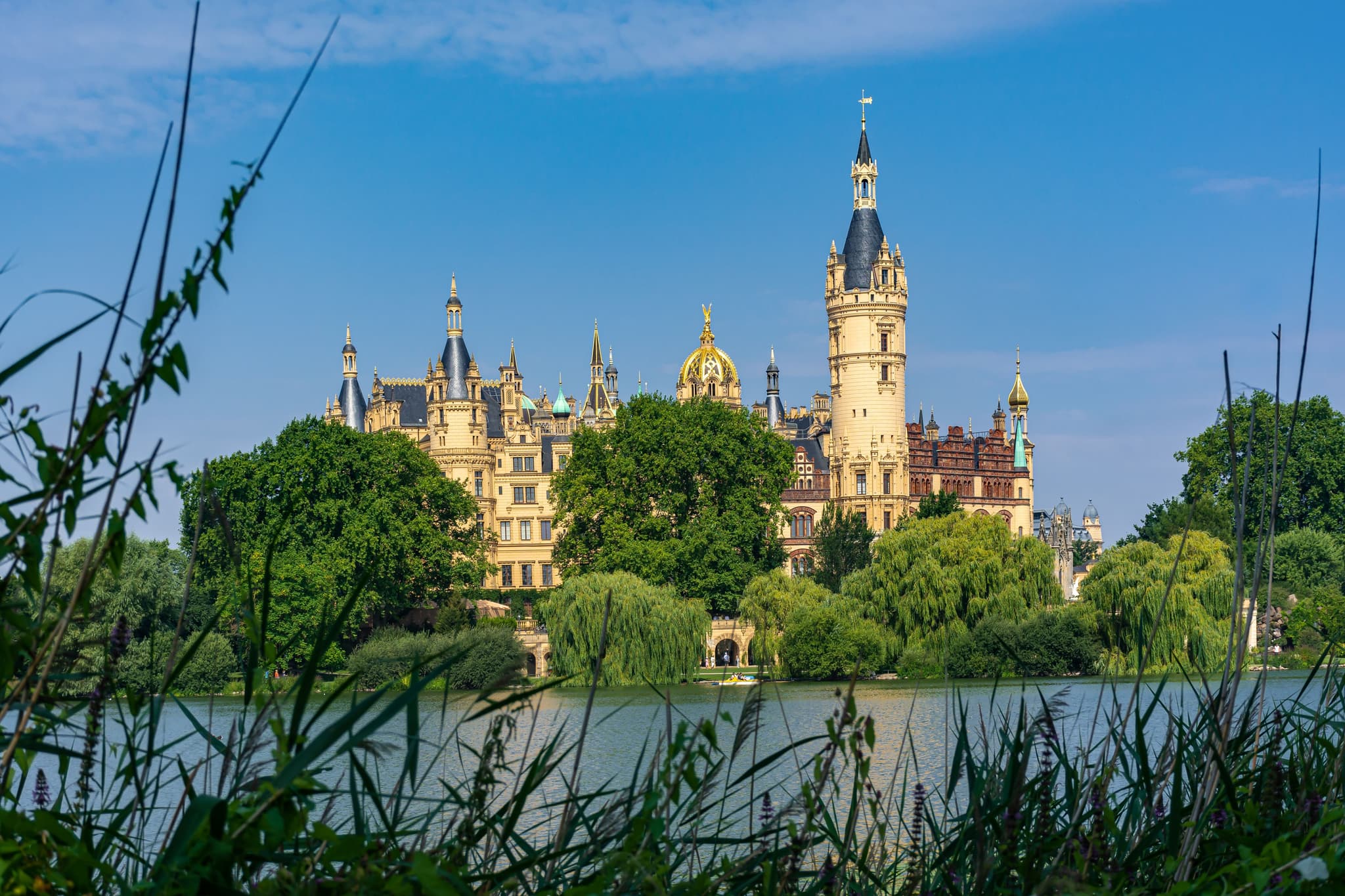
Schwerin, a castle surrounded by lakes
This town trades the bigger cities' energy for something else: a fairytale castle perched on its own island, ringed by water on every side. It's an easy day trip from Hamburg or Lübeck, though the castle and gardens alone are worth staying the night for.
Fun things to do in Schwerin
Tour the castle's staterooms, still decorated the way 19th-century dukes liked them
Walk the free castle gardens even if you skip the paid tour inside
Spot the cathedral tower from across the lake, the tallest in the entire region
Take a short boat trip across Lake Schwerin for a different angle on the castle than you get from the shore
Fun fact: A castle has occupied this island for more than 1,000 years, though the current Neo-Renaissance building only dates back to 1857.
Wismar and Stralsund, two red brick time capsules
These two towns are usually visited together, and for good reason: both were major Hanseatic ports, both survived the centuries with their medieval layouts intact, and both share a single UNESCO listing covering their historic centres.
Wismar
Its old town centres on a pink, crooked building called the Gewölbe, the most photographed corner of the city. Down by the old harbour, you can buy a fish sandwich straight off the boat that caught it that morning, a tradition locals take seriously.
Stralsund
This one works well as a base before heading over to Rügen, since a causeway connects the island to the mainland without the need for a ferry. You can climb St Mary's Church tower for a view that takes in the old town, the harbour and Rügen in the distance on a clear day, and the official World Heritage page has more on what makes the brick Gothic architecture across both towns so distinct.
Rostock and Warnemünde, student city meets Baltic beach
This city and its beach suburb Warnemünde make an easy pair, connected by a 20-minute train ride and both worth half a day on their own.
Rostock
Its old city wall used to circle the centre in a full loop, and parts of it still stand today between two small parks. Inside St Mary's Church, an astronomical clock built in 1472 still gets wound by hand twice a day. Every August the harbour fills up for Hanse Sail, when tall ships from across the Baltic dock along the Warnow river for a long weekend of free concerts and fireworks.
Warnemünde
For just a few euros, you can climb the 19th-century lighthouse and enjoy a clear view all the way down the beach from the top. Its main draw is a five-kilometre beach, lined with the wicker chairs you'll see all along this coast. Saturday and Sunday mornings bring a fish market to the Alter Strom promenade, where you can buy smoked fish straight from the boats that caught it.
Did you know: The astronomical clock inside St Mary's Church has been telling time since 1472, with figures of the apostles that circle past at noon.
Sylt and the North Sea coast
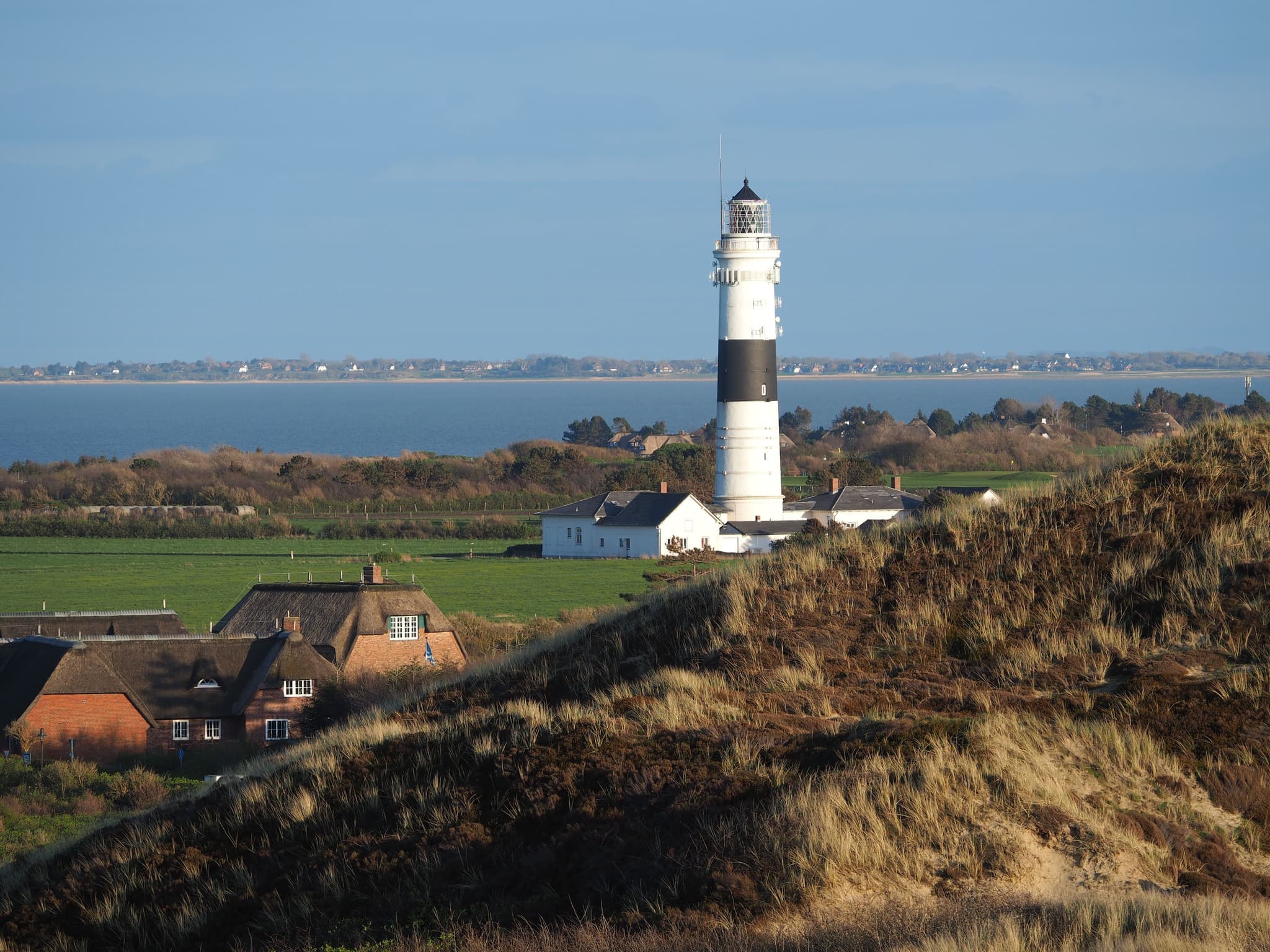
Everything so far has faced the Baltic, but the North Sea side deserves its own mention. This island is the best known of the North Frisian islands, and the contrast with the Baltic coast is obvious the moment you arrive: wider beaches, sharper wind, and tides that completely rearrange the coastline twice a day. Locals call it the Queen of the North Sea, and once you've watched the tide pull back across the mudflats for a kilometre or more, the nickname starts to make sense.
Which part of Sylt to base yourself in
Westerland: the main town, with most of the hotels, restaurants and the train station, good if you want everything within walking distance
Kampen: the glossy end of the island, known for thatched roof houses, expensive boutiques and the Rotes Kliff, a red sandstone cliff that glows at sunset
List: the calmer northern tip, with a ferry across to the Danish island of Rømø and some of the widest beaches on Sylt
Things to do beyond the beach
Join a Wattwanderung, a guided walk out across the Wadden Sea mudflats at low tide, mud up to your knees included, while a guide points out lugworms and the odd seal in the distance
Cycle the coastal path between Westerland and List, flat enough for a half day ride even if you're out of practice
Order a dozen Sylter Royal oysters at one of the harbour restaurants in Munkmarsch, farmed just offshore and considered some of the best in the country
Time a visit to the Rotes Kliff near Kampen around sunset, when the cliff face turns a deep red that's hard to capture properly on a phone camera
Good to know: Sylt connects to the mainland only by train, since no public road bridge crosses the water. Cars travel over on the Sylt Shuttle, a car-carrying train that runs from Niebüll and takes about 35 minutes.
Kiel and the Schleswig-Holstein coast
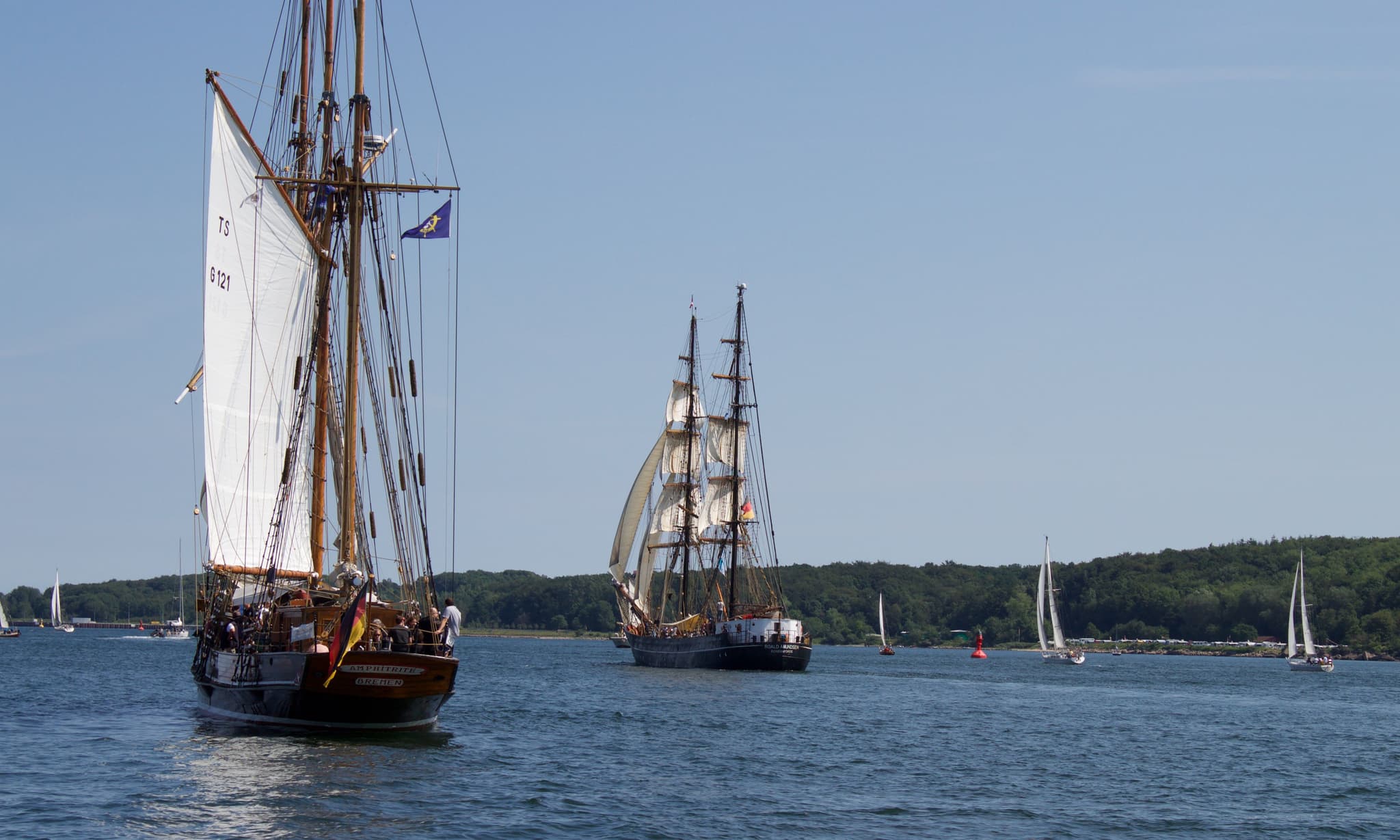
The city wraps around the end of a long fjord, and every June it hosts Kiel Week, the largest sailing event anywhere, when around two thousand boats and several million visitors pack the waterfront for nine days running.
What to do in Kiel
Watch the Windjammerparade on the opening Saturday of Kiel Week, when tall ships sail past the fjord in a long procession
Visit the Laboe Naval Memorial just outside the city, a 72-metre tower with a real U-boat moored beside it that you can walk through
Tour the Maritime Museum, housed in a former fish auction hall down by the harbour, free entry and worth an hour even if boats aren't usually your thing
Take the harbour ferry instead of the bus between Kiel's districts, the cheapest way to see the fjord from the water
Day trips along the coast
Eckernförde: a smaller fjord town 30 minutes away, known for its smoked fish, called Kieler Sprotten, and a long sandy beach
Holstein Switzerland: a lake district inland from Kiel, with rolling hills, swimming spots and rural views nobody expects to find this far north
Kiel Canal: the busiest artificial waterway anywhere, connecting the North Sea to the Baltic, with container ships and cruise liners passing close enough to watch from the banks at Holtenau
Guided tip: Book accommodation for Kiel Week months ahead, since the whole city fills up fast and prices climb right along with demand. Visit the week before or after instead if you'd rather skip the busiest days without missing the harbour buzz entirely.
Island of Rügen, Germany's Baltic giant
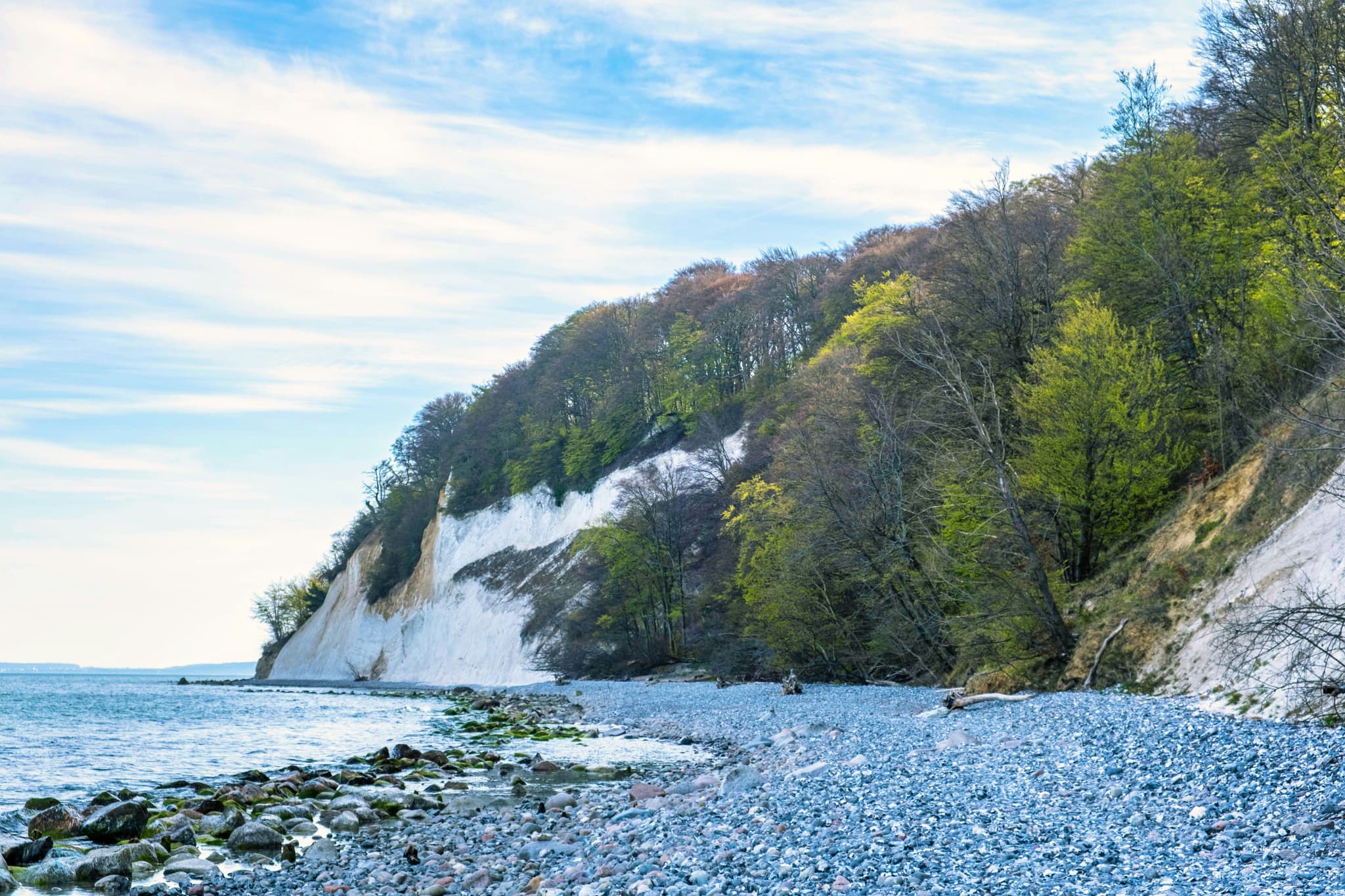
This is Germany's largest island, reachable from Stralsund without a ferry, since a causeway connects it to the mainland. One section can't really do Rügen justice, since the island alone could fill a week, but here's enough to get a route started.
Where to go on Rügen
Jasmund National Park: home to the chalk cliffs at Königsstuhl, reachable by a forest path or a shuttle bus from the visitor centre, with a viewing platform suspended right over the cliff edge
Binz: the island's main beach resort, lined with restored 19th-century spa villas and a long wooden pier worth walking out on even if you don't plan to swim
Sellin: a smaller version of Binz, with its own pier and far fewer day-trippers
Putbus: a planned town built almost entirely in white, nicknamed the White Town, with a circular market square that looks more like Bath than the Baltic
Kap Arkona: the island's northern tip, with two lighthouses and views across to Denmark on a clear day
Getting around the island
A car gives you the most freedom, though the Rasender Roland, a narrow gauge steam train running since 1895, connects several of the resort towns if you'd rather skip the driving. For everywhere else, buses cover the routes, though service runs slower than you'd expect given how small the island looks on a map.
Wondering about more of Germany's islands and beaches? Our guide to the best beaches and islands in Germany goes deeper into Rügen, including which beach towns suit solo travellers, plus several other coastal spots worth adding to your trip.
More underrated stops worth a detour
If you have a little extra time, these hidden gems deserve a spot on your itinerary. They may not be as famous, but they're every bit as memorable. Add one or two of these stops to your trip for something a little different.
Lüneburg
Because centuries of salt mining left the ground here uneven, several buildings in this former salt-trading town, including the town hall, lean at odd angles today. The German Salt Museum tells the full story, and just outside town, Lüneburg Heath turns a deep purple every August when the heather blooms, drawing day trippers from Hamburg for walking and cycling routes through the moorland.
Flensburg
Right on the Danish border, this fjord town built its fortune on rum, importing sugar cane from the Caribbean and distilling it into rum still sold today under labels like Pott or Asmussen. The harbour promenade and old town see far fewer visitors than Hamburg or Lübeck, and the mix of German and Danish influence shows up everywhere, from bilingual street signs to bakeries selling Danish pastries alongside German bread.
Heligoland
A two and a half hour ferry from Cuxhaven or Hamburg gets you to this tiny, remote North Sea outpost, made up of two islands: the main island with red sandstone cliffs and a small town, and Düne, a sandy neighbour with a seal colony you can walk right past during pupping season in winter. Because of its duty-free status, prices on perfume and spirits run cheaper than anywhere else in Germany, though most people come for the cliffs, the seabirds nesting on Lange Anna, the famous rock stack, and the feeling of having reached the edge of the country.
Best time to visit and how to plan your route
Along the North and Baltic Seas, weather swings harder between seasons than it does inland, so timing matters more here than in the bigger cities.
From May through September, the odds of dry, mild weather are best for beach towns like Warnemünde or Sylt, and this stretch also covers most of the region's festivals: Kiel Week in late June, Hanse Sail in Rostock during August, and the heather bloom on Lüneburg Heath that same month. Even winter works well for the bigger cities, with Christmas market season in Hamburg, Bremen and Lübeck adding a different kind of appeal, plus noticeably lower hotel prices than summer.
Our full guide on the best time to visit Germany breaks this down further if your trip covers more than just the north.
How many days you need
A long weekend: stick to Hamburg and Lübeck, both an easy train ride apart, with Bremen as a possible third stop if you start early
A week: add Bremen, Schwerin and either Wismar or Stralsund to the route, all connected well enough by train that a rental car isn't necessary
Ten days or more: work in Rügen, Kiel and the North Sea coast around Sylt, ideally renting a car once you reach the coast since the smaller towns and beaches spread out further than the train network covers
For checking connections between these stops, Deutsche Bahn's English-language site (https://www.bahn.com/en) keeps things simple, and tickets are worth booking a few weeks ahead if you're travelling in July or August.
If you're working your way south after the coast, our five-day Munich itinerary and two-day Cologne guide both make good follow-ups, and our guide on how to spend three days in Berlin pairs well with a Hamburg or Schwerin stop if you'd rather head inland first.
Ready to plan your route?
A slower trip rewards you more here than a packed one does. If you pick two or three places from this list and actually spend time in them, you'll get further than trying to squeeze in all ten over a single week. If you're still planning your itinerary, our full Germany destination guide is a great place to start. You'll find more cities, day trips, travel tips, and inspiration for every type of traveller.
Enjoyed This Blog? Continue Reading!
There is more travel inspiration waiting for you on our blog. You can take a look below and start mapping out your next travel adventure!


