
Australia east coast road trip: Sydney to Brisbane
By Sandra Romano
Oct 22, 2026
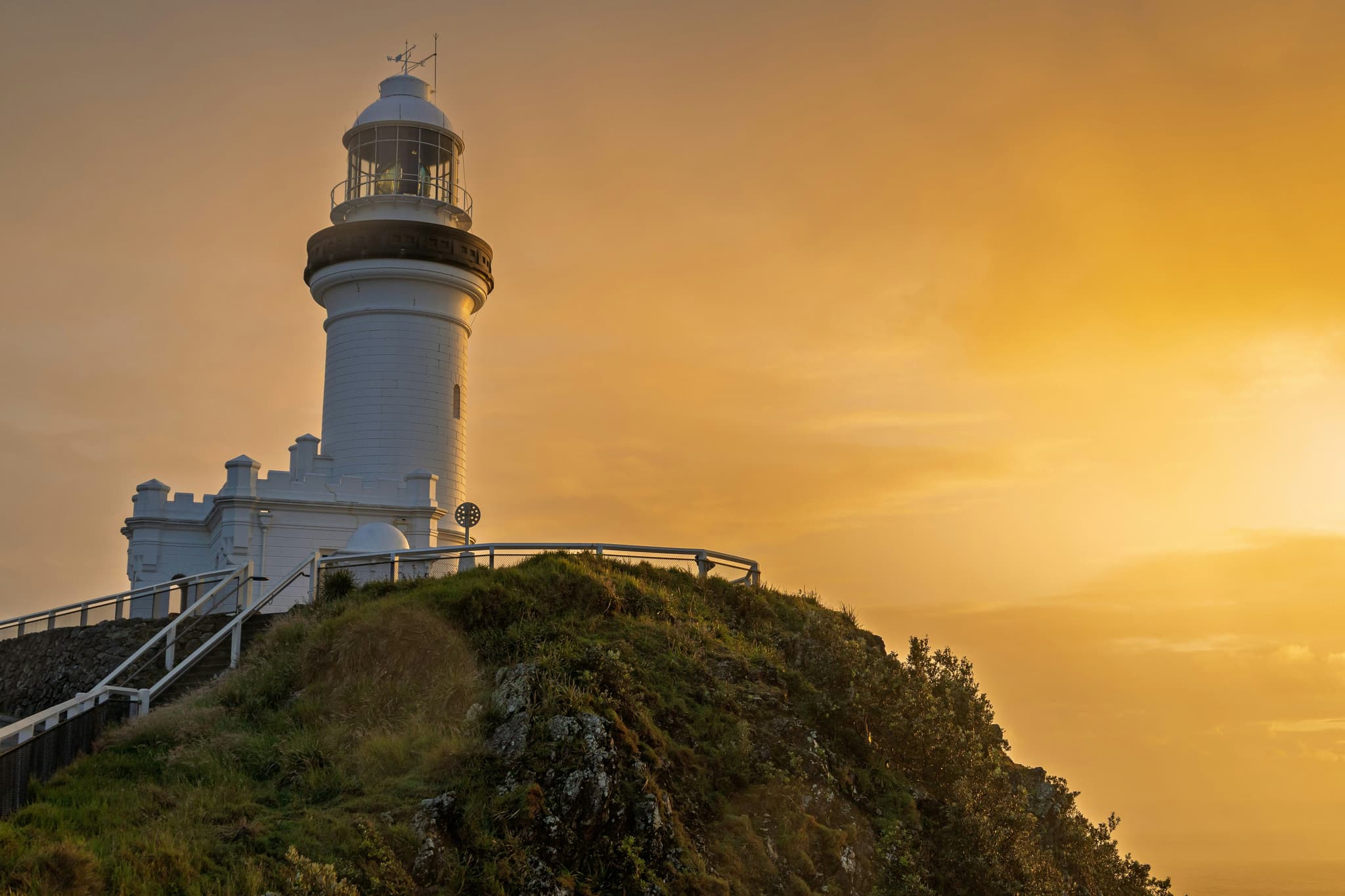
Somewhere between 950 km and a little over 1,000 km of coast road separates Sydney from Brisbane, depending on whose version of the route you follow. Add up every leg and it comes to 12-13 hours of driving. Spread that across a week, with nights in Port Stephens, Port Macquarie, Coffs Harbour and Byron Bay, and you have the drive known as the Legendary Pacific Coast.
This guide is written for summer, and specifically for December 2026 into January 2027. That's the most popular window of the year for this trip, and the hardest one to plan around. Below is how we'd pace the driving and what to do at each of the four stops. There's also a full section on what summer changes, from school-holiday crowds and campervan bookings to afternoon storms, along with the reason you can stop worrying about stingers.
Choosing the right route
Stay on the coast, and drive it north. The Legendary Pacific Coast follows the Pacific Highway and Pacific Motorway corridor from Sydney up to Brisbane, and all four overnight stops sit along it. Driving north means the trip builds toward Byron Bay, which is where we'd want any spare night to land. It's the same logic behind a road trip through New Zealand, where picking one direction and building toward the best stretch works just as well.
Two campervan operators publish their own versions of this drive, and their numbers don't match. Britz's itinerary comes to about 950-955 km over five to seven days. Apollo Camper's covers 1,014 km in six. Neither is wrong, so plan around a range of 950 km to a little over 1,000 km rather than one fixed figure.
Five days and four nights is the minimum, enough for one night at each of the four core stops. We think that's too tight for a summer trip. Seven to ten days is the pace most commonly recommended, and it's the one we'd choose.
How many hours should you drive each day?
About two and a half, on average. The 12-13 hours of total driving divide into five legs. Sydney to Port Stephens is the first, then come Port Macquarie, Coffs Harbour and Byron Bay, and the last leg runs from Byron into Brisbane. Nobody drives it all in one go, and on this route there's no reason to.
Some legs will run longer than others, so check each day's drive when you set your plan. In summer, though, the hour you leave matters more than the number of hours. Subtropical afternoon storms get more common the further north you go, so we'd do the driving in the morning and be parked at the next stop by early afternoon. That leaves the rest of the day for the beach.
The four core stops
Port Stephens, Port Macquarie, Coffs Harbour and Byron Bay are the four overnights this route is built around. Byron is the end of the coastal run, and Brisbane is one more leg beyond it. Each stop has its own short walk worth the time, the same way the best hikes in New Zealand reward picking one or two over trying to do them all.
Port Stephens
Port Stephens has resident bottlenose dolphins, and a dolphin-watching cruise is the signature thing to do here. If you only have one night, we'd still make room for it.
The other big draw is Stockton Bight, where the sand dunes are some of the largest moving dunes in the Southern Hemisphere. You can see them from a 4WD tour or go sandboarding down them. For views of the coast from above, walk up Tomaree Head in Tomaree National Park and take in the lookouts.
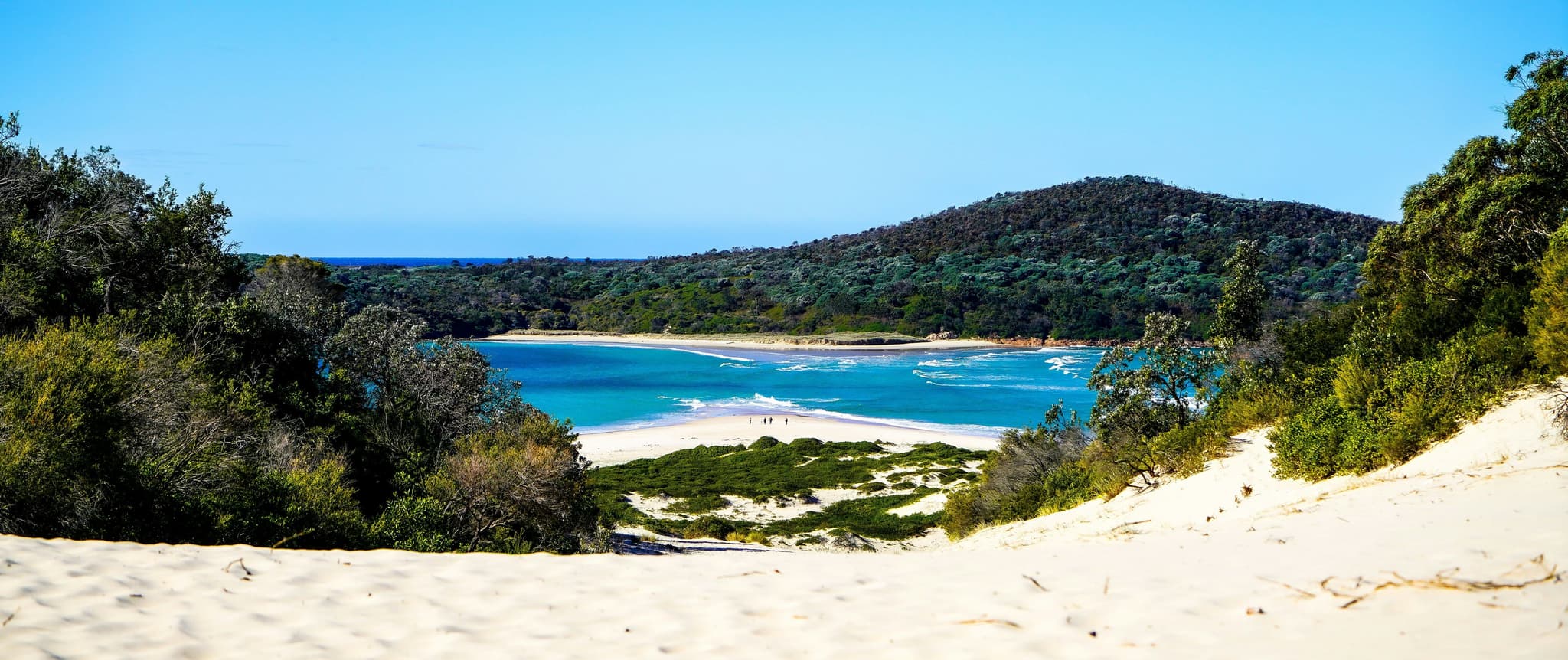
You can swim at Shoal Bay or Fingal Bay. One Mile Beach is the other option.
You'll also see Port Stephens sold as a whale-watching base. The whale season here runs from May to November, though, so it isn't part of a December or January visit.
Port Macquarie
We'd make the Koala Hospital the first stop in Port Macquarie. You can visit, and sponsorship is an option too.
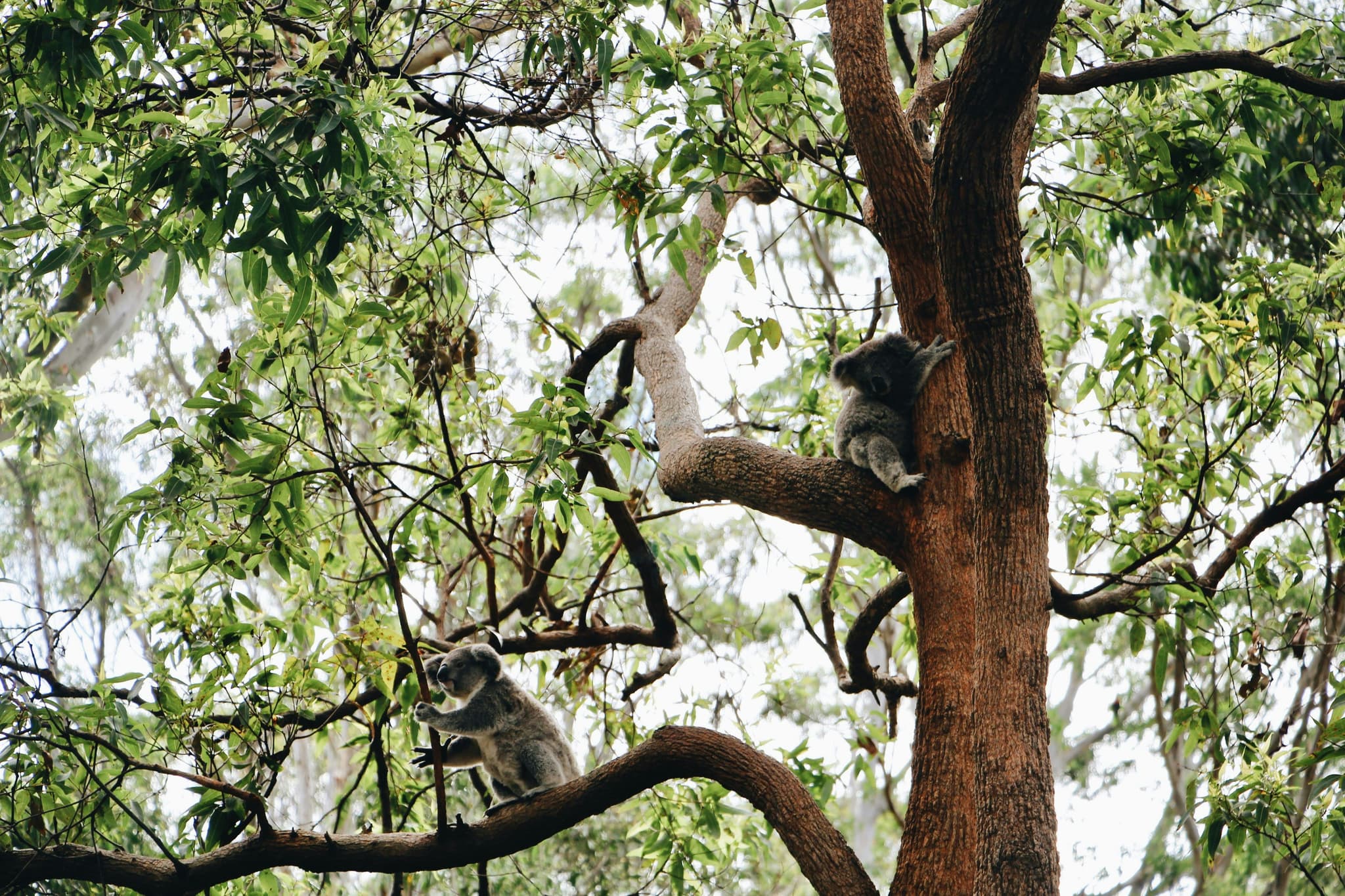
Sea Acres Rainforest Centre is the second. Its elevated boardwalk runs 1.3 km through the rainforest, and the interpretive displays cover Aboriginal culture.
For the coast, take the Coastal Walk between Flynns Beach and Shelly Beach and keep an eye on the water. Dolphins are seen along here year-round, unlike the Port Stephens whales. Town Beach is the place for a swim at the end of the day.
Coffs Harbour
Is the Big Banana worth stopping for? If you're travelling with kids, yes. The Big Banana Fun Park has a water park and an ice rink, and there are toboggan rides as well. Without kids, it's a kitsch photo stop and we wouldn't give it more than that.
The walk we'd prioritise in Coffs is the Look At Me Now Headland, where kangaroos commonly graze right beside the path. Muttonbird Island is the other short outing worth fitting in.
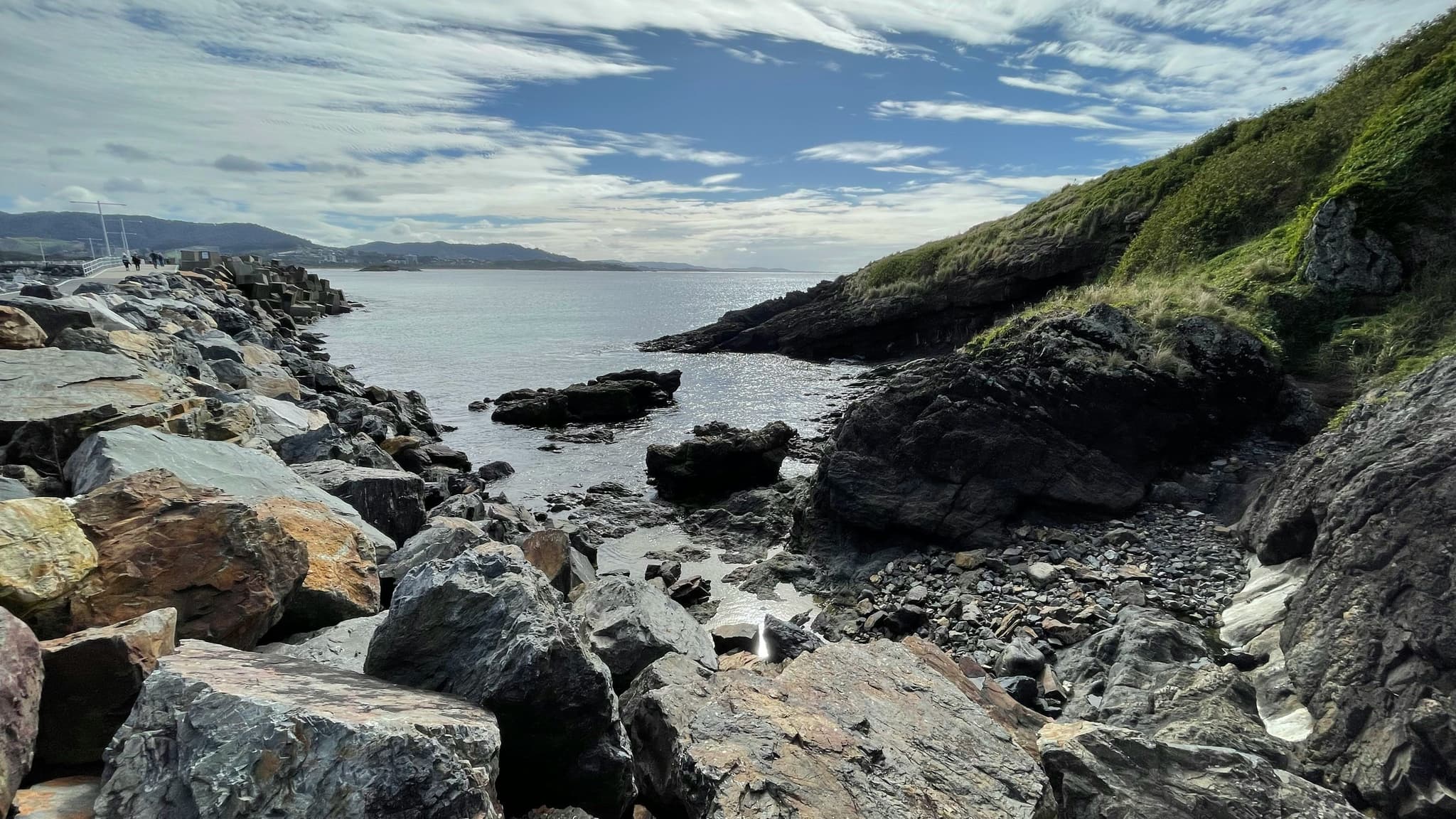
Jetty Beach is the sheltered swim. Park Beach is patrolled, and with younger swimmers that's the one we'd choose.
Byron Bay
The Cape Byron Lighthouse walk is 5.4 km return and reaches mainland Australia's most easterly point. Sunrise is the time most often recommended for it, and in summer that also gets the walk done before the heat builds.
Main Beach, Clarkes Beach and The Pass are where to swim or surf. In the evening the town takes over, with its cafes and live music, and enough shops to fill an hour before dinner.
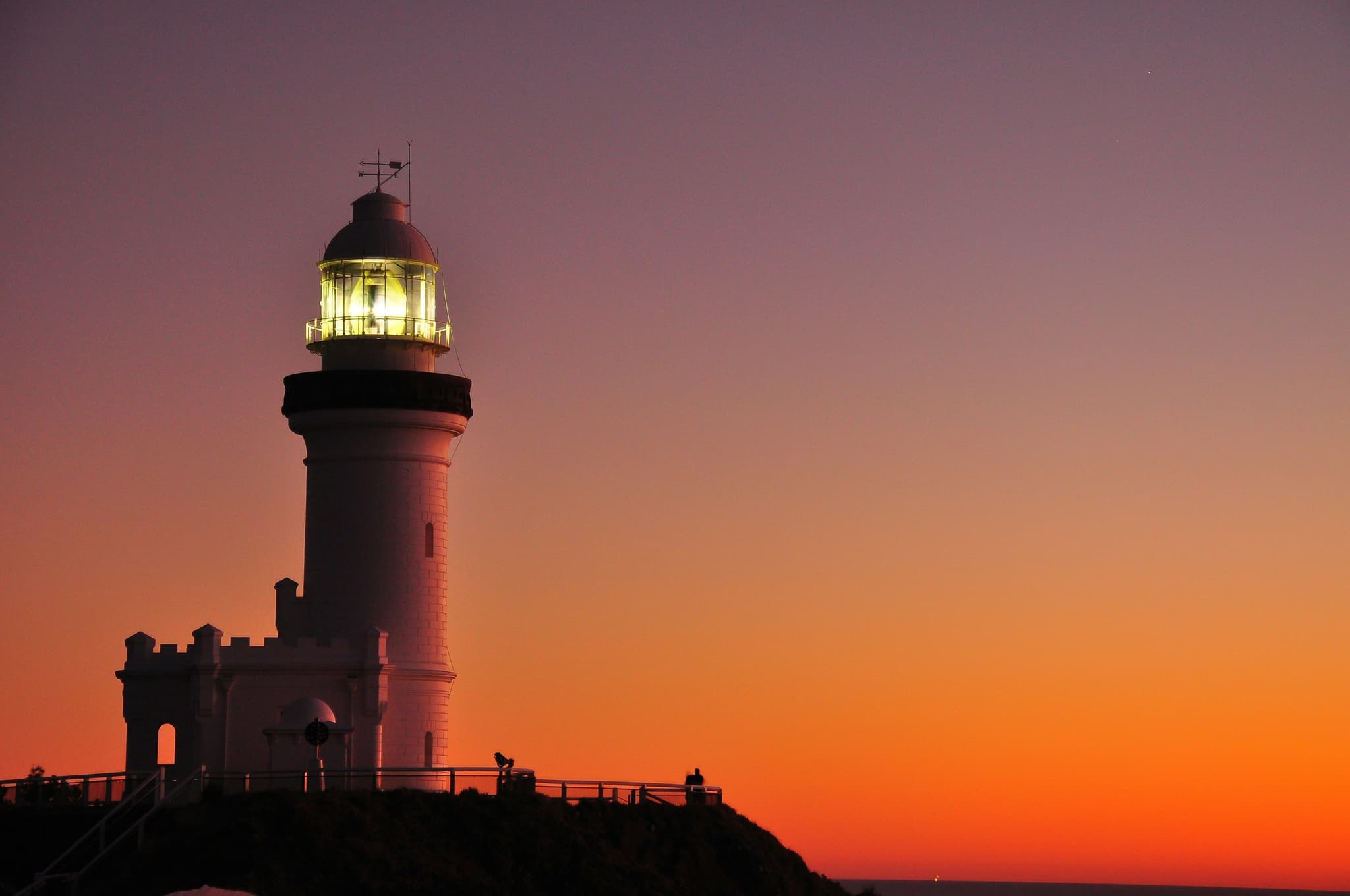
Byron is also the base for two day trips inland. Nightcap National Park has Minyon Falls, and Wollumbin (Mount Warning) is the other. Neither fits into a single night here, which is why Byron is where we'd spend a second one.
From Byron, the final leg runs on into Brisbane.
Itinerary ideas
Five days will get you to all four stops, but we'd only drive it in five if that's genuinely all the leave you have.
Five days, four nights
This is the minimum, with one night at each core stop. It also means you can't keep every drive to the morning, so on two of the days the sightseeing comes first and the leg comes after.
Day 1. Sydney to Port Stephens. Swim at Shoal Bay or Fingal Bay once you arrive.
Day 2. Dolphin cruise in the morning, then drive to Port Macquarie. Walk from Flynns Beach to Shelly Beach if the weather holds.
Day 3. The Koala Hospital and Sea Acres in the morning, then on to Coffs Harbour for the Look At Me Now Headland walk.
Day 4. Coffs Harbour to Byron Bay. Swim at Main Beach and spend the evening in town.
Day 5. The Cape Byron Lighthouse walk at sunrise, then the final leg into Brisbane.
Seven days, six nights
This is the version we'd recommend. Keep the five-day plan and add two nights where they do the most.
The first goes to Port Stephens, so the dolphin cruise and the Stockton Bight dunes each get their own half day instead of competing. The second goes to Byron Bay, for a day trip to Minyon Falls in Nightcap National Park or out to Wollumbin. That puts two nights in Port Stephens, one each in Port Macquarie and Coffs Harbour, and two in Byron.
Seven to ten days, with detours
What do you do with the time beyond a week? Our advice is to add nights at the core stops before adding new places, so Port Macquarie or Coffs Harbour would get a second night first.
Once you have more than that, these are the waypoints people add between the main stops.
Newcastle, for Nobbys Beach
Forster and Tuncurry
Nambucca Heads, for the V-Wall
South West Rocks and Smoky Cape
Yamba
Ballina
Newrybar
Treat them as extras. None of them is a reason to cut a night from Byron. The same math applies to a road trip through Ireland: an extra night only pays off if there's a genuine full day to put it into, not just a long drive.
Campervan or hire car?
Which should you hire for this trip? A campervan. Both of the route plans quoted above come from campervan operators, and in summer a campervan also solves the hardest booking problem on the trip, which is finding a bed at four different stops in peak season.
A hire car still works if you'd rather stay in hotels. It just means booking four or more separate places to stay during the busiest weeks of the year, and doing it well in advance.
Where to rent
Britz and Apollo Camper are the two operators whose itineraries this guide draws on, and both publish a version of the Sydney to Brisbane drive. Since you start in one city and finish in another, ask for a one-way hire with a Sydney pickup and a Brisbane drop-off, and confirm it in writing when you book.
Driving the east coast in summer
From 18 December 2026 to 26 January 2027, schools in Queensland and in NSW's eastern division are on summer holidays at the same time. Those weeks are also the most popular of the year for this drive. Summer changes four things about the trip, and only three of them should change your plans.
School holidays, December 2026 to January 2027
Plan this trip around the school calendar before you plan anything else. Here's the window, state by state.
NSW, eastern division: Friday 18 December 2026 to Wednesday 27 January 2027
NSW, western division: a week longer, to Wednesday 3 February 2027
Queensland: Saturday 12 December 2026 to Tuesday 26 January 2027
Put those side by side and both states are on break for nearly the whole six-week stretch, across the entire route. Expect peak crowds and peak prices. Accommodation and campervans will be at their tightest of the year.
If your dates can move, we'd aim for Thursday 28 January 2027 or later. By then Queensland schools and NSW's eastern-division schools have all gone back, and it's still summer.
Booking a campervan
December and January are peak season for campervan and motorhome hire in Australia, and they line up almost exactly with the school holidays. That's the same six weeks in which everyone else is trying to book.
There's no reliable rule for how far ahead to book. Our answer is as soon as your dates are fixed, and well before Christmas.
Guided tip: Lock in the campervan before you book anything else for this trip. Accommodation at the four stops can be rearranged around it, but in peak season the vehicle is the part you're least likely to replace.
Heat, humidity and afternoon storms
Do the hard walking early. Summer is when this stretch of coast is at its hottest and most humid, and subtropical afternoon storms get more common the further north you drive, especially as you approach Byron Bay.
On this route that mostly affects the walks. Tomaree Head, the Coastal Walk in Port Macquarie and the Cape Byron Lighthouse are all better done in the morning, with the afternoons left for swimming and the drive already behind you.
What about stingers?
Do you need to worry about box jellyfish or Irukandji on this drive? No. Marine stingers are not a concern anywhere between Sydney and Brisbane, or on the Sunshine Coast just north of it.
Queensland's WorkSafe guidance places the dangerous marine-stinger zone in tropical waters, generally north of Bundaberg, at around 25°S. Historically, stingers have been confined to waters north of Gladstone. The one exception was an adult Irukandji recorded as far south as Hervey Bay in March 2007, after which stings were reported in that area too. Hervey Bay sits a little over three hours' drive north of Brisbane, and Brisbane itself sits at around 27.5°S, well south of all of it.
It only becomes a genuine question well north of Brisbane, around K'gari (Fraser Island) and beyond, where that 2007 case sits. Check local stinger advice before you swim up there. In the tropical waters where stingers do apply, the higher-risk season runs from about November to May.
What to pack
Pack for the beach first and the walks second. Every one of the four stops has a swimming beach, and most summer days on this route will end at one.
Swimwear and a beach towel: you'll use them at all four stops
Walking shoes: for the 5.4 km Cape Byron Lighthouse walk, the Sea Acres boardwalk and the Coastal Walk between Flynns Beach and Shelly Beach
A head torch: for the lighthouse walk at sunrise, when you'll set off before it's fully light
A light rain layer: for the afternoon storms, which get more common the further north you drive
Sun protection: this is the hottest, most humid time of year on this coast
Ready to start planning your east coast road trip?
This route has four fixed overnight stops and one moving part, which is how many days you give it.
Settle that first, and check your dates against the school holidays. Then book the campervan, and fit the nights in Port Stephens, Port Macquarie, Coffs Harbour and Byron Bay around it. We'd lay the stops out in the Guided trip planner before booking anything else, so the dolphin cruise falls on a morning and the lighthouse walk falls on a sunrise you're actually awake for.


