
12 best New Zealand beaches for your next trip
By Eva Alkemade
Sep 1, 2026
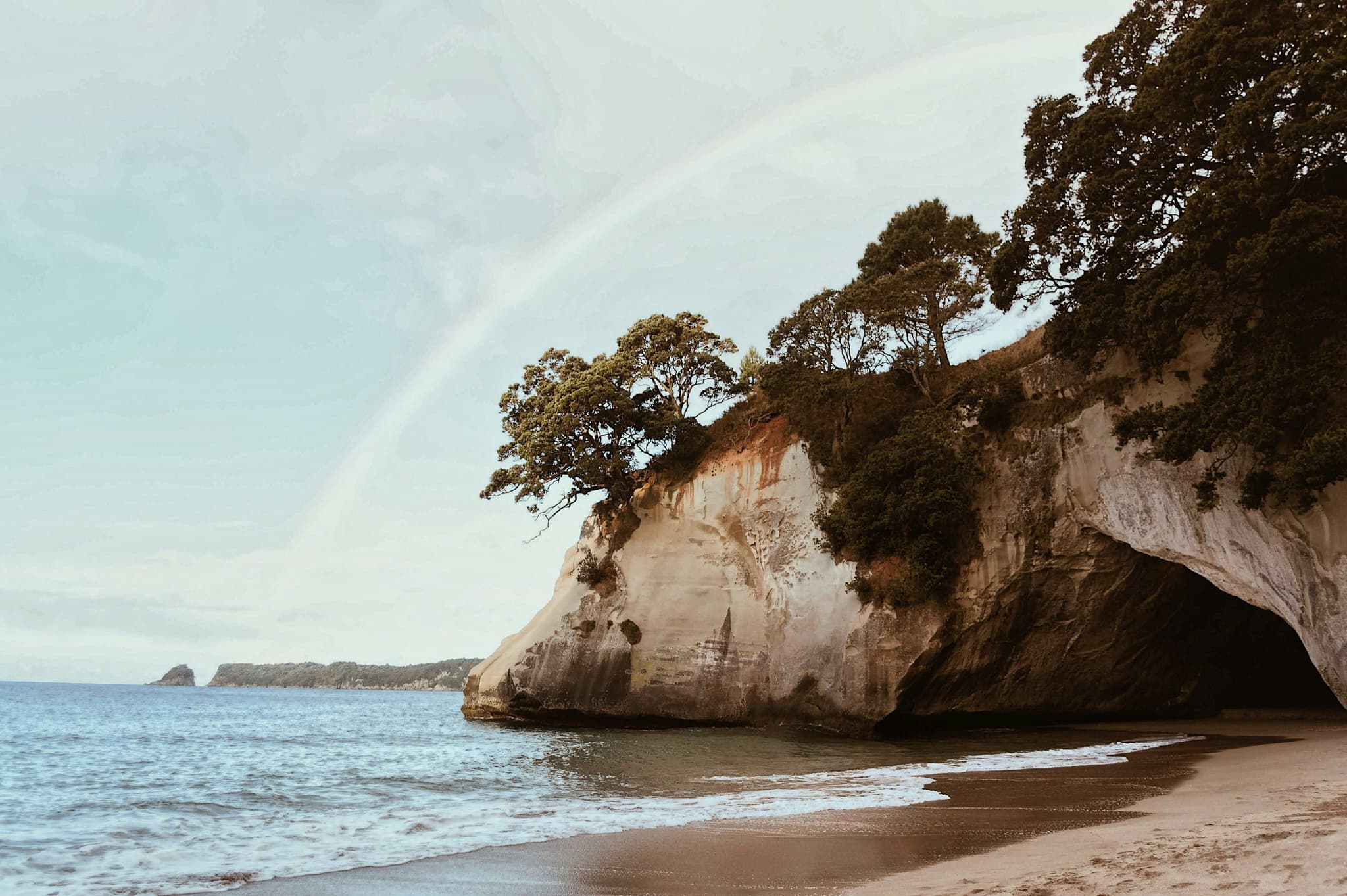
New Zealand isn't the first place most people picture when they think of a beach holiday, and that's exactly why it's worth putting on your list. Two islands, close to 15,000 kilometres of coastline, and a spread of beaches that ranges from geothermal hot springs to black volcanic shores. You won't find rows of sun loungers here. Instead, you get natural arches, glowing turquoise bays, and coves you sometimes have almost entirely to yourself. Grab a wetsuit or a picnic blanket, because these are the top beaches in New Zealand worth building a trip around.
New Zealand’s beaches at a glance
Cathedral Cove on the Coromandel Peninsula has a natural limestone arch you walk straight through onto a white sand beach.
Hot Water Beach lets you dig your own personal hot spring pool in the sand, but only around low tide.
Piha, near Auckland, is a black sand surf beach with one of the country's best sunsets.
Wharariki Beach at the very top of the South Island has sea stacks, caves and a resident seal colony.
Kaiteriteri and the Abel Tasman coastline have the warmest water and the calmest swimming conditions in the whole country.
Cathedral Cove and Hot Water Beach on the Coromandel
If you only add one beach region to your New Zealand itinerary, make it the Coromandel Peninsula, a two and a half hour drive southeast of Auckland. It packs two of the country's most photographed beaches within ten minutes of each other, and both are easy to combine with a night or two in the nearby town of Whitianga.
Cathedral Cove: the arch everyone comes for
Cathedral Cove is a beach in New Zealand that sits inside the Te Whanganui-A-Hei Marine Reserve, and the walk in tells you straight away why people rave about it. You start at Hahei village and follow a clifftop track for around 45 minutes, with the sea appearing and disappearing through the pohutukawa trees the whole way.
Then you drop down to the sand and pass through a towering limestone archway to reach a second, quieter cove on the other side. There's no beach bar and no sunbeds for hire, because the whole area is protected, so pack water and snacks before you set off. If walking isn't your thing, a water taxi or kayak from Hahei gets you there in about fifteen minutes instead, which is a nice option if you're travelling solo and fancy a slower morning on the water rather than a warm uphill walk.
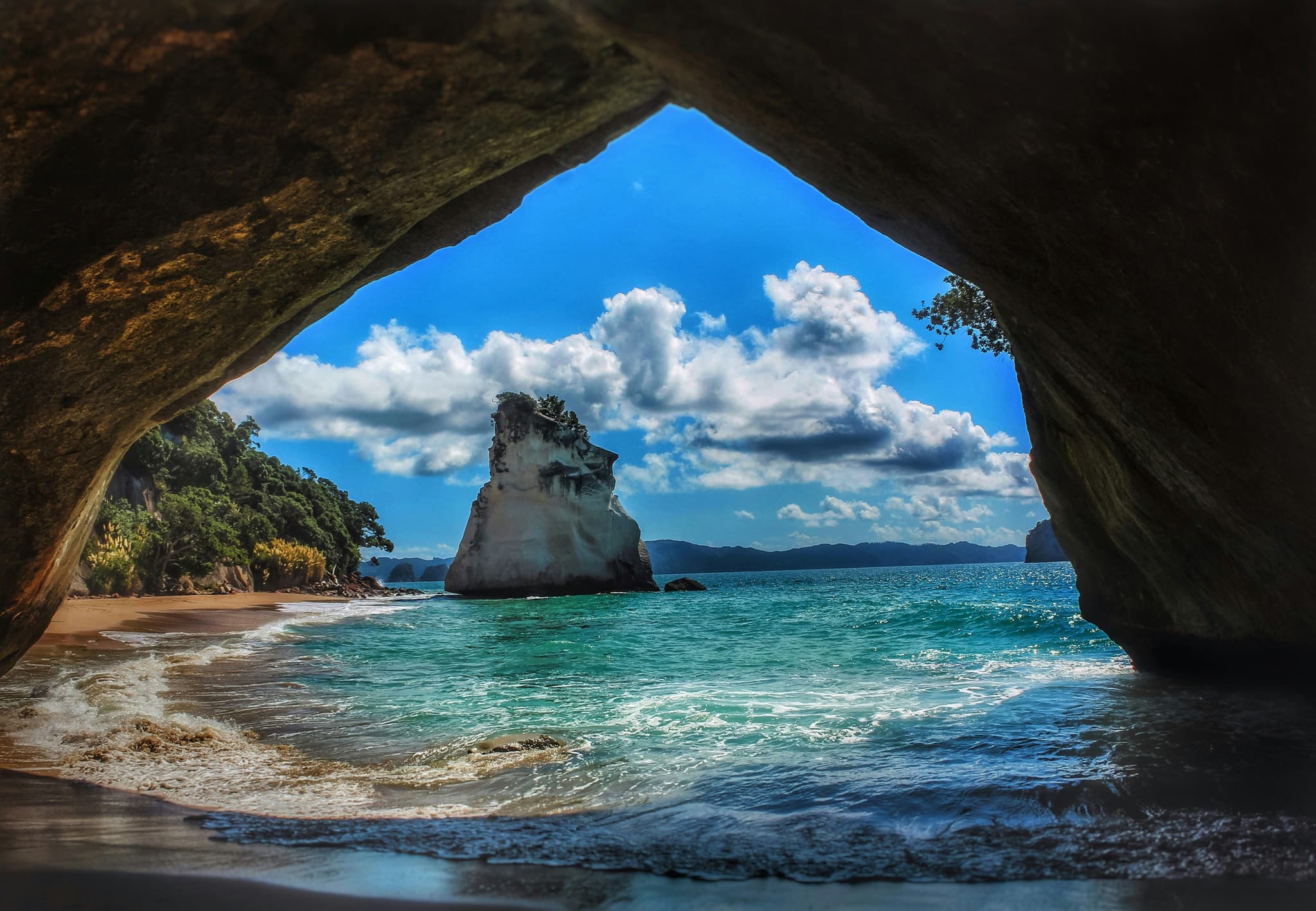
Cathedral Cove gets genuinely busy between December and February, with private car access to the car park sometimes restricted during peak hours. Visit in October or March and you'll get the same view with a fraction of the people.
Wondering when to plan the rest of your trip? Read our guide to the best time to visit New Zealand and see which months work best for your plans.
Hot Water Beach: your own personal spa
Ten minutes down the coast from Hahei, Hot Water Beach does exactly what it says. Geothermal water bubbles up through the sand at temperatures that can reach 64°C, so you dig a shallow pool around two hours either side of low tide, let it fill, and mix in some cooler seawater until you've got a bath you'd happily stay in for an hour. Bring a spade if you have one, or rent one from a nearby café, because you'll need it. Check the tide times before you go, since arriving at high tide means there's no exposed sand to dig into at all.
Guided tip: Base yourself in Whitianga for two nights and you can do Cathedral Cove in the morning before the crowds, then time your afternoon around low tide at Hot Water Beach.
Piha and Auckland's black sand west coast
The beaches west of Auckland couldn't feel more different from the Coromandel, and that contrast is worth building into your trip. Volcanic black sand, dramatic surf, and cliffs instead of gentle coves.
Piha: Auckland's favourite day trip
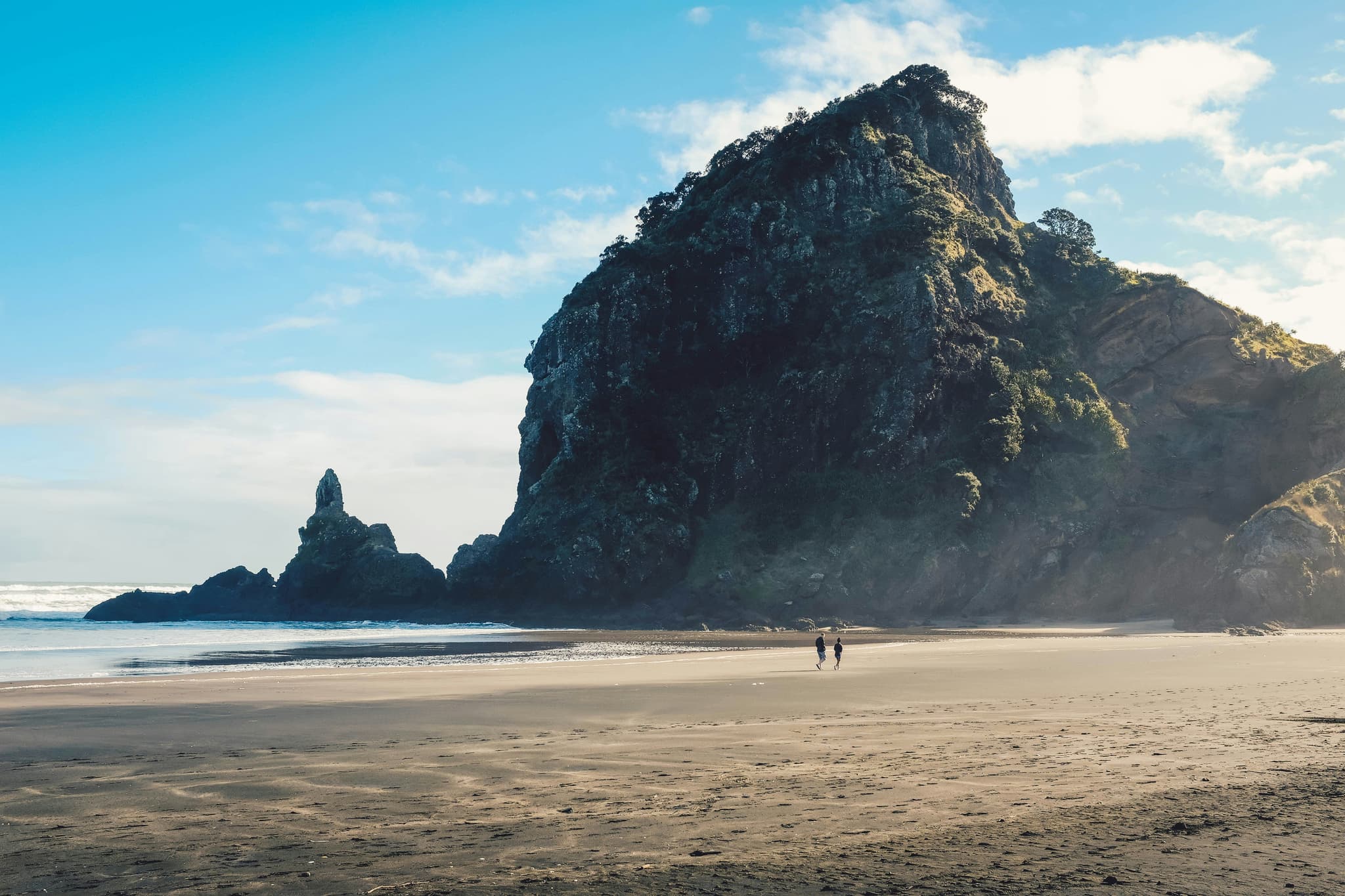
Piha is around 45 minutes' drive from central Auckland, which makes it the easiest beach escape if you're only in the city for a few days. Lion Rock dominates the middle of the bay, splitting it into two distinct surf breaks, and the black volcanic sand gets genuinely hot underfoot in summer, so pack sandals for the walk down. Lifeguards patrol during summer, but the surf here has strong rips, so stick between the flags if you're swimming rather than surfing. Piha Café at the top of the hill is worth the stop afterwards for a coffee with a view back over the bay.
Bethells and Muriwai: two more west coast options
If Piha feels a bit busy for your taste, Bethells Beach nearby has the same wild, black sand character with far fewer visitors, and a short walk to a freshwater lagoon behind the dunes. Muriwai, a little further north, adds a gannet colony to the mix. Thousands of birds nest on the cliffs here between August and March, and there's a viewing platform close enough that you don't need binoculars. Both are easy to combine into one west coast day if you've hired a car.
Planning to explore more of New Zealand by car? Read our New Zealand road trip guide for route ideas, driving tips and some of the best stops to add along the way.
Did you know: Piha's Lion Rock was once connected to the mainland. Māori tradition holds that it's named after Panitiare, the son of a chief, and today it's a short, steep scramble to the top for one of the best views on this stretch of coast.
Ninety Mile Beach and the far north
Head north of Auckland far enough and the country starts to feel emptier, and the beaches start to feel bigger. This is the stretch to add if you want space more than facilities.
Ninety Mile Beach: shorter than the name suggests
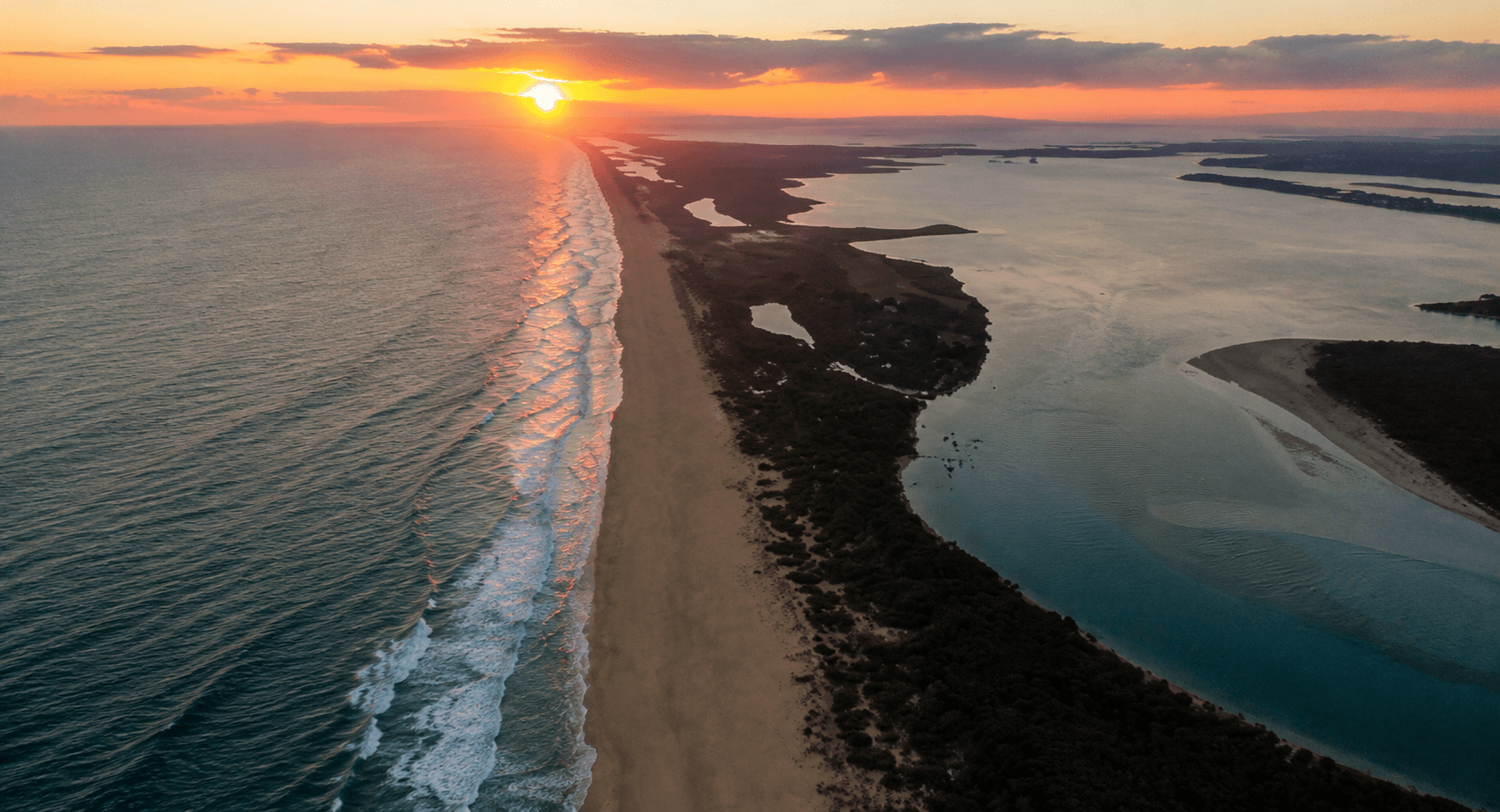
Despite the name, Ninety Mile Beach actually runs for about 88 kilometres along the west coast of the Far North, from near Kaitaia up towards Cape Reinga. It's classified as a legal highway, so tour buses drive along the hard-packed sand at low tide, though most rental car insurance won't cover you if you try it yourself. Up at the northern end, the huge Te Paki sand dunes are worth a stop too. Grab a sandboard and you can slide straight down them, although getting back to the top is considerably less fun.
Cape Reinga sits right at the northern tip of New Zealand, where the Tasman Sea and Pacific Ocean meet and you can actually see the currents coming together offshore. The headland is also an important place in Māori culture. Known as Te Rerenga Wairua, it's traditionally believed to be the point where spirits leave New Zealand and begin their journey to the ancestral homeland of Hawaiki.
Guided tip: Book a guided coach tour rather than driving yourself. It covers the sand highway safely, includes the dunes and Cape Reinga, and usually loops back via the Ancient Kauri Kingdom, so you're not backtracking on the same roads twice.
Bay of Islands: beaches with boats attached
A few hours north of Auckland, you can find the Bay of Islands, where beach hopping doesn't get better than this. With 144 islands scattered along the coast, you can spend one day swimming and kayaking and the next sailing between quiet bays or heading out to spot dolphins. Add little coastal towns and Māori history to the mix, and it's an easy place to stay longer than you planned.
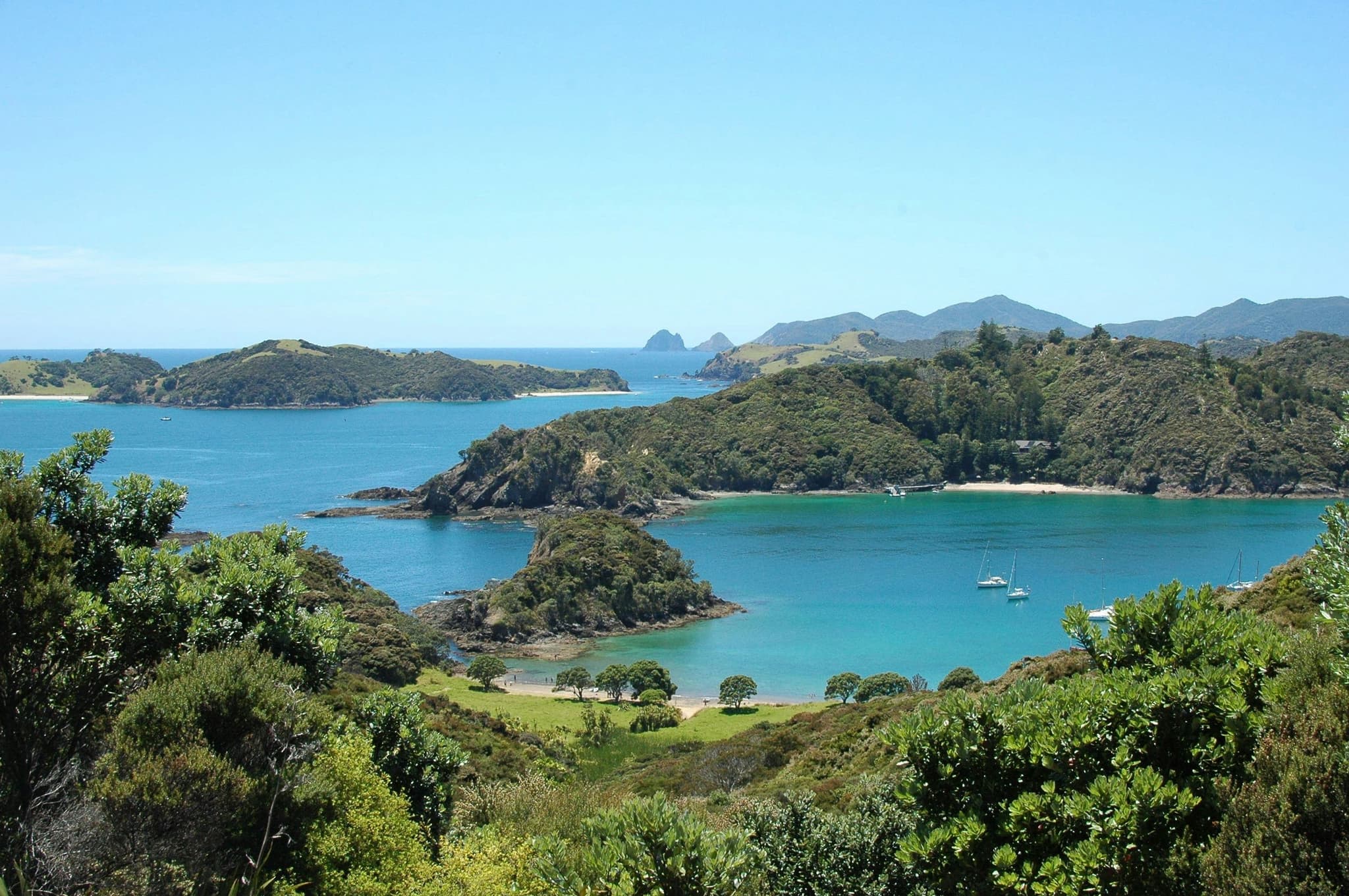
Why the Bay of Islands works differently
Paihia and Russell are the easiest places to stay if you want to explore the Bay of Islands, with boat trips leaving regularly for beaches and little bays you can't reach by road. Along the way, there's a good chance you'll spot bottlenose dolphins, and some trips stop at Otehei Bay on Urupukapuka Island for a swim in beautifully clear, calm water. Back on the mainland, take the ferry across to Russell for a wander along the waterfront. It's small, relaxed and packed with history, so it's worth a few hours even if you're mainly here for the beaches.
Kaiteriteri and Golden Bay in the South Island
If everything so far has been about the North Island, the South Island beaches are where the water actually gets warmer, thanks to a sunnier microclimate around Nelson and Tasman. This is where we'd send you if a proper swim is the priority.
Still wondering whether to go to the North or South Island? Read our blog comparing New Zealand's North and South Islands to see which one fits your trip better.
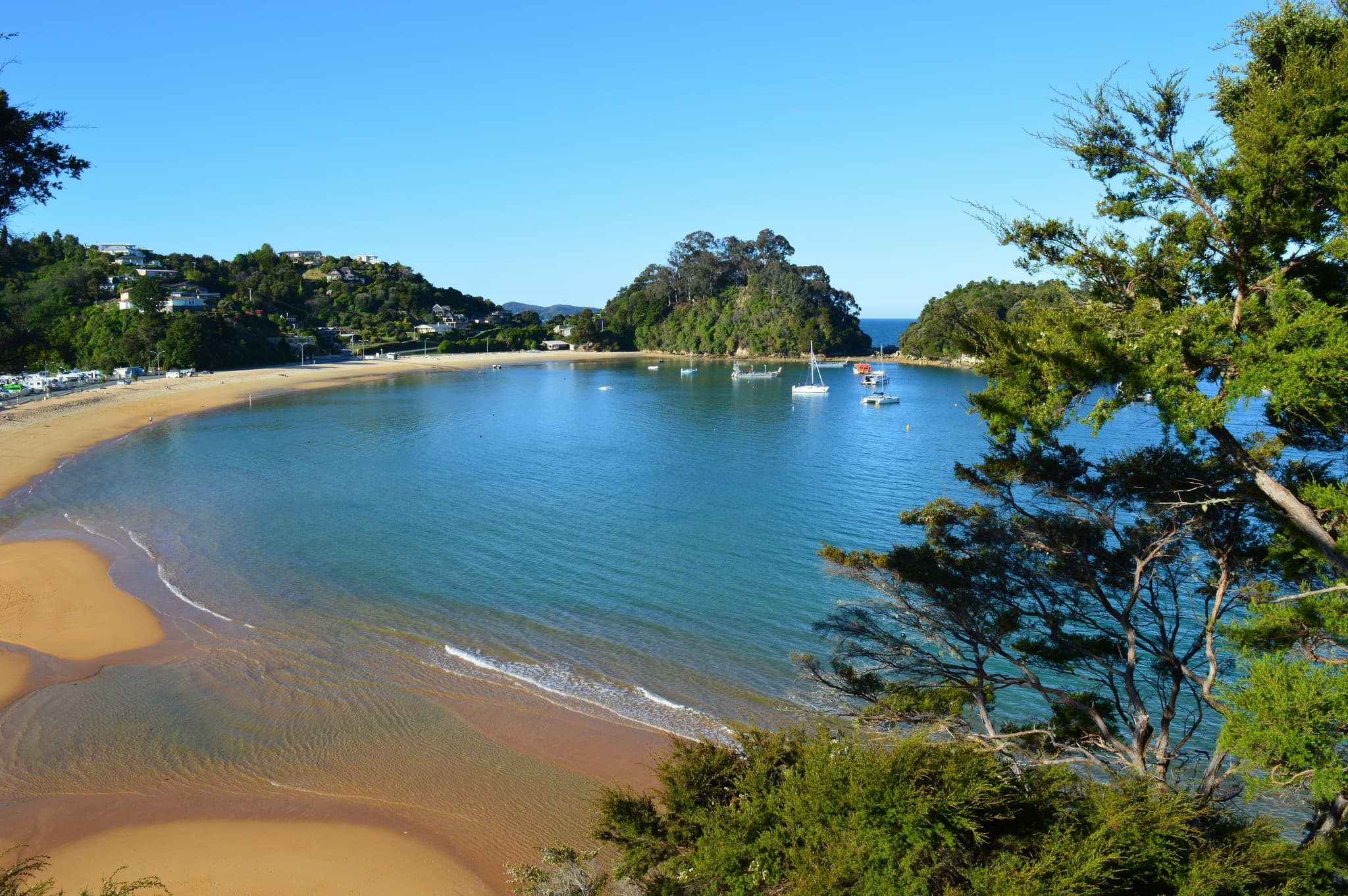
Kaiteriteri: the gateway to Abel Tasman
Kaiteriteri has the highest average sunshine hours in the country, and it shows the moment you arrive. Golden sand, clear water, and a relaxed holiday town feel that's popular with New Zealand families in summer. It also happens to be the main launch point for water taxis into Abel Tasman National Park, so you can combine a beach afternoon with a half day exploring golden coves like Anchorage and Torrent Bay that are only reachable by boat or on foot. The water here is about as calm as New Zealand's coastline gets, which is exactly why it works so well as a base for Abel Tasman.
Wharariki Beach: wild, remote, and worth the walk
At the very northwestern tip of the South Island, Wharariki Beach takes a twenty-minute walk across farmland to reach, and it's one of the few beaches on this list we'd tell you not to swim at. The currents are genuinely dangerous. What you're here for is the scenery: huge windswept dunes, sea caves, and the Archway Islands just offshore, a small group of rock formations that have ended up on more New Zealand calendars than almost anywhere else. Fur seals often haul out in the dunes between November and January, so keep a respectful distance if you spot one.
Planning to explore more of New Zealand on foot? Read our guide to the 10 best hikes in New Zealand for trails through mountains, forests and some pretty incredible coastal scenery too.
When to visit New Zealand’s beaches?
Summer, from December to February, gives you the warmest water and the longest days, but it's also when Cathedral Cove and Kaiteriteri get properly busy. October, November, March and April are the sweet spot if you want good weather without the queues, and swimming is still comfortable at most North Island beaches. If you're travelling solo, weekday visits outside school holidays are noticeably quieter, and most of the beaches here are perfectly manageable to explore alone!
A few things to weigh up before picking where to go:
North Island beaches have warmer water overall, more geothermal activity, busier over summer holidays.
South Island beaches have a sunnier microclimate around Nelson and Tasman, colder water further south.
Bring reef shoes for volcanic black sand beaches like Piha, which get hot and can have sharp rocks.
Always check tide times before Hot Water Beach and rip warnings before swimming at any west coast beach.
Season matters more here than in a lot of countries, so it's worth checking our full breakdown of the best time to go to New Zealand before you lock in flights, especially if beach weather is the whole point of your trip.
A few things worth knowing about the beaches in New Zealand
New Zealand's beaches are almost all free to access and refreshingly undeveloped, but that also means fewer facilities than you might expect. Toilets and cafés cluster around the well-known spots like Piha and Kaiteriteri, while places like Wharariki or Ninety Mile Beach have next to nothing nearby, so plan food and water in advance.
Surf lifeguards patrol popular beaches only during summer, and rip currents are a real risk at west coast beaches in particular, so always swim between the flags where they're present. Surf Life Saving New Zealand publishes a live list of which beaches are patrolled and when, which is worth checking the morning of your visit rather than assuming a lifeguard will be there.
Tide times matter more than you'd think here too, particularly at Hot Water Beach. MetService has a free tide chart tool that covers the whole coastline down to the hour.
Before you head to the beach, check:
Sun protection: the ozone layer is thinner over New Zealand, so sunburn happens faster than you'd expect, even on a cloudy day.
Driving: many of the best beaches sit at the end of gravel roads, so check your rental car's terms before heading off the main highway.
Marine reserves: swimming, kayaking and snorkelling are usually fine, but fishing is banned in reserves like Cathedral Cove's, so check signage first.
Ready to plan your New Zealand beach trip?
New Zealand has far more beaches than you could squeeze into one trip, so don't worry about trying to see them all. Pick a few that fit naturally into your route, leave some time for the smaller beaches you find along the way and make the journey part of it too. Once you've got your favourites, add them to the Guided app to see how they fit together on the map and plan your driving days around them. You can also browse routes from other travellers for ideas, and who knows, you might find a few beaches to add that weren't even on your list yet.
Enjoyed This Blog? Continue Reading!
There is more travel inspiration waiting for you on our blog. You can take a look below and start mapping out your next travel adventure!


