

New Zealand
New Zealand travel tips: Your complete guide to planning the perfect trip
A winding road along a deep blue lake, mist hanging low over the mountains, and suddenly a waterfall appears right beside the road: that could be your first moment in New Zealand. What many people don’t realise is how remote large parts of the country still are, with more sheep than people and long stretches where you can drive for hours without passing a town. Across just two islands you move from geothermal valleys in the North Island to glaciers and fjords in the south. What many Guided travellers tell us, is that the best trips are about choosing the right route and giving each region time. Read this New Zealand travel guide and you will know where to go, how long to stay, and what makes this country unlike anywhere else.
5 reasons to visit New Zealand
You will experience geothermal areas, fjords, beaches and mountains within one trip, just a few hours apart.
You can explore the country by car, with road tripping being the most practical way to reach remote places.
New Zealand brings outdoor activities close to you, from a short walk to full day cruises or hikes.
Every region shows Māori culture through language, traditions and daily life across both islands.
You will recognise places from Lord of the Rings, which was filmed here!
Best places to visit in New Zealand
The best places to visit in New Zealand are spread across both islands, which means your route matters more than the number of stops. From our experience, choosing a mix of nature, coast and culture gives you a much better overall trip.
Milford Sound
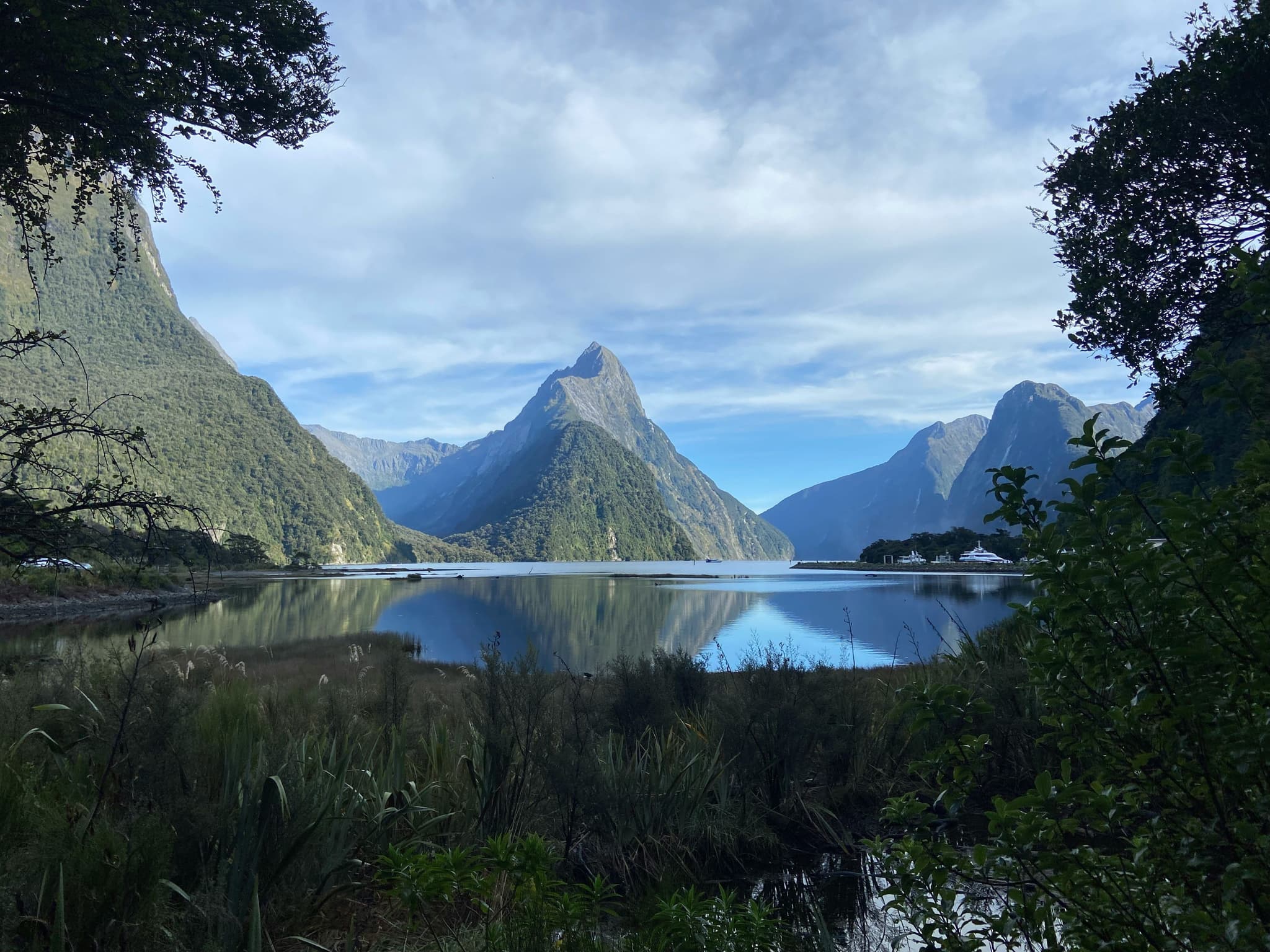
Milford Sound is one of the most talked-about places in New Zealand, and for good reason. What is nice about this area is how the fjord is surrounded by steep cliffs and waterfalls that change with the weather throughout the day. You probably didn’t know yet that rainfall here is very high, which is why waterfalls appear everywhere after a short rain shower. Many people visit on a full day trip from Te Anau, though staying nearby gives you more time to explore early in the morning. We recommend taking a boat cruise to really see the scale of the fjord from the water.
Queenstown
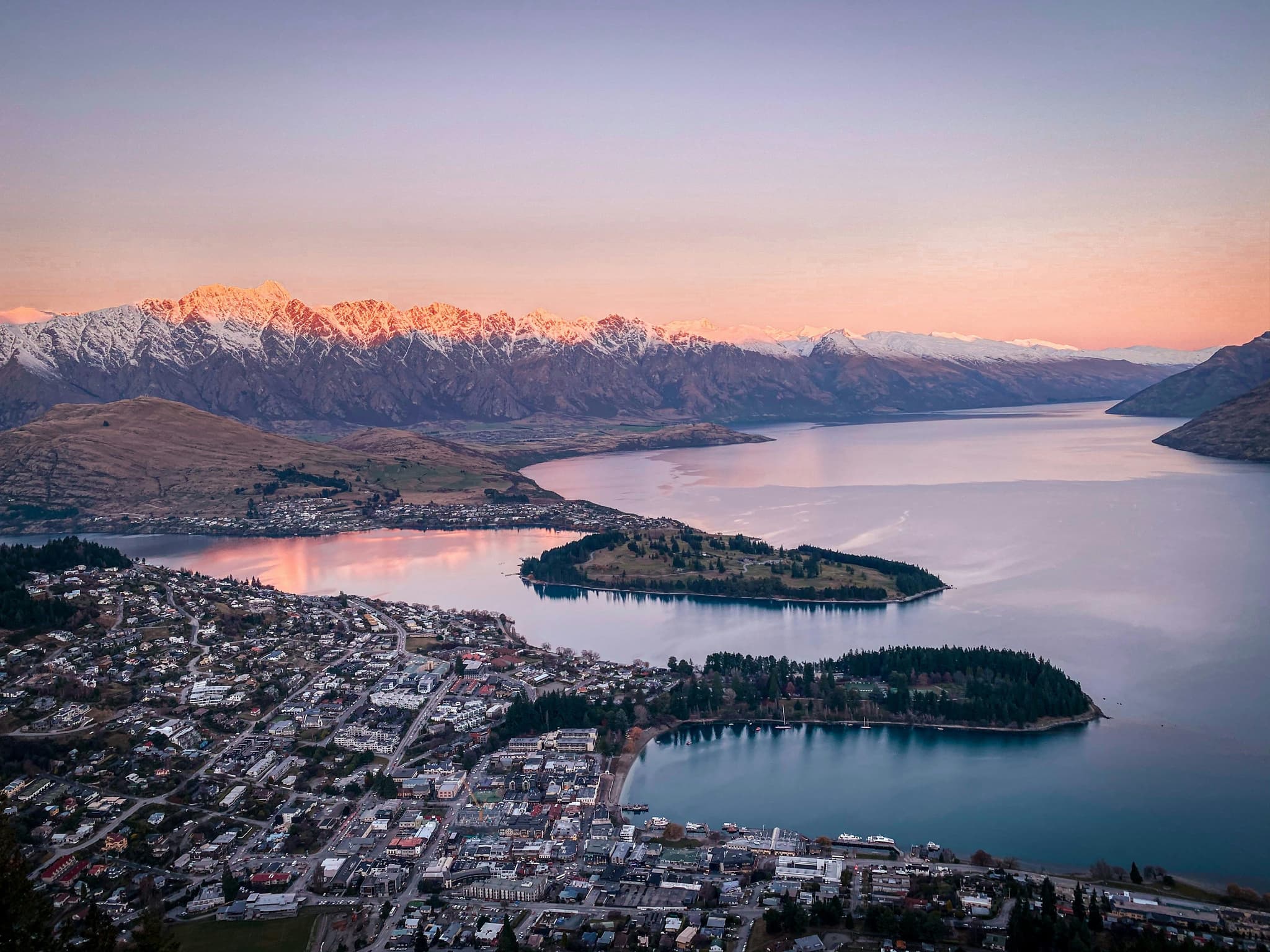
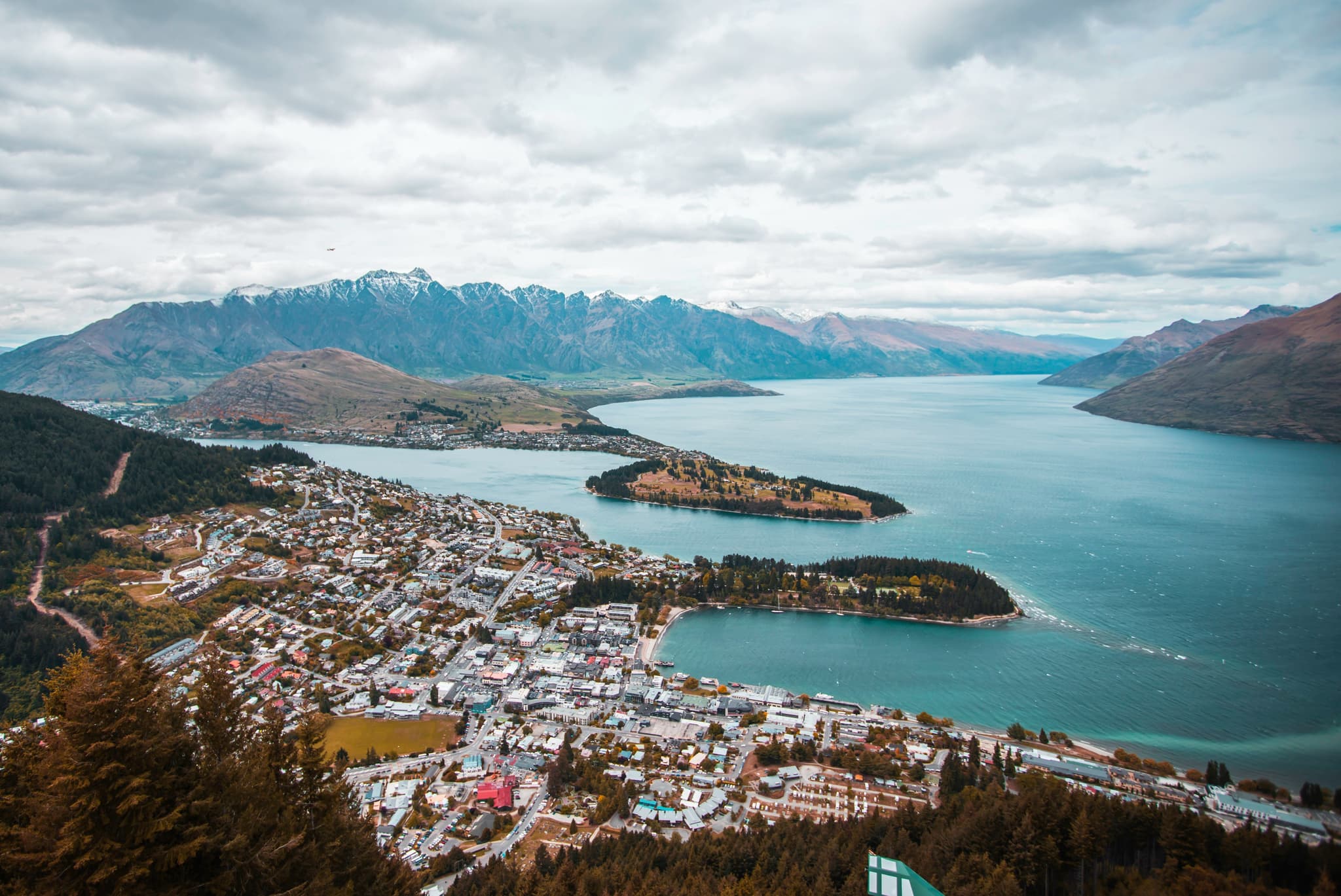
What is nice about Queenstown is that it works for almost every type of trip, even without doing extreme activities. Surrounded by mountains and Lake Wakatipu, the town acts as a base for day trips and longer routes across the South Island. You can use Queenstown as a starting point for exploring nearby areas rather than staying only in town. This place has incredible options for short walks, lake views and nearby drives. We recommend staying at least two nights so you are not just passing through.
Abel Tasman National Park
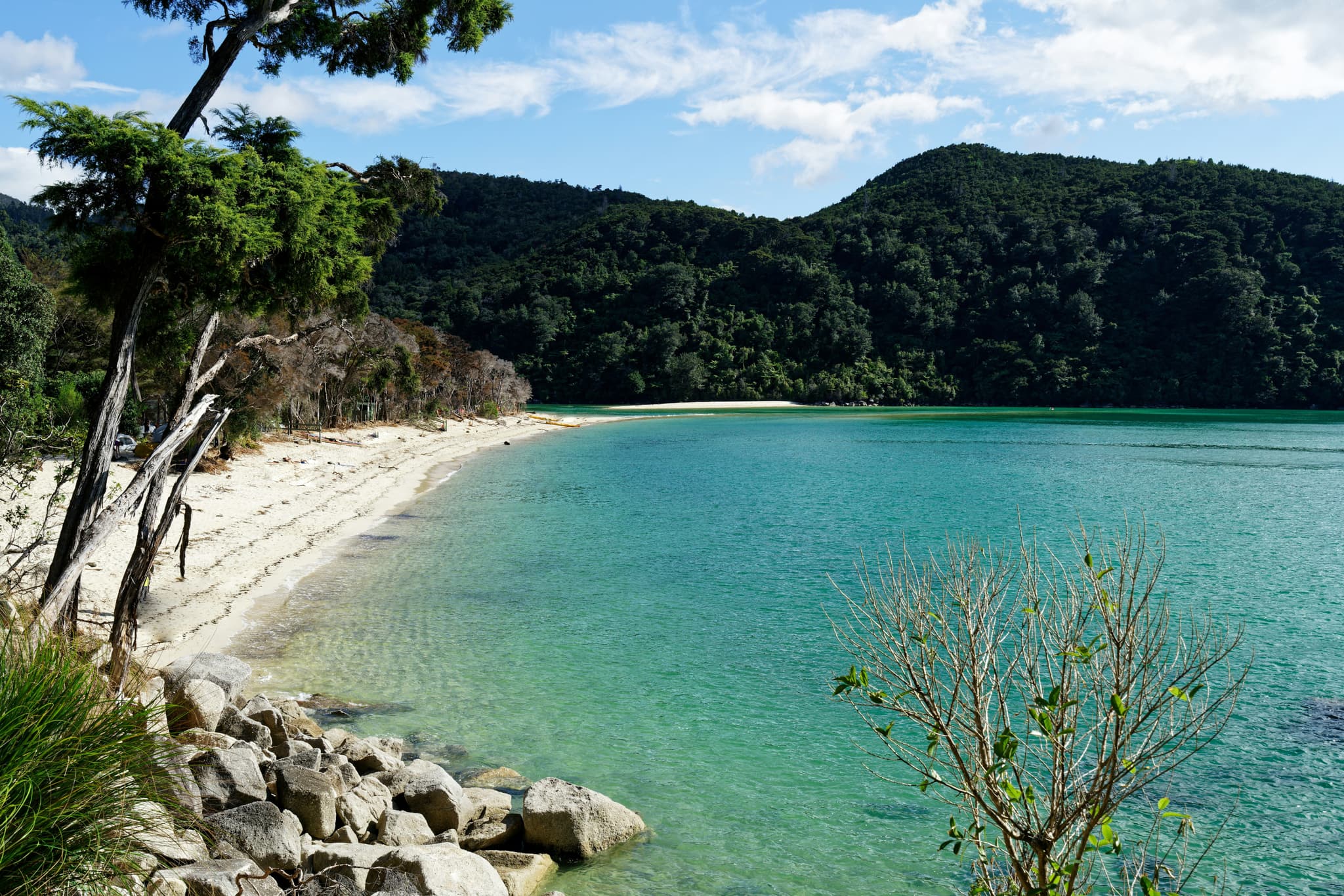
Abel Tasman National Park shows a completely different side of New Zealand compared to the south. What is nice about this park is the combination of golden beaches, clear water and coastal walking tracks. The Abel Tasman Coast Track stretches about 60 km, and you can walk sections of it with the help of water taxis. Many Guided travellers choose kayaking here, since it allows you to explore bays that are not reachable by road. We recommend staying at least two nights to enjoy both walking and time on the water.
Rotorua and Taupō
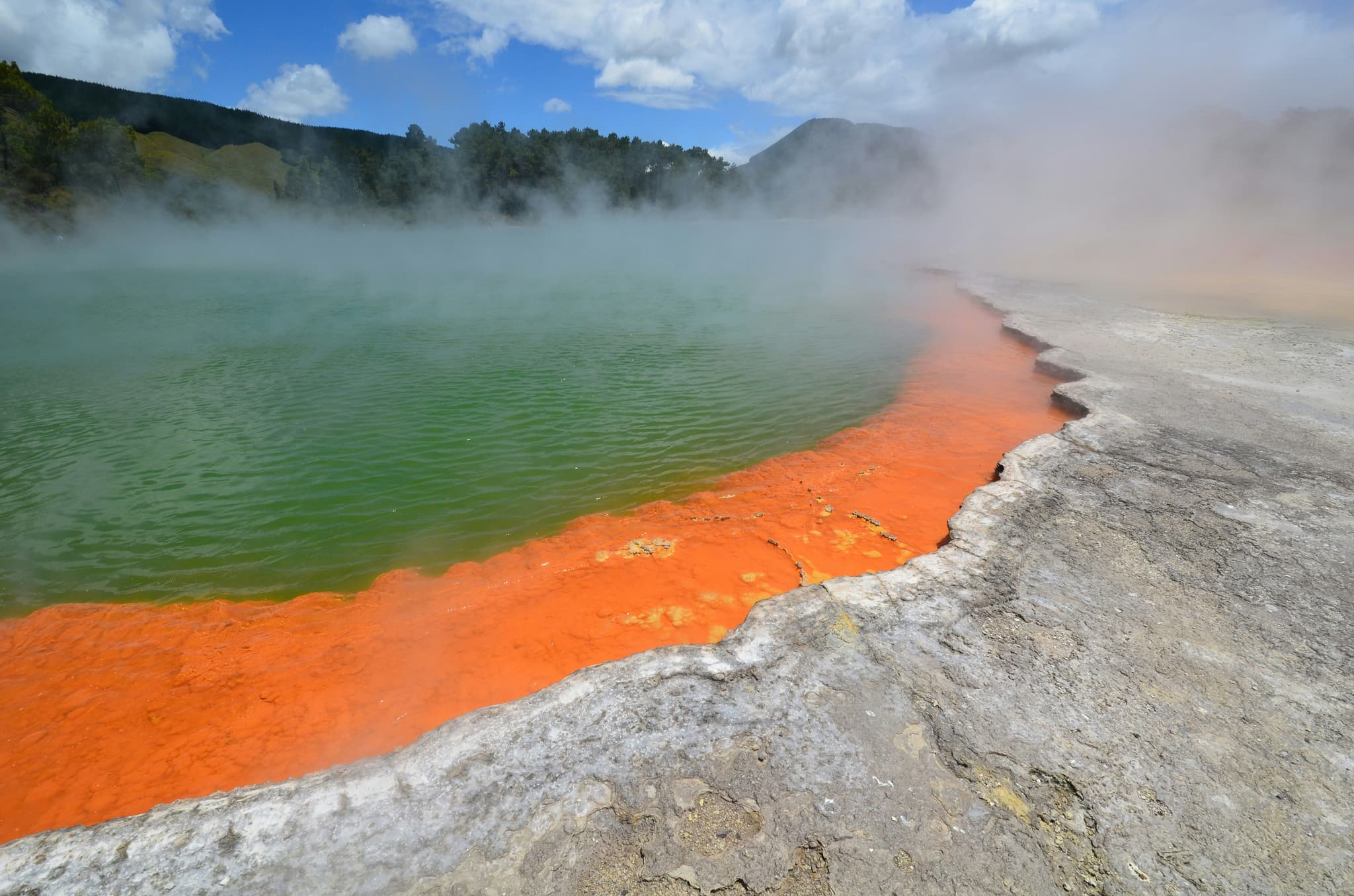
Rotorua and Taupō work well together because they show two very different sides of the North Island within a short distance. Rotorua is known for geothermal areas, hot pools and Māori culture, while Taupō sits on the edge of the country’s largest lake. You probably didn’t know yet that Lake Taupō was formed by a massive volcanic eruption thousands of years ago! We recommend staying in both locations rather than choosing just one.
Bay of Islands
What is nice about the Bay of Islands is the slower coastal setting with more than 140 small islands spread across the water. Paihia works as a base, with boat trips, dolphin spotting and access to nearby beaches. This place has incredible opportunities for sailing and exploring smaller coves. And did you know this region played a key part in New Zealand’s early history with the signing of the Treaty of Waitangi? We recommend adding a day trip to Cape Reinga if you have extra time, it is one of the most unique spots in the far north of the North Island. Here you can stand at the point where the Tasman Sea and Pacific Ocean meet, walk up to the lighthouse and follow short walking paths along the cliffs with wide ocean views.
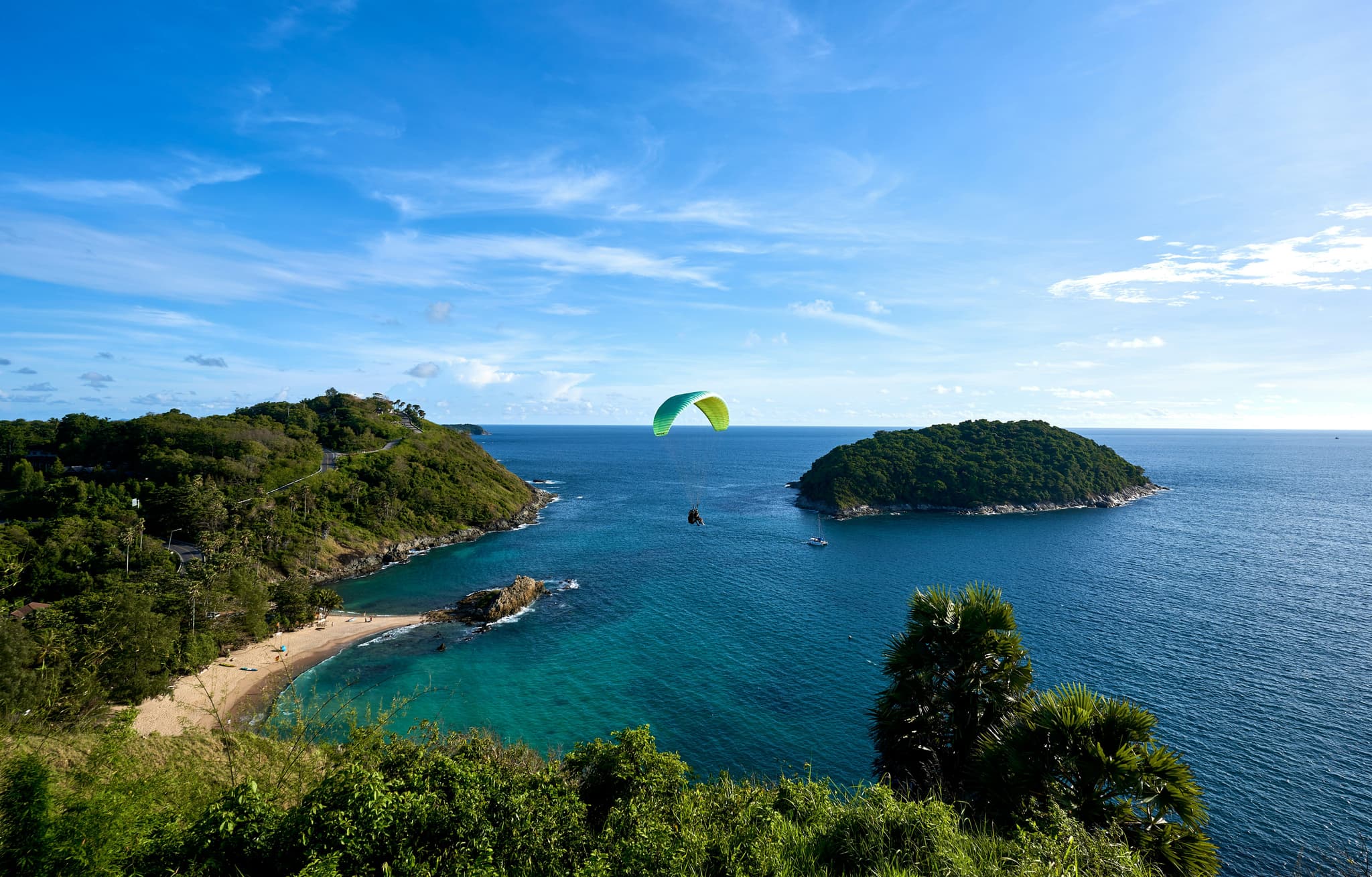
Piha Beach and Auckland’s west coast
Piha Beach is one of the easiest ways to experience nature close to a major New Zealand city, yet it feels completely different from urban areas. Black sand, strong waves and Lion Rock give the beach a wild character that stands out from the east coast. The currents here can be strong, so swimming is only advised in designated areas. We recommend timing your visit around sunset for the best light.
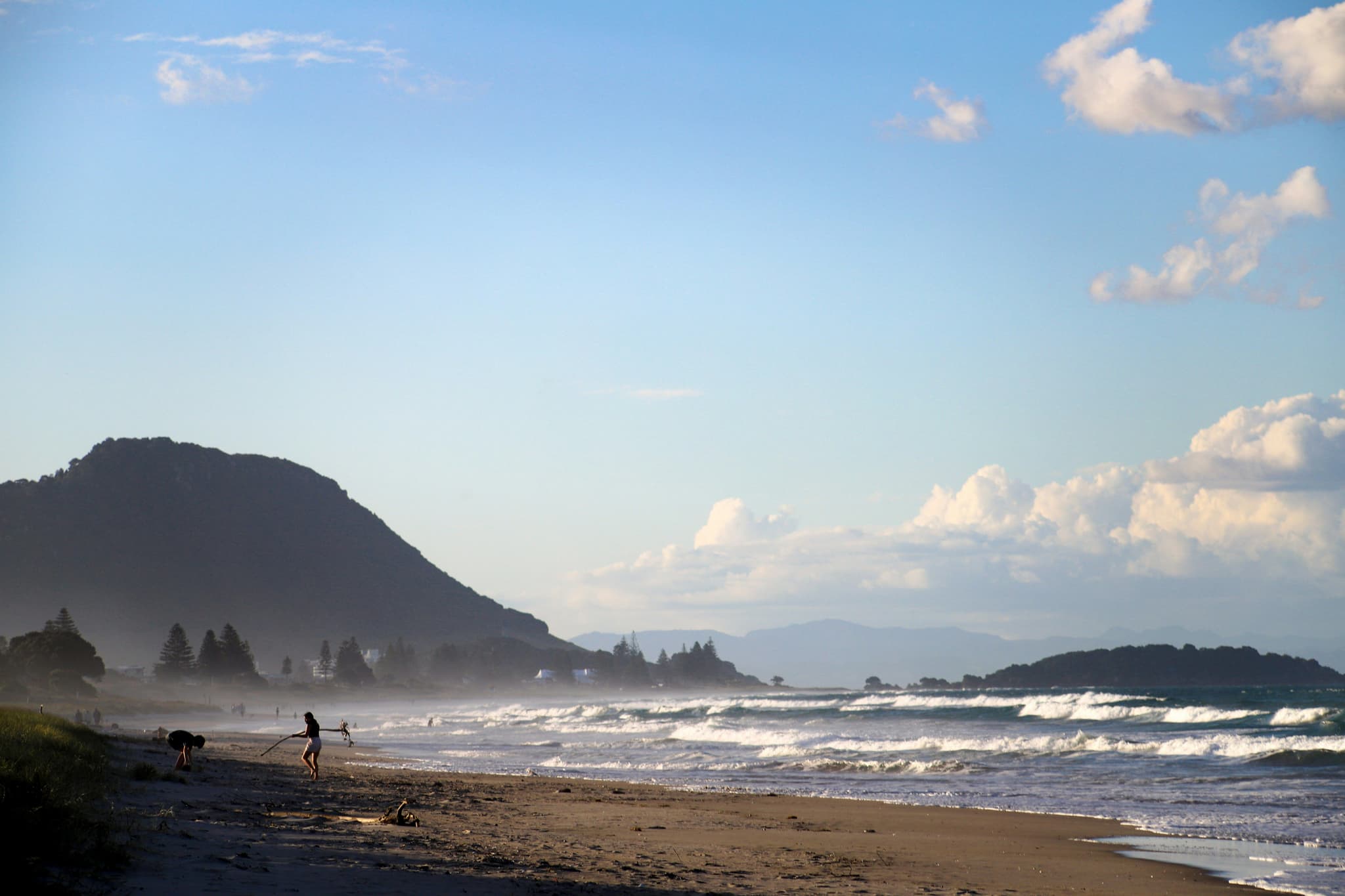
How long do you need in New Zealand? The ideal New Zealand trip itinerary
Many people underestimate how long they need in New Zealand, mainly because distances look shorter on a map than they actually are. For many trips to New Zealand, two or three weeks is enough.
2 week New Zealand itinerary
Two weeks works best when you stay on one island and avoid long travel days between distant regions.
Day 1-2: Auckland
Day 3: Piha Beach or Coromandel
Day 4-5: Rotorua
Day 6: Taupō
Day 7-9: Tongariro area or east coast
Day 10-12: Wellington
Day 13-14: buffer days or return
3 week New Zealand itinerary
Three weeks allows you to see both islands without turning your trip into constant travel days.
Day 1-2: Auckland
Day 3-5: Bay of Islands or Rotorua and Taupō
Day 6-7: Wellington
Day 8: Ferry to South Island
Day 9-11: Abel Tasman National Park
Day 12-15: West Coast or Wānaka
Day 16-18: Queenstown
Day 19-21: Te Anau and Milford Sound
Now sure how to start planning? Use our Guided app to build your own route, or use routes created by fellow travellers!
Want more inspiration? Check out the following trips

When to visit New Zealand?
Did you know the seasons in New Zealand are the opposite of Europe and the UK? When it is summer here, it’s actually winter there, with December bringing warm beach days and July turning into ski season.
Summer: December to February: Warm temperatures and long days make this the best season for beaches and outdoor trips, although it’s also the busiest time of year.
Autumn: March to May: Mild weather, fewer visitors and generally good driving conditions make autumn a great time for exploring both islands.
Winter: June to August: Colder weather brings snow to alpine regions and marks the main ski season, particularly on the South Island.
Spring: September to November: Warmer days, blooming landscapes and smaller crowds make spring great for road trips, although the weather can change quickly.
Not sure when to go? We’ve put together a guide to help you choose the best month to visit New Zealand for your trip.
Where to stay: north or south Island of New Zealand
Each area has its own character and distances between them can be longer than expected, so where you base yourself will shape how your trip flows.
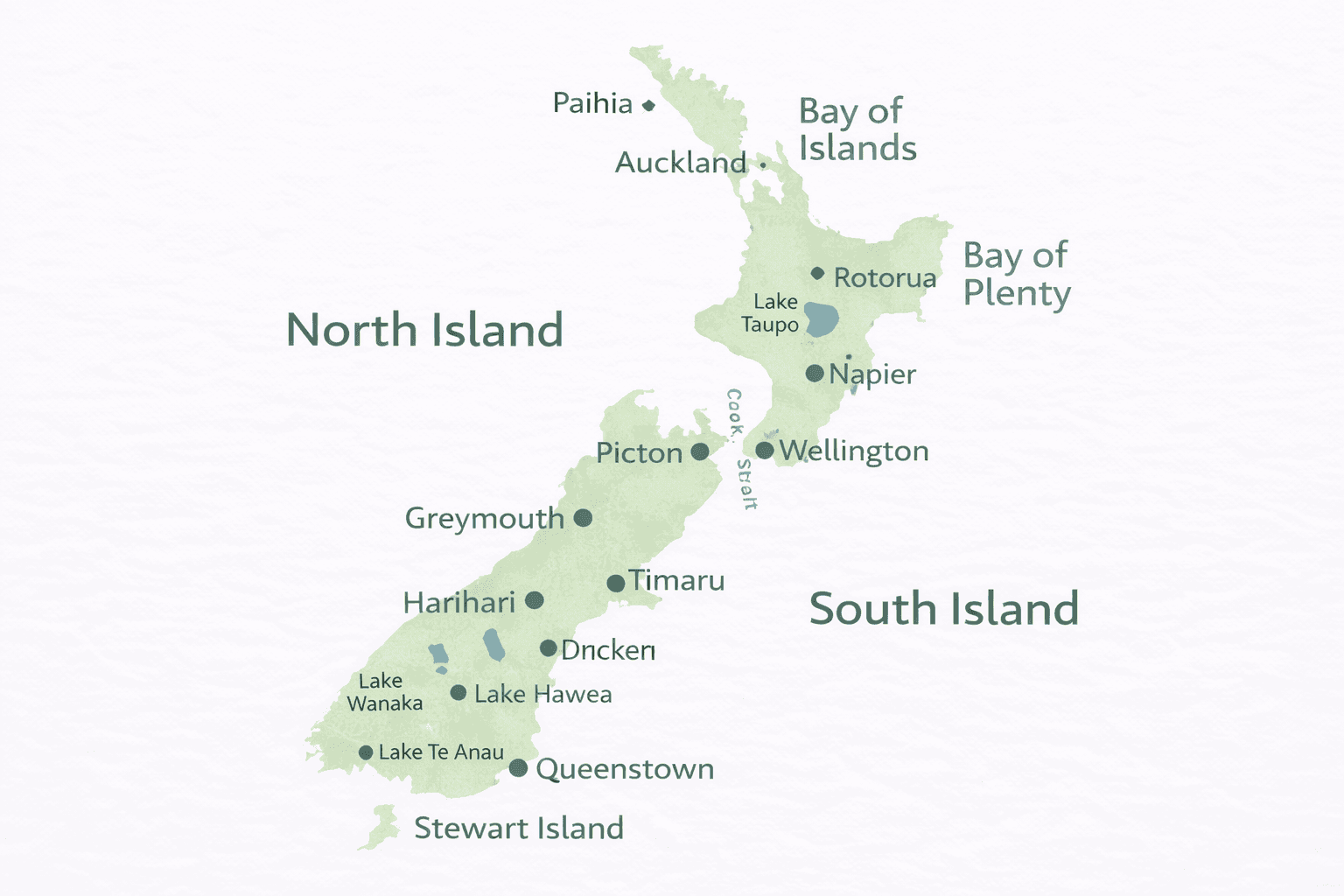
Northern Island, New Zealand
The North Island works well with a few strong bases instead of changing accommodation every night. What is nice about Auckland is that it gives you a starting point with easy connections to nearby coastal areas and the west coast. Rotorua and Taupō New Zealand form a central base, ideal for geothermal areas and lake activities. And then there is the Bay of Plenty New Zealand, known for its coastal towns and warmer climate. We recommend choosing two or three regions and building your stay around those.
Wondering what else to see on the North Island? Our North Island New Zealand guide covers the best places, attractions and itinerary ideas to help you plan your route.
South Island, New Zealand
The South Island is larger in distance, which makes choosing the right bases even more relevant. What makes Queenstown a strong option is how many day trips you can do from one place, including routes towards Te Anau and Milford Sound. Te Anau itself is a quieter alternative and works well for early access to Fiordland. You can also choose to stay near Abel Tasman National Park, which gives you a completely different stay near the coast with beaches and walking tracks.
Planning to explore the South Island? Our South Island New Zealand guide helps you choose the best places, scenic drives and stops for your itinerary.
Guided tip: aim for stays of at least two nights per location to avoid constant packing.
New Zealand cities to visit
Cities in New Zealand are often used as starting points for road trips. We recommend adding one to two cities to your itinerary, like:
Auckland
Auckland is the largest new zealand city and the main international gateway. What is nice about staying here is how quickly you can reach beaches, islands and places like Piha New Zealand for a day trip. You can explore the harbour, visit nearby islands or simply recover from your flight before starting your route. One or two nights is usually enough to see everything.
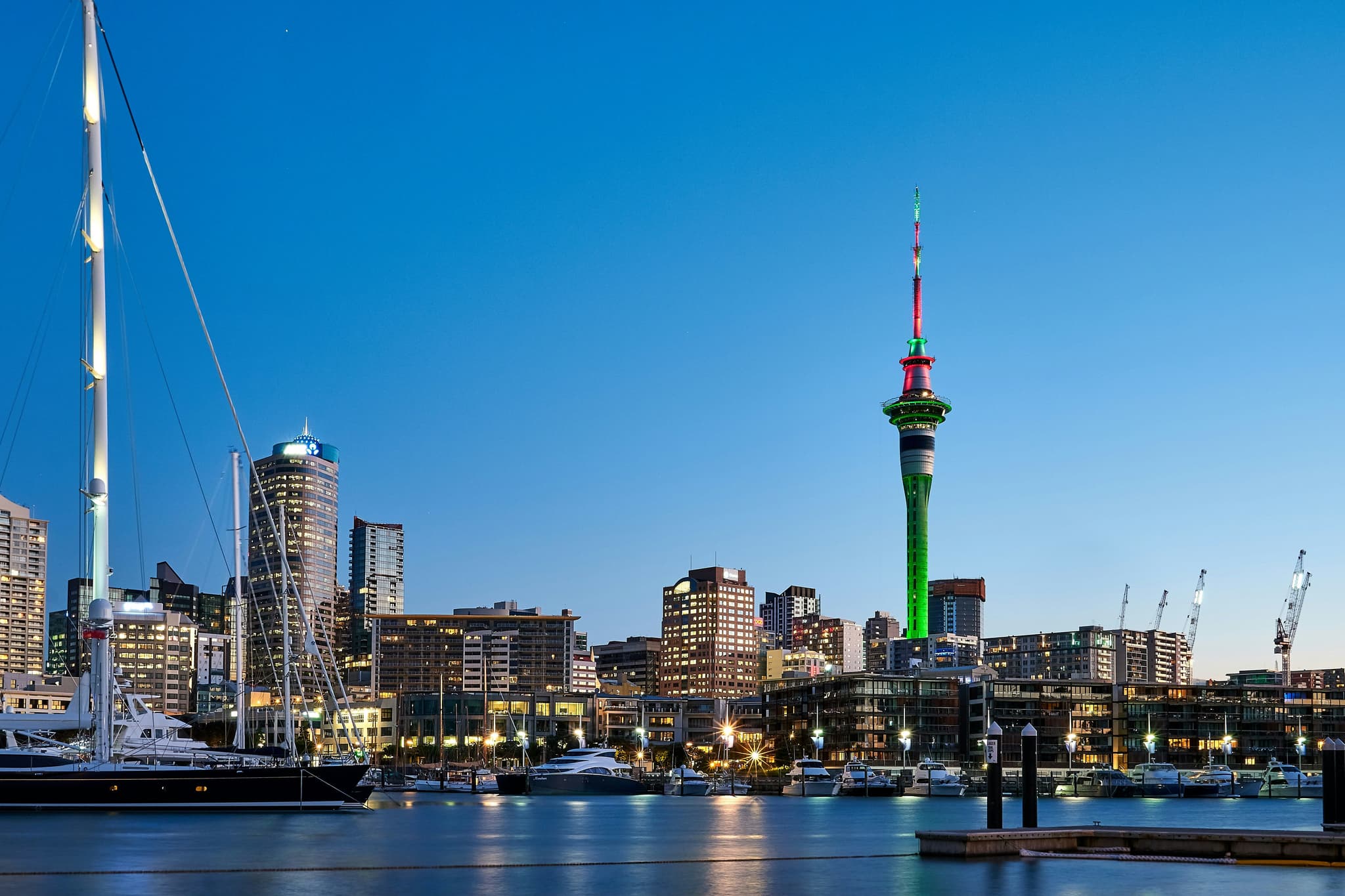
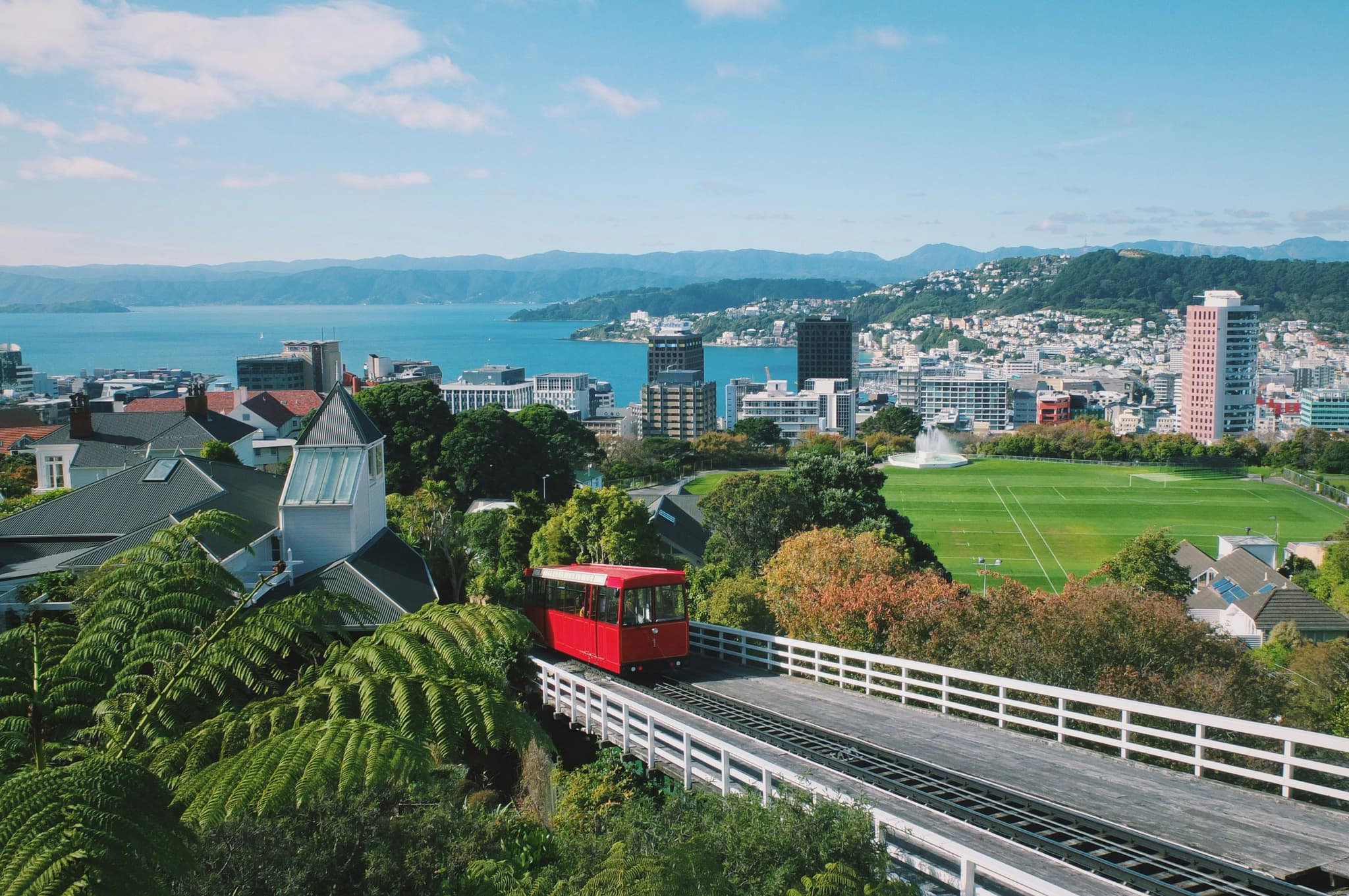
Wellington
Wellington has a different character compared to Auckland, with a focus on culture, food and museums. What makes this city stand out is how compact it is, which makes it easy to explore in a short time. Many routes include Wellington as the connection point between the North Island and South Island via the ferry. We recommend stopping here before crossing to Picton.
Queenstown
Queenstown is one of the most well-known towns in the country and a key stop in many routes. Where is Queenstown located in New Zealand often comes up, and the answer is on the South Island, near Lake Wakatipu and surrounded by mountains. It works well as a base for several days, with easy routes towards Te Anau and Milford Sound. From our experience, this is one of the most convenient bases on the South Island.
Guided tip: Supermarkets like Countdown and New World are easy spots to grab affordable meals instead of eating out every day.
What to do in New Zealand? Fun local activities
Besides the places you visit, the best moments often come from the things you actually do along the way. From what we hear again and again, it is those small experiences, like getting on the water, trying something new or stopping somewhere unexpected, that really stay with you.
Take a cruise in Milford Sound: you sit on the boat, waterfalls appear next to you and seals rest on the rocks along the way
Go kayaking in Abel Tasman National Park: you paddle along the coast and stop at small beaches where there are no roads
Walk part of a Great Walk: even a short walk gives you a strong impression of the nature here without needing to be experienced
Visit geothermal parks and hot pools: steam rises from the ground and you can relax in warm water after a long drive
Try surfing at Piha Beach: black sand, strong waves and Lion Rock right in front of you
Take a helicopter flight: a short helicopter ride shows you areas that would take days to reach by road
Go wine tasting on the east coast: small vineyards where you can sit outside and try local wines
Planning your route around mountains, lakes and national parks? Have a look at our 10 best hikes in New Zealand to see which trails fit naturally into your trip.

Ready to map out your New Zealand route?
Now that you know the best places to visit in New Zealand, which areas to stay, and fun things to do in New Zealand, you can start thinking about your own route. Creating an itinerary is very easy in the Guided app, where you can create your own route or use routes shared by other travellers for free!
Māori culture: something you will see everywhere
Aotearoa, that is the name you will hear often once you arrive, and it already tells you something about the country. You will notice it in small ways at first, on road signs, in greetings, in names that are hard to pronounce at the beginning but slowly start to make sense. Māori culture is not something you only visit in a museum, it is part of daily life, from the way people speak to how stories are told about the land. In places like Rotorua you can experience this more directly, with traditional performances and meals, but even outside those areas it is always there in the background. At the same time, you will see traces of European history in towns, farms and cities, which creates a mix that feels quite unique.
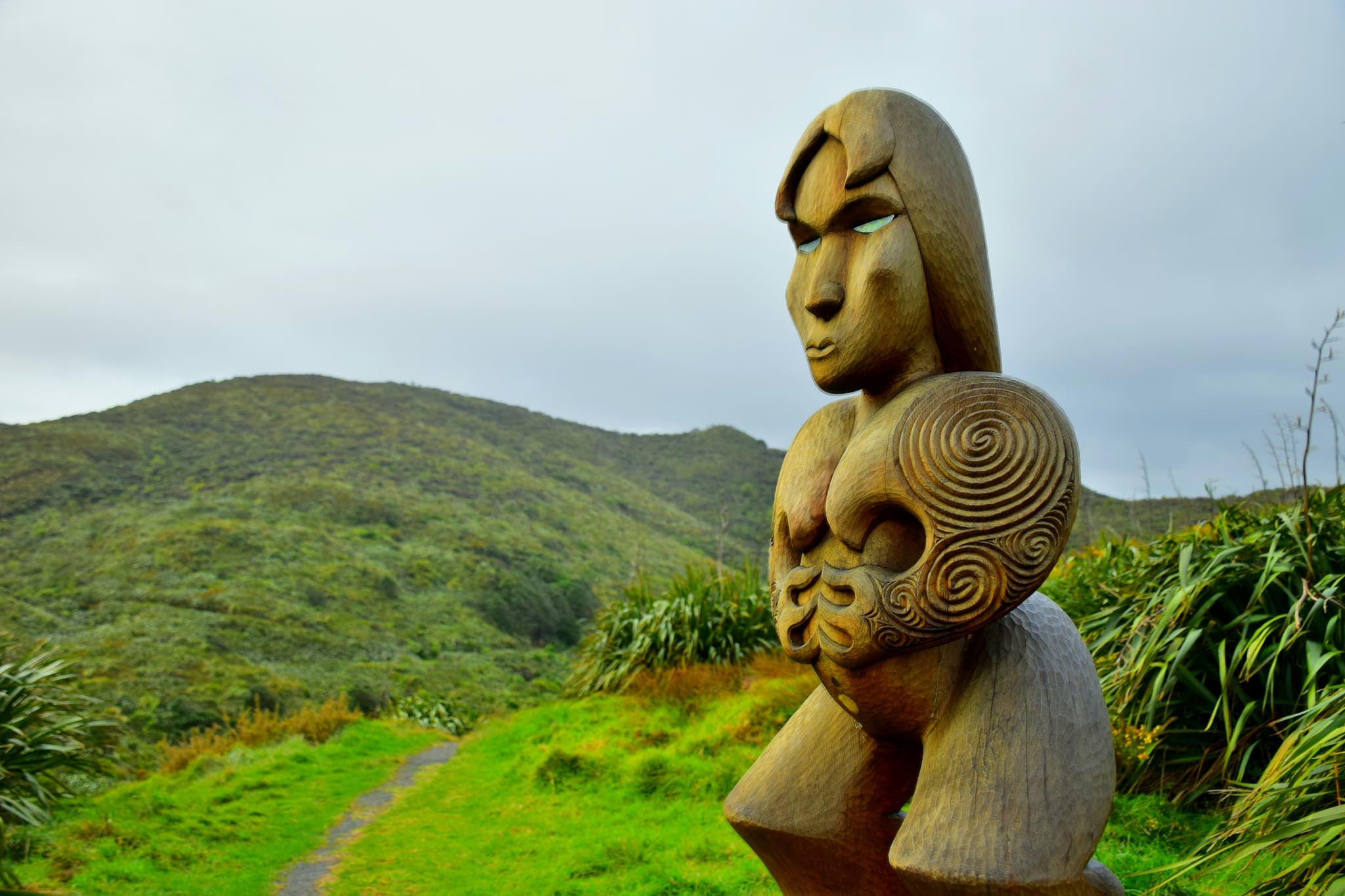
And did you know Lord of the Rings was filmed across both islands: you can visit Hobbiton in Matamata on the North Island, explore Tongariro National Park as Mordor, and see areas around Queenstown and Fiordland used for scenes near Milford Sound!
Foods to try in New Zealand
Food here is simple, local and often connected to where you are in the country. These dishes we recommend trying when you go on a trip to New Zealand.
Green-lipped mussels: often served in coastal towns, fresh and straight from the water
Crayfish: best known in Kaikōura, where you eat it close to where it was caught
Roast lamb: a classic dish you will see on many menus across both islands
Fish and chips: grab a takeaway and eat it by the water, that is how most people do it
Pavlova: a light dessert you will find in cafés and restaurants
Hokey pokey ice cream: a local favourite you will see in almost every ice cream shop
Hāngī: a traditional Māori meal, usually part of a cultural experience in Rotorua
How to travel around New Zealand
Transport choices in New Zealand shape your entire trip, more than in many other destinations. From what we hear from Go-Guided travellers, having your own vehicle often changes the experience completely.
Renting a car
A rental car gives you the most freedom to explore places between major stops. What is nice about driving yourself is that you can stop anywhere along the route, which is where many of the best views appear. Distances may look short on the map, though roads are often winding and travel times are longer than expected. We recommend checking official journey planners before setting off to avoid underestimating your drive.
Planning to explore by car? Our New Zealand road trip guide explains how to choose the right route, plan your driving days and make the most of your time.
Campervan travel
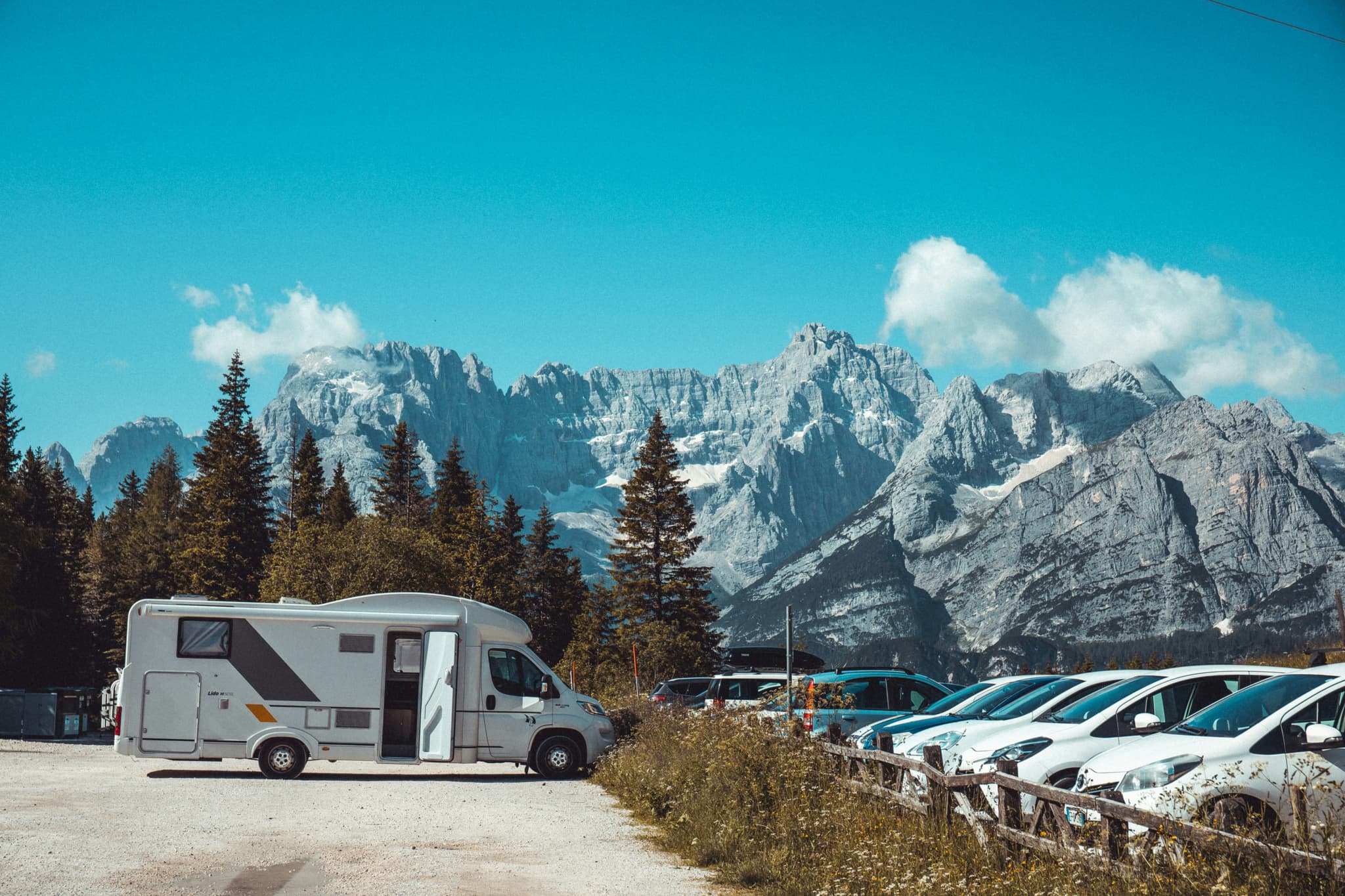
Campervans are one of the most popular ways to travel to New Zealand. What makes this option attractive is that transport and accommodation are combined, which works well for longer trips to New Zealand. Campsites are spread across the country, though you need to use designated areas and follow local rules. From our experience, this style of travel gives more freedom but requires a bit more preparation.
Free or very cheap campervan relocation deals
Some travellers reduce costs by relocating vehicles for rental companies. What is interesting about these deals is that you can sometimes rent a campervan for as little as one dollar per day, depending on the route. These offers are time-sensitive and fixed between locations, so they work best when your plans are flexible. We recommend checking platforms like Transfercar or Imoova.
Domestic flights and buses
Flights and buses connect most major regions across the country. What makes flights useful is the ability to cover long distances quickly, for example between the North and South Island. Buses and organised tours are also available, though they give less freedom compared to driving yourself. From our experience, these options work best when time is limited.
Go-guided tip: choose a car or campervan if you want to explore smaller stops between destinations.
Looking for more unique places, trips and activities?
Subscribe to our Guided Newsletter for more travel inspiration.
Costs of a trip to New Zealand
New Zealand is not the cheapest destination, and that becomes clear once you start looking at flights and transport. From what we see with many Go-Guided travellers, your budget mainly depends on how you choose to travel around and where you stay.
Food & Drink

Coffee
Coffee: 4 – 7 NZD
Lunch
Lunch: 15 – 30 NZD
Beer
Beer: 8 – 12 NZD
Accommodation

Hotels
150 – 300 NZD
Airbnb
120 – 250 NZD
Hostel dorm
30 – 60 NZD
Transport

Trains
50 – 150 NZD
Public Transport
3 – 8 NZD
Car Rental
60 – 120 NZD
Attractions

Museums
10 – 25 NZD
Big Attractions
50 – 200 NZD
Theatre
40 – 120 NZD
Practical travel tips for New Zealand
When going to New Zealand, travel tips can help you plan your trip with ease. Let’s take a look at what you need to know before you travel to New Zealand.
✔ Plan slower than the map suggests
New Zealand looks compact on the map, yet distances take longer than expected once you are on the road. What surprises many people is how winding roads and frequent stops turn a short drive into a full day. We recommend keeping your daily driving time limited so you still have energy to explore.
✔ Check driving rules before you land
Driving here comes with a few rules that may be different from what you are used to. Cars drive on the left side of the road. Non-English licences often require an official translation, which you should arrange before departure. We recommend reading the official NZTA visitor driving advice so you know what to expect from day one.
✔ Use campsites properly in a campervan
Campervan travel works well in New Zealand, though there are clear rules about where you can stay overnight. Designated campsites and holiday parks are spread across the country, and dump stations are used for waste disposal. We recommend downloading a campsite app like Rankers Camping before your trip to find approved spots easily.
✔ Solo travel in New Zealand
Many of you wonder if New Zealand is appropriate for solo travel. With clear routes and many organised activities you can join, many people travel alone here. It is easy to meet others along the way. At the same time, long driving days require extra attention, since distances can be tiring after a flight. We recommend spacing out your route more when travelling solo.
✔ Sort visas and travel documents early
Entry requirements depend on your nationality, and this is something to check early. Many visitors need an NZeTA, which allows you to stay for a set period without a full visa. UK citizens, for example, can stay up to six months with the right approval. We recommend using the official Immigration New Zealand website to confirm your situation before booking anything.
Fun facts about New Zealand
New Zealand has a lot of small details you don’t always expect before arriving. Some of them you’ll notice straight away, others only once you’ve spent a bit more time there.
Coffee culture is strong, even in small towns you will find good cafés
Māori call the country Aotearoa, which means land of the long white cloud
Sheep outnumber people by several times, which you will quickly notice when driving through rural areas
Abel Tasman National Park is one of the smallest national parks, yet one of the most visited
Piha Beach near Auckland has black sand!
The country sits on two tectonic plates, which explains geothermal areas and volcanic activity
You will often see boxes at farms where you can buy fruit or eggs
Some of these moments will probably become part of your own trip along the way. New Zealand stands out in its own way, with days that can take you from mountain landscapes and national parks to coastlines and quiet lakes. Each stop brings something different, from outdoor activities to small towns and wide open nature. So New Zealand suits you well if you like road trips, hiking, and big natural scenery.
Create your own route for free!
We hope this New Zealand travel guide has given you a clear starting point for your trip. Stay tuned for more inspiration, itineraries and practical tips to help you shape your perfect adventure. And don’t forget to check out our Guided app, where you can create your own route or use routes shared by other travellers for free!
FAQs about trips to New Zealand
- Where is Queenstown located in New Zealand?
Queenstown is on the South Island, near Lake Wakatipu and surrounded by mountains. It is one of the main bases for exploring nearby regions such as Te Anau and Milford Sound.
- What is New Zealand famous for?
New Zealand is known for its nature, outdoor activities and cultural heritage. Many people also recognise it from Lord of the Rings filming locations spread across the country.
- Do you need a visa to visit New Zealand?
Entry depends on your nationality, with many visitors needing an NZeTA instead of a full visa. Official immigration tools help you check exactly what applies to your situation.
- Do you need travel insurance to New Zealand?
Travel insurance to New Zealand is strongly recommended due to remote areas and the cost of unexpected situations. This becomes even more relevant when your trip includes driving or outdoor activities.