
Iceland in summer: what to do, see and experience
By Eva Alkemade
Jun 23, 2026
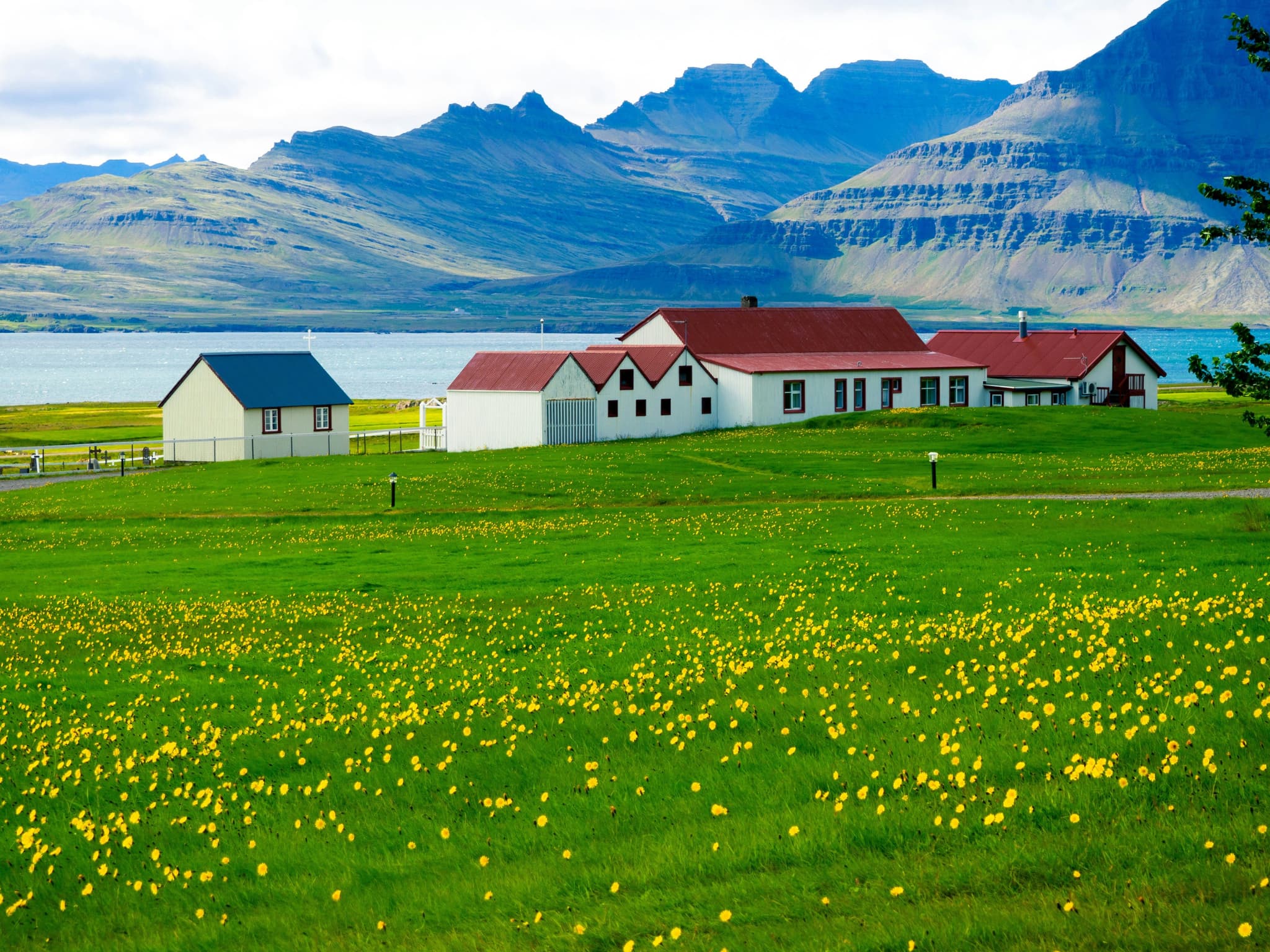
Most people picture Iceland as cold, dark and relentlessly wintry, which is fair enough, but it tells you almost nothing about what the country is like between June and August. You can be hiking in a light jacket at 11pm in full golden daylight, then standing next to a glacier an hour later wondering where you left your extra fleece. The midnight sun is the thing nobody is quite prepared for, and that is before you even get to the fact that summer opens up entire regions, like the Highlands, the Westfjords, remote F-road routes, that are completely unreachable the rest of the year. This guide covers what to do in Iceland in summer across June, July and August, with travel tips for each month.
The midnight sun in Iceland: what it is actually like
Nobody really tells you how strange it is until you experience it yourself. You walk outside at 1am and the sky is still glowing gold, the birds are singing, and your brain simply refuses to accept that it is the middle of the night. That is the midnight sun, and it is one of the genuinely unusual things about Iceland in summer that no photograph fully prepares you for.
When does it happen and how long does it last?
The peak is around the summer solstice on 21 June. In Reykjavík on that date, the sun sets at around 23:58 and rises again at 03:05, with the sky never actually going dark in between. Head further north to Akureyri, and it barely dips below the horizon at all. The midnight sun is active from roughly late May to early August, fading gradually in either direction from the solstice.
How to use the long days properly
The most practical thing the midnight sun gives you is time, and the smartest way to use it is to visit popular sights late in the evening. Gullfoss, Seljalandsfoss and Þingvellir have no opening hours and are open 24 hours a day, so heading there at 10pm or 11pm in June means you get that extraordinary golden light with a fraction of the daytime visitor numbers. Many Guided travellers do not realise this is an option until they are already there.
A few things worth knowing before you go:
Restaurants, shops and petrol stations still close at normal times, so do not assume the daylight means everything is open
Pack a proper eye mask, blackout curtains are not guaranteed in guesthouses or campsites
The midnight sun can genuinely disrupt your sleep cycle for the first few days, give your body time to adjust
Photography in Iceland during this time of year is extraordinary, the golden light that most photographers wait years for is just permanently there from about 10pm to 3am
Fun Fact: On the summer solstice in Reykjavík, there are roughly 21 hours of direct sunlight. In Akureyri, 378km further north, the sun barely dips below the horizon at all on the longest day.
Road trips and the ring road in Iceland summer
Summer is genuinely the best time of year to drive Iceland, and the ring road is the most logical way to structure a longer trip. All roads are open, the weather is as stable as it gets (which still means a waterproof and some warm clothing, but at least the roads are clear), and the long days mean you can cover far more ground without any pressure. The Ring Road, Route 1, loops the entire country and connects the South Coast, the glacier lagoon, the East Fjords, North Iceland and the Snæfellsnes Peninsula in one continuous circuit.
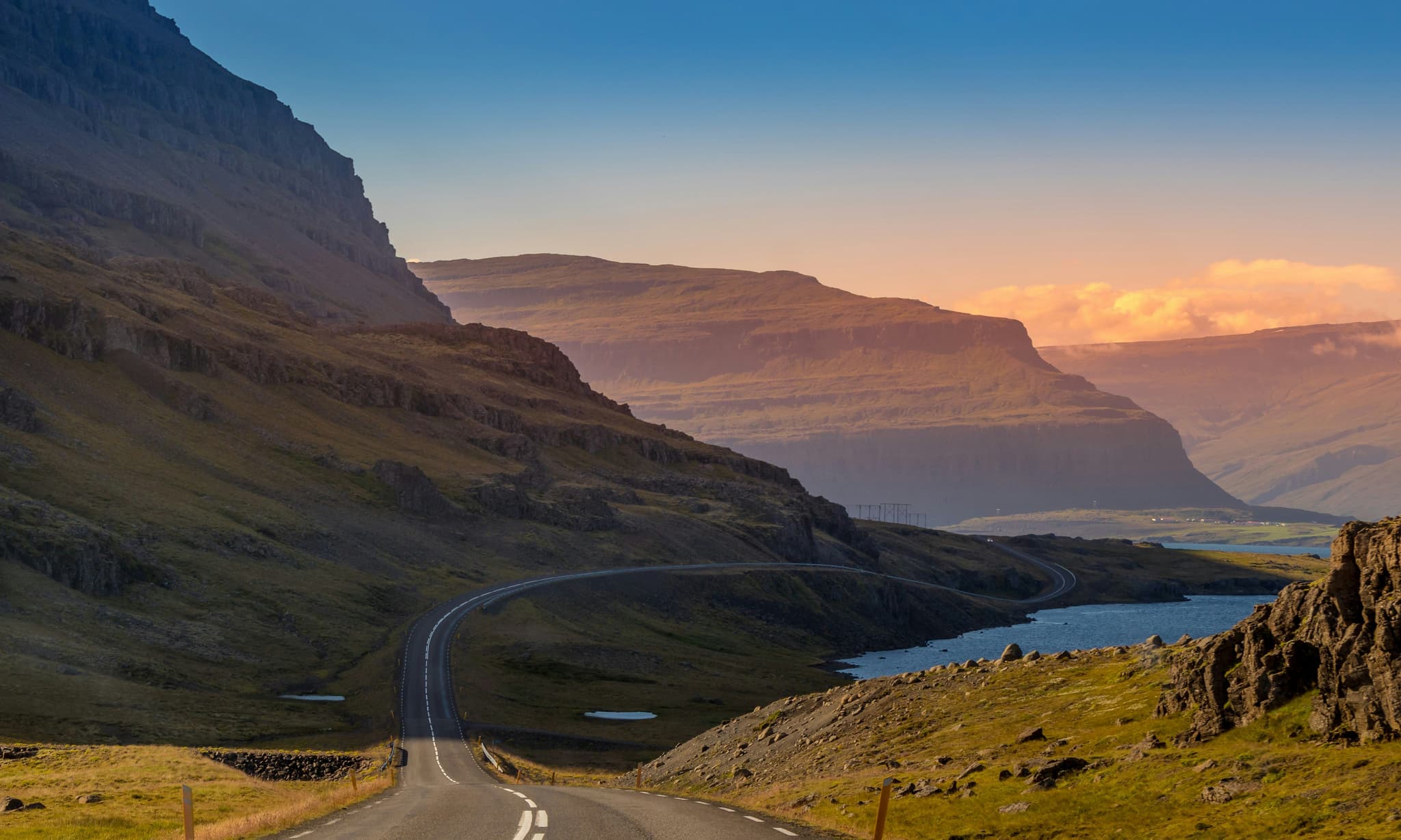
Why summer is the best time of year to drive in Iceland
From mid-June, most Highland F-roads open up too, connecting you to remote interior routes that are completely closed off for the rest of the year. This is when you can actually get to places like Landmannalaugar, Þórsmörk and the Kjölur route without needing a helicopter. Regular hire cars are not insured on F-roads, so you need a 4x4 for anything off the main Ring Road, but for the Ring Road itself, any standard rental car works fine.
Planning an Iceland road trip? Discover the best routes, must-see stops, and practical tips in our Iceland road trip guide to help you make the most of your adventure.
The weather in Iceland in summer is mild rather than warm. Average temperatures run between 10°C and 15°C, and it can get noticeably colder near glaciers and on exposed coastlines. Packing a windproof, waterproof jacket is non-negotiable even in July. Before you set off on any drive, check road conditions at road.is and register your travel plan at safetravel.is, particularly useful if you are heading into the Highlands or remote areas.
Want to figure out the best time of year for your trip? Take a look at our guide on the best time to visit Iceland, which goes through what each season actually looks like month by month.
The Golden Circle as a day tour from Reykjavík
The Golden Circle is a roughly 300km loop from Reykjavík that most people do in a day. It covers three main stops: Gullfoss, a two-tiered waterfall where you can walk right up to the edge and get completely soaked by the spray; Geysir, the original geyser that gave all geysers their name, which erupts every 5–8 minutes; and Þingvellir National Park, where you can walk on a path between the North American and Eurasian tectonic plates, and where Iceland's parliament was founded in 930 AD.
You can do it as a guided day tour from Reykjavík or self-drive. In July, the most popular spots get genuinely busy during the day, so going early morning or late evening makes a real difference. The Golden Circle also connects well with the Secret Lagoon at Flúðir and Kerið volcanic crater if you want to extend the loop.
Wondering what a full Iceland week on the road actually looks like in practice? Take a look at our Iceland 1-week road trip, which maps out a complete route day by day so you can see exactly how to connect the best stops. It is a solid starting point you can follow exactly or use as a base for your own version.
Fun Fact: Iceland has more than 10,000 waterfalls, and a significant number of them are visible directly from the Ring Road.
What to see in Iceland in July: hiking trails and the Highlands
July is the peak month for hiking in Iceland, and for good reason. Most trails are clear of snow, the Highlands are open, and you have enough daylight to do multi-hour hikes and still be back in time for dinner that same evening. Iceland's natural terrain in summer opens up landscapes that most countries simply do not have: active geothermal areas, coloured volcanic mountains, glacial canyons and lava fields that are navigable on foot for the first time each year.
The Highlands, only open in summer
The Icelandic Highlands are only reachable from mid-June to late September, when the F-roads open. These are rough, unpaved tracks that require a 4x4, and taking a regular rental car on them is not only risky but comes with fines that are not worth ignoring. With the right vehicle though, the Highlands open up some of the most extraordinary terrain in the country, the kind of terrain that puts you genuinely in the middle of nowhere, because you are.
The main Highlands destinations most people aim for:
Landmannalaugar: multicoloured rhyolite mountains, a natural geothermal hot spring right at the campsite, lava fields and volcanic craters. One of the most photographed areas in Iceland and genuinely one of the best summer hiking bases in the country
Þórsmörk: a glacial valley surrounded by three glaciers, reachable by 4x4 or Highland bus, and the end point of the Laugavegur trail. The birch forest here is one of the most unusual landscapes in Iceland
Kerlingarfjöll: a geothermal mountain range with steam rising from the ground between the peaks, far less visited than Landmannalaugar and with its own campsite and mountain huts
The Laugavegur trail connects Landmannalaugar to Þórsmörk over 55km and is consistently listed among the best long-distance hikes in Europe. Most people do it in 4–5 days with overnight huts along the way, the huts fill up months ahead for July, so book early.
Glacier hiking in Iceland
Glacier hiking is one of those experiences that sounds straightforward and then turns out to be genuinely extraordinary. You strap crampons onto your boots, follow a guide across a moving river of ice, and spend the whole time looking at crevasses and formations that simply do not exist anywhere else. The sound of the ice, the colour of the deep crevasses, the way the surface constantly shifts.
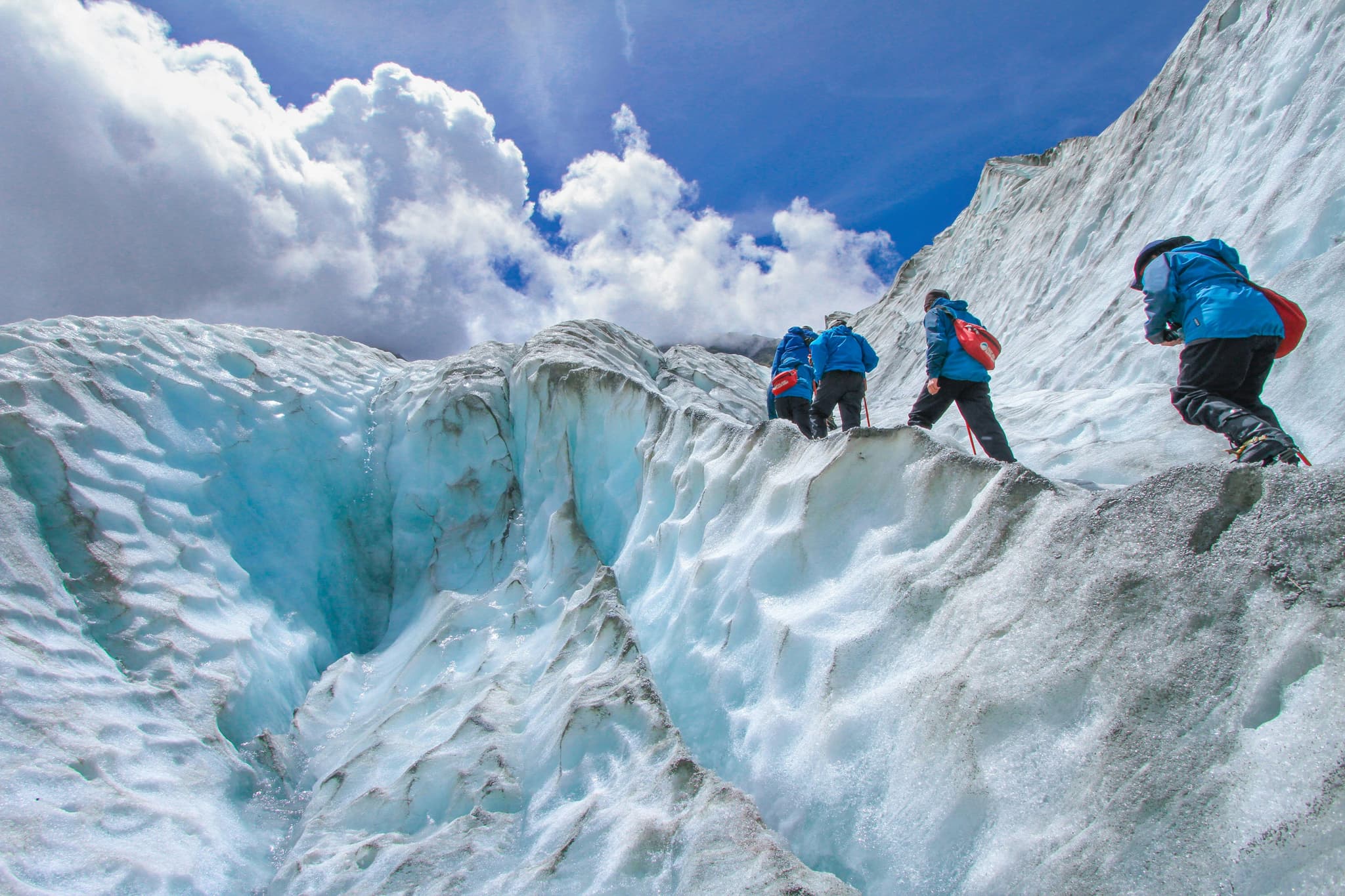
You must go with a certified guide on any glacier in Iceland, there is no independent option. The two most popular choices are:
Sólheimajökull: an outlet glacier of Mýrdalsjökull, about 2.5 hours from Reykjavík, very easy to reach and a brilliant first glacier experience. Half-day guided walks start at around 9,000–11,000 ISK per person, and the short walk from the car park to the glacier edge gives you a striking view of the ice before you even put crampons on
Vatnajökull: Europe's largest glacier, covering roughly 8% of Iceland's entire surface area and sitting on top of several active volcanoes. The main entry point is Skaftafell in the south-east, with options ranging from a 1-hour introductory walk to full-day ice climbing
Guided tip: Glacier hike tours at Sólheimajökull book out fast in July. Book at least two weeks ahead during peak season, more if you are going in the second half of July.
South Coast waterfalls and coastal hikes
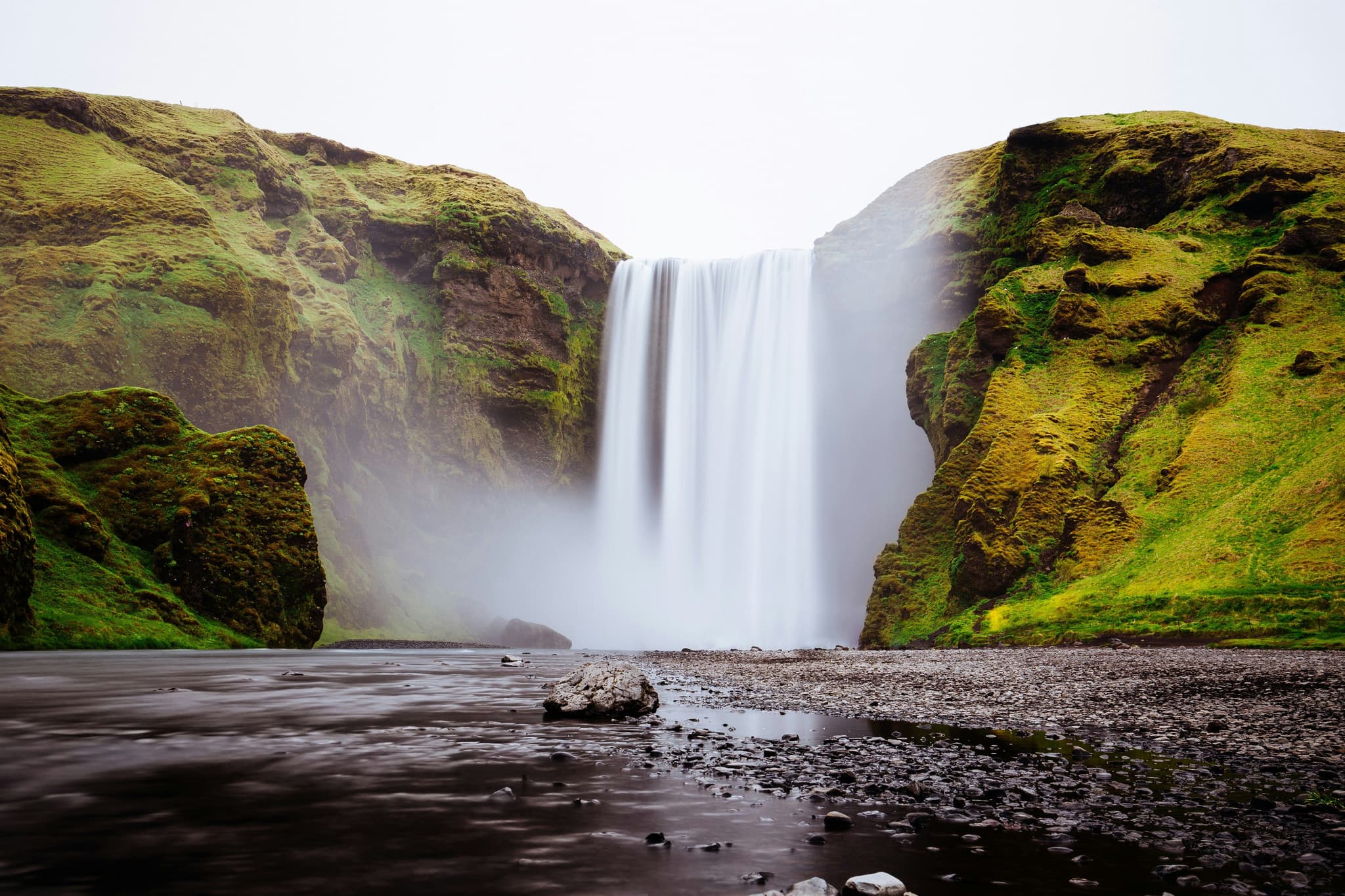
The South Coast between Reykjavík and the glacier lagoon is one of the most rewarding drives in Iceland, and the hiking along it is just as good as the views from the car. A few hours from the capital, two of the country's best-known waterfalls sit almost next to each other on the same road.
Skógafoss drops 60 metres and has a staircase up the side that leads to a long river trail stretching for hours above the falls. Getting soaked by the spray at the base is unavoidable and entirely worth it, and the evening light makes it even better.
Seljalandsfoss is narrower but has a path that goes all the way around behind the curtain of water, which gives you a view from behind the fall that is quite unlike anything else. Bring something waterproof, the mist reaches further than you expect.
A little further east, the Fimmvörðuháls trail connects Skógar to Þórsmörk and passes directly between two volcanic craters created by the 2010 Eyjafjallajökull eruption. It is a full day out and involves some elevation, but one of the more unusual hikes in the country and very doable as a summer day hike with an early start.
Whale watching and puffins in Iceland in summer
Summer is peak season for both whale watching and puffin spotting in Iceland, and both are experiences that work best between June and August. The combination of long daylight hours and nutrient-rich waters draws large numbers of whales to Icelandic coastal areas during these months, and roughly 60% of the entire Atlantic puffin population spends summer here.
Whale watching
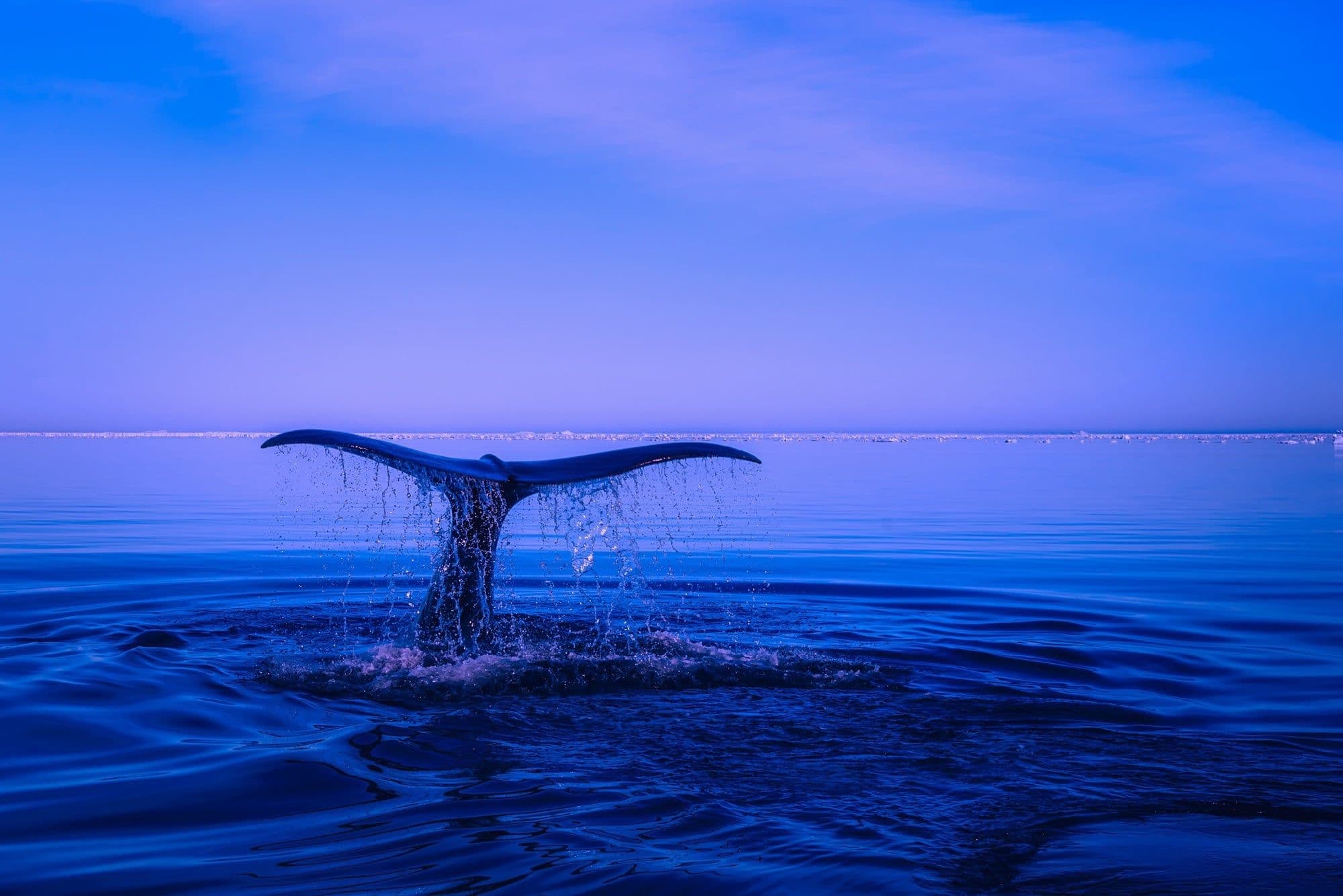
Iceland is one of the best places in Europe for whale watching, and summer gives you the highest chance of sightings. Humpback whales, minke whales and white-beaked dolphins are the most commonly spotted species between June and August, with humpbacks being the most reliably seen in the waters around Húsavík and Reykjavík. A few things to know before you book:
Húsavík in North Iceland is the whale watching capital of the country, with a very high success rate and tours leaving multiple times a day from a small fishing harbour. It is about a 5-hour drive from Reykjavík, so it works best as part of a North Iceland or Ring Road itinerary rather than a standalone day trip from the capital
Reykjavík Old Harbour also runs regular whale watching tours departing from the city, a good option if you are not heading north and still want to get out on the water
Midnight whale watching tours run in June and July, spotting humpback whales surfacing against a glowing sky at 11pm is the kind of thing that ends up being the story you tell when you get home
Success rates for whale sightings in summer typically run above 95% from Húsavík, and tour operators will usually give you a free return trip if you do not see any whales
Puffins in Iceland
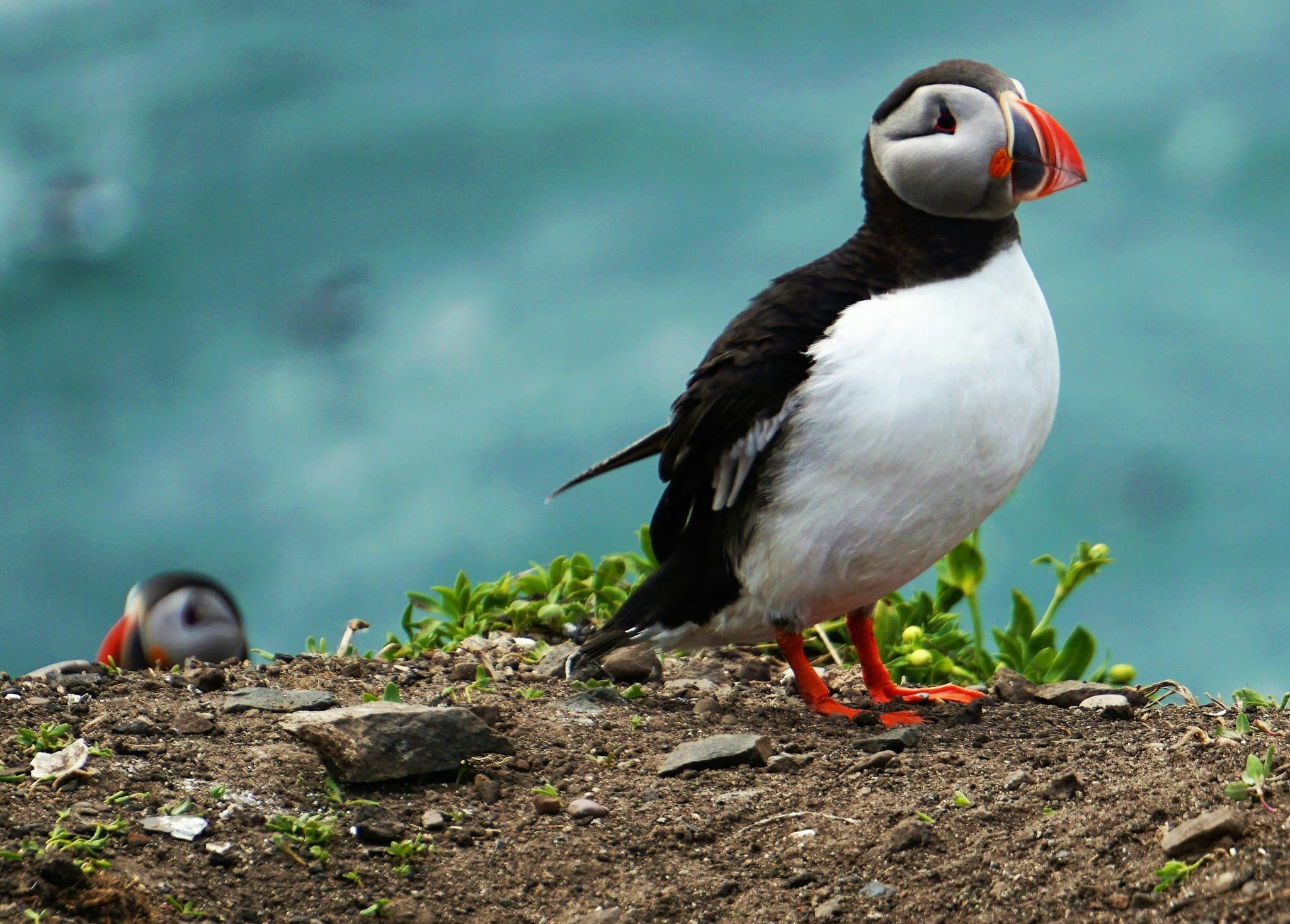
Around 4 million puffin pairs summer in Iceland every year, which makes it the largest Atlantic puffin colony on earth. They arrive around late April and are gone by mid-August, heading back out to open sea until the following spring. Unlike many wildlife experiences, puffins in Iceland are genuinely easy to get close to, they are not particularly bothered by people and the colonies at Látrabjarg, in particular, let you get surprisingly near.
Puffins mate for life and return to the exact same burrow every year. A puffin can live for over 20 years, which means some of the birds you see at Látrabjarg have been nesting on that exact cliff for two decades!
The best spots to see them:
Látrabjarg cliffs, Westfjords: the westernmost point in Europe, with thousands of puffins nesting on the cliff edge and no fence or barrier between you and them. A long drive but one of the best wildlife experiences in the country
Borgarfjörður Eystri, East Fjords: a purpose-built puffin viewing platform right above the nesting colony, very easy to reach and one of the easiest puffin spots in Iceland
Vestmannaeyjar (Westman Islands): home to one of the largest puffin colonies in Iceland, and also one of the most interesting island destinations in the country for other reasons
Short puffin tours leave from Reykjavík Old Harbour daily in summer for around 3,000–4,000 ISK per person, taking about an hour and giving you a very good chance of seeing them even without leaving the capital.
Guided tip: Puffins are easiest to spot in the morning and evening when they are coming and going from the sea. Midday is actually the slowest time at most puffin colonies, so plan accordingly.
Hot springs, the Blue Lagoon and geothermal pools
Iceland has geothermal pools at every point on the spectrum, from full luxury spa resort with cocktail menus and silica face masks to a warm patch of river in the middle of the countryside with nowhere to change. The variety is part of what makes this such a good summer activity, you can match the experience to exactly what you are in the mood for, and there is something for every budget. Soaking in warm geothermal water after a day of hiking is one of those experiences that sounds like a cliché until you actually do it.
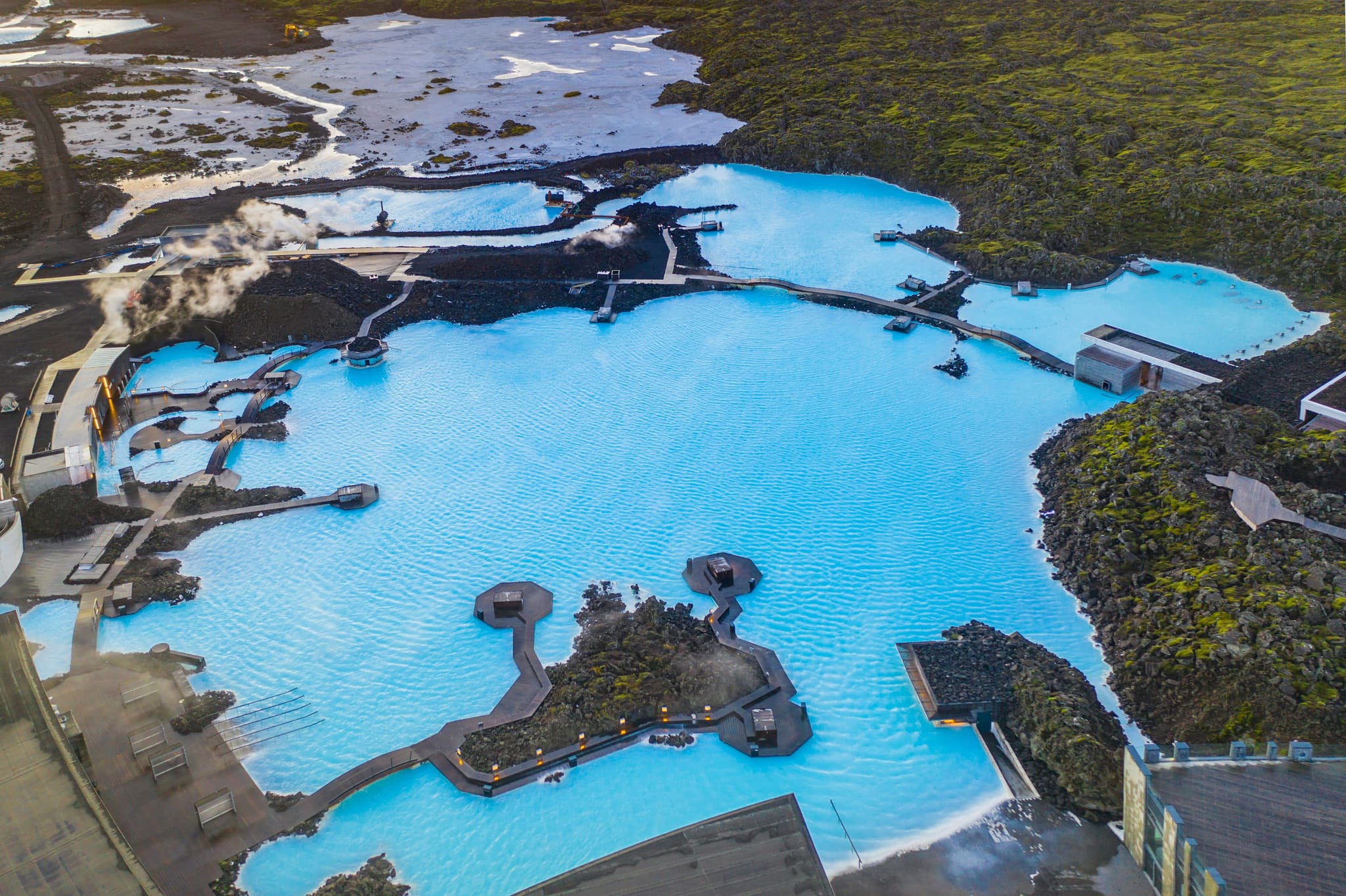
Blue Lagoon: Near Keflavík airport, the silica-rich water is that distinctive milky blue colour, the facilities are excellent and the whole experience is very well run. The flip side is that it is extremely popular and you need to book in advance, weeks ahead in summer, and ideally months ahead for July. Book directly at bluelagoon.com. Tickets start at around 11,990 ISK for the Comfort package, which includes a silica mud mask, towel and one drink.
Sky Lagoon: In Reykjavík, opened in 2021, with a horizon pool looking out over the ocean. A more relaxed and understated experience than the Blue Lagoon, and considerably easier to book at shorter notice. Tickets from around 6,990 ISK and the seven-step spa ritual is a genuinely good afternoon.
Mývatn Nature Baths: In North Iceland near Lake Mývatn, similar geothermal chemistry to the Blue Lagoon but much less visited and considerably cheaper at around 5,000 ISK. A genuinely brilliant alternative if you are doing a Ring Road trip and want the geothermal pool experience without the visitor numbers or the price.
Reykjadalur hot springs: A 3km hike from a car park near Hveragerði (about 45 minutes from Reykjavík) leads to a natural warm river you can actually bathe in. Free, no booking needed, bring a towel and expect some other hikers but nothing like the numbers at the Blue Lagoon.
Hoffell Hot Tubs: Near Höfn in the south-east, tiny round tubs with Vatnajökull glacier views, barely known and completely free. One of those spots that rewards people who do a bit of research before they go and is a genuinely memorable stop on a Ring Road trip.
Guided tip: Save the Blue Lagoon for your last morning before the flight home. It is directly next to Keflavík airport, which makes it a perfect final stop, and you will appreciate it a lot more after a week of glacier wind than you would on day one.
Iceland Summer festivals and concerts
Iceland has a summer festival calendar that punches well above its weight for a country of 370,000 people. From live music under the midnight sun to a national outdoor gathering on a small island with bonfires and fireworks, the concerts for the summer in Iceland span a real range of sizes and styles. Festivals here do not perform for tourists; most of them exist because Icelanders genuinely love them.
Secret Solstice Festival
The Secret Solstice Festival takes place around the summer solstice weekend every June in Reykjavík. It is built entirely around the midnight sun, with concerts running through the night into early morning under a sky that refuses to go dark. The lineup mixes Icelandic artists with international names, and the whole thing has a slightly surreal quality that is quite different from a regular summer festiva, partly because time genuinely stops making sense when it has been light for 18 hours in a row.
Weekend passes cost around 29,900 ISK (roughly €210), with single-day tickets available too. What makes the Secret Solstice unusual beyond the midnight sun backdrop is the side events: a concert held inside Langjökull glacier and a performance at the Bridge Between Continents, where musicians play literally between two tectonic plates. Both are limited to under 200 people, sell out fast and are worth booking the moment tickets go on sale.
Other summer festivals and events worth planning around
Live Icelandic music and cultural events fill the calendar all summer long. A few of the other festivals worth knowing about:
Þjóðhátíð (National Festival, Vestmannaeyjar): held on the Westman Islands over the first weekend of August, with around 15,000 people gathering on a tiny island for music, bonfires, fireworks and communal meals. Book the ferry well in advance, there are no other ways onto the island.
Verslunarmannahelgi: the Labour Day bank holiday weekend at the start of August, with music festivals and events across the country. Very popular with locals, accommodation and ferries across Iceland book out fast around this period
Reykjavík Pride: held in August, with a large street parade through the city centre, outdoor concerts and a week of events that makes Reykjavík particularly lively
Reykjavík Culture Night (Menningarnótt): mid-August, over 200 venues across the city open for free including galleries, museums and private spaces. Street performances, live music and concerts run all evening and the whole city takes part
Eistnaflug Rock Festival: a small rock and metal festival in Neskaupstaður in the East Fjords, genuinely local, unpretentious and a very good reason to visit the east of the country
Fun Fact: Secret Solstice launched in 2014 and has hosted some of the most unusual concert venues ever used: Sigur Rós played inside Langjökull glacier to a crowd of around 200 people. The glacier portion of the festival is still one of the most extraordinary concert settings on earth.
Reykjavík, Iceland in summer: what to do in the capital
In summer in Iceland, Reykjavík is a genuinely enjoyable city to spend time in, and easy to underestimate when you are focused on getting out into the countryside. The harbour area, the colourful streets, the food and the sheer number of events packed into June, July and August make it worth a day or two on its own before or after the road trip. In summer, the city is at its most active, with outdoor concerts, markets, street food and a social energy that simply does not exist during the long dark winter.
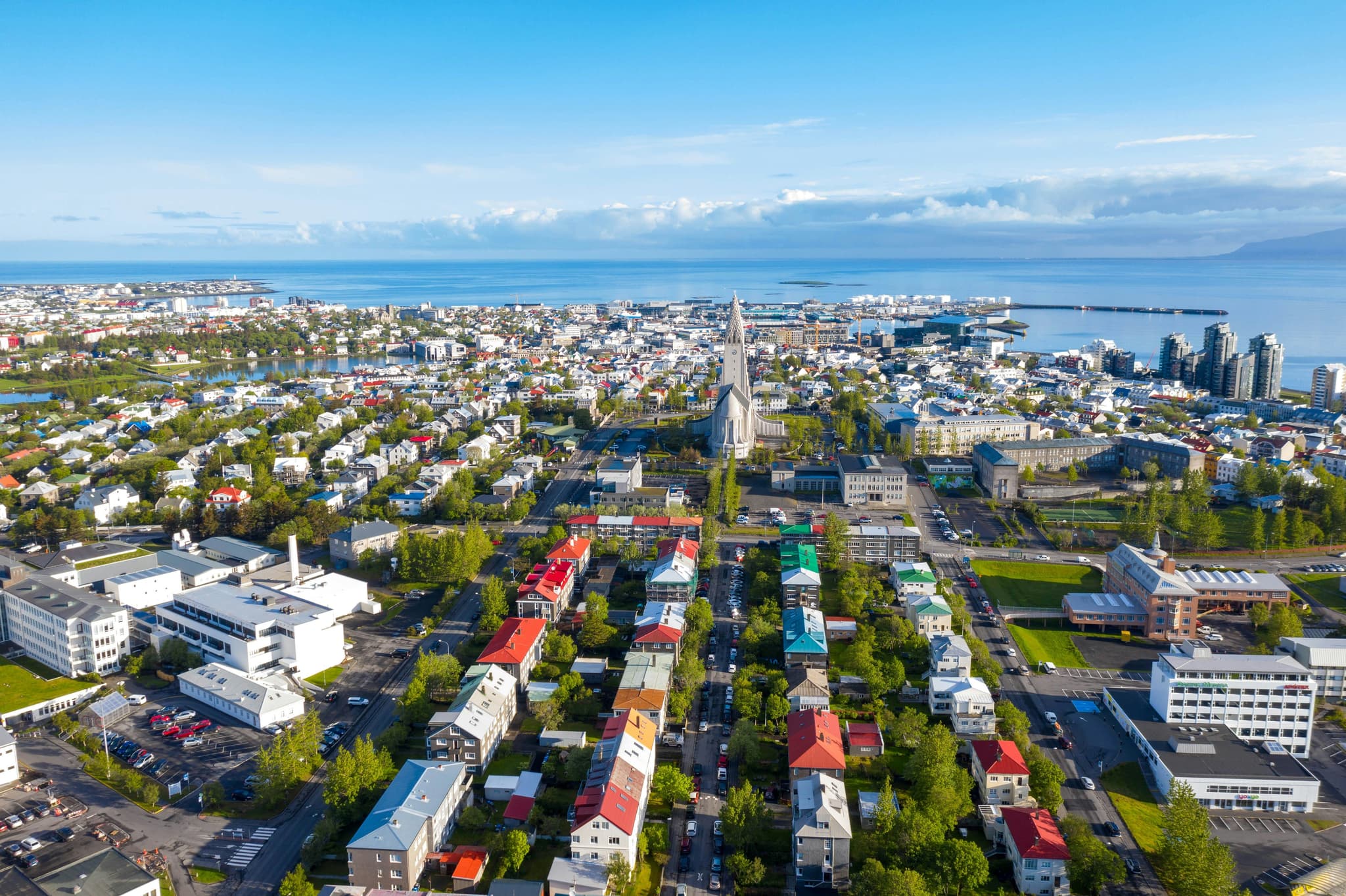
A few things to see and do in the city itself:
Hallgrímskirkja: the rocket-shaped church that towers over the city. You can take a lift to the top for around 1,000 ISK and get a full 360-degree view over Reykjavík, the surrounding mountains and the bay.
Harpa Concert Hall: on the harbour, an award-winning glass building that looks completely different depending on the light and hosts regular summer events including the Reykjavík Jazz Festival in late August
Laugavegur: the main shopping and restaurant street, running from the city centre down towards Hlemmur. Independent shops, cafés, design stores and some of the best restaurants in the country are all along this stretch
Old Harbour: where the whale watching and puffin tours depart, and also a genuinely good area for fish soup, fish and chips and the Reykjavík Street Food hall at Lækjartorg
Perlan: a glass dome building on a hill above the city with a museum inside covering Iceland's natural environment, a permanent ice cave exhibit you can walk through, and a good observation deck with free views
Reykjavík is also the main departure point for summer day tours covering the Golden Circle, the South Coast, the Snæfellsnes Peninsula and Jökulsárlón glacier lagoon. Most tours pick up from central hotels, and the city is very walkable, the main sights are within comfortable walking distance of each other.
Curious about where to go beyond Reykjavík and how to plan your route through Iceland? Take a look at our Iceland travel guide, which covers the best places to visit across the whole country, how to get between them and what to budget. It is the most complete overview we have put together for Iceland in one place.
Did You Know: Reykjavík is the northernmost capital city on the planet and has a population of around 140,000, which is roughly 40% of Iceland's entire population living in one city.
Camping in Iceland in summer
Camping in Iceland in summer is one of the best ways to travel around the country, both for cost reasons and for what you actually experience. Waking up next to a glacier, brewing coffee outside a tent with no one around and a view of nothing but volcanic rock and sky, that is a specific kind of morning that stays with you long after the trip is over. Iceland has over 170 designated campsites across the country. The campsite at Landmannalaugar, the Þórsmörk valley and the coastal spots along the Ring Road all give you something that no guesthouse or hotel can replicate.
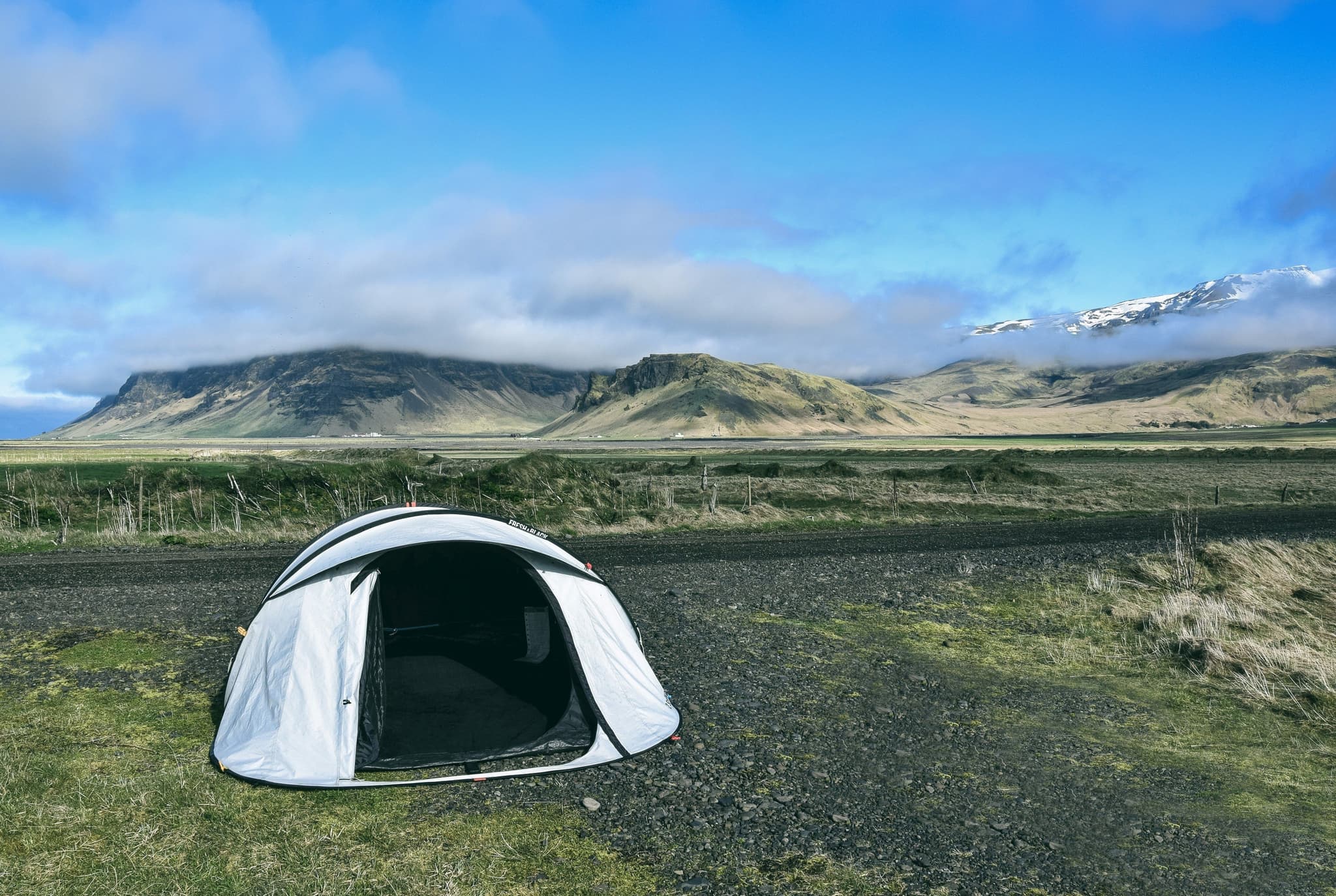
Campsites open across the country from roughly May to September, most of them in genuinely extraordinary locations near waterfalls, mountains or coastlines. You can bring your own tent or rent a campervan, the latter being by far the most popular option for summer road trips because it removes the need to book accommodation night by night and gives you total freedom over your itinerary.
A few things to know about camping in Iceland:
Designated campsites cost around 1,500–2,500 ISK per person per night (roughly €10–18), which is far cheaper than any guesthouse and most of them have clean facilities and hot showers
Wild camping outside designated sites is allowed but limited: a maximum of 1–2 nights in the same spot, no fires, leave no trace, and some protected areas prohibit it entirely
The midnight sun means your tent will be flooded with light at all hours. A tent with a dark inner lining makes a genuine difference to how much sleep you actually get
Campervans give you maximum freedom but book very early for July, popular rental companies sell out months ahead and prices rise sharply in peak season
Guided tip: The Kirkjubæjarklaustur campsite in South Iceland is a brilliant overnight stop on a Ring Road trip. It has good facilities, is right next to Fjaðrárgljúfur canyon, and costs far less than any guesthouse in the area.
Can you see the northern lights in Iceland in summer?
This is one of the most common questions people ask about Iceland in summer, and the straightforward answer is no, not in June or July. The sky simply never gets dark enough for the aurora to be visible during those months. The midnight sun that makes summer in Iceland so extraordinary is the same reason the northern lights are not an option until the season changes, you need genuine darkness for the aurora to show up, and darkness does not exist here in midsummer.
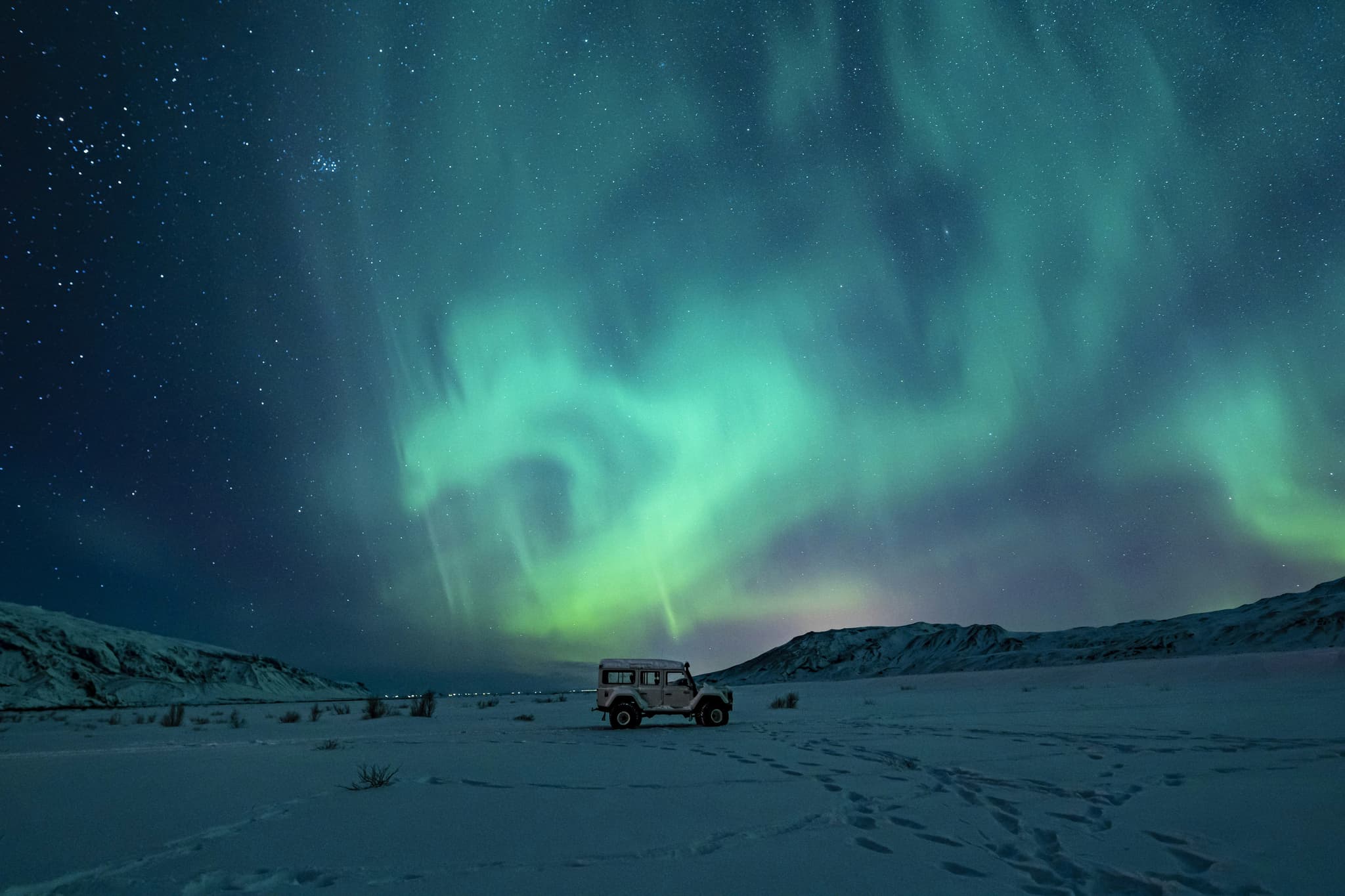
From mid-August, as nights start shortening again, there is a very slim chance of catching a faint aurora on an exceptionally clear, dark night. Sightings do occasionally happen in late August but they are unpredictable and not something to plan a trip around. From September onwards, darker skies return properly, and tour operators start running regular northern lights tours again.
Wondering when and where you're most likely to see the northern lights? Our Iceland Northern Lights Guide covers the best months, top viewing locations, and practical tips to improve your chances of witnessing this incredible natural phenomenon.
Things to know before going to Iceland in summer
Going to Iceland for the first time? We’ve gathered a few things that you’ll need to know before departure, and will make your trip run much more smoothly.
Weather: Average temperatures in June to August run between 10°C and 15°C. Near glaciers and on exposed coastlines it can get noticeably colder with wind chill. Always pack a windproof, waterproof jacket and a mid-weight top, even if the forecast looks sunny when you leave.
Book ahead: July is peak season and popular experiences sell out. The Blue Lagoon, guided glacier walks at Sólheimajökull, whale watching tours from Húsavík and most popular day tours from Reykjavík should be booked at least several weeks ahead, and for mid-July that can mean planning months in advance. Do not leave this until the week before you fly.
Petrol stations: Can be over 100km apart in remote areas of the East Fjords, Westfjords and Highlands. Always fill up when you pass one, do not assume the next town will have one. Paying by card at unmanned stations is standard and works fine.
F-roads: Require a 4x4, and taking a regular rental car on them voids your insurance. The fines for doing so are real and the roads are genuinely rough. If you want to reach places like Landmannalaugar, budget for the right vehicle from the start rather than trying to manage without one.
Budget: Iceland is expensive in July if you are staying in hotels in popular areas like Vík or Höfn. Campervans and campsites cut that number by a lot. More information about prices can be found in our Iceland destination guide.
Driving: On the right side of the road. If you are used to left-hand driving, give yourself time to adjust, particularly on narrower roads and single-track bridges where you need to give way. Speed limits are clearly signed in km/h.
Booking accommodation: July and August in popular areas (Vík, Höfn, Akureyri) book out months ahead. If you are planning to sleep in guesthouses rather than camping, start looking at accommodation early and do not rely on finding something available when you arrive.
How to Plan Your Trip to Iceland in Summer?
Summer gives you the most open and complete version of Iceland there is. The roads are clear, the days are longer than you know what to do with, and places that are genuinely off limits the rest of the year become part of your itinerary. You can build a trip that covers glaciers, waterfalls, hot springs, whale watching and a festival or two without any of it feeling like too much, because the time you have available is genuinely unusual.
Ready to start mapping out your Iceland summer route? With the Guided app, you can save places you want to visit, build your own itinerary, and create a route that matches your travel style. Whether you're planning a complete Ring Road adventure or focusing on a specific region, the app helps you keep all your favourite stops in one place.
Enjoyed This Blog? Continue Reading!
There is more travel inspiration waiting for you on our blog. You can take a look below and start mapping out your next travel adventure!


