
Iceland Ring Road: A Complete Guide For an Amazing Trip
By Eva Alkemade
Mar 12, 2026
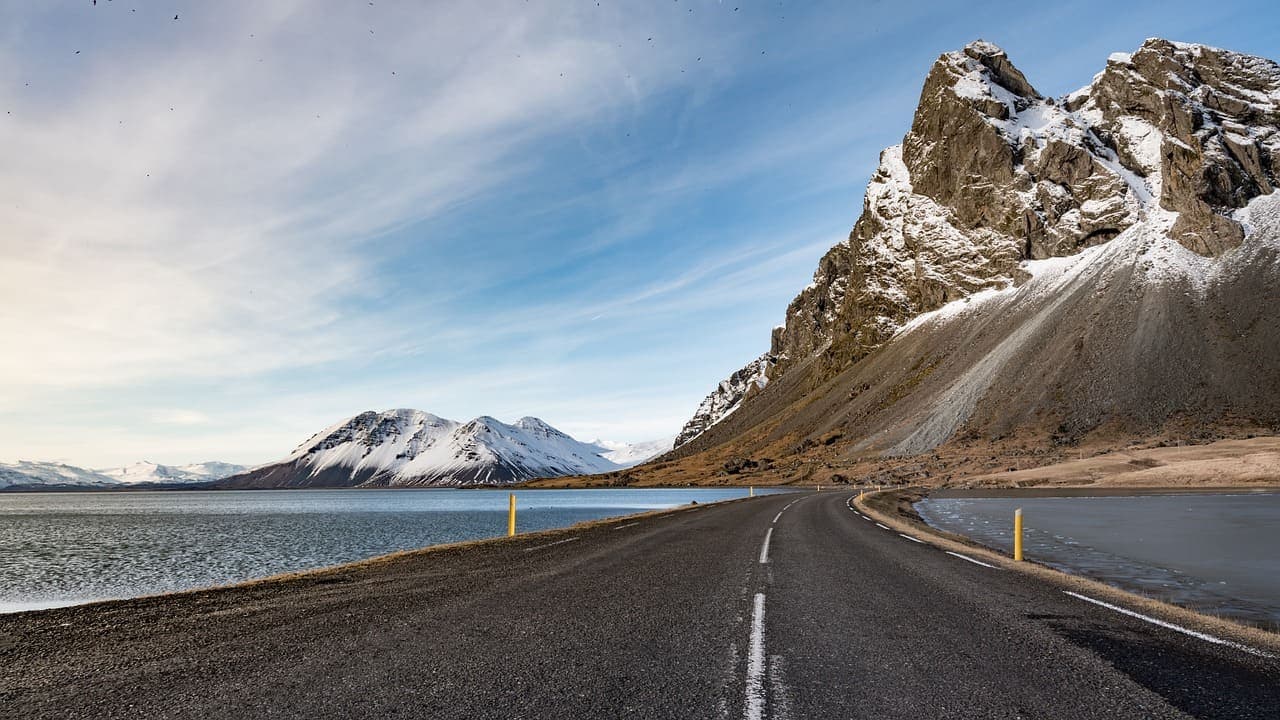
Iceland is not a place you can just glance at quickly. You can easily spend hours driving through Iceland passing by lava fields, waterfalls and empty plains without seeing a village. The Iceland Ring Road makes it possible to explore the island in one loop without constantly going back to the same place.
What is the Iceland Ring Road?
The Iceland Ring Road is also called Route 1. It runs in a circle around the island. The total distance is 1,322 kilometers. It connects all the bigger towns in the country.
The route mostly follows the coast. This means you pass through different parts of Iceland. You go from glaciers in the south to areas in the north. If you want to see regions of Iceland without taking complicated detours this is a good choice.
The road is paved everywhere, and it is well maintained. You can still find longer sections without facilities, so plan your stays in advance. Keep in mind that the distances are bigger than you might be used to. A bit of preparation makes the journey more relaxed.
How Long Does the Iceland Ring Road Take?
This is a good question before booking flights. In theory you can drive the Iceland Ring Road in around 17 to 20 hours. However, that would be without stops.
At least seven days are needed to experience everything the road trip has to offer. Ten days work better if you want to stop at waterfalls, hiking trails and viewpoints. So, how long the Iceland Ring Road takes depends on your pace and the season.
Want to know which season is the best time to go to Iceland for you? Read our blog about the best time to visit Iceland and find the best season for your trip.
Iceland Ring Road route: What Will You See Along the Way?
Reykjavik slowly disappears in the distance, and the surroundings begin to change. The Iceland Ring Road is not a typical motorway, it's a sequence of completely different regions following one another.
South Iceland: waterfalls and black beaches
The south coast takes you past Seljalandsfoss and Skógafoss. These are two waterfalls beside the road. A little later you stand on the sand of Reynisfjara. Here basalt columns rise from the sea. Vatnajökull, the glacier area in Europe, is also found here. This region is part of a national park. You drive between glacier tongues and ice lagoons. It is a large stretch of the Iceland Ring Road, so extra time here works well.
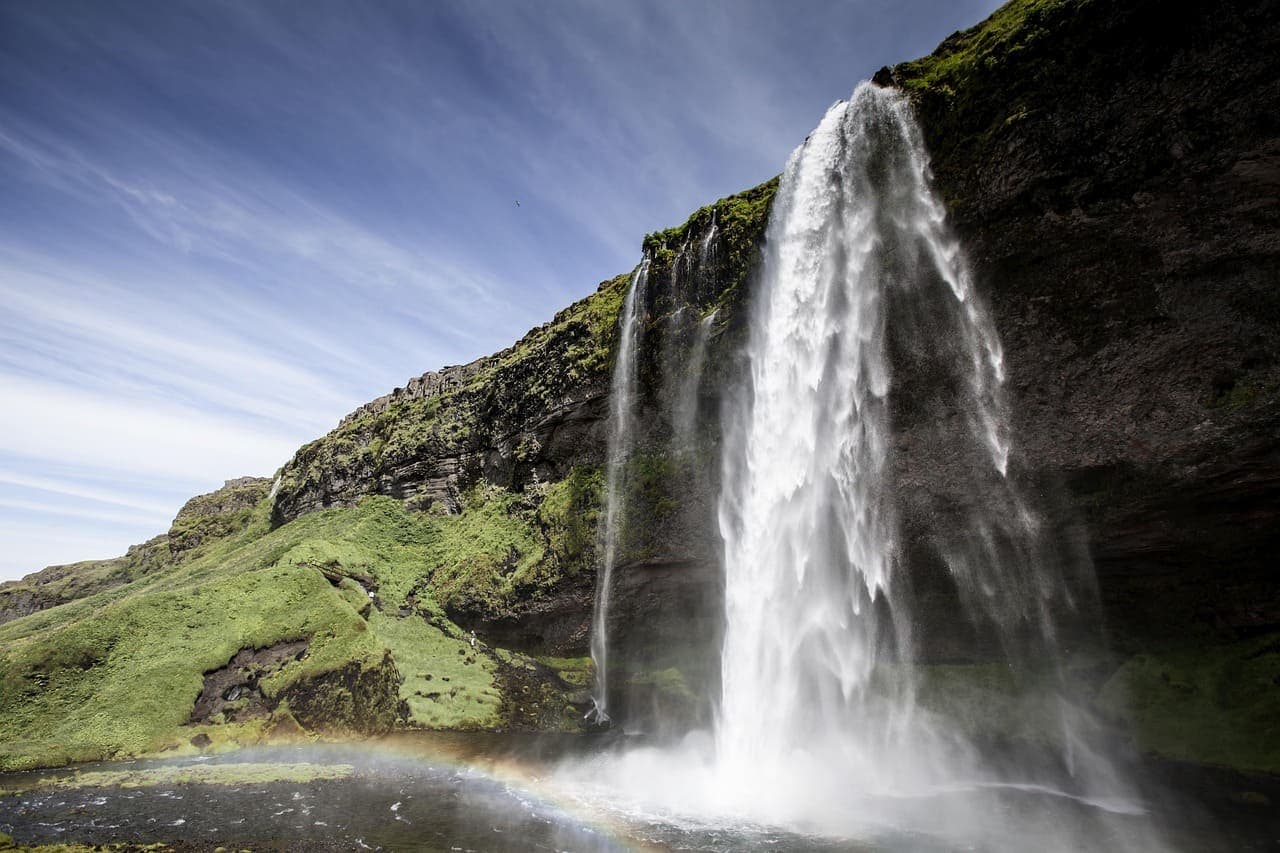
Image by adriankirby from Pixabay
Eastfjords: winding coast and small villages
After the south, traffic decreases. The road winds along fjords and small fishing villages. Certain sections include narrow mountain passes and regular single lane bridges. Extra attention helps, as only one vehicle can cross at a time. There are less vehicles here, which gives this area a very relaxed atmosphere.
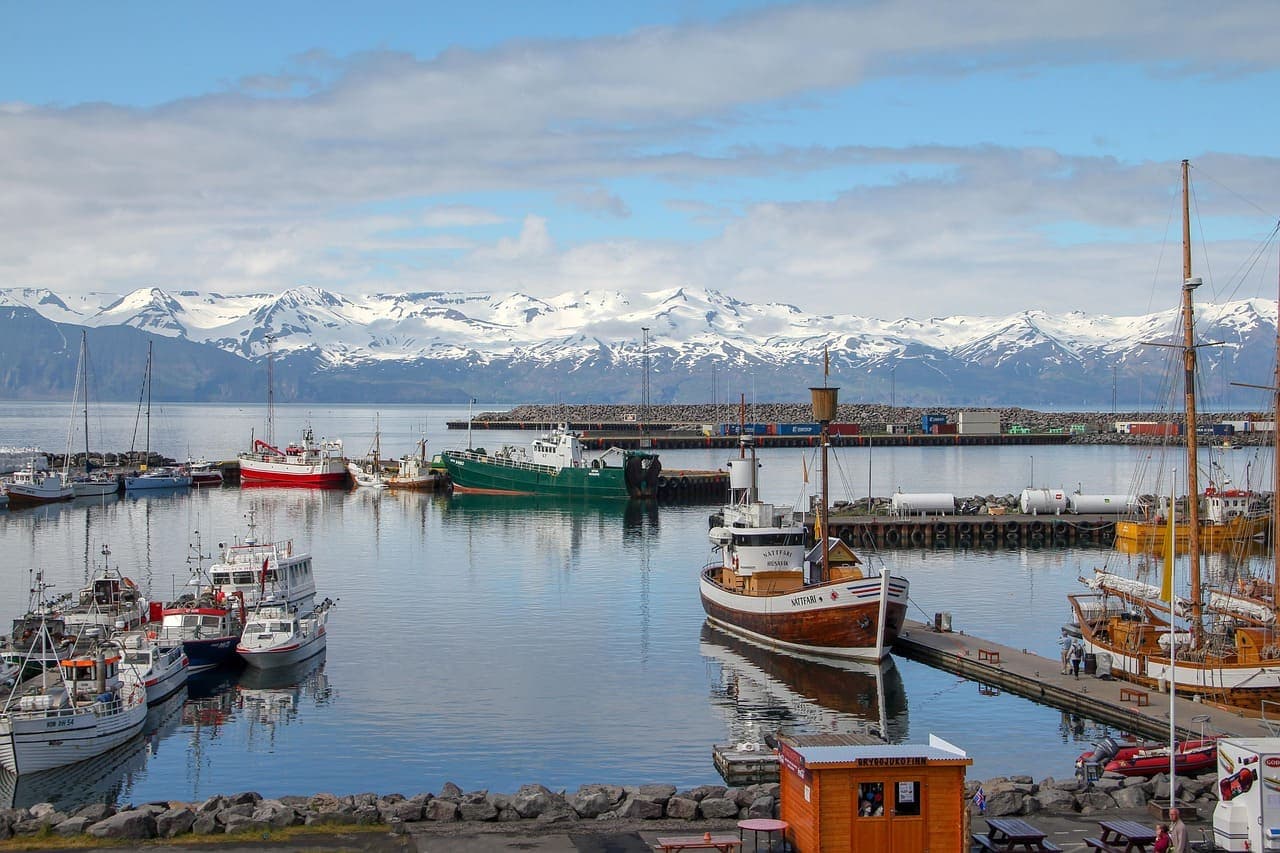
Image by hristian Klein from Pixabay
North Iceland: volcanic areas and marine life
North Iceland is full of geothermal areas and marine life. North Iceland changes when you are around Lake Mývatn. You can see a lot of steam, lava formations and craters. Or visit Dettifoss, which is one of the most powerful waterfalls in Europe.
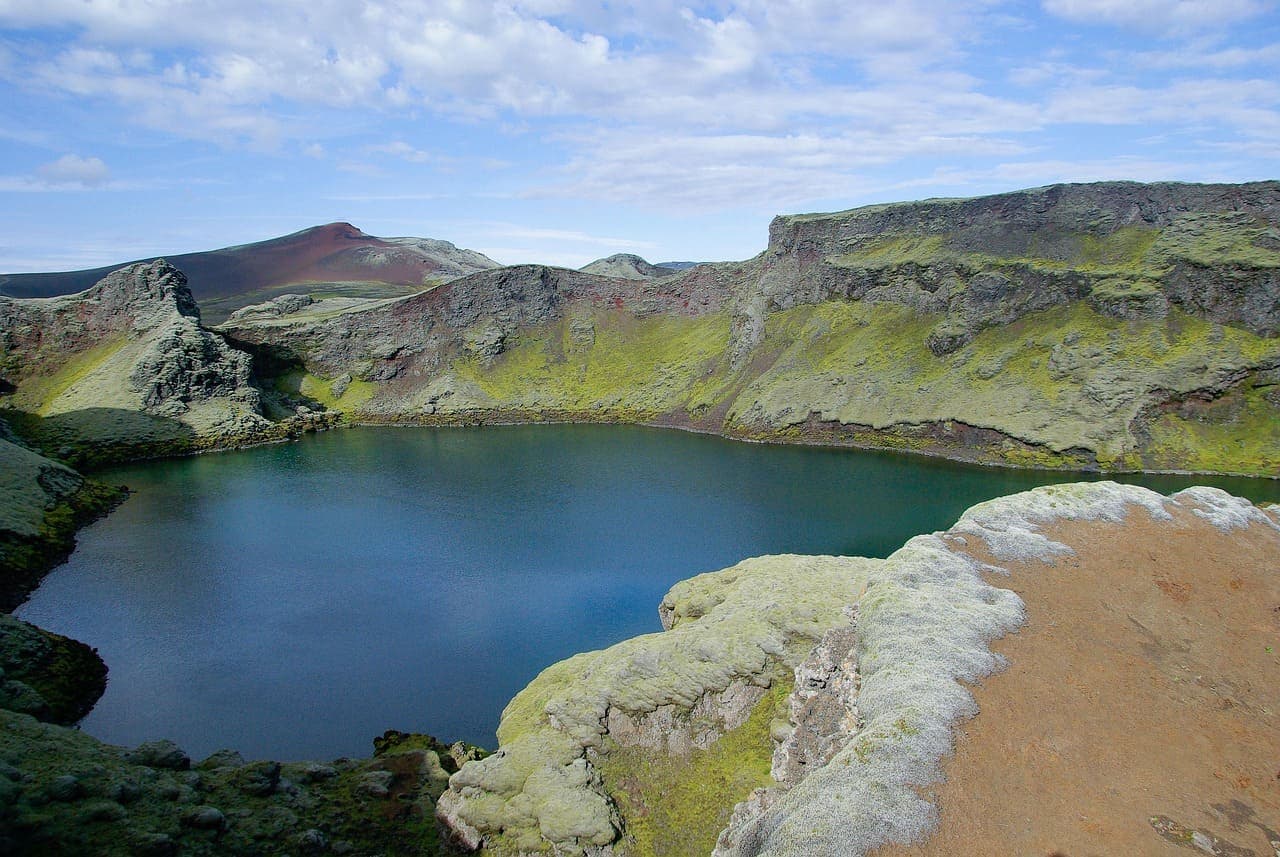
Image by jacqueline macou from Pixabay
In the center of North Iceland you can visit Akureyri. You can go on tours to see whales from here. If you come in the winter months you have a chance of seeing the northern lights because it is darker.
West Iceland and the Snæfellsnes Peninsula
West Iceland and the Snæfellsnes Peninsula are a little outside the way, but many people add them to their trip around Iceland. The Snæfellsnes Peninsula has cliffs and lava fields and a beautiful mountain called Kirkjufell. The route shows you how different the areas of Iceland are. Book your accommodation in advance because rooms get filled up quickly.
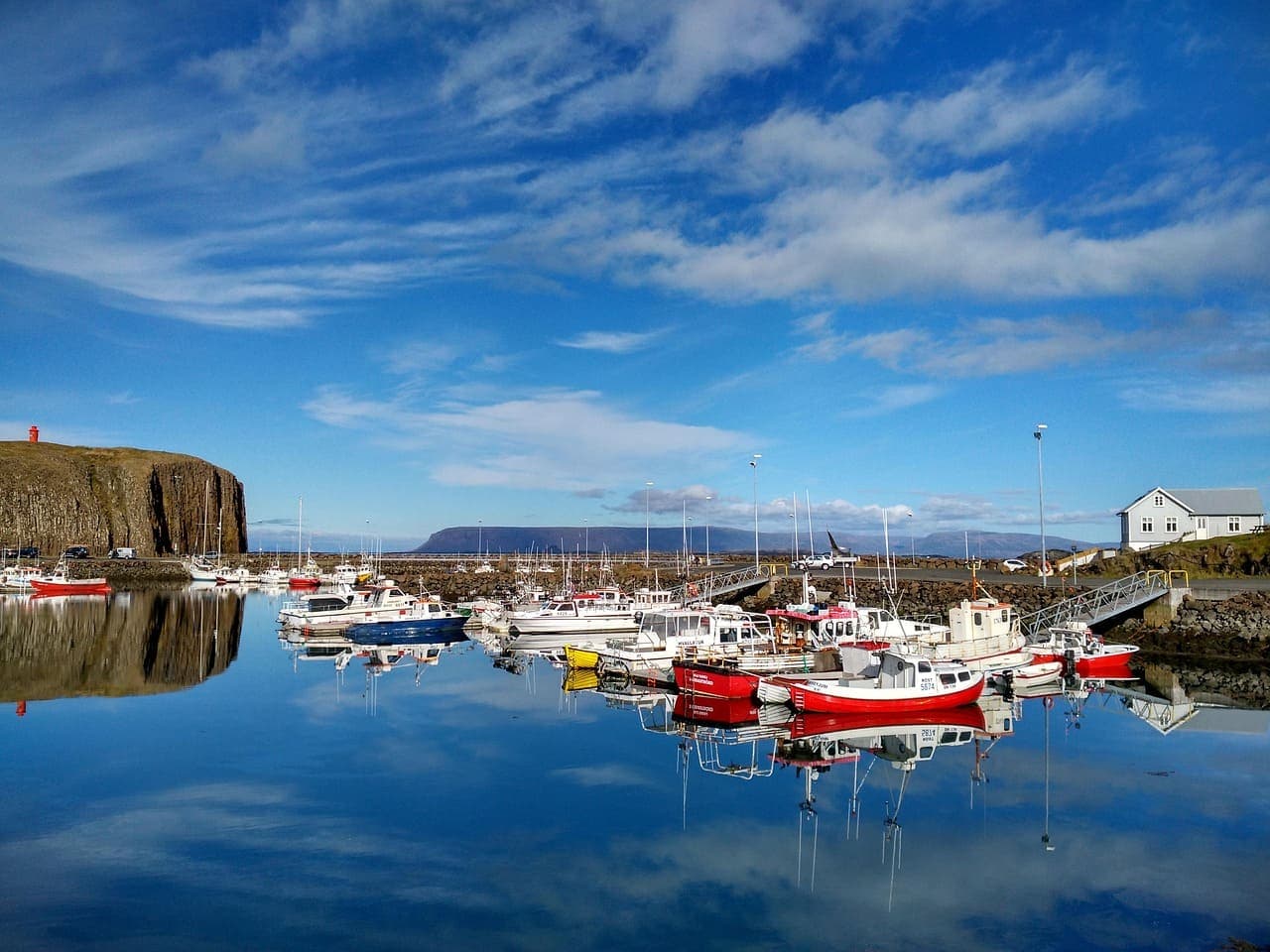
Image by Patricia van den Berg from Pixabay
Iceland Ring Road Itinerary for 10 days
A good plan means fewer long days behind the wheel. This Iceland ring road itinerary spreads distances logically and takes into account what you want to see.
Day one: is when you arrive in Reykjavik. You pick up your car and go to Reykjavik. You can walk along the harbor, and visit the Blue Lagoon to relax.
Day two: is the Golden Circle. You visit Þingvellir, where the Eurasian and North American tectonic plates are slowly moving apart, and you can stand between two continents. Then you go to the geothermal area at Geysir, and to the Gullfoss waterfall. The distances are not too long so you have time to look around and take photos.
Day three: is when you drive along the coast to Vík. There are a lot of stops on the way. You will see the Seljalandsfoss and Skógafoss waterfalls next to the road. When you get to Vík you can go to the beach of Reynisfjara where the waves crash against the rocks.
Day four: is when you drive to the glacier area. You go to the area around Vatnajökull. The famous Jökulsárlón glacier lagoon is here. You can see ice floating slowly towards the sea. You will have plenty of time to enjoy the view.
Day five: is when you drive through the Eastfjords. The distances are a bit longer, but there are no cars on the road. The road goes along the fjords and small villages. You can stop for coffee or a short walk.
Day six: is when you drive to the north. The fjords start to disappear. You see the area around Lake Mývatn. The area is more rugged and open than the south.
Day seven: is when you explore North Iceland. You see the Dettifoss waterfall which's very powerful. You can go on a tour to see whales from Húsavík. Akureyri is a nice place to stay overnight.
Day eight: is when you drive through Northwest Iceland. You see hills and open land and Icelandic horses in the fields of Skagafjörður.
Day nine: is when you visit the Snæfellsnes Peninsula. You see lava fields and cliffs and the Kirkjufell mountain. You can stop many times because the distances are short.
Day ten is when you drive back to Reykjavik. You can stop at a pool or a viewpoint before you return your car.
It is a good idea to book your accommodation in the south and north in advance so you do not have to look for a place to stay at the end of a long day.
Want to know the best areas to stay in Iceland? Read our full Iceland destination guide with the best regions to visit and stay!
Iceland Ring Road Map
So what does this route look like on the map?
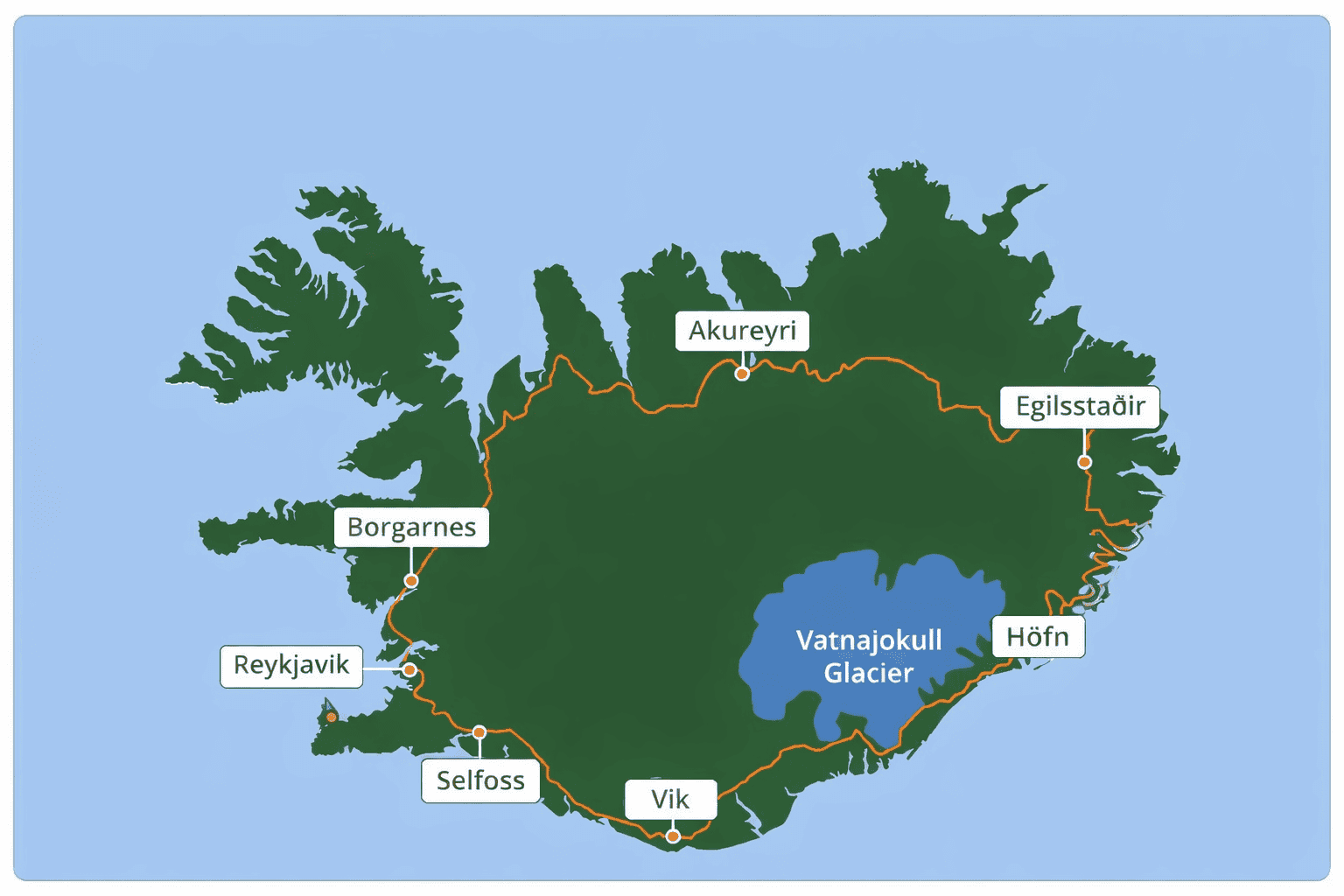
Map of the ring road in Iceland
Clockwise or anti-clockwise?
Driving around the Ring Road clockwise means you start with the Golden Circle and the South Coast. These are the places that most tourists visit. This way is good if you want to see the attractions early in your trip.. If you do not have much time and do not want to risk missing them because of bad weather later.
Driving in an anti-clockwise direction takes you north first. This way usually feels quieter at the start. Then it gets busier as you go to the waterfalls and glacier lagoons in the south. You end with the Golden Circle, near Reykjavík.
So if you want to see the most famous places first, drive around the Ring Road in the anti-clockwise direction. This gives you a good start. If not, drive in the opposite direction. This way you can take it easy at the beginning of your road trip. You can save the highlights for the last days.
Practical Tips for Driving the Ring Road
Preparation keeps your journey clear and organised. The Iceland ring road is easy to follow, though attention to planning, weather and distances remains necessary.
Rental car: where and how to pick up
Keflavík Airport is the place where most people pick up their car when they get to Iceland. You can find companies like Hertz and Europcar at the airport. There are also local companies that have good prices. You can also get your car in Reykjavik but that means you have to travel from the airport to get it.
It is a good idea to book your rental car early, especially if you are going to Iceland between June and August.
Road conditions and traffic information
You can use apps and websites to check important information before you leave
umferdin.is provides up to date details per region for every road in Iceland
vedur.is shows weather forecasts, including wind and precipitation
safetravel.is publishes alerts about dangerous situations or closures
A quick check each morning can prevent unexpected detours and delays.
Fuel stations and facilities
Fuel stations appear along the ring road, though not at close intervals everywhere. Longer stretches without larger towns exist between Vík and the north. Chains such as N1 and Olís are most common. Many stations are self service, so a credit card is useful.
Traffic rules and points to note
Outside built up areas, the maximum speed is usually ninety kilometres per hour. Bridges and gravel roads require lower speeds. Sheep often stand at the side of the road, mainly in summer. Off-road driving is prohibited and fines can be high.
A bit of preparation keeps the journey calm and organised. Shorter driving days leave room for spontaneous stops.
Who is the Iceland Ring Road Suitable For?
The ring road in Iceland suits many types of travellers. Experience as an adventurer is not required to enjoy this route.
Image by Vladan Rajkovic from Pixabay
Couples travelling together
A round trip along the ring road works well for couples wanting to travel at their own tempo. Short drives alternate with walks and warm baths. Time together on the road adds something special.
Families with older children
Clear signage and straightforward routes make this Iceland ring road trip suitable for families. Many sights lie close to the road, so long hikes are not necessary. Nature becomes easy to experience without complicated planning.
Photographers and nature lovers
Light changes constantly, creating striking images near waterfalls or along the coast. Open spaces give freedom to stop whenever something catches your eye.
First time in Iceland
A first visit to the country feels less complicated by following this ring road itinerary. Coastlines, mountains, lava fields and waterfalls all appear without entering the interior. Trips to Iceland become more straightforward when you stick to this route.
The route suits people who enjoy variety and freedom without extreme challenges. Accommodation placed logically reduces your travel time.
Enjoyed This Blog? Continue Reading!
There is more travel inspiration waiting for you on our blog. You can take a look below and start mapping out your next travel adventure!

