


On the morning of Monday 22 March 2027, a lot of India will be throwing coloured powder and water at friends and strangers alike. By early to mid afternoon, most of those streets will have gone quiet again. That short, messy window is Holi, and it is the reason plenty of people plan a spring trip to India around one particular week.
Where you spend it changes the day completely. In Mathura and Vrindavan the festival runs for about a week of temple rituals and street play. Jaipur and Udaipur offer a calmer, more ceremonial version. Delhi turns it into a ticketed party. We think picking the right place for your temperament matters more than any packing list, so this guide starts there and then gets practical about clothes, colour, crowds and the point in the day when it's smart to head inside.
A few quick facts
- Holika Dahan (bonfire night): Sunday 21 March 2027
- Holi, also called Rangwali Holi or Dhulandi (the colour day): Monday 22 March 2027
- The colour day always falls the day after Holika Dahan
- Around Mathura and Vrindavan, celebrations start about a week before the main day
- Best time to join the street play: the morning
- Season: the last stretch of India's comfortable travel weather before the summer heat moves in
When is Holi 2027?
Holi is set by the Hindu calendar rather than a fixed date, and for 2027 the Hindu calendar published by Drik Panchang places it across two days. Sunday 21 March is Holika Dahan, the night of bonfires. Monday 22 March is the colour day itself, known as Rangwali Holi or Dhulandi, when the powder and water come out. The order never changes. Bonfire night comes first, and the colour day follows the next morning.
We'd arrive by the Sunday afternoon at the latest. The bonfire night has a completely different mood from the day after, and it's easy to miss if you land on the Monday assuming that's when everything starts.
Where to celebrate Holi in India
Our pick depends entirely on what you want from the day. For tradition and intensity, go to Mathura and Vrindavan. For something calmer and more ceremonial, choose Jaipur or Udaipur. If you want a party with a ticket and a pool, Delhi is the answer.
Mathura and Vrindavan, for tradition
The Braj region around Mathura and Vrindavan doesn't do Holi in a single day. Instead it runs a sequence of events across several towns, each with its own ritual, building toward the main colour day. The Braj Holi week as it runs in Mathura and Vrindavan follows a set pattern relative to the main day, and the dates below are worked out from how that pattern fell in 2026. Only 21 and 22 March are confirmed for 2027, so treat the rest as approximate and check again closer to the time.
- Laddu Holi, Barsana, about eight days before the main day, expected around 14 March. Sweets are tossed from the balcony of the Radha Rani Temple as the ceremonial opener.
- Lathmar Holi, Barsana, about a week before, expected around 15 March. Women from Barsana playfully strike visiting men from Nandgaon with sticks while the men shield themselves.
- Lathmar Holi, Nandgaon, the following day, around 16 March. The roles reverse at the hilltop Nand Bhawan Temple.
- Phoolon Ki Holi and Rangbhari Ekadashi, Vrindavan, around 17 March. Flower petals replace powder at Banke Bihari Temple, marking the start of colour offerings to Krishna.
- Holika Dahan, Mathura and Vrindavan, Sunday 21 March. Bonfires burn at Vishram Ghat and Dwarkadhish Temple.
- Dhulandi, Mathura and Vrindavan, Monday 22 March. The big colour celebration, centred on Dwarkadhish Temple and the lanes around Banke Bihari Temple.
- Dauji Ka Huranga, Baldeo, about a day after, around 23 March. In this town about 30km from Mathura, women tear at men's clothing in a rawer and far less touristy finale.
If you only have time for one of the build-up days, we'd choose Phoolon Ki Holi in Vrindavan. Petals instead of powder make it the gentlest way into the week, and it's the most devotional and fragrant moment of the whole sequence.
We think the main day here is the most intense version of Holi on this list, with the crowds at their densest around the temples.
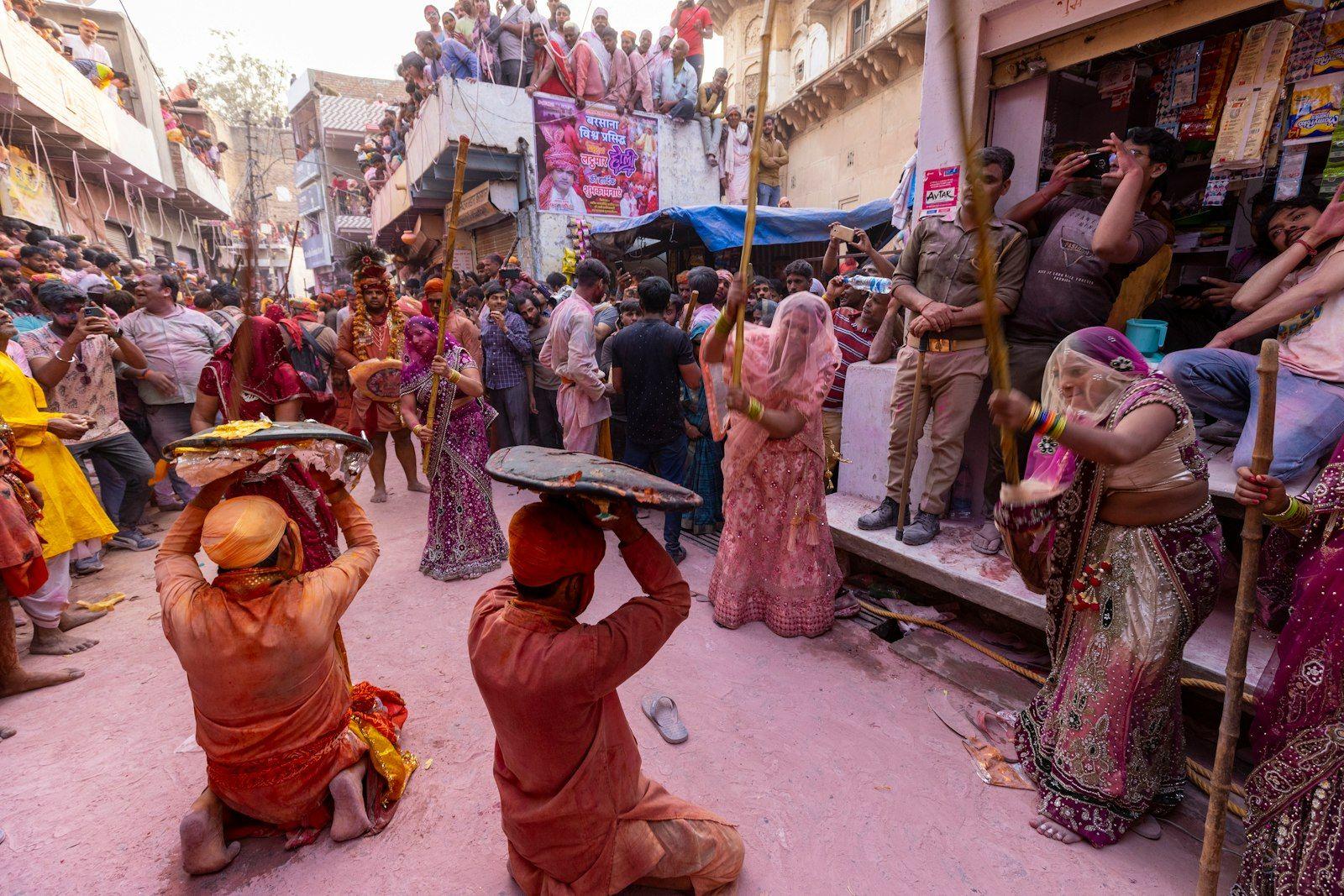
Guided tip: If you want the Braj tradition without the main-day scrum, spend the earlier part of the week here and plan to watch Dhulandi from a rooftop or upper floor.
Jaipur, for the Elephant Festival
Picture painted elephants parading through the city streets alongside horses and camels, with elephant tug-of-war contests breaking out and polo matches further along. That scene is Jaipur's Elephant Festival, held the day before Holi. On that pattern it should fall around 21 March 2027, though both the date and the venue are worth confirming once they're announced. Folk performances fill out the day around the procession. It's the most spectacle-heavy option here, and we'd happily build a first Holi around it.
Udaipur, for the royal version
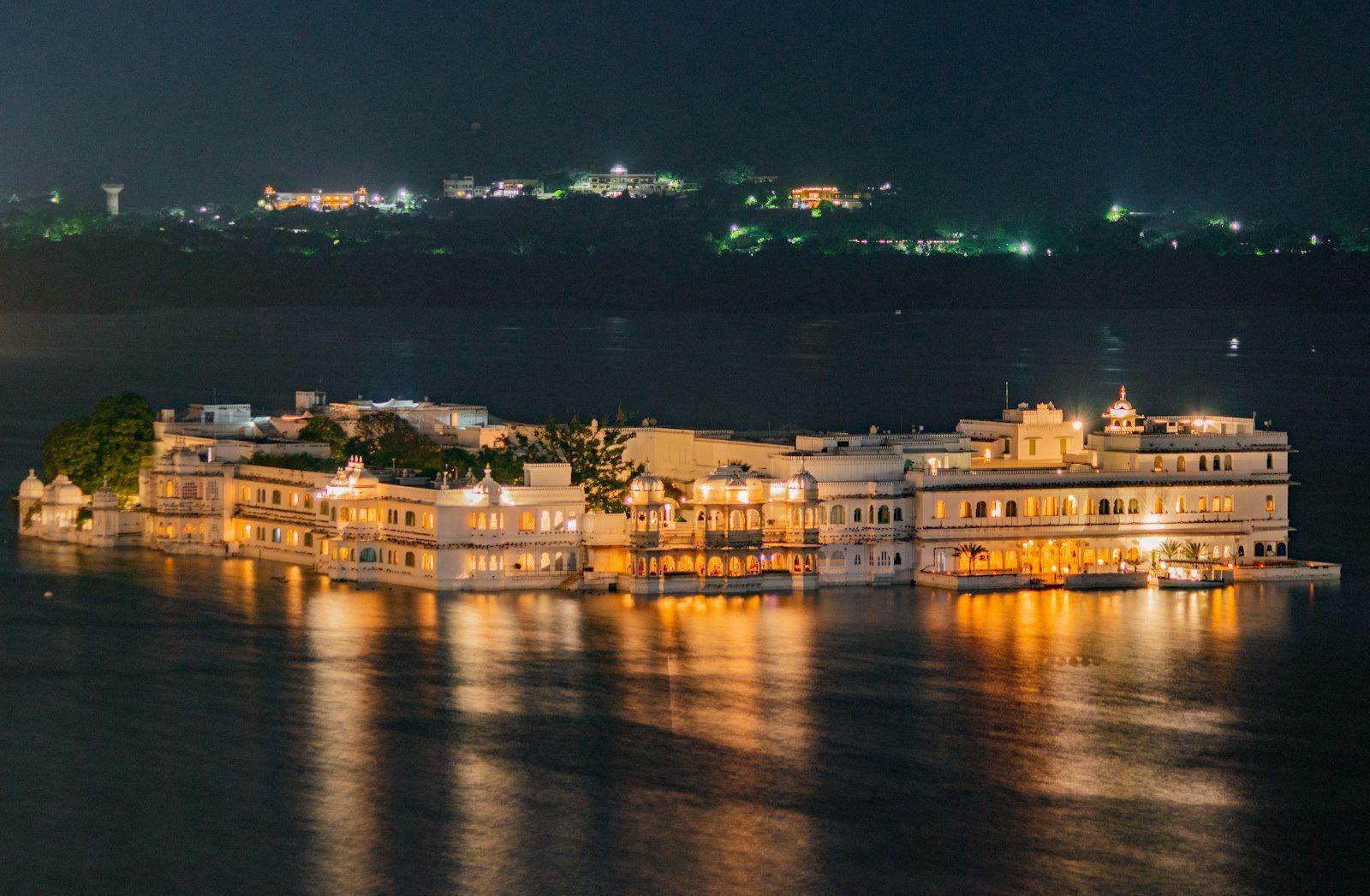
Udaipur is where we'd send anyone who wants the ceremony more than the chaos. The highlight is a grand Holika Dahan at the City Palace on the Sunday night, with processions of elephants, camels and horses followed by fireworks, as described in Lonely Planet's guide to Holi in India. The procession winds through the palace grounds before the fireworks close out the night.
Delhi, for the parties
Want a dance floor and someone else handling the logistics? Delhi treats Holi as a party, and a large one. Events range from big public grounds and stadiums with several stages to sports and social clubs, hotel and resort parties with pool access and table bookings, and lower-cost gatherings at markets and fairgrounds. Some promoters run a series of events across several venues and dates.
Most follow a similar formula. Expect DJ sets mixing Bollywood, hip-hop and EDM, live dhol drumming, rain-dance or splash zones, organic colour play, food stalls and drink counters, with thandai sometimes on the menu. Premium events add flower showers, pool access and reserved tables.
Tickets run from a few hundred rupees for a general daytime event to a couple of thousand for a premium hotel party. Those ranges come from recent listings, so check prices closer to the date once 2027 events go on sale.
If you're new to Holi, we'd pick a hotel event over a big open ground. You still get the colour and the music, in a space that already has a pool to rinse off in.
How to play Holi safely
What should you actually wear on Holi morning, and what should stay in the hotel safe?
Clothes and what to carry
Wear old, light clothes you're happy to see ruined. Full sleeves and long pants cover more skin, and cotton is the most comfortable fabric once you're soaked. Kurtas and salwar kameez are common choices.
Skip anything thin or white. Wet, it turns see-through, which draws the kind of attention nobody wants. If you're unsure, wear a layer underneath.
Add sunglasses and a scarf or cap, and leave expensive jewellery at the hotel. Phones and most of your cash are better left behind too, and whatever you do carry should go in a waterproof pouch or a sealed plastic bag. For photos, we think a waterproof camera is the easy answer. A DSLR can come along, but it needs to be sealed in plastic with openings left for the lens and viewfinder.
Skin, hair and eyes
Before you head out, coat exposed skin and hair in coconut oil or petroleum jelly. Coconut oil is the one recommended over other oils, and either option helps the colour wash out afterwards.
Be picky about the powder itself. Some stalls sell a cheap metallic "silver" colour, and it's a real health concern, so avoid it. Organic, natural colour is the safer choice, and it's increasingly sold as the clean, eco-friendly option.
When water is coming at you, keep your mouth closed, since you can't always tell where it came from. Never aim colour or water at anyone's eyes, nose or mouth.
If you have sensitive skin, or you'd simply rather watch, find a balcony, rooftop or upper floor. Watching from above is a completely legitimate way to do Holi, and it's where we'd want to be standing for photos anyway.
Crowds and etiquette
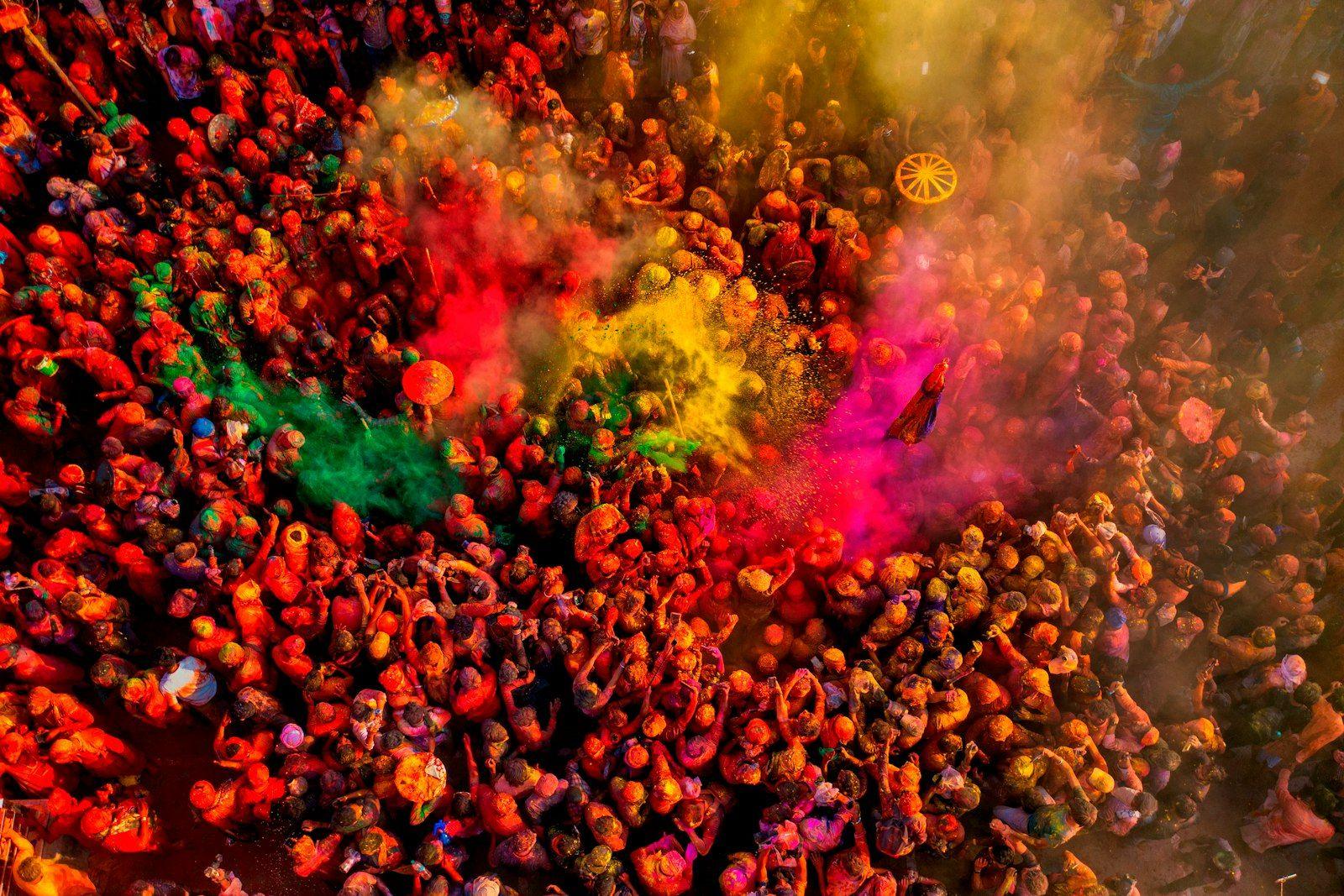
Ask before putting colour on anyone, especially on their face. The same goes for dipping into someone else's water bucket or colour supply.
Harassment does happen in dense crowds. First-hand traveller accounts describe foreign visitors who stand out physically, and women in particular, drawing more unwanted attention. That comes from travellers' own experience rather than any official advisory, and the practical advice is easy to follow. Stay with a group, and decline unwanted colour firmly. You don't owe anyone a polite explanation.
Look up as well as around. Water balloons thrown from rooftops can injure you if one hits your head.
Leave animals alone. Colour on their coats can make them sick when they lick it off.
When to stay in
Our rule is simple. Play in the morning, and be indoors or somewhere calmer by mid-afternoon.
Holi is liveliest and safest to join in the morning. Streets usually quiet down by early to mid afternoon, partly because drinking picks up as the day goes on. Once that shift starts, especially in the densest crowds, head back to your hotel, find a vantage point to watch from, or move to a calmer, ceremonial setting.
The evening before has a different mood altogether. Holika Dahan bonfires and evening temple rituals are calmer and more reverent than the daytime colour play, which is one more reason we like Udaipur's palace version of the night.
Guided tip: Oil your skin and hair before breakfast, then be on the street as early as you can manage. Book lunch somewhere indoors instead of fighting for a table once the afternoon turns, and you'll have caught the best hours of play without the crowds that follow.
Bhang and drinks
Bhang is cannabis-infused, and it turns up in lassi, thandai and pakoras as a genuine, widespread part of Holi in many places. The catch is strength. Informally sold street versions are unpredictable, so if you want to try it, buy from a government-licensed outlet or an established, reputable shop rather than a street stall. We'd rather you skipped it entirely than gambled on an unknown batch.
Alcohol needs planning too. Prices often rise and some shops close for the day, so buy anything you want in advance.
Is March still a good time to visit India?
Is March still a good time to visit India? Yes, as long as you book early.
October to March is consistently described as India's main travel season, when the weather is dry, warm and comfortable. March is a very popular month in its own right, partly for that weather and partly for Holi itself. From April, conditions shift toward hot, humid and stormy, so a Holi trip catches the last stretch of comfortable travel weather before the summer heat arrives.
That popularity is the thing to plan around. We'd book accommodation in your Holi town before anything else.
Planning your trip
Settle where you'll spend 22 March first, then build the rest of the trip around it. For the Braj week, that means arriving around mid-March and moving between Barsana, Nandgaon, Vrindavan and Mathura. For Jaipur's Elephant Festival or Udaipur's palace bonfire, the Sunday night matters as much as the Monday. For Delhi, it's mostly about buying the right ticket once 2027 events are listed.
If you're weighing Holi against a calmer winter trip, see our Kerala or Rajasthan comparison.
If a festival is reason enough to plan a whole trip around, our guide to Japan's own festival calendar covers the same idea on the other side of Asia.
For a first Holi, we'd do Udaipur's palace bonfire on the Sunday night, then play in the streets Monday morning before heading to a rooftop once the afternoon turns.
You can plan the route and the bookings in the Guided travel planning app.


