


In three lagoons on the Pacific side of Baja California Sur, wild gray whales swim up to small boats, surface right alongside them and sometimes stay long enough for the people on board to reach out and touch them. The whales choose to do this. Nobody chases them, and a whale that loses interest sinks out of sight and leaves. It's one of the strangest wildlife encounters anywhere in Mexico. It runs on a tight calendar, from late December or early January to mid-to-late April, and the best weeks fall between mid-February and mid-March.
This guide compares the three gray whale lagoons (San Ignacio, Magdalena Bay and Ojo de Liebre) and covers what's worth adding on a longer trip, which means Cabo's humpbacks and the blue whales off Loreto.
Where to see whales in Baja California
The gray whales are the reason to come, and we'd plan the whole trip around them. Every winter they migrate from Arctic and sub-Arctic feeding grounds to Baja's Pacific-side lagoons to calve and mate. They arrive around late December or early January and leave by mid-to-late April. Outside that window the lagoons are empty because the whales are back in Arctic waters, and no tours run between May and November.
Two other species turn a lagoon trip into something bigger. Humpbacks come to the waters off Cabo San Lucas to mate and give birth, breaching and slapping their tails while they're at it, though they don't come up to boats the way gray whales do. Over on the Sea of Cortez side, Loreto Bay National Marine Park is considered the best place in Mexico to see blue whales, the largest animal on Earth. Both of these seasons overlap with the gray whales' peak, and that overlap is what makes a longer trip work. If big wildlife encounters are the draw, we'd also point you toward East Africa's Great Migration, one of the only other wildlife spectacles on this scale.
The three gray whale lagoons
Which lagoon should you pick? Mostly the one that fits your route, because all three sit inside the same broad gray whale season, even though the recommended window narrows a little from lagoon to lagoon, and all three are worked by licensed local boats. San Ignacio and Ojo de Liebre both sit inside the El Vizcaíno Biosphere Reserve, a UNESCO-recognized protected area. Magdalena Bay is a few hours' drive from La Paz and a long day trip from Cabo.
If we could only pick one for a first visit, we'd pick San Ignacio, because it has the history and a cap on boat numbers. After that, the differences mostly come down to boat size and cost.
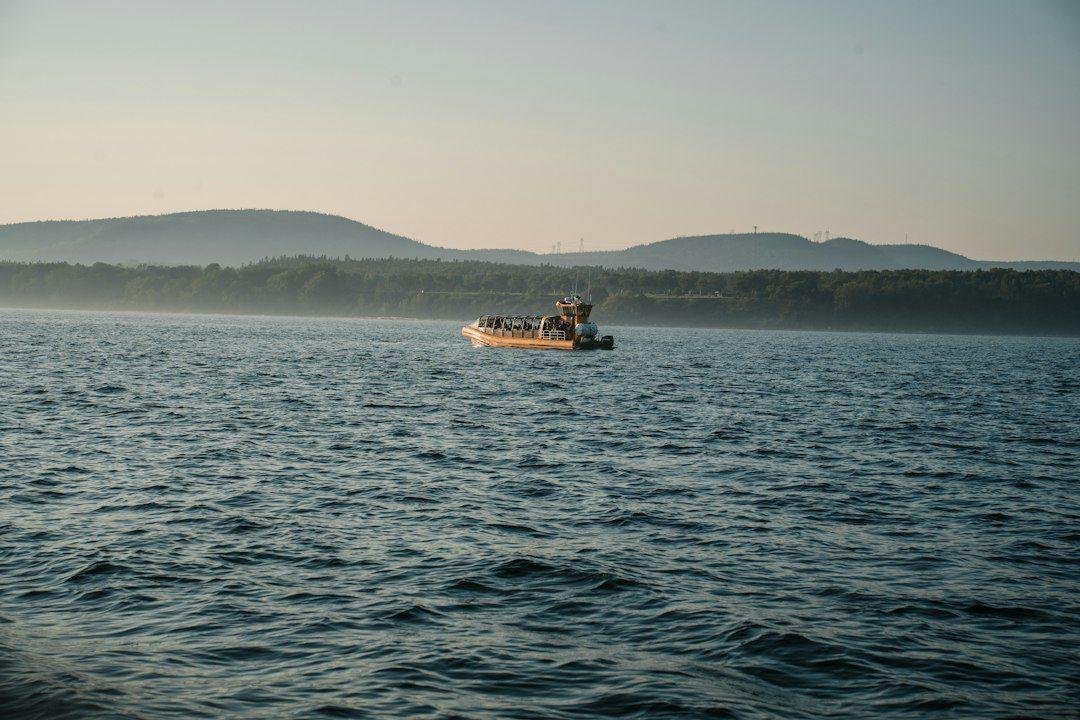
San Ignacio Lagoon
San Ignacio Lagoon is where the “friendly whale” story started. The first documented case of a whale choosing to make contact with a boat happened here, and sources date the start of the behavior to the early 1970s. One account credits a lone fisherman whose repeated friendly encounters set it off. The lagoon also has a reputation for the best odds of a long, sustained encounter. Nobody has measured that, but it's the reputation you'll hear most often.
Because the lagoon is inside the biosphere reserve, the number of boats on the water is capped. Day trips leave from the town of San Ignacio, and the lagoon itself is about an hour away on a dirt road. Locals recommend a 4x4, though a regular car can make it. Multi-day packages put you in an eco-camp on the lagoon instead.
The long-standing local cooperative Kuyima runs tours and takes bookings at its office in San Ignacio town. Kuyima recommends January 20 to March 10 for this lagoon specifically. A short local day tour costs roughly $55 to $70 per person. Multi-day packages with transport from further away, such as San Diego, can run well over $1,000 to $2,000 per person for a couple of nights with lodging.
For San Ignacio Lagoon whale watching, we'd choose the eco-camp over day trips. About two hours of dirt road round trip is time you could spend on the water.
Magdalena Bay
We think Magdalena Bay is the best lagoon for anyone who wants flexibility, since you can often just show up at the port and go out. It's also one of the more reliable places for the moment most people come for, when a mother nudges her calf toward the boat.
There are three access points, and each one is a different town.
- Puerto Chale. The closest to La Paz, about 2.5 hours away.
- Puerto San Carlos. About 3 hours from La Paz, and good for photography.
- Puerto Adolfo López Mateos. Its narrow channel has the strongest reputation for close encounters.
Tours work the same way at all three. You pay in cash pesos for the whole boat, not per person, and outside peak weekends you usually don't need to book ahead. Expect to pay around 1,500 to 1,600 pesos an hour for the boat, with a three-hour minimum, split among up to about 12 people. For a longer stay, overnight whale camps on the bay sell two- to four-day packages for roughly $600 to $1,200 per person, depending on the number of nights.
Sources disagree about crowds here. One operator says Magdalena Bay is calmer and less crowded than the other lagoons, while an independent travel blog says it's busier than San Ignacio. Our read is that both can be true, since the experience varies a lot depending on which town you leave from and when. The calving period at Magdalena Bay runs from mid-February to the end of March.
Ojo de Liebre
Want the most gray whales in one place? Ojo de Liebre, near Guerrero Negro and also known as Scammon's Lagoon, has the largest concentration of the three, with counts sometimes put at more than a thousand whales in season. Like San Ignacio, it sits inside the El Vizcaíno Biosphere Reserve.
Tours leave from Guerrero Negro, and you book them through a hotel, the local fishermen's cooperative or an agency. The boats here are bigger, carrying 12 to 16 people. That makes the encounter less intimate and harder to photograph than at Magdalena Bay or San Ignacio. A basic tour costs roughly $50 per person, about the same as the other lagoons, though treat that figure as a loose guide.
We'd choose Ojo de Liebre if sheer numbers matter more to you than a small boat, or if Guerrero Negro is already on your route. Drones aren't allowed during the tour.
The rules that protect the whales
All whale watching in Mexico falls under NOM-131-SEMARNAT-2010, the federal environmental standard for the activity. It limits how fast boats can travel, how close they can get and the angle they can approach from. It also limits how many boats can be near the whales at once. Engines must be off during close encounters, and harassing whales is explicitly banned.
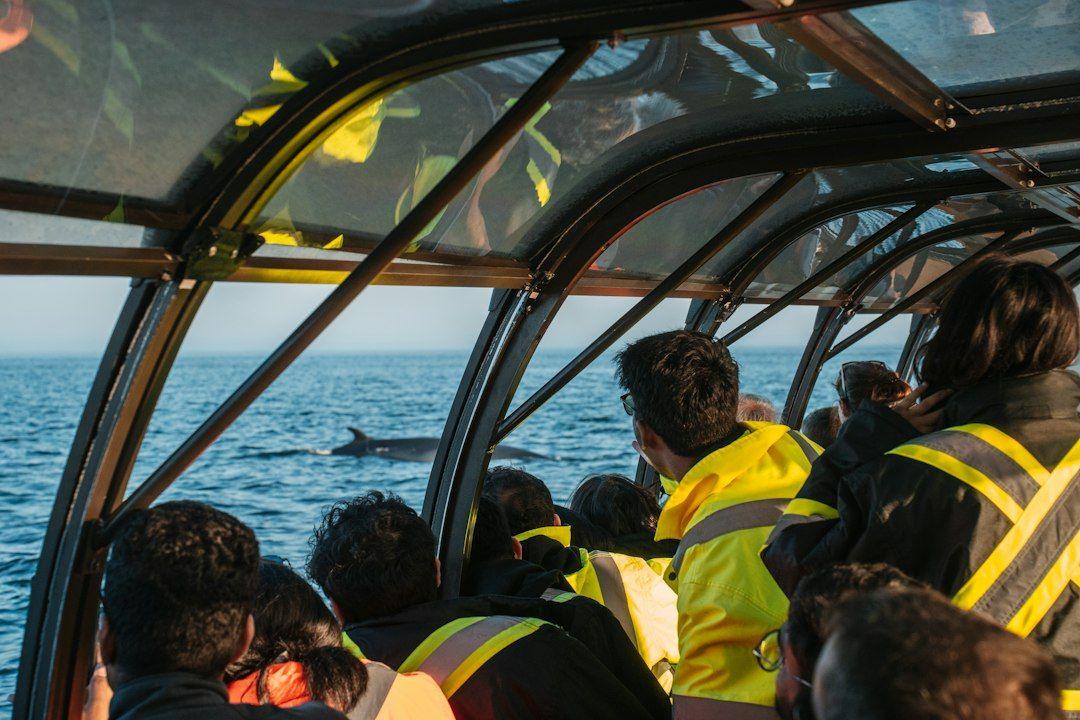
In the gray whale lagoons, only small boats licensed for whale watching, called pangas, are allowed to carry tourists. Unlicensed boats can't legally run whale tours, and swimming with wild whales generally isn't permitted anywhere in Mexico. San Ignacio and Ojo de Liebre add another layer, because the biosphere reserve has its own rules on top of the federal standard.
We'd only get on a licensed boat, and we'd walk away from anyone offering to put you in the water with whales.
Can you touch a gray whale?
We'd go out hoping for a touch and expecting none. It does happen, but only when the whale decides. If a whale surfaces at the boat and chooses to stay, the captain may let guests reach out to it. Nobody chases or grabs a whale or forces an approach, and a whale that doesn't want contact just leaves. No lagoon guarantees a touch on any trip.
Your odds go up later in the season. From mid-February, the calves are old enough and confident enough to approach boats.
Humpback whales in Cabo San Lucas
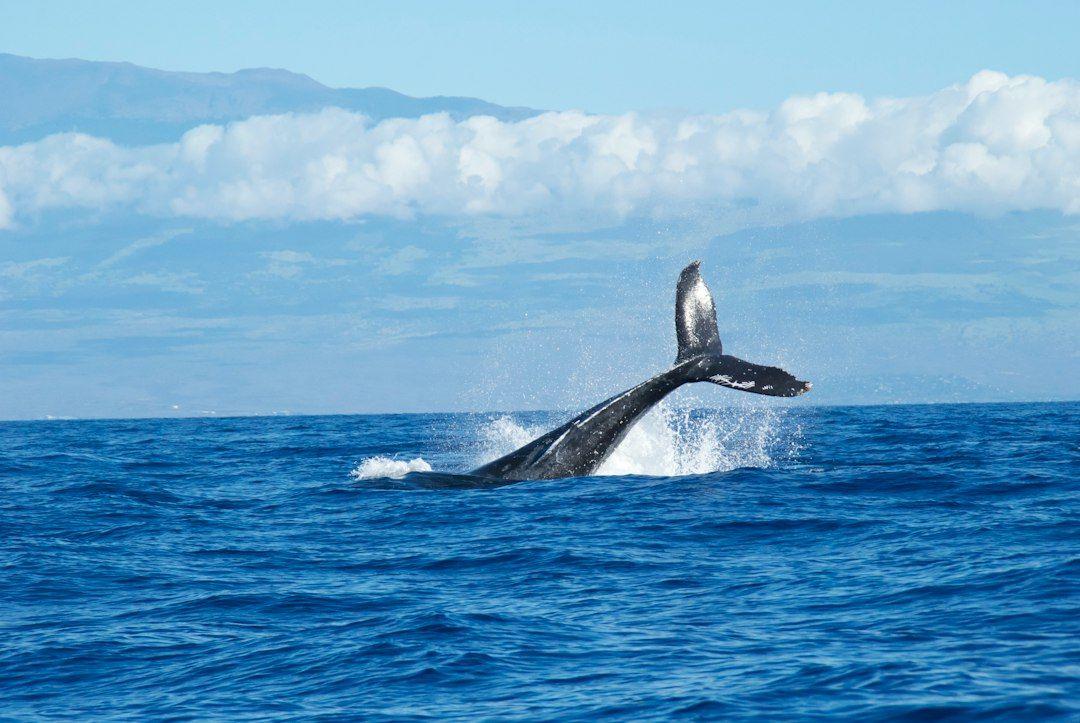
Staying in Cabo and not heading north? Then you'll be watching humpbacks, the whale most visitors to Cabo see. They come here to mate and give birth, and they're known for breaching and slapping their tails. They don't approach boats the way gray whales do, so you'll be watching from a distance.
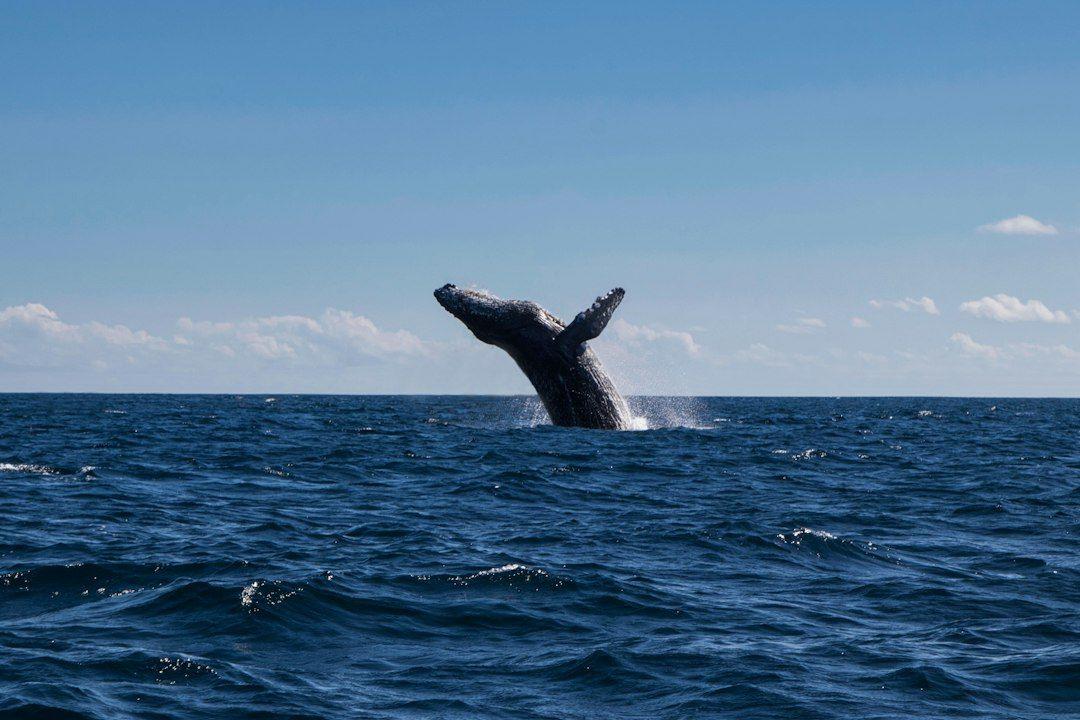
The season runs roughly from November or December through April. Activity peaks from late December through March, and January is usually the busiest single month. Sources disagree about how the season ends. One tour operator's guarantee program stops on April 15, another source runs the season to the end of April or into May, and a third already counts April as low season. We'd treat March as the safe bet.
Tours leave the Cabo San Lucas marina several times a day. They last about 2 to 2.5 hours and are usually led by a marine biologist or naturalist. Shared small-group tours cost roughly $80 to $120 per person, and private tours roughly $300 to $500 per group. Operators offering steep discounts are usually unlicensed. You can sometimes see humpbacks from shore too, especially near The Arch (El Arco).
Gray whales only occasionally turn up around Cabo. To see them from here, take a day trip north to Magdalena Bay, which is roughly five hours each way.
Blue whales in Loreto
Loreto Bay National Marine Park is a UNESCO World Heritage Site in the Sea of Cortez, sheltered by five uninhabited islands. It's considered the best place in Mexico to see blue whales. Fin whales and sei whales share the same waters, and dolphins turn up too.
Mid-February through March is the window every source agrees on, and mid-February is named again and again as the peak. One source narrows Loreto's season to February 15 through March 30 and calls February the best month for blue whales here and in La Paz. Sightings aren't guaranteed, because blue whales are less predictable than gray whales in a lagoon.
Tours leave from the Loreto marina, and some leave from Marina Puerto Escondido. They cost roughly $80 to $120 per person, and combo tours add stops at nearby islands. We'd only add Loreto if you can give it a few days of its own. It's remote enough that very few operators run day trips in from elsewhere.
Best time to see whales in Baja
If you can only go once, go between mid-February and mid-March. That's when the gray whale peak overlaps with both the humpback season and Loreto's blue whale window, and it's the only time of year all three are realistic on one trip.
- December. Gray whales start arriving late in the month, and Kuyima counts December as low season in the lagoons. Humpbacks are arriving off Cabo, with peak activity starting in the last weeks of the month.
- January. Kuyima's high season for the gray whale lagoons starts on January 15, and its recommended window for San Ignacio opens on January 20. January is usually the busiest month for humpbacks. Sources disagree about blue whales this early, so we wouldn't plan on them.
- Mid-February to mid-March. The sweet spot. Calves are old and confident enough to approach boats, Magdalena Bay's calving period is underway, humpbacks are still at their peak and Loreto's blue whale window is open. March is San Ignacio's busiest month, so book ahead.
- Late March and April. Kuyima's high season ends on March 15 and April counts as low season, with the gray whales leaving by mid-to-late April. Loreto's agreed blue whale window closes at the end of March, and sources disagree about whether April still counts for humpbacks.
- May to November. No gray whale tours run, because the whales are back in Arctic waters.
So, is it worth it?
A short local day tour at San Ignacio costs roughly $55 to $70 a person, and at Magdalena Bay up to about 12 people share the hourly boat rate. For that money, we think a gray whale lagoon is one of the best-value wildlife trips in Mexico, even on a day when no whale comes close enough to touch.
The bigger cost is time. All three lagoons take some driving to reach, and Loreto takes even more. If we had extra money to spend, we'd put it toward a night at a lagoon camp rather than another day on the road.
In a nutshell
Short on planning time? Here's the whole trip in eight lines:
- Gray whales are in Baja's Pacific lagoons from roughly late December to mid-to-late April. Mid-February to mid-March is the sweet spot.
- San Ignacio has the history and a cap on boat numbers. Book through Kuyima in town, and book ahead for March.
- Magdalena Bay is the most flexible. You pay per boat in cash pesos at Puerto Chale, Puerto San Carlos or Puerto Adolfo López Mateos.
- Ojo de Liebre has the most whales but bigger boats of 12 to 16 people.
- Touching only happens if the whale chooses to stay. No lagoon guarantees it.
- Cabo's humpbacks peak from late December through March, and March is the safe bet.
- Loreto's blue whales are most reliable from mid-February through March, and the trip works best as a stop of its own.
- Only book licensed operators, which all work under NOM-131-SEMARNAT-2010.
Planning the trip
We'd build the route around the lagoon first and fit Cabo or Loreto around it. Which lagoon you choose decides most of the driving, and you'll get the most out of it with an overnight stay rather than a rushed day trip. If you want more of what else makes the country worth it, our Mexico fun facts roundup covers the basics. Use the Guided travel planning app to map out the drive between lagoons and the nights in between.


