
Greece Fun Facts to Know Before Your Trip
By Sandra Romano
Aug 29, 2026
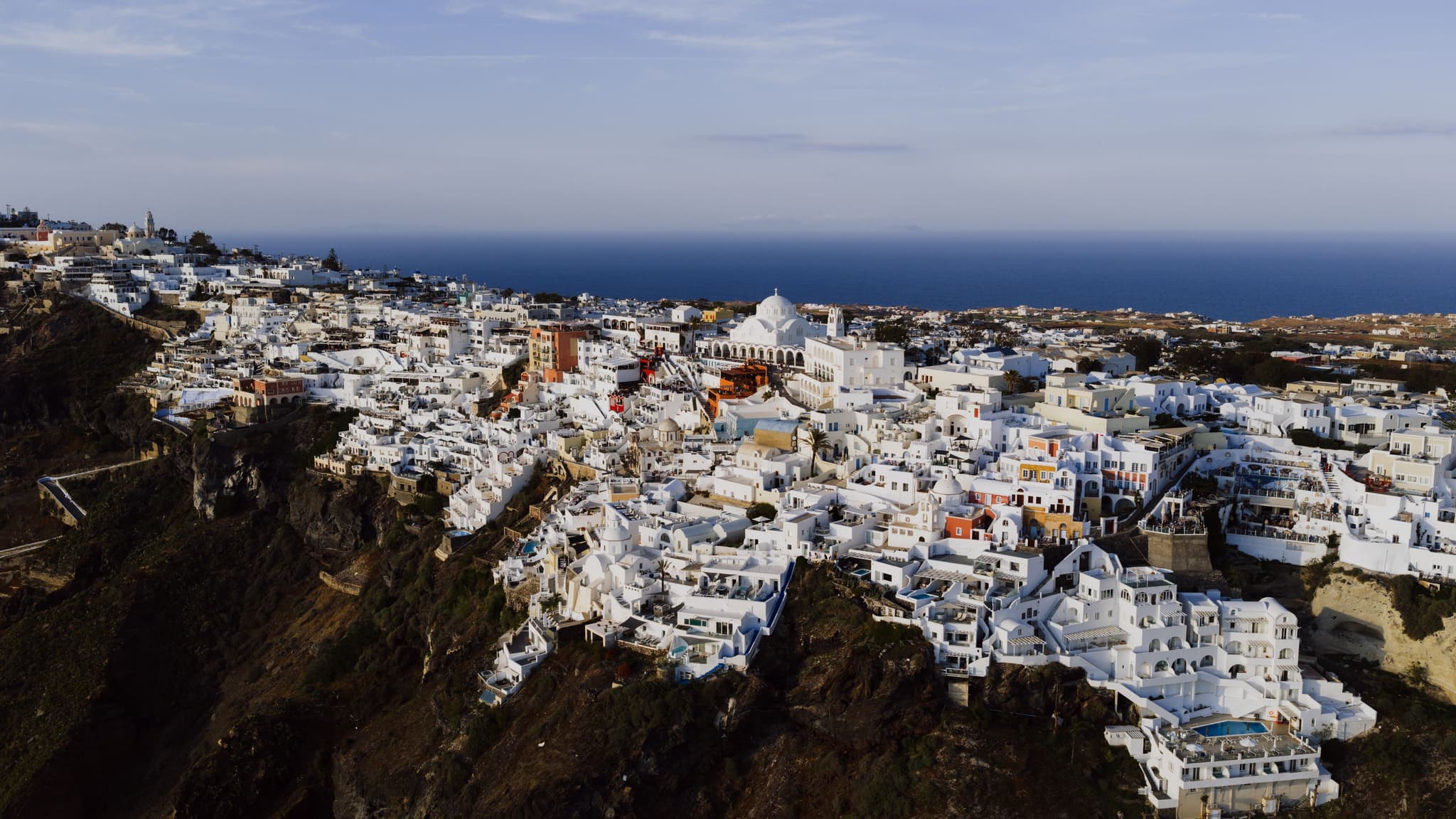
Most people plan Greece backwards. They pick the two islands they have already seen in photographs, book them, and then try to fit an entire country into whatever days are left over. Greece has around 6,000 islands and islets and only about 227 of them are inhabited, so the chances that your famous two are also your best two are not good. Here is what is actually worth knowing before you book, and a few places where we think the received wisdom about Greece is wrong.
The islands do most of the deciding
How many islands can you sensibly do in a week? Two. Three if they sit in the same group and the ferry timetable cooperates, which it does not always do. Island hopping looks frictionless on a map and then you discover that two islands you can see from each other are connected by a boat that runs twice a week in the wrong direction.
The islands split into groups, and the group you choose matters more than the individual island. The Cyclades are the ones you have already seen in photographs. The Ionian islands sit on the other side of the country and feel, to us, like a different holiday altogether. Within the Cyclades, we would take Naxos over Paros every time, and it is not close. That is a preference rather than a verdict. There is just more island to Naxos, and it takes a crowd better.
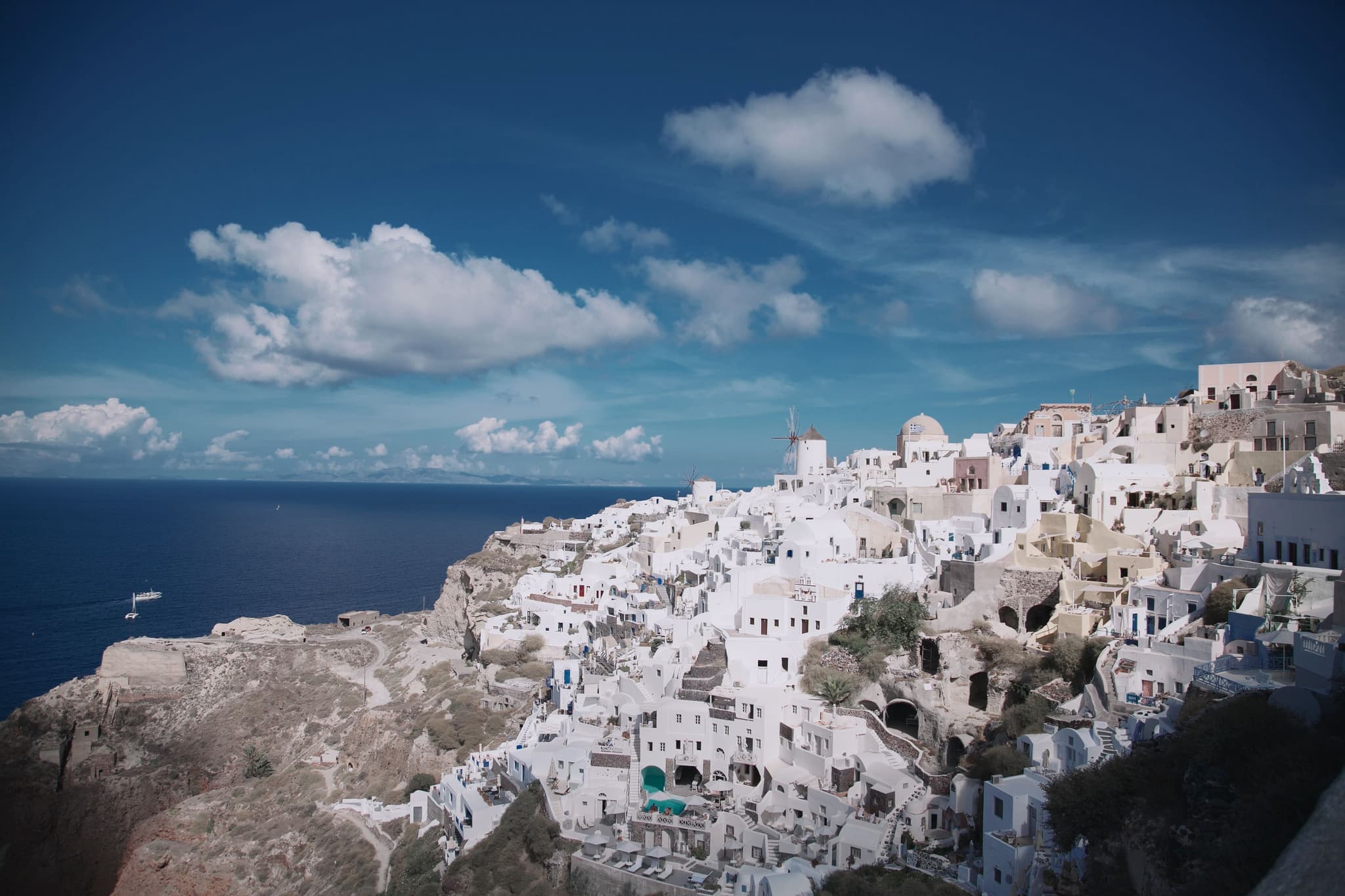
Santorini earns the photographs. It genuinely does, and the people who call it overrated are usually reacting to the crowd rather than the place. The view down over the caldera is worth arranging a trip around. Just do not turn up at Oia at seven in the evening expecting a quiet moment with it, because everybody else has had that same plan since breakfast.
The mainland is mostly vertical
About 80% of Greece is mountainous, dominated by the Pindus range running down the spine of the mainland. This surprises people whose mental image of the country is entirely coastline. The mainland is the most underrated part of Greece and we will keep saying so until more people spend a few days up there instead of transferring straight from the airport to a ferry.
Twenty-four letters, most of which you already know
Do you need to learn Greek before you go? No. But being able to read the alphabet is worth an hour of your life, because the moment road signs and menus stop being decorative shapes, the whole country gets easier to move around.
The Greek alphabet has 24 letters and developed somewhere between 2,500 and 3,000 years ago. Greek is also one of the oldest living languages still in everyday use, which is a strange thing to sit with while you are reading a bus timetable. You already know more of those letters than you think from maths and science classes. Once you can sound out a word, a surprising number of them turn out to be words you know.
A few phrases that will carry you further than they should.
Yassas: hello (polite, or to more than one person)
Kalimera: good morning
Efharisto: thank you
Parakalo: please, and also you're welcome
Nero: water
The old stuff is older than you are picturing
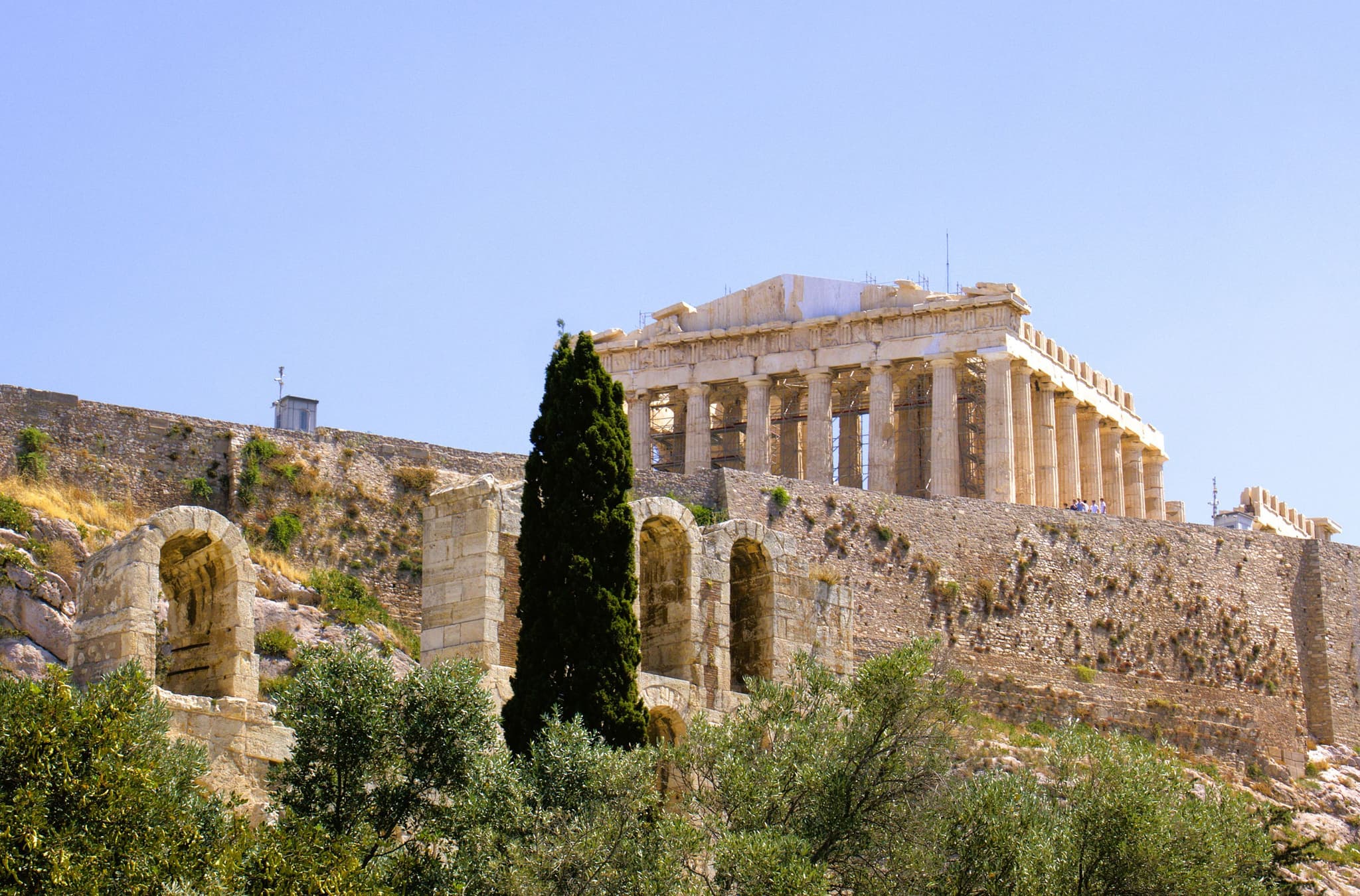
The Acropolis is worth the queue and the heat, and we have no patience for the argument that it is overhyped. The Parthenon on top of it dates to the 5th century BC. Standing under the columns does something that photographs of them have never once done.
Here is the part that reframes everything. The Minoan civilisation on Crete flourished between about 3000 and 1100 BC, which means it was already ancient history to the people who built the Parthenon. Even so, those Parthenon builders lived closer to the last of the Minoans than they do to us. Roughly 600 years back to the Minoans for them, and about 2,500 years forward to us. Alexander the Great came later still, born at Pella in 356 BC, and by the time he died he had built one of the largest empires in history.
Democracy and the Olympics started smaller than the brand suggests
How democratic was it? Not very, by the standards of the word today. Athenian democracy developed across the 6th and 5th centuries BC, and only free men could vote. Women could not vote. Neither could enslaved people or foreigners. Worth remembering when the word gets thrown around on a walking tour. The ancient Olympic Games began at Olympia around 776 BC as a religious festival in honour of Zeus. The sport was the offering. The modern Games were revived in Athens in 1896.
Greece has more archaeological museums than any other country, which is either a wonderful fact or a warning, depending on your travelling companions.
Guided tip: two archaeological sites in one day is ambitious, three is a mistake. Pick the one you actually care about and go early. Spend the afternoon somewhere with shade.
Food, and the coffee situation
Greece is usually ranked the world's top per-capita olive oil consumer, and one afternoon at a taverna table makes that ranking obvious. Olive oil goes on the salad, in the beans, over the bread, and then a bit more on the salad. Feta turns up in more places than you are expecting, and so does whatever came out of the water that morning. Lamb, cooked slowly until it gives up, is the thing to order when a taverna has it on the daily board.

Moussaka is the dish everyone knows. Souvlaki is the one you will actually eat most often, usually standing up and usually late. Meals run long by design, and dessert arrives when it arrives. Greece has over 4,000 traditional dances documented across its regions, and a fair number of them still come out at weddings.
The frappé was invented in Greece, and it is the correct order. Cold, foamy instant coffee shaken into something far better than its ingredients deserve, sipped over an hour or two rather than drunk. Order it metrios if you want it medium sweet. Anyone telling you to seek out third wave espresso instead has misunderstood the assignment.
The goats and the seals
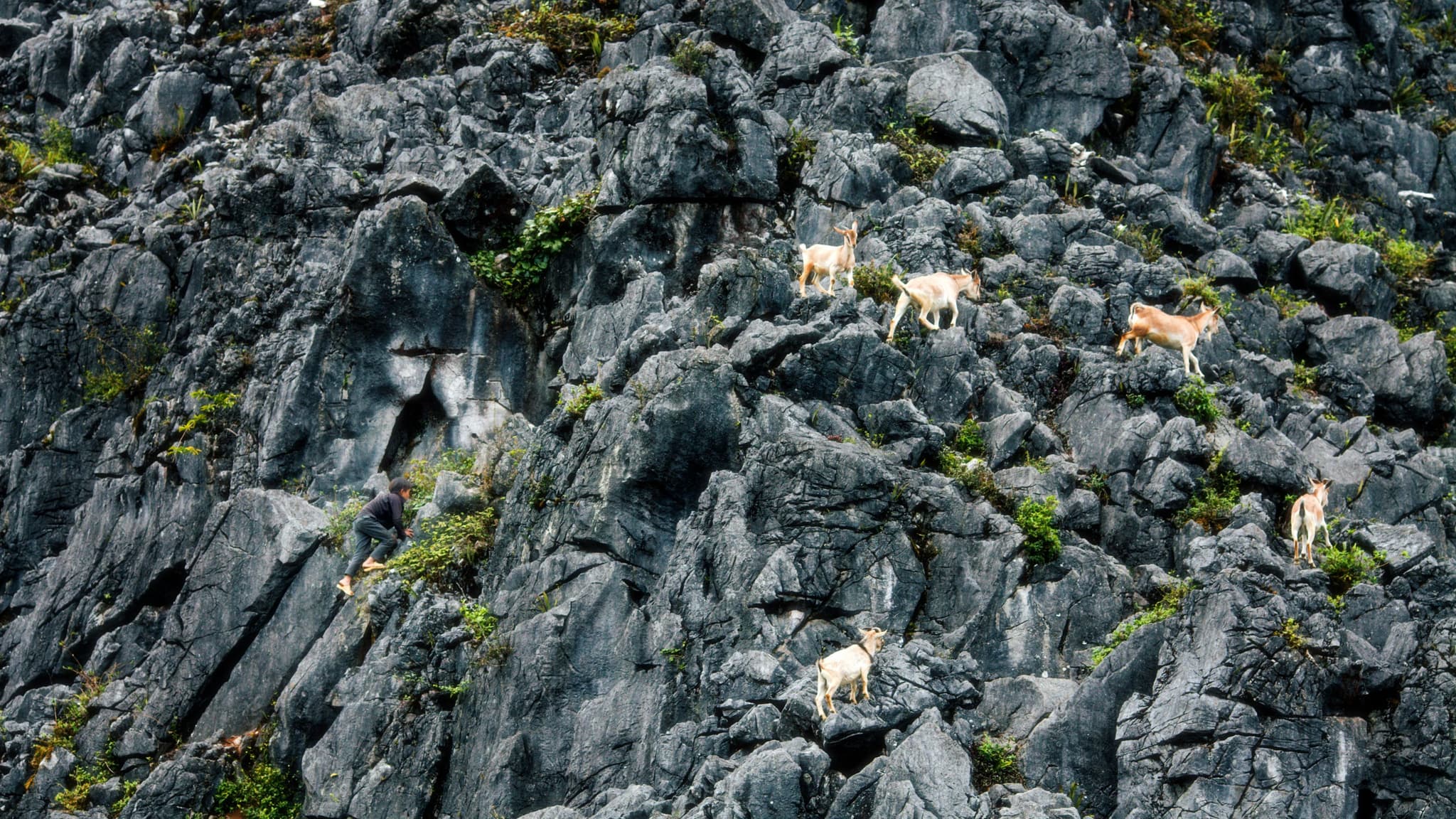
Nobody books Greece for the wildlife, and we understand why, but two animals here are worth knowing about. The Kri-Kri is a wild goat found only on Crete, sure-footed on cliffs in a way that looks like showing off. It is genuinely rare, so treat a sighting as luck rather than an itinerary item.
In the water, Greek coasts are one of the strongholds of the Mediterranean monk seal, one of the world's most endangered marine mammals. Sea caves and quiet coves are their thing. If a boat captain tells you to keep your distance from one, listen to them.
When to go, and what everyone else is doing
When should you go? Not August, unless you have no choice, because that is when the heat peaks and the entire country is on holiday alongside you. May, June, September and early October are the good months. September in particular gets you warm sea and thinner crowds.
Greece averages more than 250 sunny days a year, and some islands run closer to 300. Tourism makes up around 20% of the economy, and the country hosts far more visitors each year than it has residents. Go anyway. Just be strategic about where you are standing at sunset.
Guided tip: check the ferry schedule before you book accommodation, not after. Routes thin out sharply either side of high summer, and an island that was a quick hop in August can turn into an overnight problem in late October.
Planning the thing
The trips that work are the ones where somebody kept a running list. A beach a friend swears by. The taverna somebody mentioned on the plane. Save Greece to the Guided travel planning app and you can drop all of it into one place and turn a pile of half-remembered recommendations into an actual route before you fly.
Enjoyed This Blog? Continue Reading!
There is plenty more where this came from, so keep scrolling for our other destination guides and trip-planning posts.


