

Thailand
Thailand travel guide: everything you need to know before you go
We still remember our first bowl of khao soi on a plastic stool in Chiang Mai, and honestly, that's when Thailand properly hooked us. This country somehow does it all at once, jungle mornings, island afternoons, and street food that beats half the restaurants back home. You don't need a rigid plan to travel to Thailand; some of our best days happened because we changed course after meeting someone at a hostel. Prices stay low almost everywhere, so you can eat well, sleep well and still have money left for the next stop. Locals tend to go out of their way for you, too; a small “khob khun” (thank you) usually gets a big smile in return. This Thailand travel guide covers everything you'll want to know before you go.
5 reasons to visit Thailand
Beaches and islands for every budget (also for backpackers)
Street food that gives fine dining a run for its money.
Temples you can actually walk through yourself
Cheap, easy travel between cities, islands and everything in between.
Warm weather almost all year round, so you're rarely picking a bad month.
Best places to visit in Thailand
Not sure where to start when you're mapping out your Thailand travel plans? You genuinely can't go wrong, but a few places make more sense than others depending on what kind of trip you're after. If you want temples and food markets, head north. If it's beaches and boat trips you're after, everything south of Bangkok delivers. And if you just want a bit of everything without racing the clock, Thailand is small enough that you can string a handful of these together without wasting half your trip in transit. Here's our pick of where to go, and why each one earns its spot on the list.
Bangkok
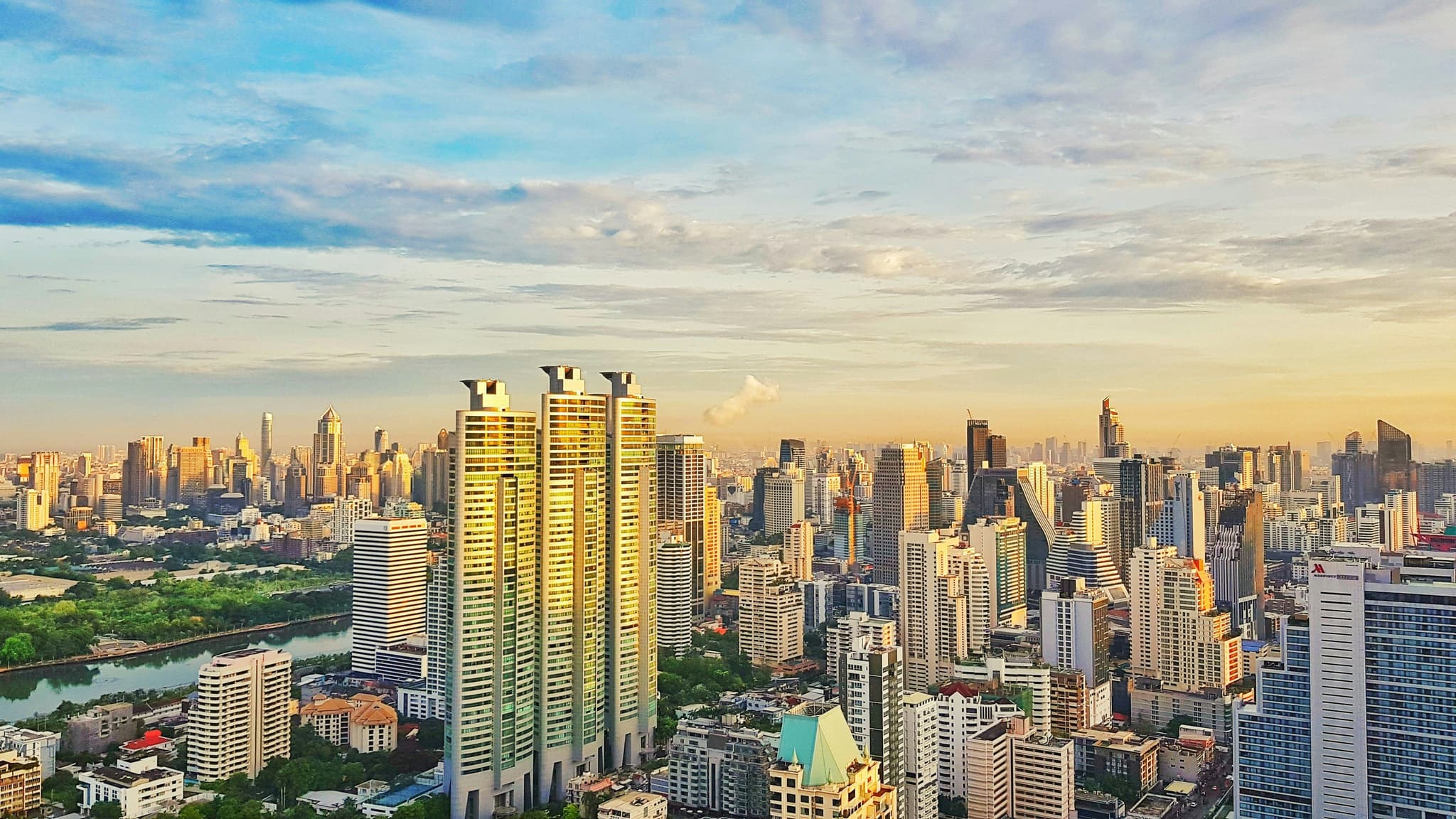
This is probably where you'll land, and while some people treat it as a one-night stopover, we'd actually give it two or three days before moving on. The Grand Palace and Wat Pho are the obvious must-sees, but Bangkok has plenty more if temples aren't quite your thing, think rooftop bars with skyline views, the canals (klongs) of Thonburi by long-tail boat, or Chatuchak Weekend Market if you're around on a Saturday or Sunday. Chinatown and Yaowarat Road come alive after dark with some of the best street food in the city, and you could spend an entire evening just working your way down one street. If you've got a spare day, Ayutthaya's temple ruins are only about an hour away by train, so you can add Thailand's old capital to your trip without booking another hotel night.
Chiang Mai
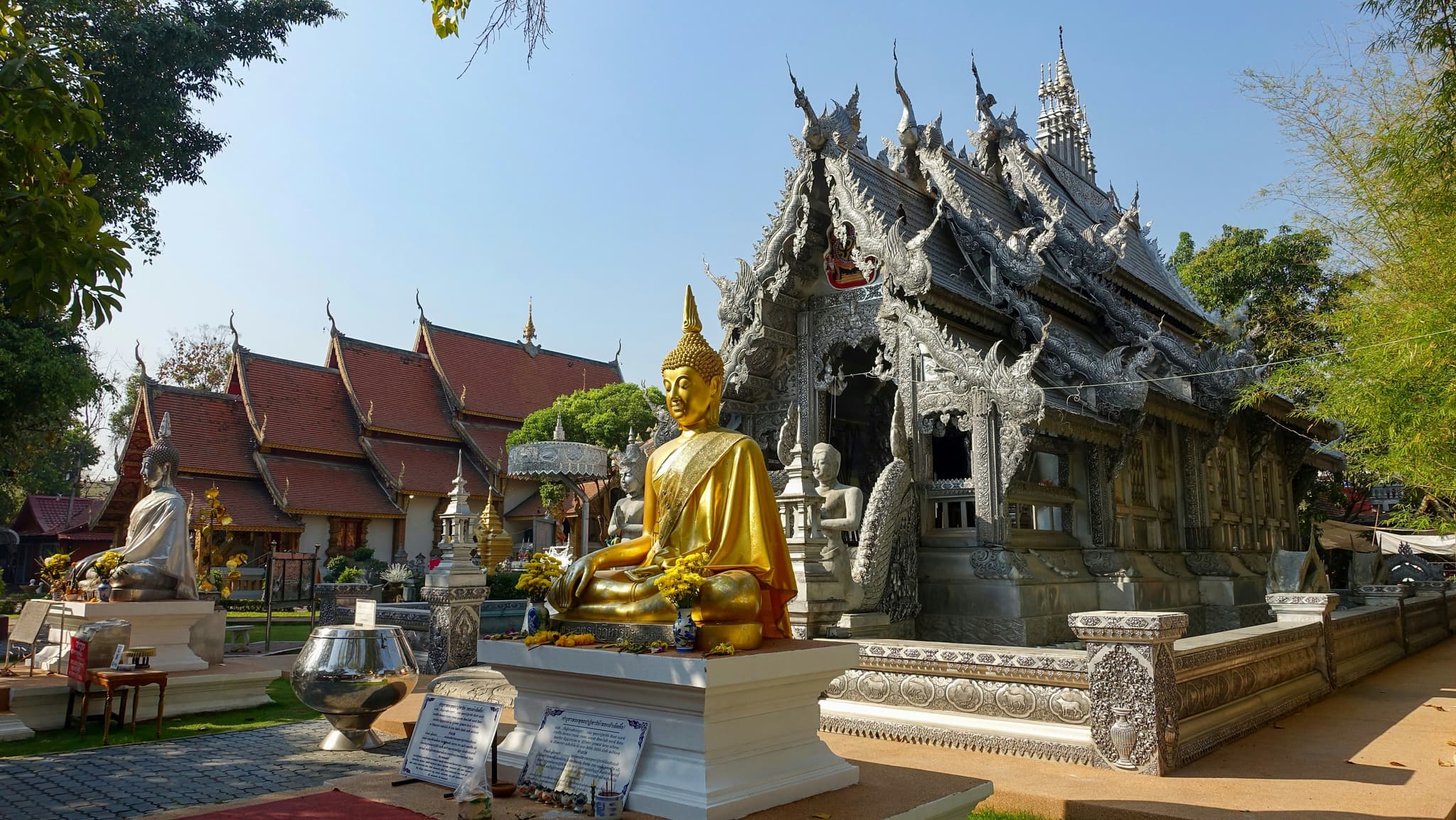
Chiang Mai has a completely different energy to Bangkok, slower, greener and easier to explore on foot. We recommend basing yourself inside the Old City walls, and you'll be within walking distance of dozens of temples. Though for fewer people around, Wat Umong's forest setting or Wat Suan Dok at sunset are great alternatives with just as much character. Wat Phra That Doi Suthep, on a mountain just outside town, is worth the trip up for the views alone, hop on a red songthaew and it'll drop you close to the entrance. Beyond temples, the food here easily holds its own too, and the Sunday Walking Street market is where you can try plenty of it in one evening. If you've got two or three extra days, Pai is only three to four hours north by minivan and gives you winding mountain roads, waterfalls and a much smaller, laid-back town at the end of the ride.
Chiang Rai
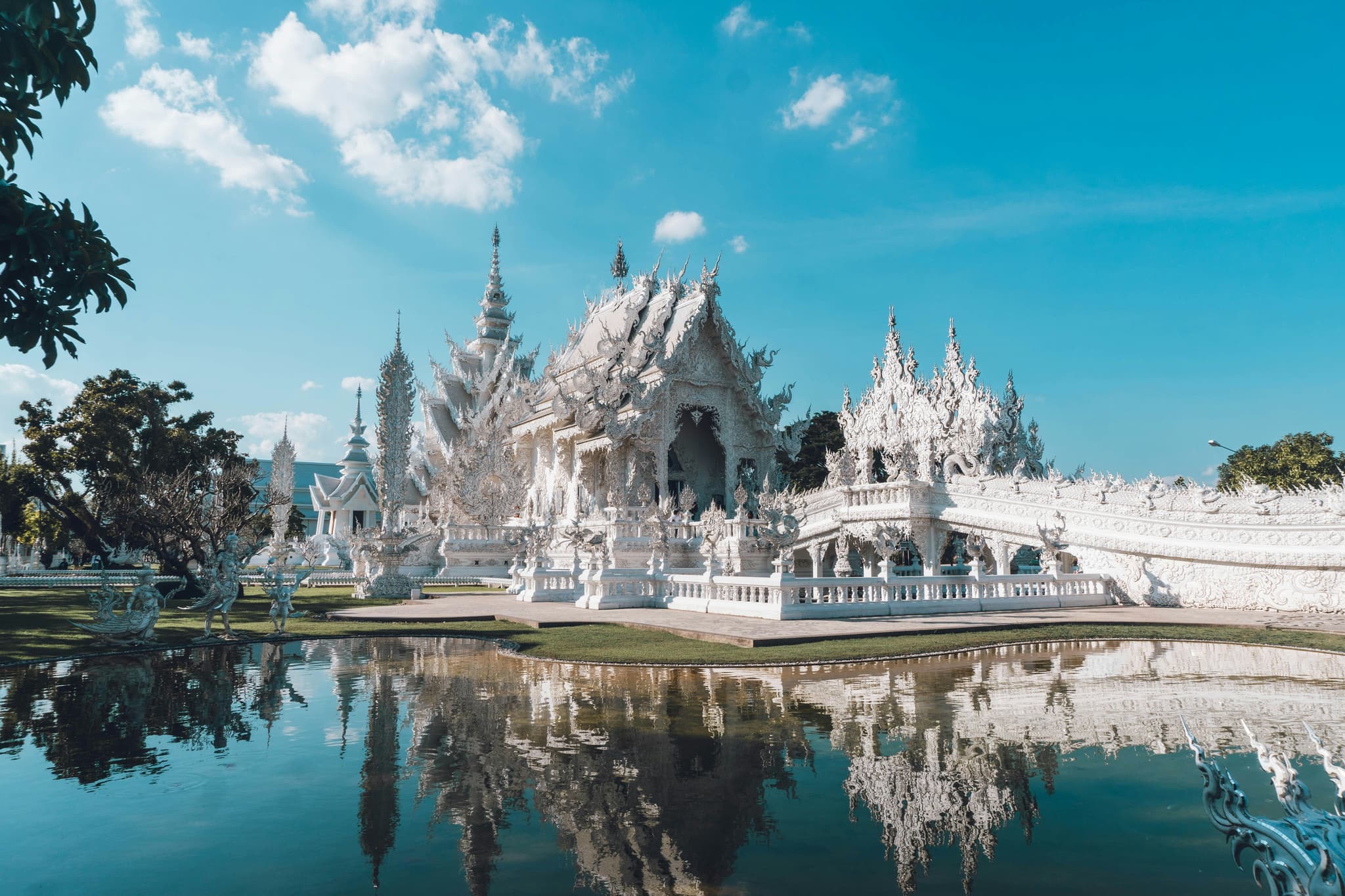
Chiang Rai gets a fraction of the visitors Chiang Mai does, despite having some of the country's most unusual temples within reach. Wat Rong Khun, the White Temple, and Wat Rong Suea Ten, the Blue Temple, are a short (songthaew) ride apart and both are free or close to it. And with more time, the Black House (Baan Dam) museum makes a worthwhile detour from the usual temple circuit. The Golden Triangle, where Thailand, Laos and Myanmar meet along the Mekong, makes a good half-day trip if you want to see three countries from one riverbank.
Koh Lanta
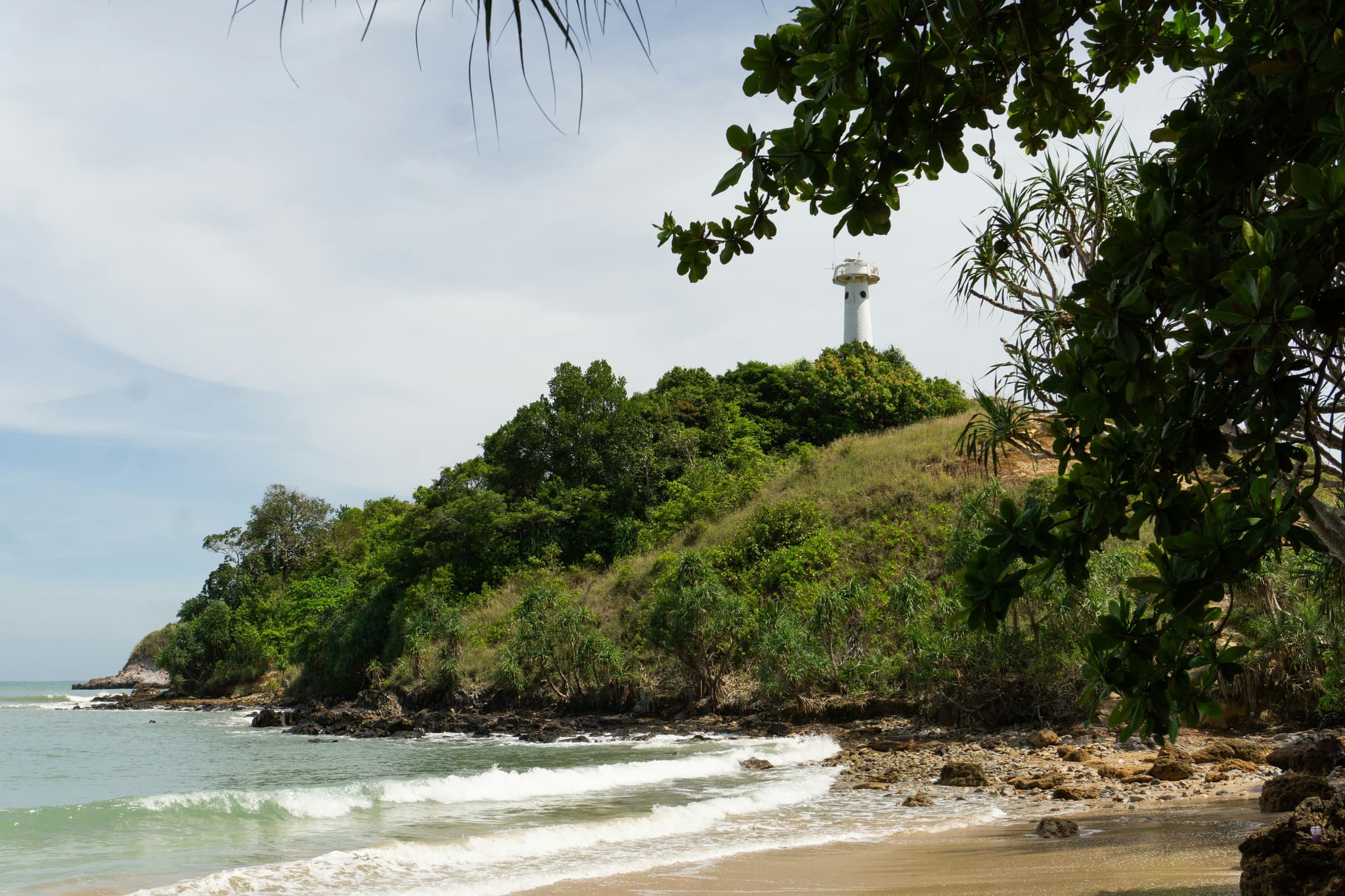
If big islands sound like too much, Koh Lanta is the calmer alternative, with long, peaceful beaches instead of beach clubs stacked three deep. Long Beach and Klong Dao make the easiest bases for your trip, both have nice guesthouses and beach restaurants, though Kantiang Bay in the south is worth considering too if you want something even calmer. If you love animals, visit Lanta Animal Welfare while you’re on Koh Lanta, where you can take a guided tour, meet some of the rescued cats and dogs and support the work they do for animals across the island. Renting a scooter makes sense here since the island is flat and easy to get around. And beyond the beaches, Mu Ko Lanta National Park on the southern tip and the Emerald Cave day trip are both worth building into your stay. You can reach Koh Lanta with a flight-plus-ferry combo from Bangkok, most routes take around half a day.
Koh Phi Phi
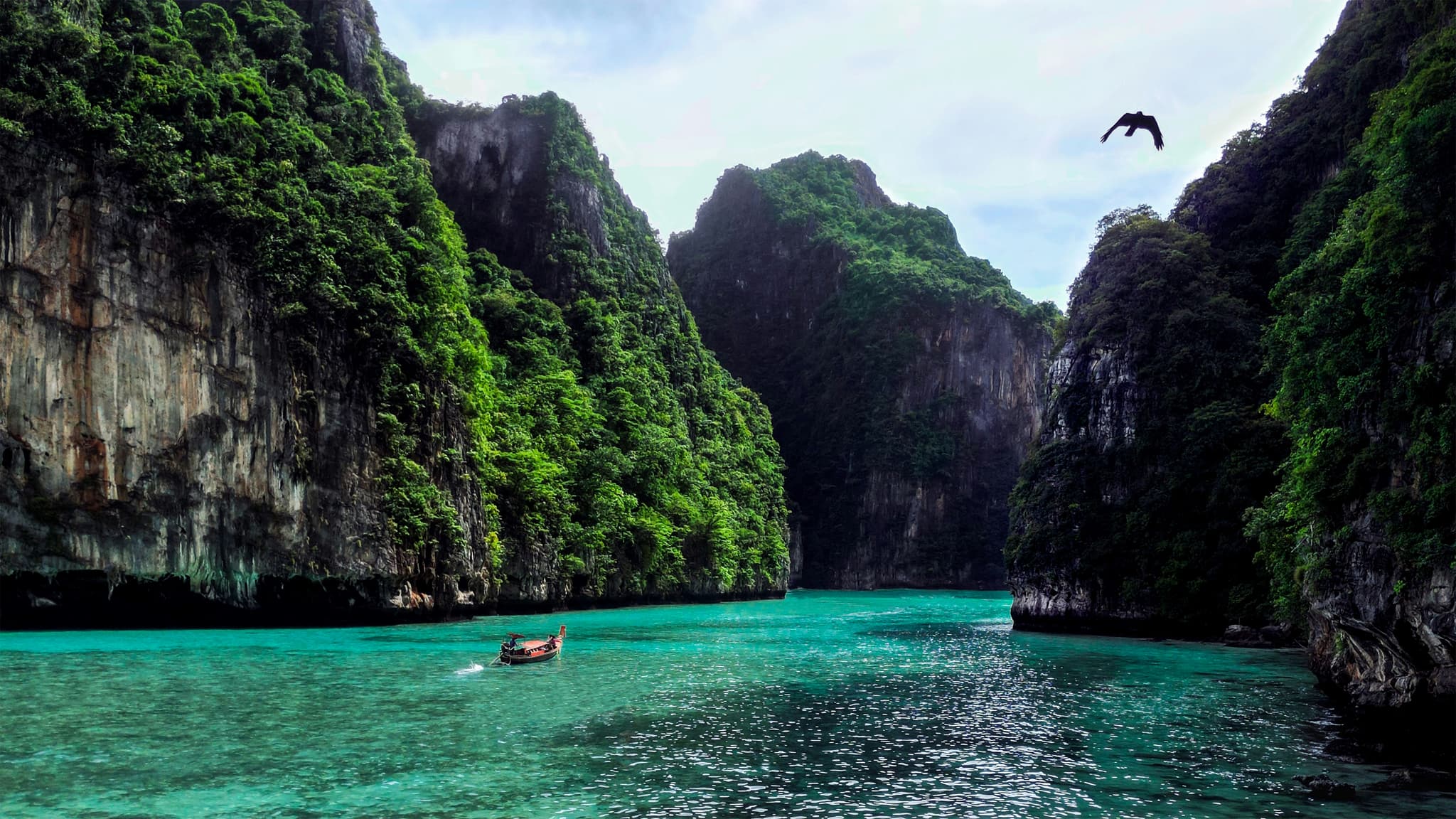
Koh Phi Phi delivers the postcard shot everyone associates with Thailand, sharp limestone cliffs dropping straight into turquoise water. Stay on Phi Phi Don, since Phi Phi Leh next door is day-trip only and closed overnight to protect Maya Bay. A sunrise longtail boat tour is the best way to see Maya Bay before the bigger boats show up mid-morning, and if snorkelling is more your thing than beach clubs, Bamboo Island and Monkey Beach are both worth adding to the same trip. Nightlife on Phi Phi gets loud around Ao Ton Sai, so if you'd rather sleep, look at guesthouses over on Loh Dalum Bay or Laem Thong instead, which’s a different world after 10pm.
Khao Sok National Park
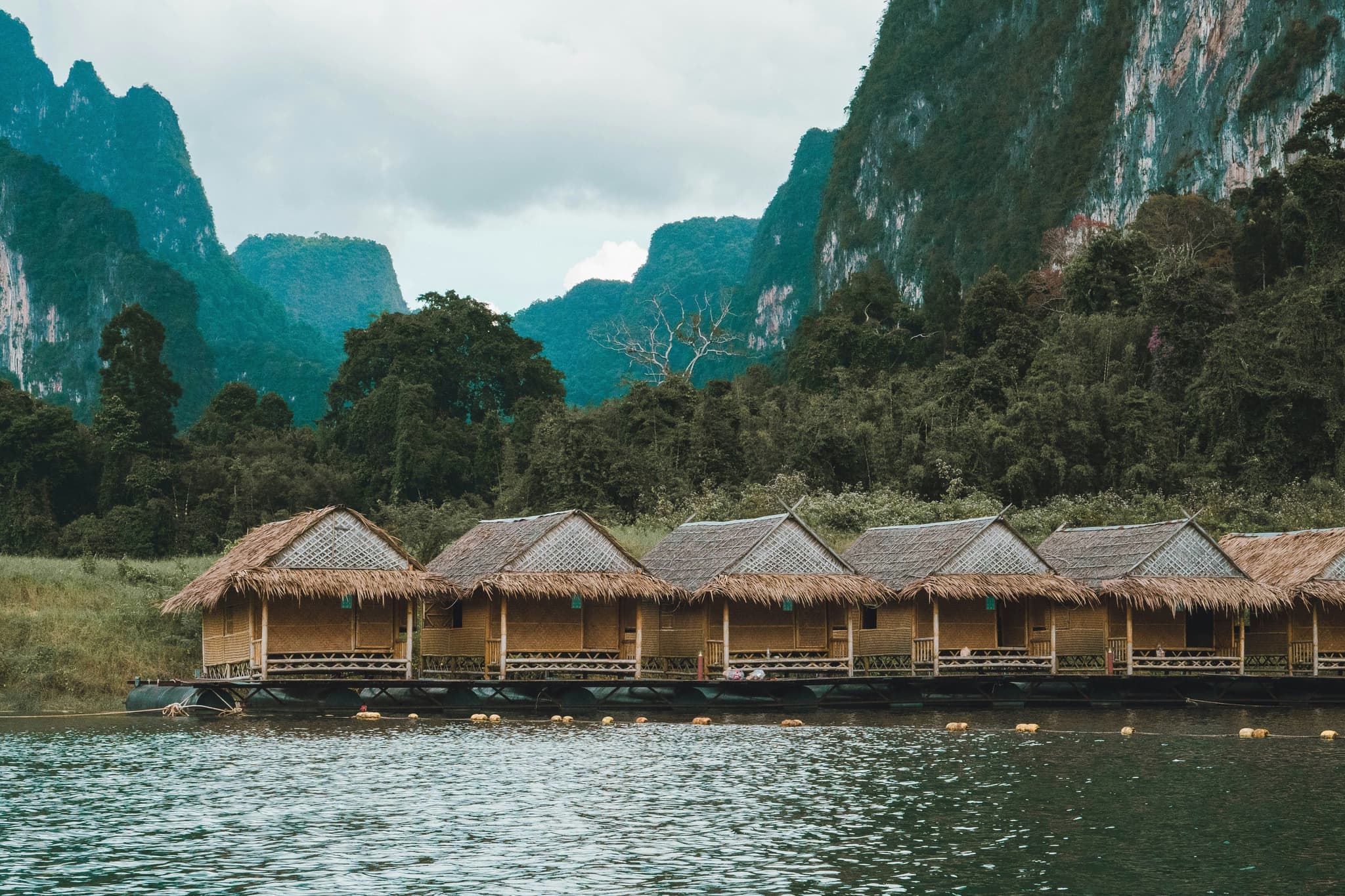
Khao Sok is an ancient rainforest older than the Amazon, with limestone karsts rising straight out of Cheow Lan Lake. A floating bungalow on the lake itself is the classic way to stay, most are simple bamboo huts with no electricity after 10pm, though jungle lodges closer to the park entrance work well too if you'd rather have hot water. Night safaris and canoe trips through the karsts are both worth booking through your accommodation, wild elephants and gibbons show up sometimes too. If you want to et here from Bangkok, you’ll need to take a flight to Surat Thani followed by a two-hour transfer, so it works best if you’re already doing a longer south-bound route rather than a standalone stop.
Koh Lipe
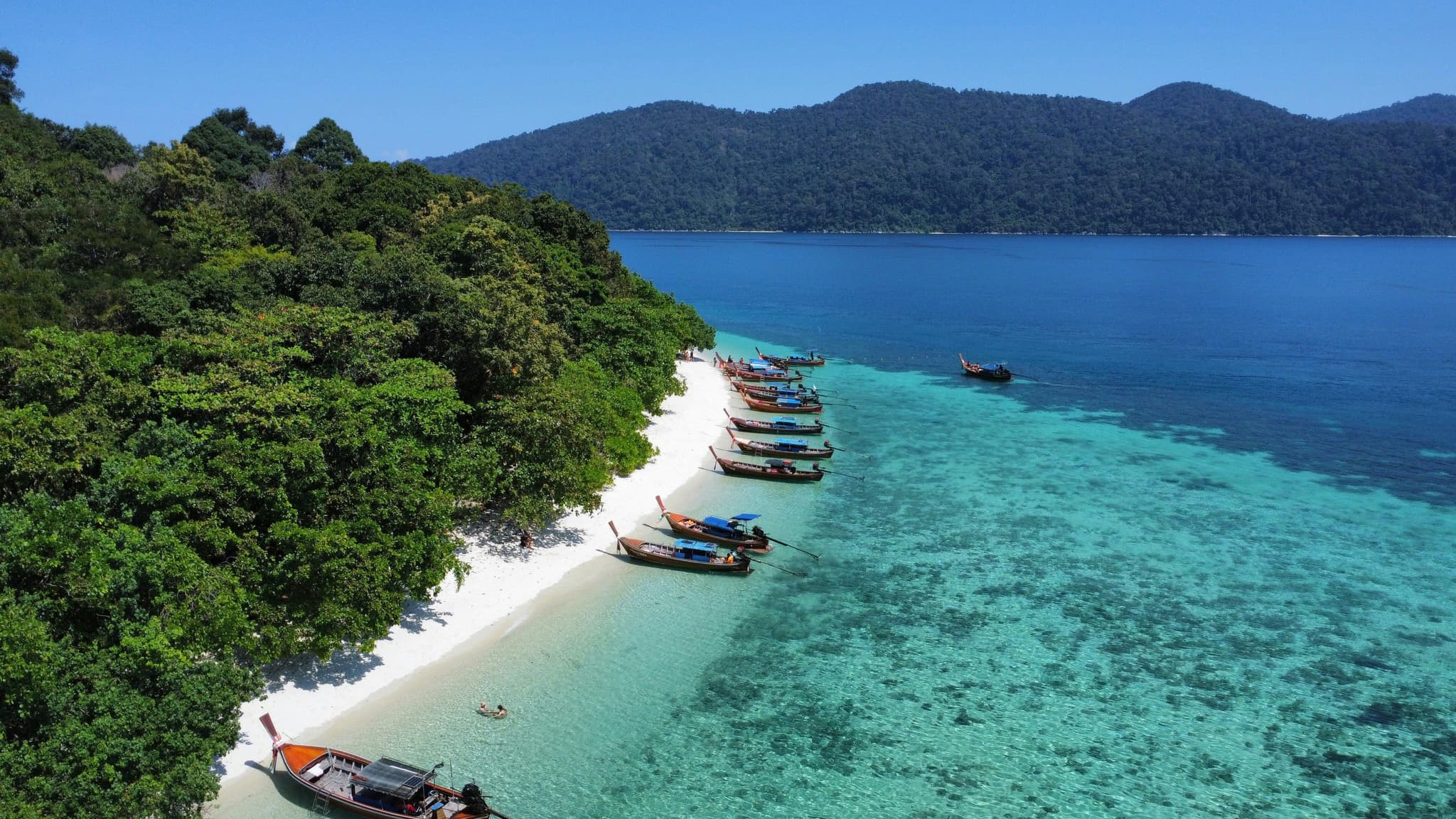
Koh Lipe is so far south it's almost closer to Malaysia than to Bangkok, and the water here is some of the clearest in the country. Walking Street doubles as the only road on the island, lined with beach bars and seafood grills that set up fresh each evening. Snorkelling right off Sunrise Beach or Sunset Beach gets you reef fish without a boat trip. Though a half-day tour out to Ko Adang and Ko Rawi is worth it if you want more coral and the island mostly to yourselves. Reaching Koh Lipe takes a bit of effort, a flight to Hat Yai or Trang followed by a ferry, so it suits a slower trip rather than a quick add-on.
Thailand itinerary ideas for your trip
By now you've probably got a shortlist of places you want to see, and the next challenge is stringing them together without wasting entire days on the road. Thailand runs about 1,650 km from its northern tip to the southern border, so a north-to-south trip covers real distance and needs a bit of planning around flights, trains and ferries. We've put together a few Thailand itinerary ideas that connect the best places in a logical way, so you're not losing days moving between stops.
7-day Thailand itinerary
Day 1-2: Bangkok: Grand Palace and Wat Pho, Chatuchak Market or a canal boat tour.
Day 3: Fly south to Koh Lanta or Koh Phi Phi
Day 4: Book a longtail boat day trip for island hopping, snorkelling
Day 5-7: More island time, or hop on a boat to a smaller nearby island
10-day Thailand itinerary
Day 1-3: Bangkok, plus a day trip to Ayutthaya's temple ruins
Day 4-6: Chiang Mai, with a night or two in Pai
Day 7-10: Koh Phi Phi or Koh Lanta
14-day Thailand itinerary
Day 1-3: Bangkok, plus a day trip to Ayutthaya's temple ruins
Day 4-7: Chiang Mai, Pai and Chiang Rai
Day 8-10: Khao Sok National Park
Day 11-14: Koh Lanta or Koh Lipe
Want more inspiration? Check out the following trips:

Fun experiences you can do in Thailand
After you've mapped out places to visit, the next question on any trip to Thailand is what you'll actually spend your days doing there, so here's what's worth booking and where to find it.
Explore the Grand Palace and Wat Pho, Bangkok
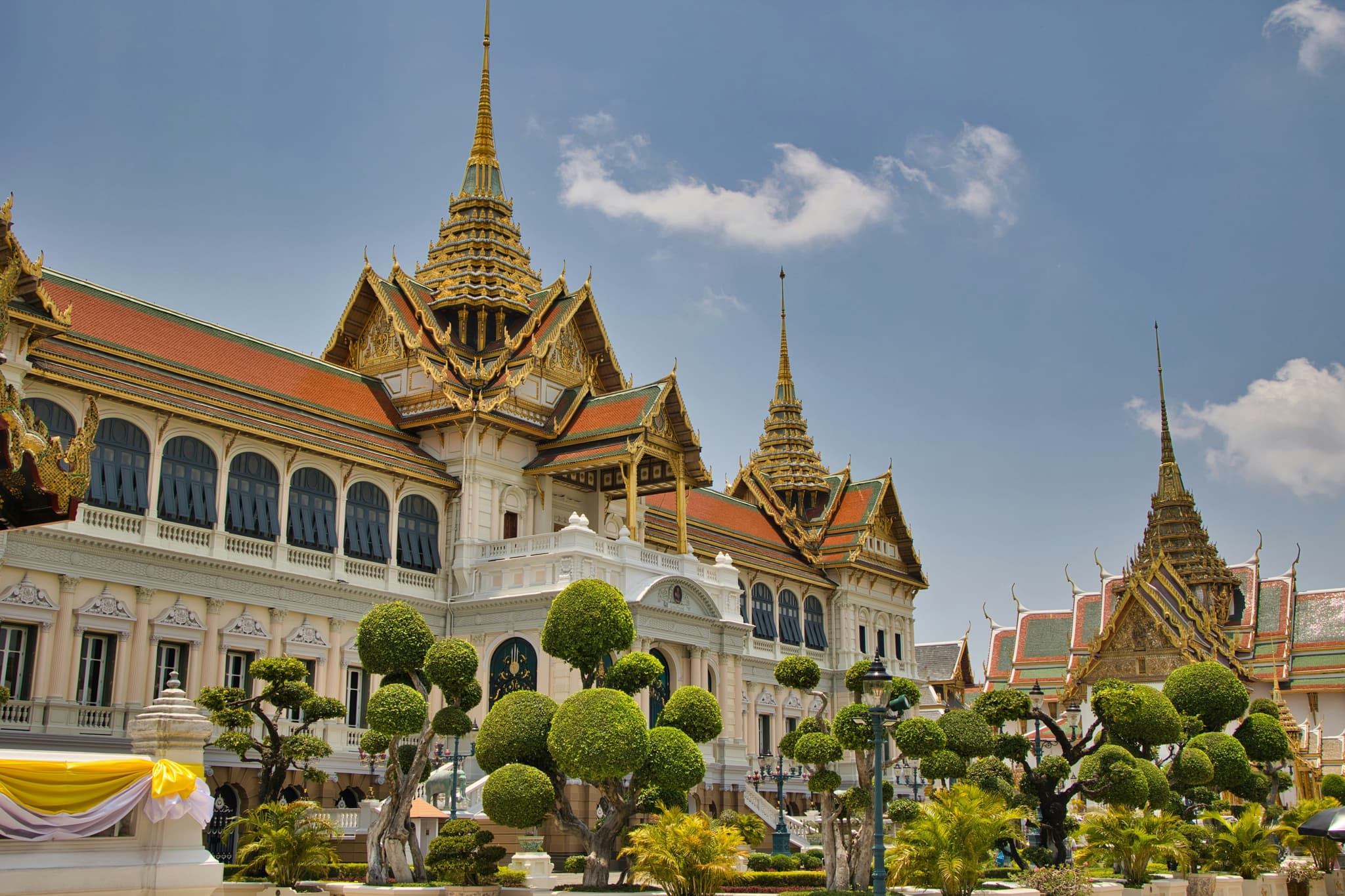
This is Bangkok's classic must-do, and it earns the hype, gold spires, intricate mosaics and one of the most important Buddha statues in the country all in one visit. You'll want half a day minimum, the Grand Palace alone covers a lot of ground and the Emerald Buddha inside Wat Phra Kaew draws long lines by mid-morning. Arrive right at opening, cover your shoulders and knees before you go in (this one's strictly enforced), and walk the short distance to Wat Pho afterwards for the reclining Buddha and an on-site traditional massage school. Entry runs about 500 baht for the Grand Palace, and Wat Pho is separate at around 200 baht, both cash or card at the gate.
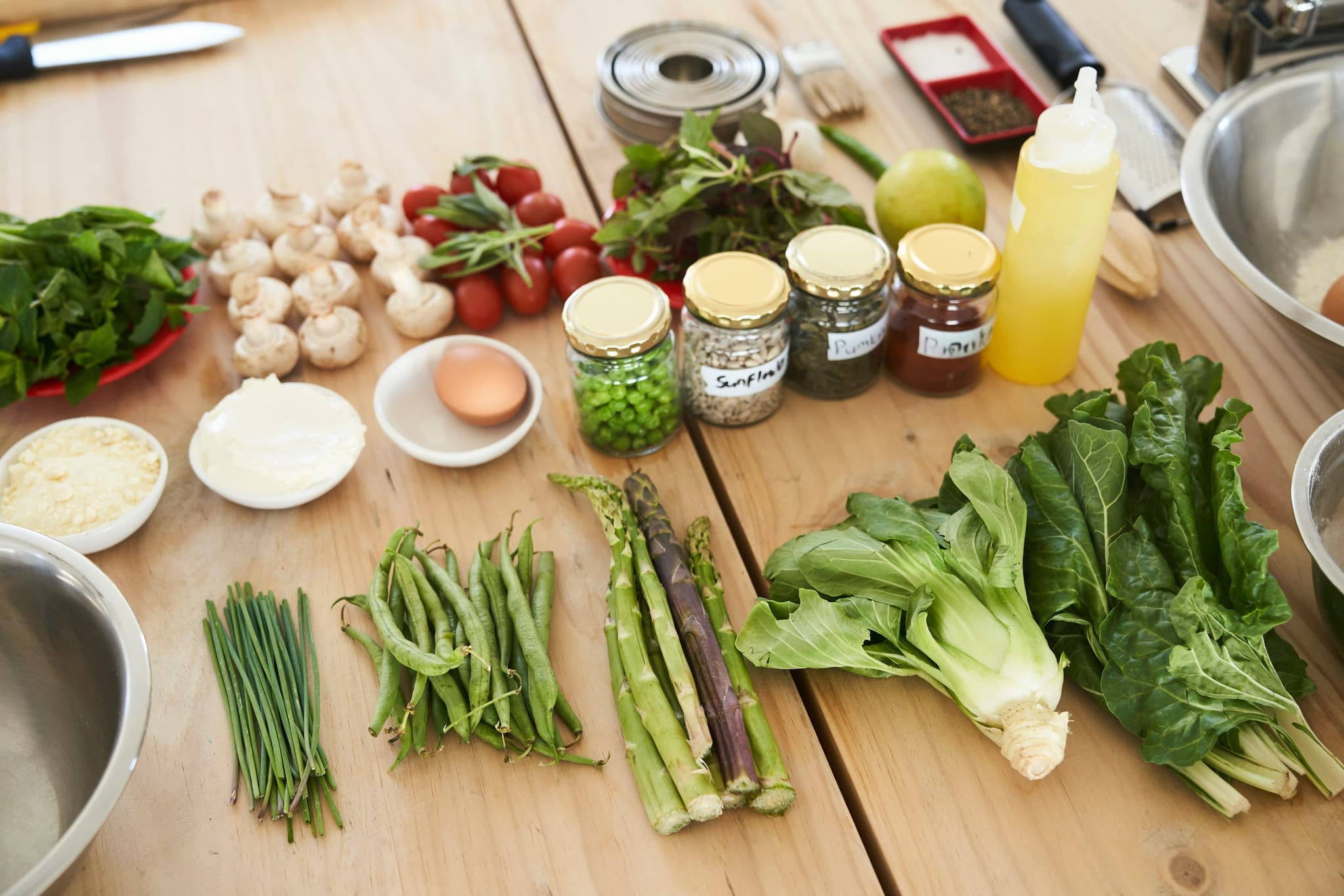
Take a Thai cooking class in Chiang Mai
Thai food might just be the best food you'll ever eat, and there's nothing quite like learning to make it yourself instead of just ordering it off a menu. There are dozens of cooking schools around Chiang Mai, but we'd point you toward the ones that start with a local market visit, Thai Farm Cooking School and Asia Scenic Thai Cooking are both solid options that build the whole day around fresh ingredients rather than a set kitchen. You'll usually cook four or five dishes, pad thai, a curry paste from scratch, and a soup, and eat everything you make for lunch. Book directly with the school rather than through a hotel desk, it's usually cheaper and you can pick a smaller group size.
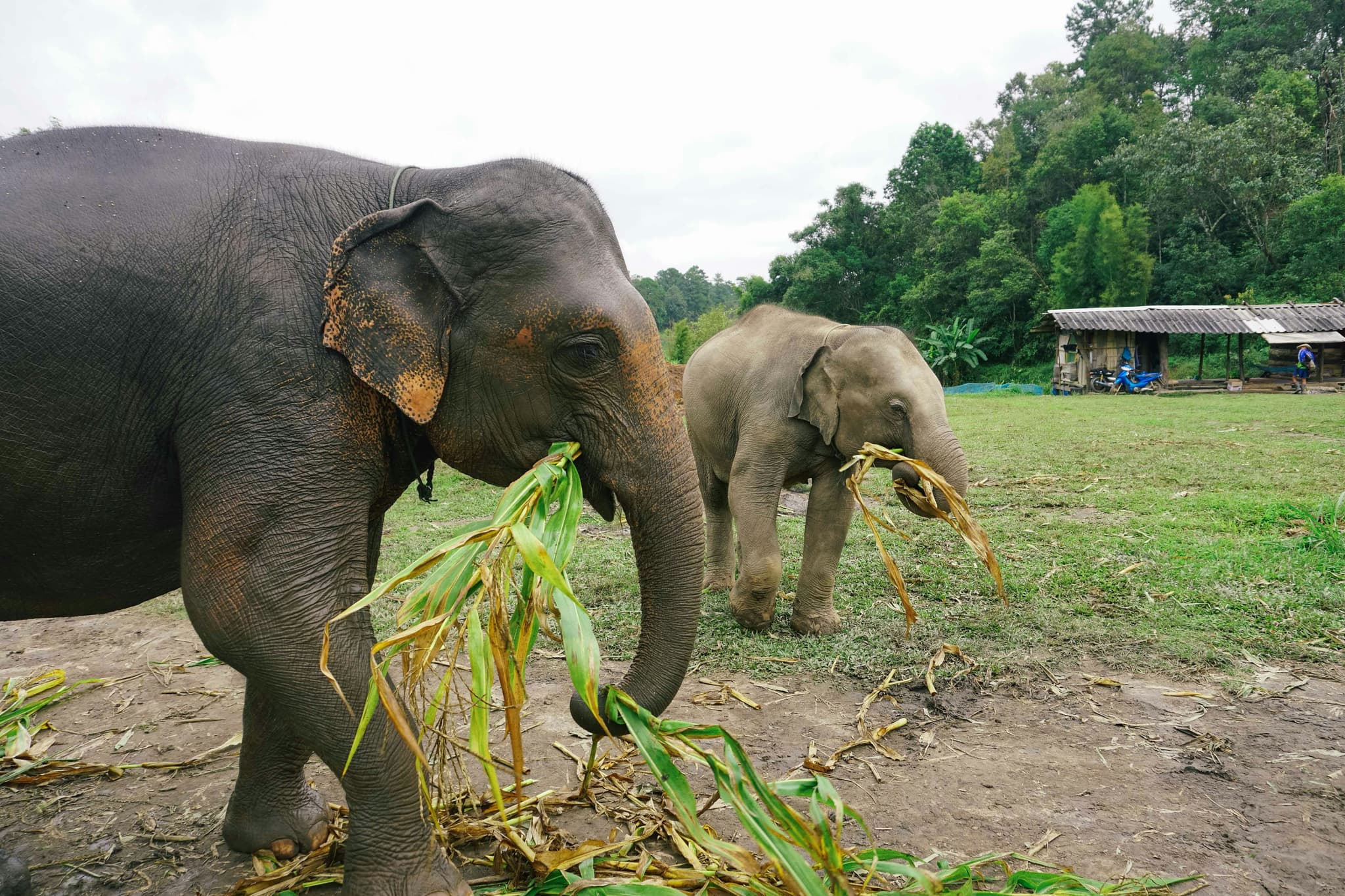
Visit an ethical elephant sanctuary
Seeing elephants in Thailand is one of those experiences everyone wants on their trip, but it's worth doing properly, and that means choosing somewhere that doesn't offer rides, shows or bathing performances, all three are signs of an operation still built around the animal rather than its welfare. Boon Lott's Elephant Sanctuary near Sukhothai runs a volunteer-friendly stays if you want more time with fewer people around, and Following Giants on Koh Lanta gives you an island-based, observation-only version if your route doesn't go north. Book any of these directly through their own websites where you can, and skip anywhere that still advertises elephant rides, no matter how convincing it looks.
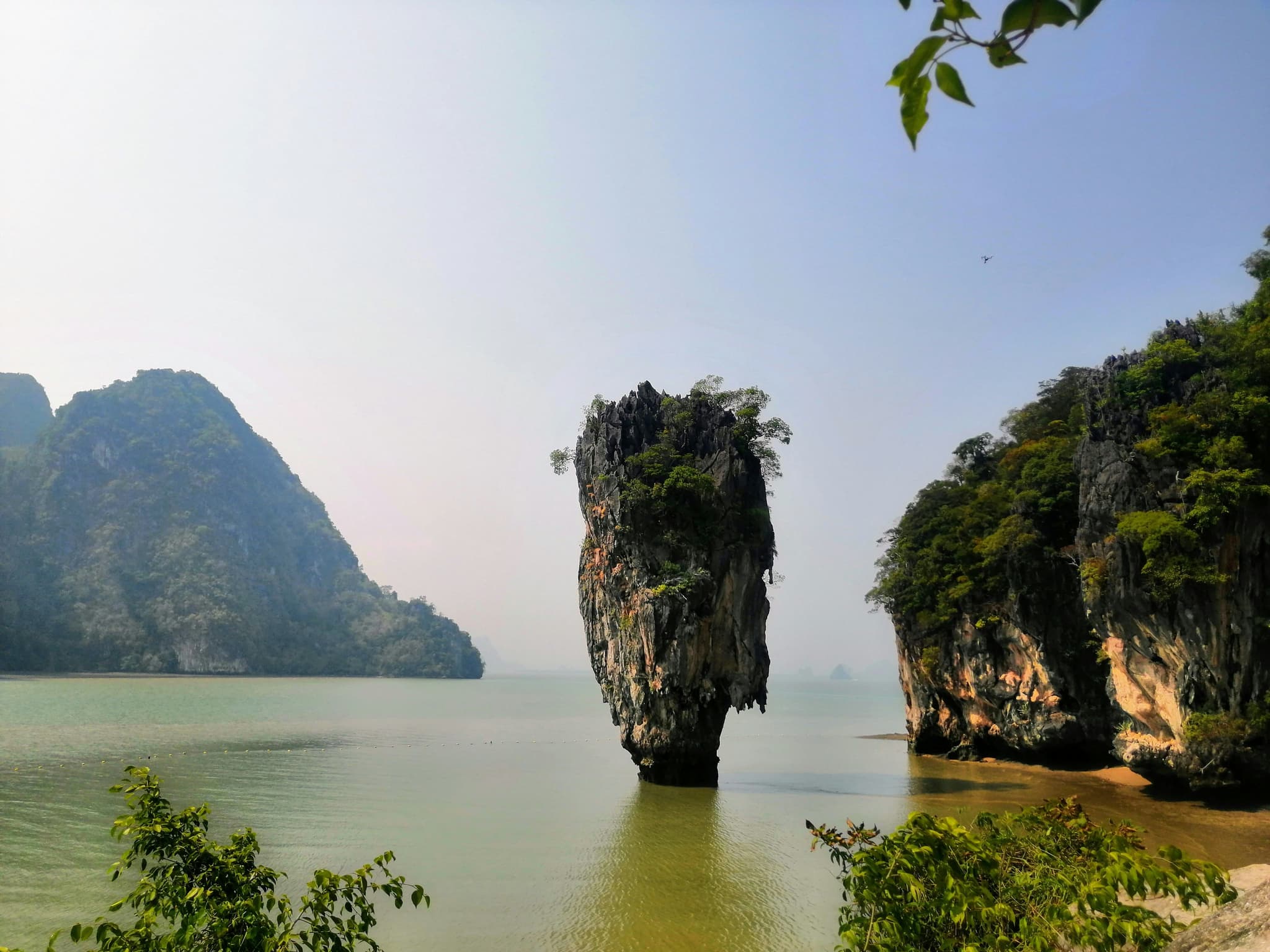
Island hop through Phang Nga Bay
A day on the water here is one of the more relaxed ways to see southern Thailand up close, and you don't need any experience to join. Longtail boats leave most mornings and wind between limestone islands rising straight out of the water, James Bond Island (Ko Tapu) is the famous one, but the smaller, unnamed karsts around it are just as good for photos and half as busy. Sea kayaking through the hidden lagoons, called hongs, inside some of the islands is worth adding if your tour offers it, standard boat trips don't go inside them. Pack a dry bag, you'll get wet climbing in and out of the boat more than once.
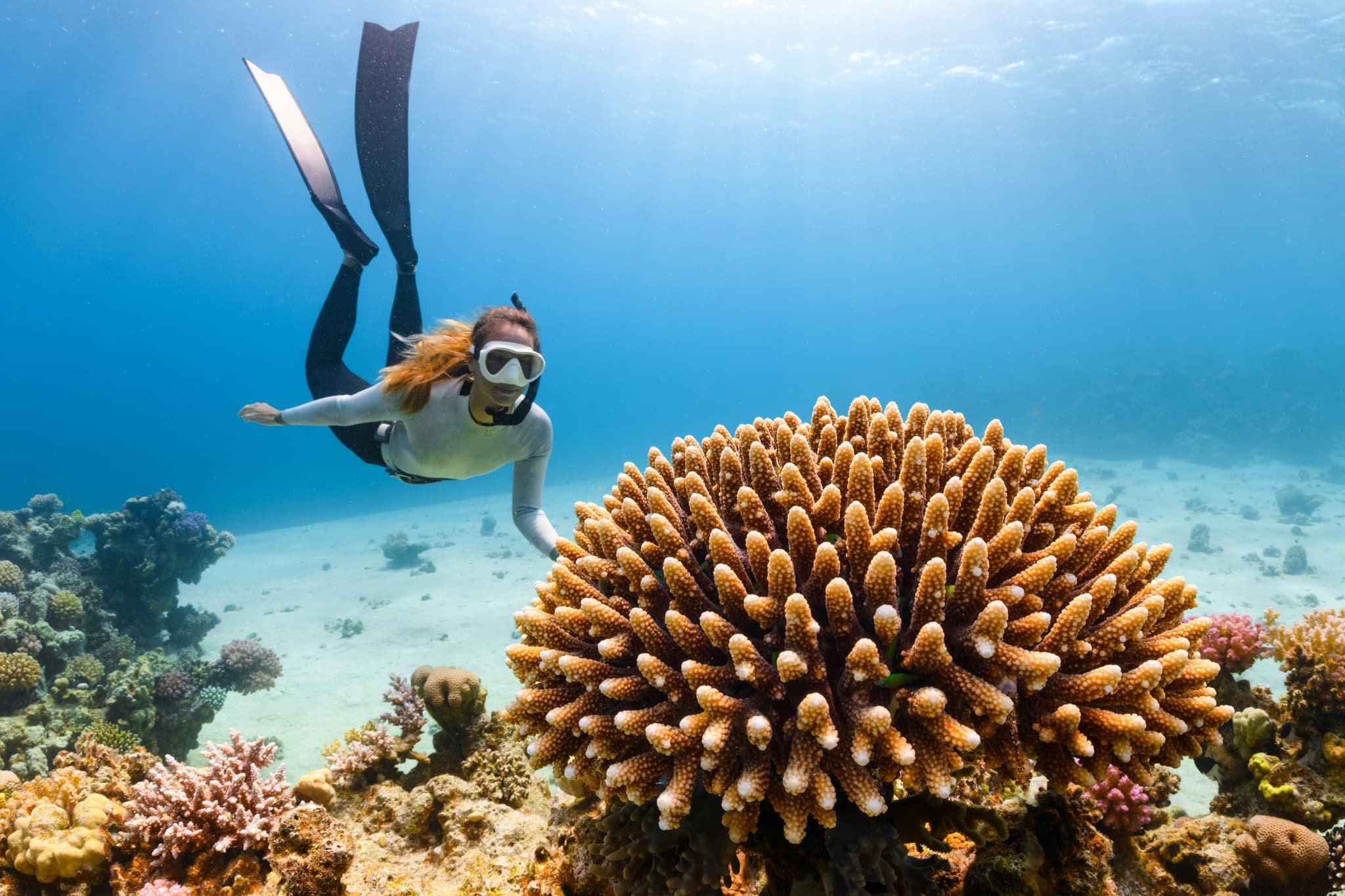
Dive the Similan Islands
If diving is even slightly on your radar, this is where to do it in Thailand, the Similans are considered some of the best in the country. Most trips run as liveaboards of two to four days rather than single-day outings, which gets you multiple dive sites instead of just one or two. Visibility regularly hits 20 to 30 metres, and you'll see reef sharks, turtles and, if you're lucky, manta rays around Elephant Head Rock. The park closes annually from mid-May to mid-October to let the reef recover, so plan around that window.
Celebrate Songkran in April
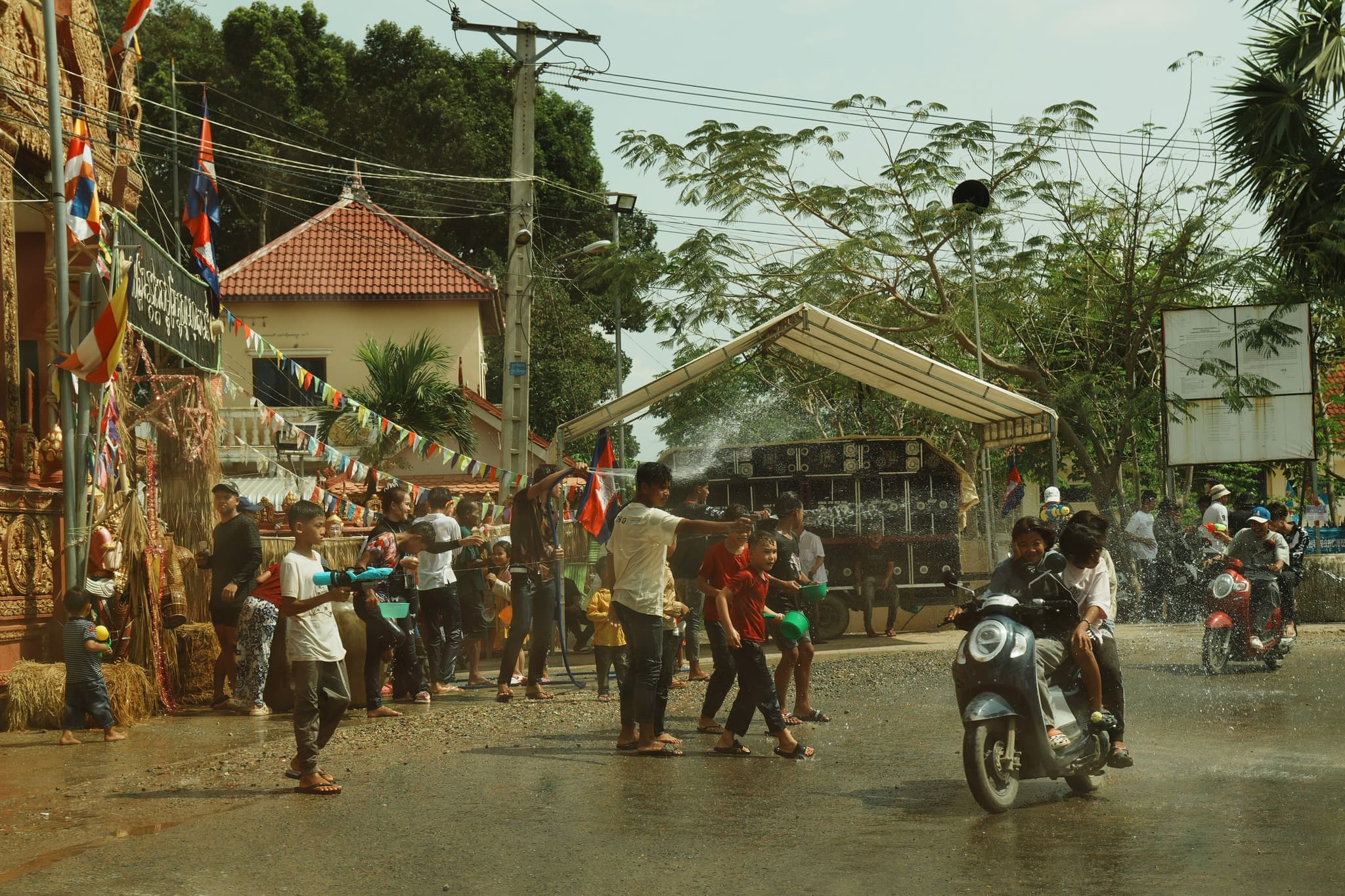
If your dates line up with April, Songkran is worth planning your whole trip around, Thailand's New Year turns entire cities into a three-day water fight unlike anything else you'll experience. Chiang Mai and Bangkok run the biggest celebrations, so pick one as your base for the festival itself. Seal your phone and any cash in a waterproof pouch before you leave your accommodation, everyone outside is fair game, including you. Curious what else the festival involves beyond the water fights? The Tourism Authority of Thailand's own guide covers the ceremonies and regional variations in more detail, and it's worth booking accommodation weeks ahead if you'll be in Chiang Mai or Bangkok during the festival, since rooms sell out fast.
When to visit Thailand?
Thailand isn't one climate, it's several stacked on top of each other, and what you pack, and where you go, changes a lot depending on the month. The islands in the south stay warm and humid year-round, the north cools down properly in the winter evenings, and the rainy season affects some regions far more than others. If your trip spans both ends of the country, expect to pack for more than one kind of weather at once, and don't be surprised if a t-shirt in Koh Lanta needs a light jacket by the time you're in Chiang Mai after dark.
November to February: cool season, 25-28°C, the busiest and driest months, book early if you're travelling over Christmas or New Year
March to May: hot season, temperatures regularly pass 35°C, the islands stay dry but the north gets smoky from seasonal crop burning, best avoided in Chiang Mai and Pai
June to October: rainy season, short daily downpours rather than all-day rain, fewer visitors and lower prices, a solid option if your dates are fixed
Guided tip: if your dates are flexible, aim for late October or February, you'll get good weather almost everywhere without the peak-season prices or the burning season haze up north.
Where to stay in Thailand: best areas in the country
Picking where to stay comes down to what you actually want to do during your trip. We'd always recommend basing yourself around your plans rather than just picking whatever looks nicest online. Thailand makes this easy since most cities and islands have a handful of distinct areas, each with its own vibe and its own reasons to pick it. Think about whether you're chasing nightlife, slow mornings, walkable temples or easy ferry access, and let that decide your base rather than the other way around.
Sukhumvit, Bangkok, if you want everything within reach
If you want to reach almost anywhere in Bangkok without touching traffic, base yourself in Sukhumvit, it's built around two BTS Skytrain lines and puts restaurants, rooftop bars and shopping malls within walking distance. It's also your best bet for late-night food if you land hungry after a long flight. Want more character and fewer high-rises? Head for the Old Town near the river instead, you'll be further from the Skytrain but closer to the Grand Palace and the older canals.
Old City, Chiang Mai, if temples and markets are your priority
Stay inside the Old City walls and you can walk to most major temples, with night markets setting up practically outside your door. Guesthouses here run cheap, and if you're an early riser, you'll catch monks collecting alms just after sunrise. Want something a bit more modern? Nimman, just west of the walls, gives you cafes, coworking spaces and a younger crowd instead.
Saladan or Klong Dao, Koh Lanta, depending on ferries or beach time
Want quick ferry access for island hopping? Base yourself in Saladan, right up at the northern tip near the pier. After a better beach for swimming and watching the sunset, head for Klong Dao instead, a short scooter ride south, with restaurants right on the sand. Either way, the island's small enough that you can cross it in twenty minutes, so you're never really far from anything.
Phi Phi Don's main strip vs the calmer bays
Want to be in the middle of it all? The main village on Phi Phi Don puts you next to restaurants, dive shops and the ferry pier, though it also means noise well past midnight. If you'd rather actually sleep, Loh Dalum Bay and Laem Thong are both a short walk or longtail ride from the centre and give you the island without the party. Either way, book ahead in high season, rooms on an island this small fill up fast.
Guided tip: book accommodation directly through the hotel or guesthouse's own website where you can; prices tend to come in lower than the big booking platforms after you skip the commission fee.

Did you know you can create your own itinerary?
Now that you have a better idea of the places to see in Thailand and things to do there, you can start creating your own trip. Do you want to travel from island to island, or would you rather spend more time in one area and really get to know it? It’s all up to you. You can easily create your own trip in the Guided app for free, or use trips shared by others.
Transport tips for travelling through Thailand
You've got plenty of ways to get around while you're travelling to Thailand, flights, trains, buses, ferries, songthaews and the odd scooter rental, and almost all of them are cheap compared to what you'd pay at home. Some options move a lot faster than others though, so it's worth comparing your options. Here's what we'd actually recommend for each type of journey, based on what's worked for us.
Take the overnight train instead of flying between Bangkok and Chiang Mai
We'd pick this over a budget flight almost every time, it costs a bit more but saves you a hotel night, and you'll wake up to rice fields instead of an airport queue. Go for a second-class sleeper berth, around 690 to 930 baht, it comes with a curtain for privacy and is worth booking a few days ahead in high season. You can check timetables and book directly through the State Railway of Thailand's own site.
Download Grab before you land, not after
Do yourself a favour and set this up before you land, Grab works like Uber and covers most cities, and you don't want to be fumbling with an app store on bad airport wifi. Fares show upfront, so there's no negotiating and no chance of an inflated meter, just keep your pickup point easy to find and you're set. And don't be surprised when you see the option to book a scooter instead of a car, GrabBike is a common way to get around, especially in busy cities.
Book island ferries a day ahead during high season
We'd always book a day ahead here if you're travelling between November and February, popular routes between islands sell out and turning up on the day can mean waiting for the next available boat. Ask your guesthouse to book tickets for you, it's usually a small fee and saves you a long wait at the ticket office.
Let songthaews handle your short hops
For anything under thirty minutes, skip the taxi and flag down a songthaew instead, these converted pickup trucks run fixed routes in cities like Chiang Mai for a flat 30 to 50 baht. Just wave one down and knock on the roof when you want off, it's the cheapest way to get around and honestly kind of fun after you get used to it.
Only rent a scooter if you've actually ridden one before
We'd only recommend this if you're genuinely experienced, roads in tourist areas see a lot of rental scooter accidents from people learning as they go. If that's you, wear a helmet even if nobody else does, check the brakes before you leave the shop, and confirm your travel insurance actually covers motorbike accidents, plenty of policies exclude them by default.
Food and drinks to try when you travel to Thailand
Thailand's food might genuinely be the best you'll eat anywhere, and we don't say that lightly. Some dishes come with real heat, but you can always ask for something "mai phet" (not spicy) or "phet nit noy" (a little spicy) before you order, and Thai people are generally happy to adjust things for you rather than let you suffer through a dish that's too much. Skip the restaurants with laminated, ten-language menus, the best meals here usually come from a cart with a line of locals in front of it.
Pad Thai
You could eat pad thai at literally every stop on your trip and never get bored, stir-fried rice noodles with egg, tofu or shrimp, tamarind and crushed peanuts on top, and every stall puts its own spin on it. We'd point you toward Thip Samai in Bangkok, it's been making pad thai since 1966 and the queue outside is worth it, though honestly, any stall with a long line of locals will treat you well. Ask for it "not sweet" if you don't want the syrupy version aimed at visitors.
Tom Yum Goong
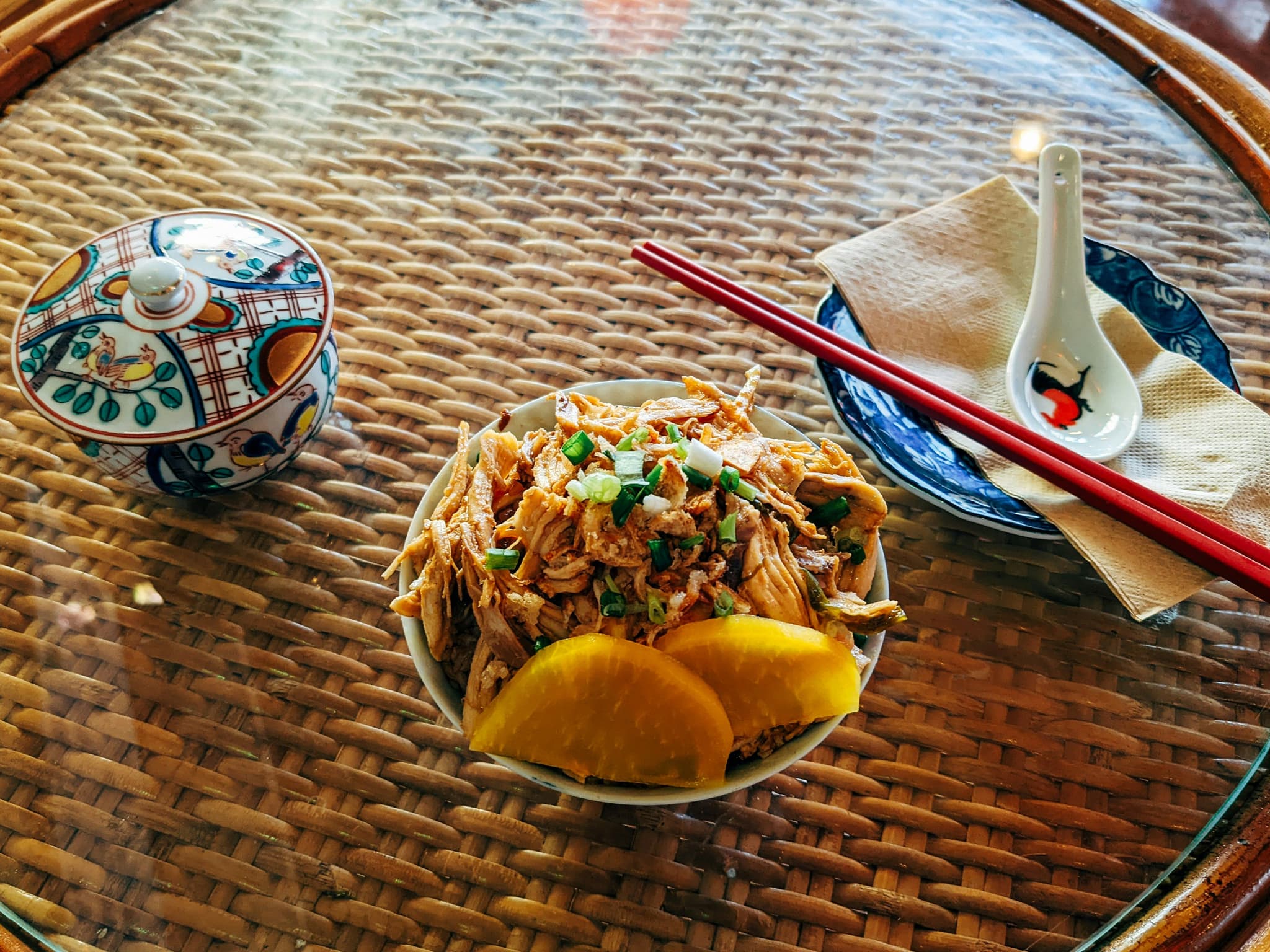
This one hits you with sour, spicy and savoury all at once, lemongrass, galangal, kaffir lime leaves and chilli in a prawn soup that's spicier than most people expect on the first spoonful. Go for "nam khon" if you want it creamier with coconut milk, or stick with "nam sai" for the clear, sharper original. Order it as a starter for the table rather than your own bowl, that's how it's usually served here.
Khao Soi in Chiang Mai
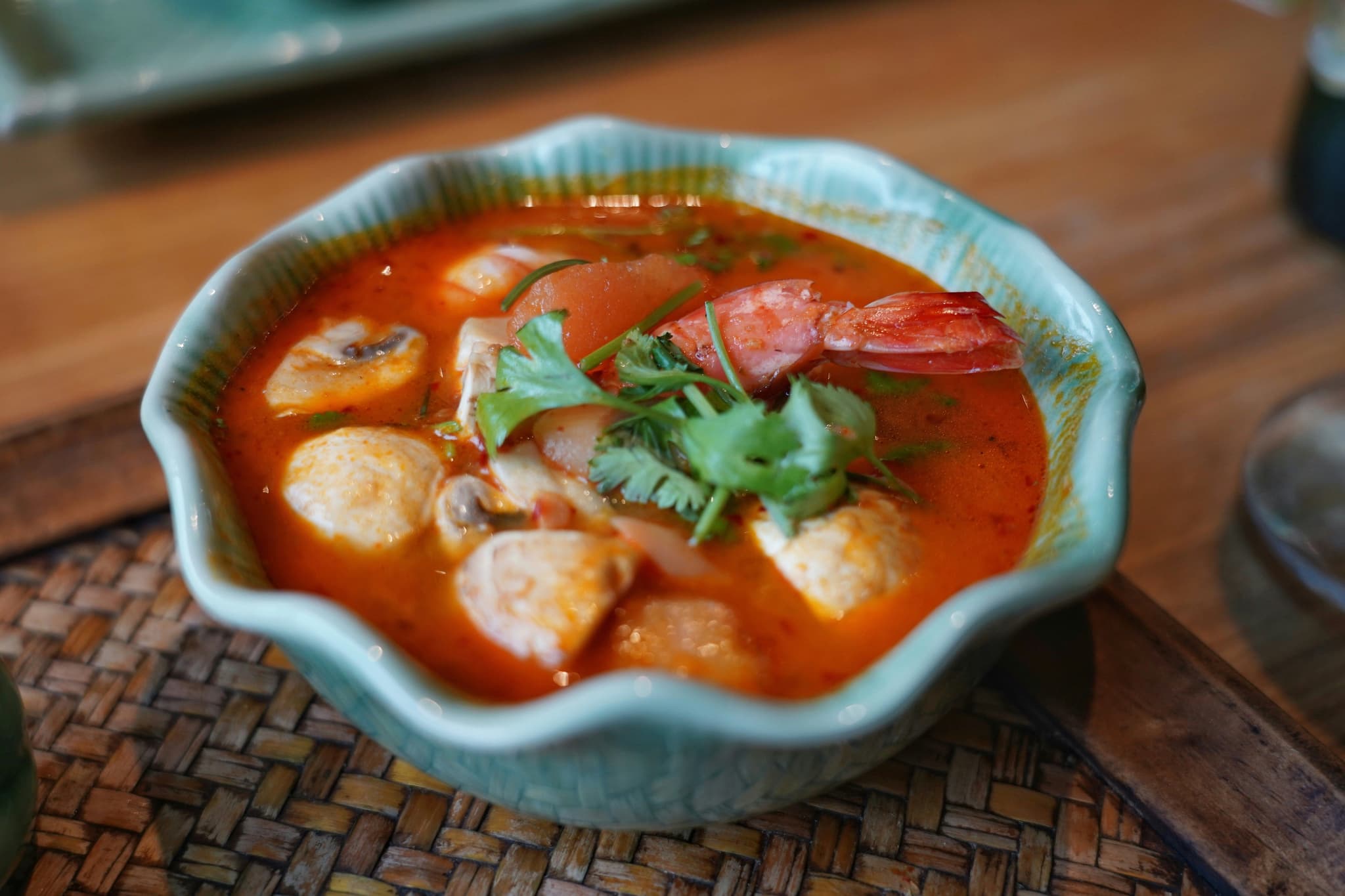
If you're heading to Chiang Mai, don't leave without trying khao soi, a northern curry noodle soup with crispy noodles on top of soft ones, in a coconut curry broth with pickled mustard greens and a wedge of lime. The small stalls around the Old City tend to beat the sit-down restaurants here on both price and flavour, so don't feel like you need a fancy setting for the best bowl. Add the chilli paste on the side slowly, it's stronger than it looks.
Som Tum
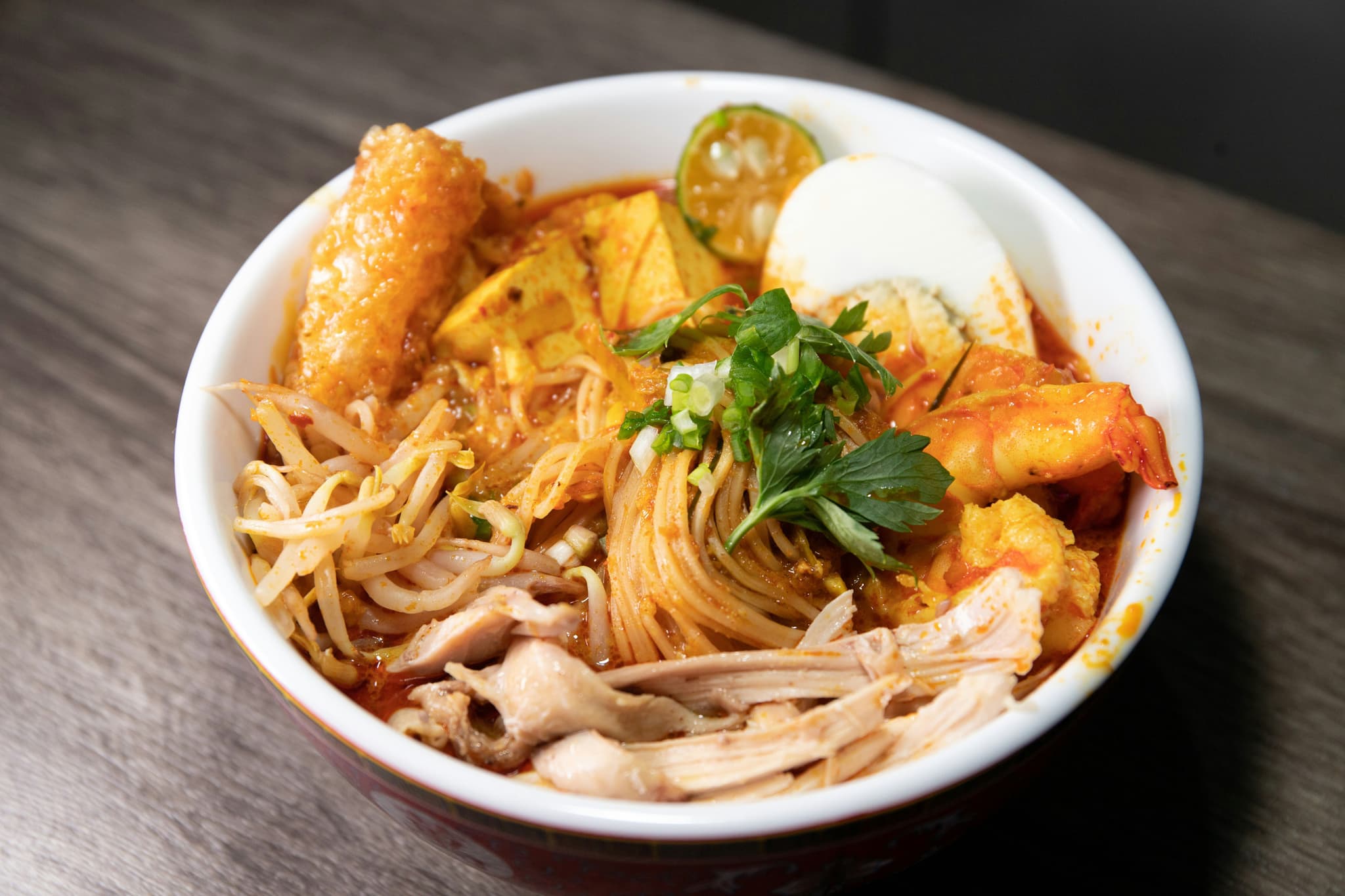
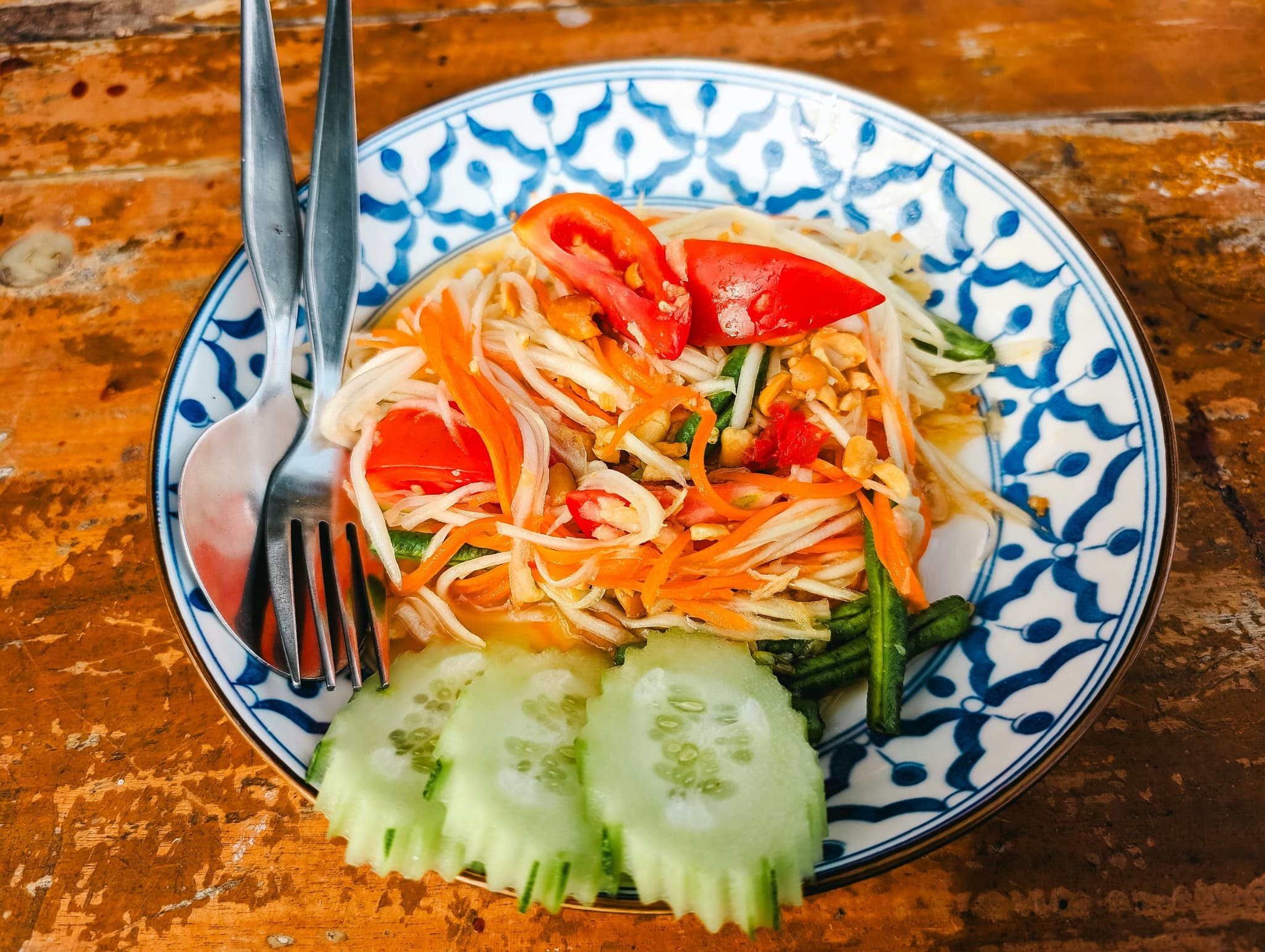
Green papaya salad, pounded together with chilli, lime, fish sauce and palm sugar, often with dried shrimp or peanuts mixed in, and it's one of the most refreshing things you can order on a hot day. Isaan food stalls tend to make the spiciest versions, so tell them how many chillies you can handle unless you're after a genuine challenge. Pair it with sticky rice and grilled chicken, most street stalls sell all three together anyway.
Mango sticky rice
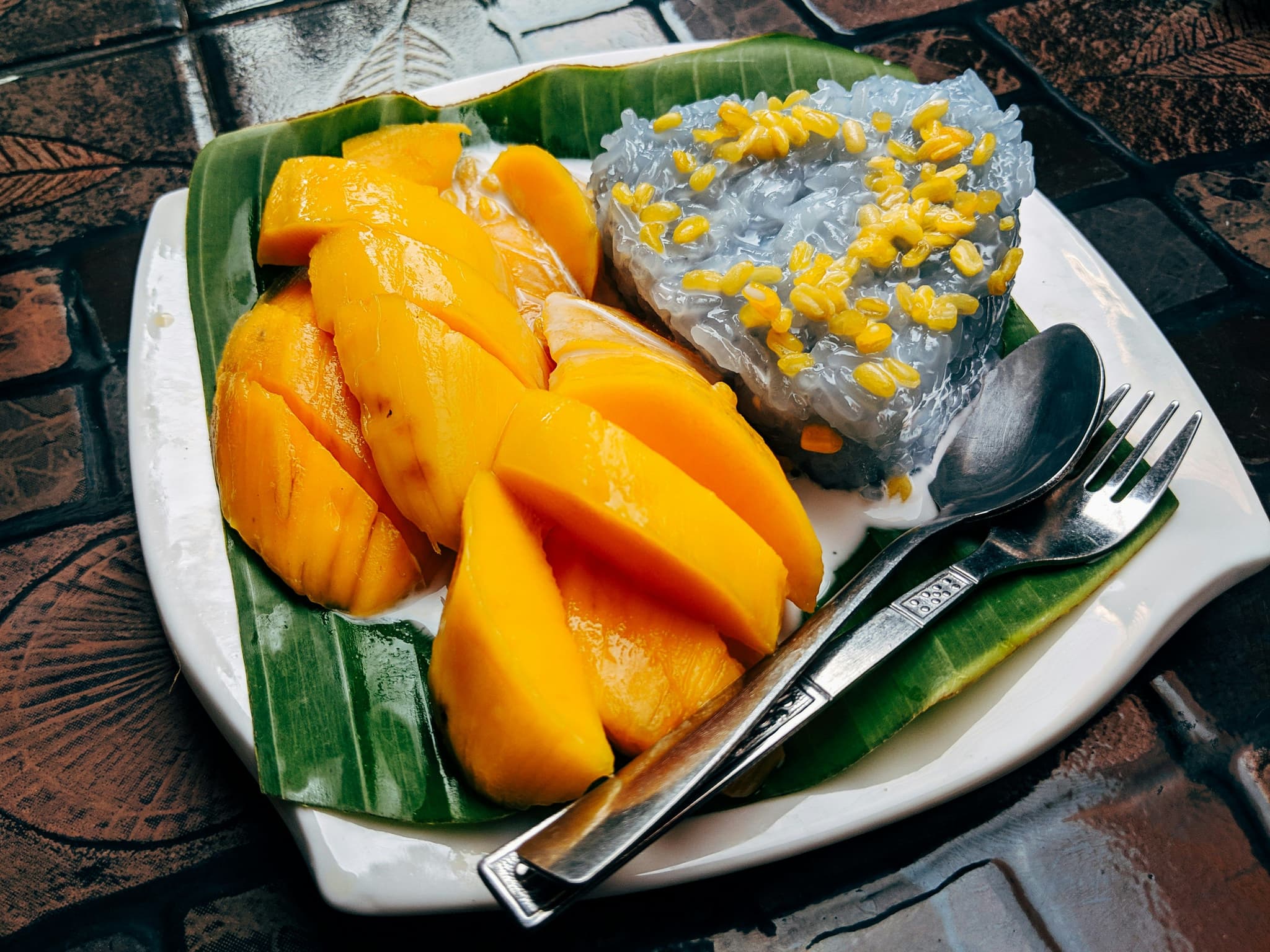
Sweet sticky rice with coconut milk, mango slices on the side and a drizzle of coconut cream over the top, this is the dessert you'll end up ordering more than once. Go for it between March and June if you can, that's mango season, when the fruit is at its best and stalls sell the whole plate for as little as 40 baht. Order it as a snack, a dessert or breakfast, nobody here is going to judge you for it.
Street food night markets
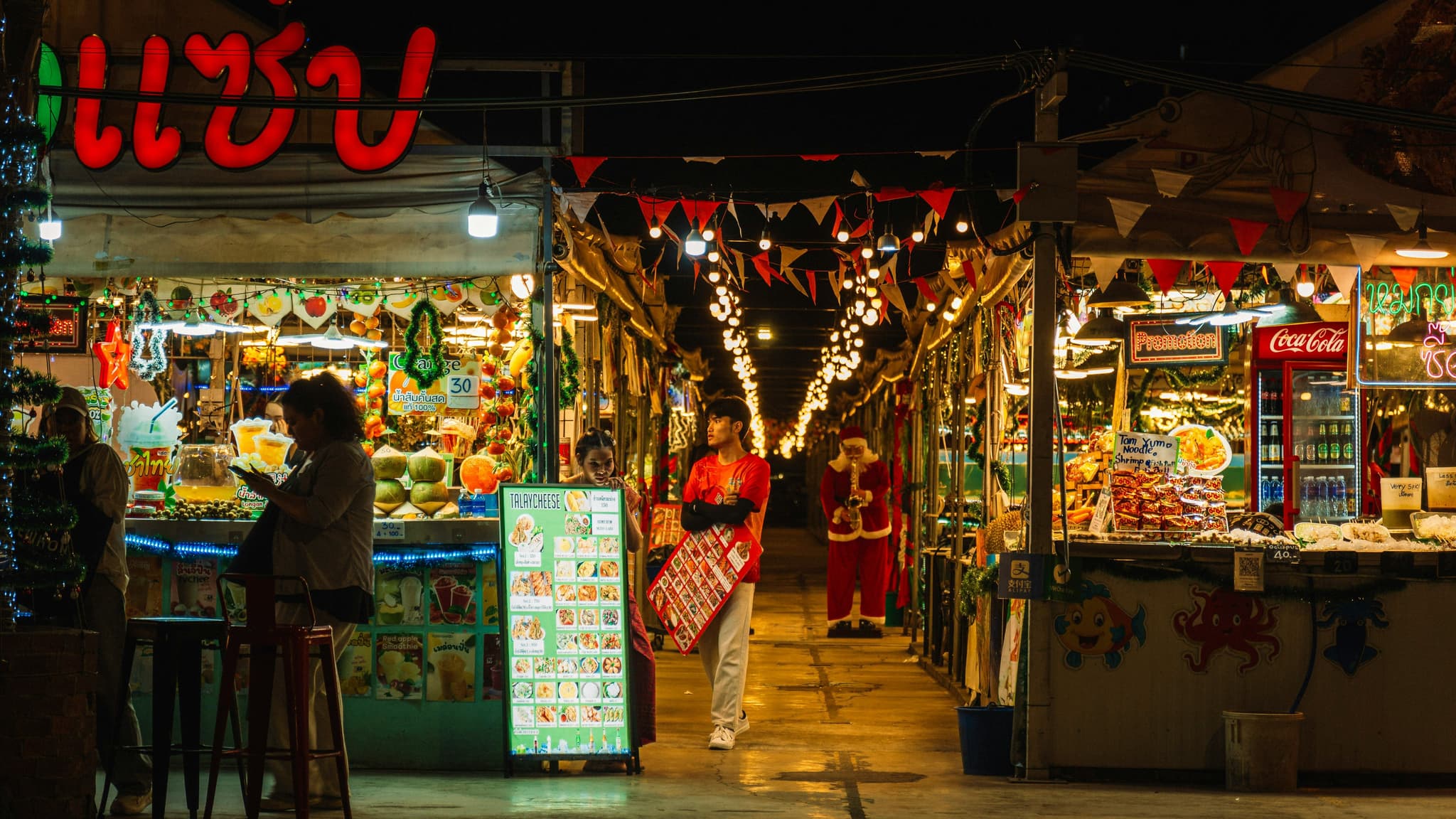
Chiang Mai's Sunday Walking Street and Bangkok's Chinatown both turn into food markets after dark, and this is where you go to try several dishes in one evening instead of committing to just one restaurant. Bring small notes with you, most stalls can't break anything over 500 baht, and go hungry, portions are small enough that you can work your way through five or six different stalls without filling up on the first one.
Culture and daily life you’ll experience during a trip to Thailand
Did you know Thailand has never been colonised by a European power, the only country in Southeast Asia that can say that? Much of that independence traces back to King Chulalongkorn, who modernised the country's laws, railways and schools through the late 19th century while its neighbours fell under French or British rule. Before him, the kingdom's capital was Ayutthaya from 1350 until Burmese forces destroyed it in 1767, and you can still walk among the brick temple ruins there today, a short train ride from Bangkok. After Ayutthaya fell, the capital moved to Bangkok, and the Chakri dynasty founded in 1782 still rules the country now, which is why you'll see the current king's portrait in shops, homes and government buildings almost everywhere you go.
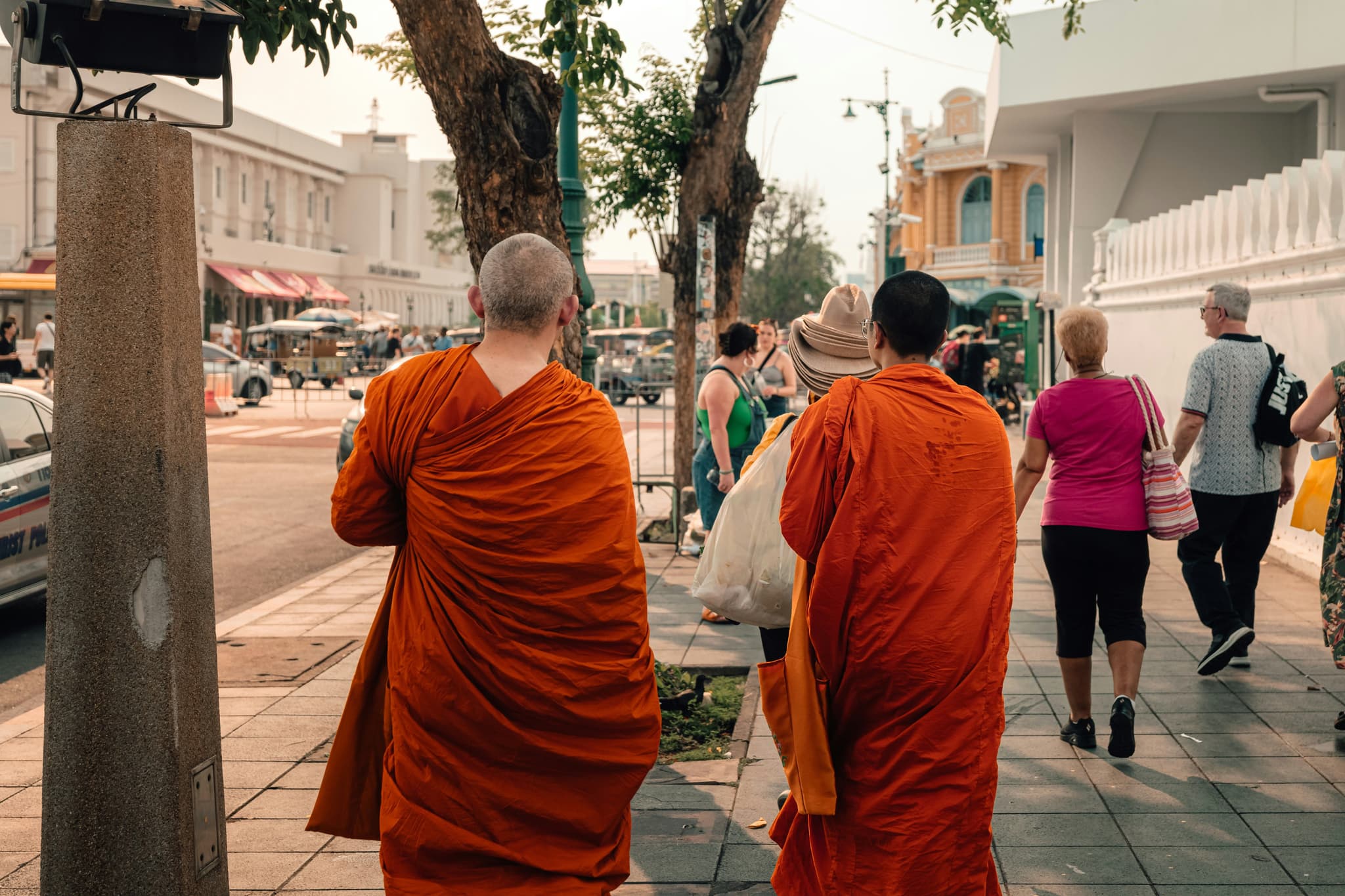
You'll notice pretty quickly how connected daily life here still is to religion, over 90 percent of the country practises Buddhism, and monks collecting alms at sunrise is a normal sight in towns both big and small. What struck us more, honestly, was how far locals go out of their way for you without expecting anything back, a stranger walking you to the right bus stop, a vendor throwing in extra food for no real reason, a warm "mai pen rai" (never mind, it's fine) whenever something goes sideways. One thing worth knowing before you land, Thailand runs on the Buddhist Era calendar, so official documents, hotel bookings and even newspapers run 543 years ahead of the Western calendar. If your confirmation email shows the year 2569, just know you haven't jumped forward in time.
Looking for more unique places, trips and activities?
Subscribe to our Guided Newsletter for more travel inspiration.
Costs of a Thailand trip
Let's talk money, because it's probably one of your first questions anyway. Thailand is one of the more affordable places you'll travel in Southeast Asia, and how much you spend each day comes down almost entirely to where you sleep and how you get around. Stick to street food, public transport and simple guesthouses, and you can comfortably get by on 1,500 to 2,000 baht a day, add air-conditioned rooms and the odd tour, and you're looking at closer to 3,000 to 4,000 baht
Food & Drink

Coffee
฿60 – ฿120
Lunch
฿60 – ฿200
Beer
฿70 – ฿150
Accommodation

Hotels
฿800 – ฿2.5k
Airbnb
฿700 – ฿2.5k
Hostel dorm
฿250 – ฿600
Transport
Train ticket
฿20 – ฿1.5k
Bus ticket
฿10 – ฿30
Car Rental
฿600 – ฿1.5k
Attractions

Museums
฿50 – ฿300
Big Attractions
฿200 – ฿500
Theatre
฿700 – ฿1.5k
Thailand travel tips worth knowing before you go
We've picked up a few things we wish we'd known before our first trip, from getting around and paying for things to those small details that can make travelling through Thailand a whole lot easier.
✔ Register your Thailand Digital Arrival Card before you fly
Every non-Thai national needs to complete the TDAC online within 72 hours of arrival, it's free, and it replaces the old paper arrival card entirely. Screenshot your confirmation QR code, immigration checks it on your phone if the wifi at the airport decides not to cooperate.
✔ Check the current visa rules before you book
Thailand's visa exemption rules have shifted more than once recently, and the length of stay you're granted depends on your passport and whatever's in force on your travel date. Confirm the current rules through Thailand's official e-Visa portal shortly before you fly rather than relying on older blog posts, including this one.
✔ Pack the right adapter
Thailand runs on Type A, B, C and O sockets at 220V, and most hotels have at least one Type A or C outlet, the same as continental Europe. A universal adapter covers you everywhere, and a two-pin-only adapter, without round European pins, will leave you stuck in some older buildings.
✔ Avoid Chiang Mai and Pai during burning season
Farmers across the north burn crop stubble between January and April most years, and the resulting smoke haze can make outdoor plans genuinely unpleasant and affect anyone with respiratory issues. Check the air quality index for Chiang Mai before you book that leg of the trip if you're travelling in these months.
✔ Get a local SIM or eSIM at the airport
AIS, DTAC and True all sell tourist SIMs at arrivals with 15 to 30 days of data for around 300 to 500 baht, and staff there set it up for you on the spot. An eSIM through an app works too if your phone supports it, and it means you land already connected.
✔ Carry small notes for markets and songthaews
Street vendors, songthaew drivers and market stalls rarely carry change for a 1,000 baht note, so break large bills at a 7-Eleven or convenience store as soon as you get one. It sounds minor until you're standing at a food stall holding up a line because nobody can make change.
✔ Pack reef-safe sunscreen before you reach the islands
Regular sunscreen is banned in some marine parks, including parts of the Similan and Surin Islands, because the chemicals damage coral. Reef-safe options are harder to find locally and pricier when you do, so bringing your own from home saves both money and hassle.
✔ Learn five basic Thai phrases
Sawasdee (hello), khob khun (thank you), mai pen rai (no worries), aroi (delicious) and chek bin (the bill, please) cover more situations than you'd think. Locals notice the effort, and it tends to get you warmer service and the occasional discount at markets.
Fun facts about Thailand
Thailand has plenty of quirks, traditions and little surprises that make the country even more interesting once you know about them. Here are a few of our favourite fun facts to know before you go.
Thailand's official name, Prathet Thai, translates to "land of the free."
Bangkok's full ceremonial name is the longest city name in the world, running to 168 letters.
Thailand is home to the world's smallest mammal, the bumblebee bat, in Kanchanaburi.
It's technically illegal to leave your house without underwear in Thailand
Thailand has over 40,000 Buddhist temples spread across the country.
White elephants are considered sacred and, by law, belong to the King
The traditional Thai greeting, the wai, changes slightly depending on who you're greeting, monks get the highest hand position.
These little details are half the fun of being here, you'll spot at least a few of them yourself without even trying. What we love most about Thailand is how much it packs into one country, you can genuinely go from a jungle sunrise to a rooftop bar to a beach bonfire in the same week, and none of it feels forced. That range, plus how far your money goes, is exactly why so many of us keep booking another trip back. If you're the kind of person who wants variety without a complicated route to get it, Thailand is about as good as it gets.
Ready to map out your Thailand trip?
We hope this Thailand travel guide has given you a clear starting point for your trip. Stay tuned for more inspiration, itineraries and practical tips to help you shape your own trip to Thailand. And don’t forget to check out our Guided app, where you can create your own trip or use trips shared by other travellers for free.
Frequently asked questions about travelling to Thailand
- What travel adapter do I need for Thailand?
Thailand runs on 220V with Type A, B, C and O sockets, which covers most European two-pin and American flat-pin plugs without much trouble. A universal adapter is the simplest option since it handles all four types in one device. Double check your device's voltage rating too, most phone and laptop chargers handle 220V fine, but older hairdryers or straighteners might not.
- How long can you stay in Thailand?
- How many days do you need for a good Thailand trip?
- Do I need a visa for Thailand?
- Is Thailand cheap to travel?
- Do I need vaccinations for Thailand?