
China

China travel guide: Everything you need to know before visiting China
The fastest train from Beijing West reaches Xi'an North in about 4h10, and that one ride explains how a trip to China works. At the end of 2025 the country had 50,400 km of high-speed line, the largest network in the world, so the Forbidden City and the Terracotta Army fit into the same week as the pandas of Chengdu. The food changes as much as the scenery, from Peking duck in the north to the numbing mala of Sichuan in the west.
Japan and South Korea are more polished and cost more. Vietnam and Laos are cheaper but can't match the range. China sits between them, with day-to-day costs close to Thailand's and a scale of imperial sites and landscapes none of its neighbours have. The trade-off is admin, because you'll need payment apps on your phone and a plan for life without Google. It's getting easier, and 30.08 million foreign entries in 2025 were visa-free. China suits first-timers to Asia who want the big names, and anyone with 10 to 14 days who doesn't mind setting up a few apps before they fly.
This guide covers where to go and how to link it up by train, then the practical side, from seasons to the rules worth knowing before you land.
5 reasons to visit China
These are the five that matter most on a first trip.
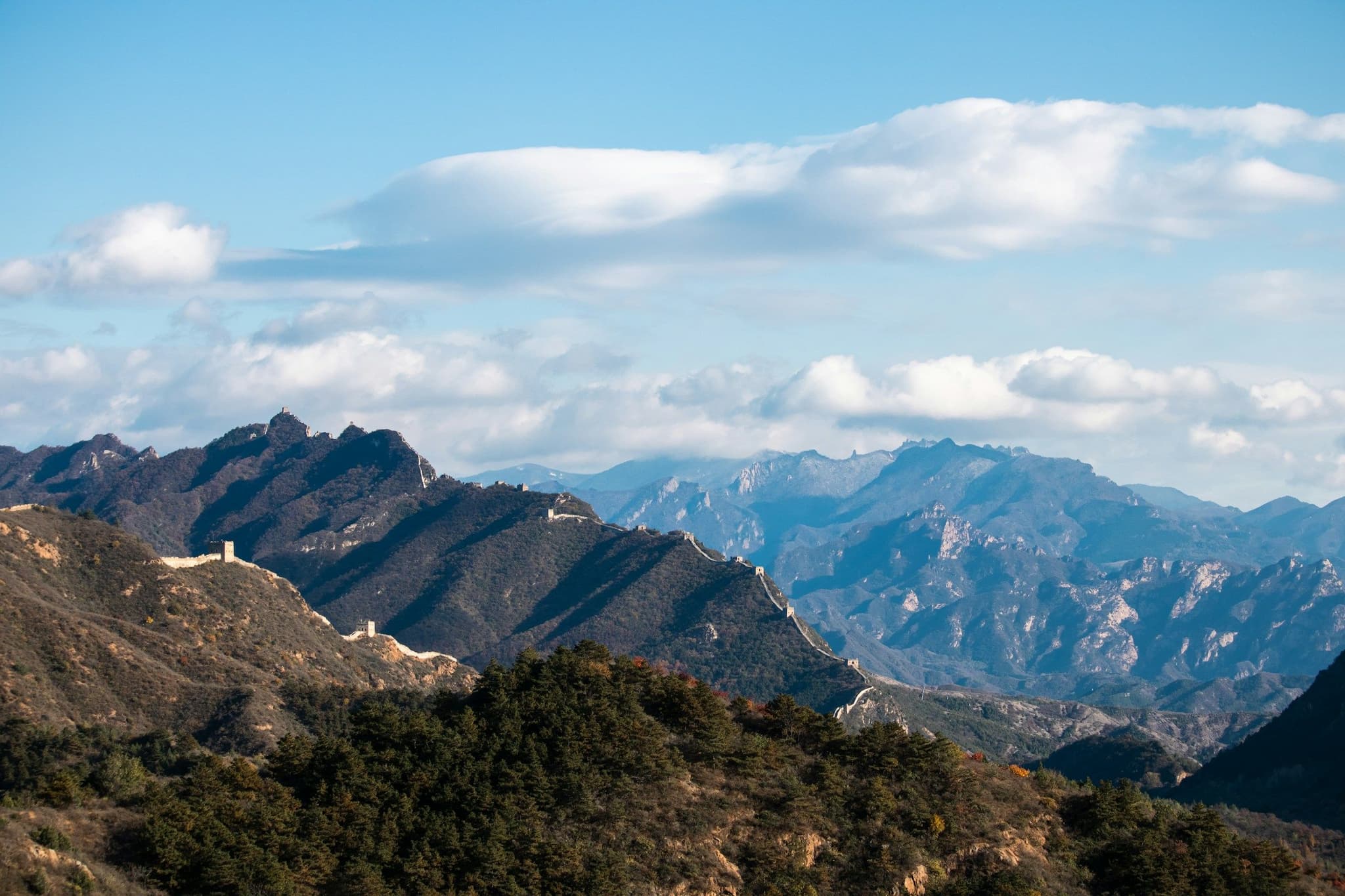
- You can walk a restored or wild section of the Great Wall a couple of hours from Beijing.
- The Terracotta Army has more than 8,000 figures, buried around 210-209 BCE.
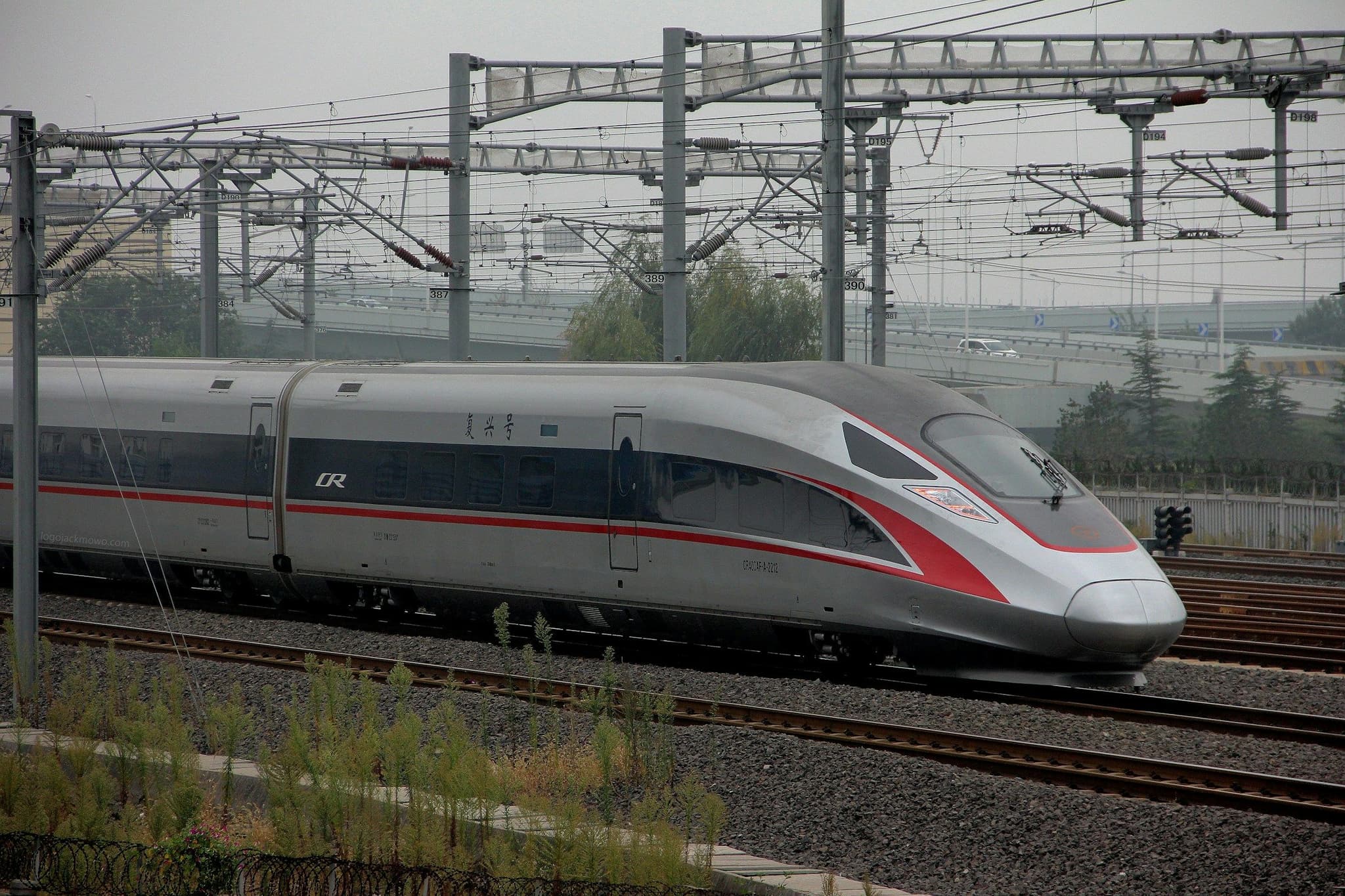
- Fuxing trains cross the country at 350 km/h on the world's largest high-speed rail network.
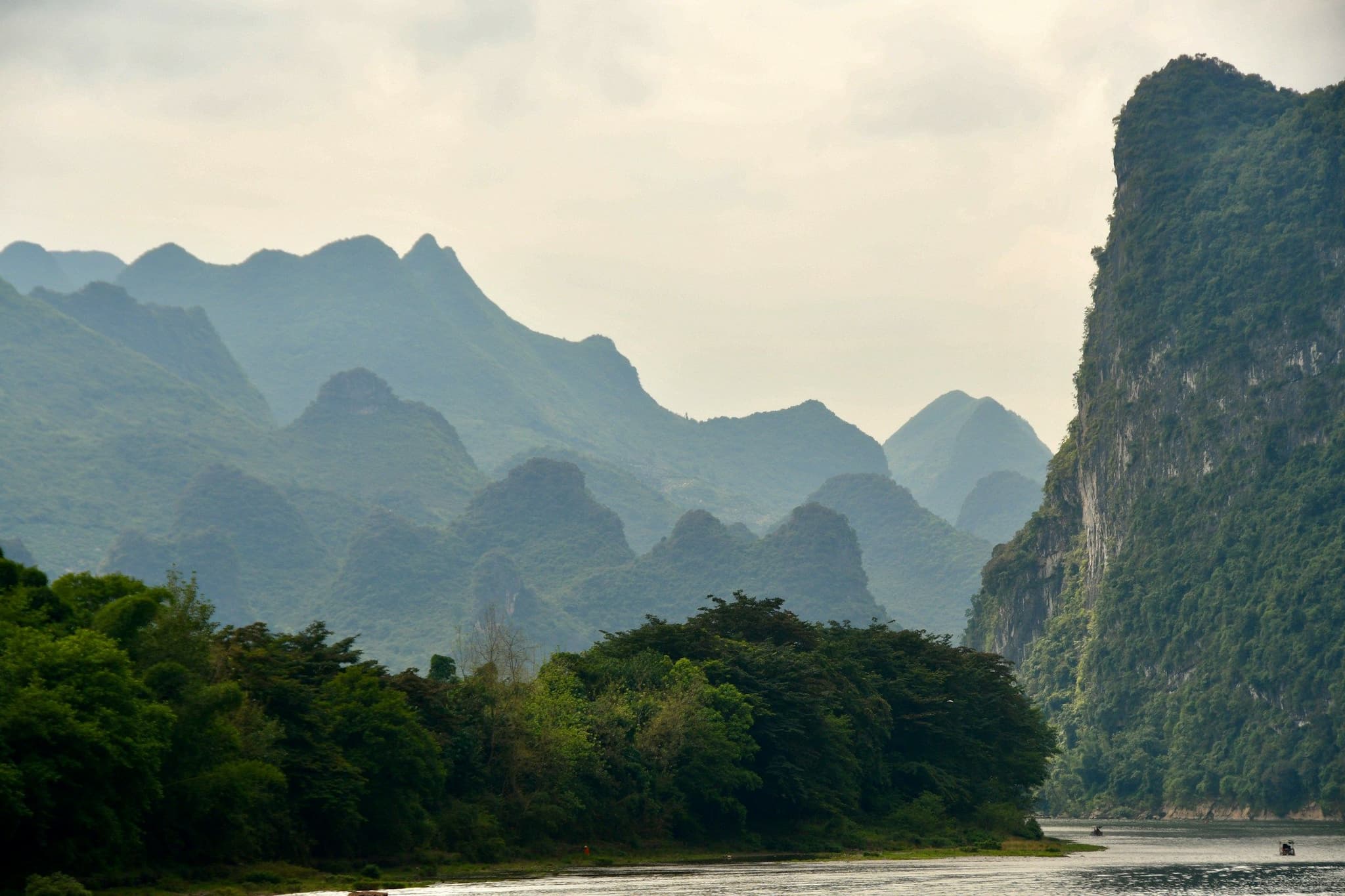
- The karst peaks along the Li River near Xingping are the view printed on the ¥20 note.
- Every region eats differently, so one trip can run from Peking duck in Beijing to hand-pulled noodles in Xi'an.
Where to visit in China?
Start with Beijing and Xi'an. That's our advice for almost every first trip, and the places further down suit a longer route or a second visit. Most big sights now need a real-name booking with your passport number, usually through the site's official mini-program in WeChat or Alipay, or on Trip.com, and tickets tend to open 7 to 15 days ahead. Bring the physical passport, because photos aren't accepted, and check the official channel before you go, since prices and rules change often.
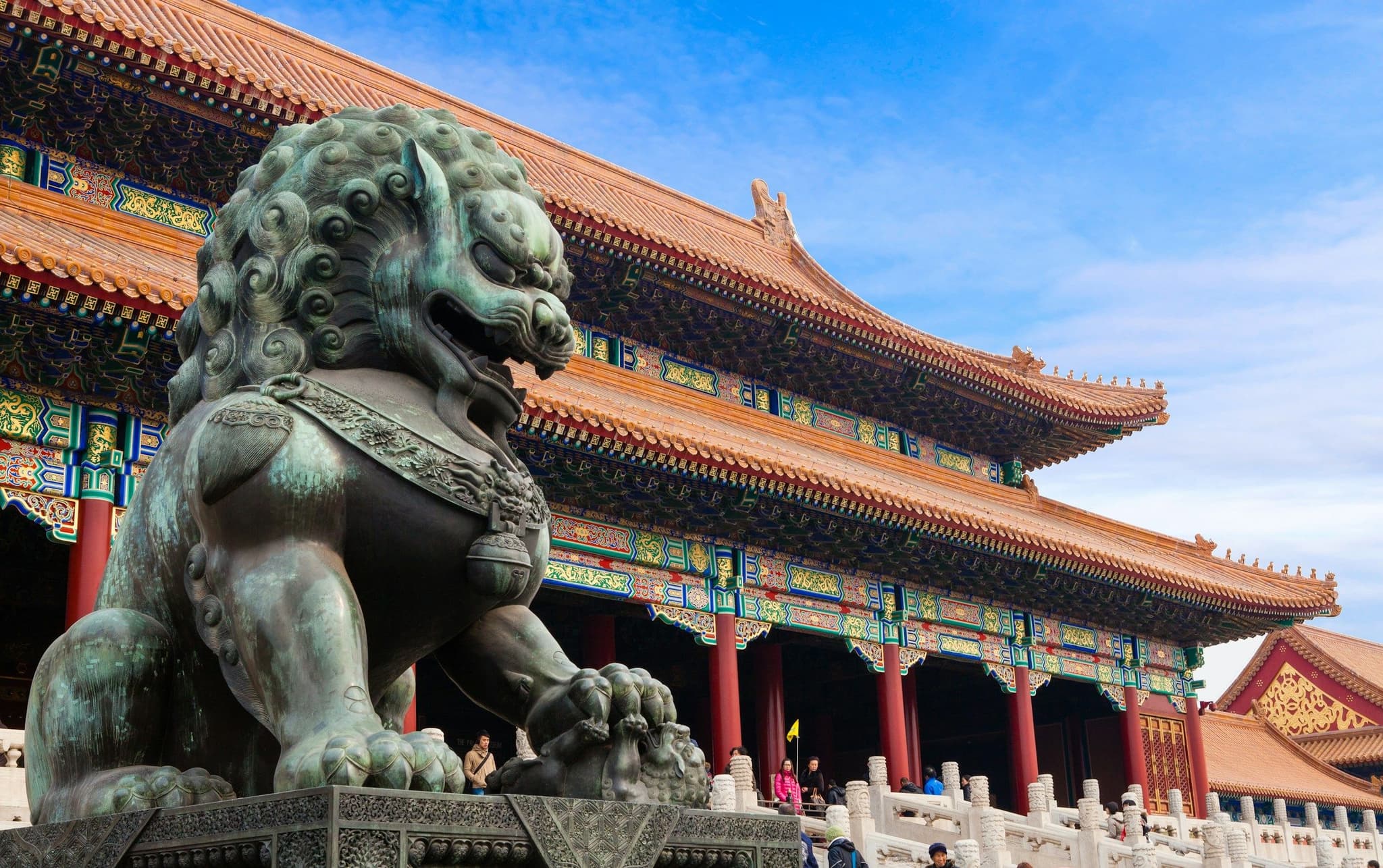
Beat the queues at Beijing's Forbidden City and Temple of Heaven
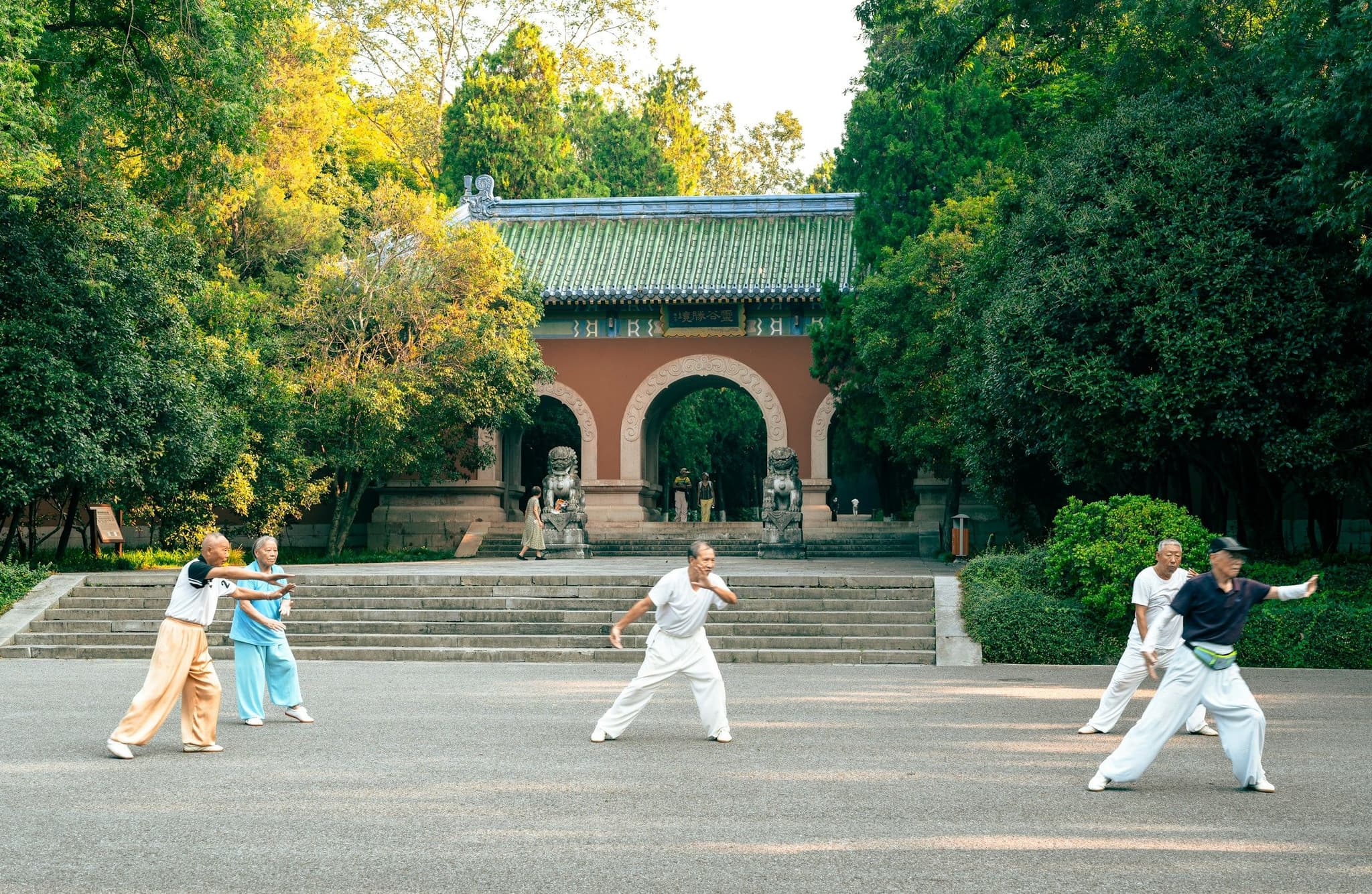
The Forbidden City sells no tickets at the gate. Book on the official Palace Museum site or Trip.com, where tickets are released seven days ahead at 8pm Beijing time, and bring the passport you booked with. Entry is ¥60 from April to October and ¥40 from November to March. It's closed on Mondays except public holidays. Get to the Meridian Gate (Metro Line 1, Tiananmen East) for about 8am, then head for the eastern palaces, which are quieter than the central axis. The Forbidden City and the Temple of Heaven were both built in 1420. The Temple's ¥15 park ticket is worth buying for 6am, when locals arrive for tai chi.
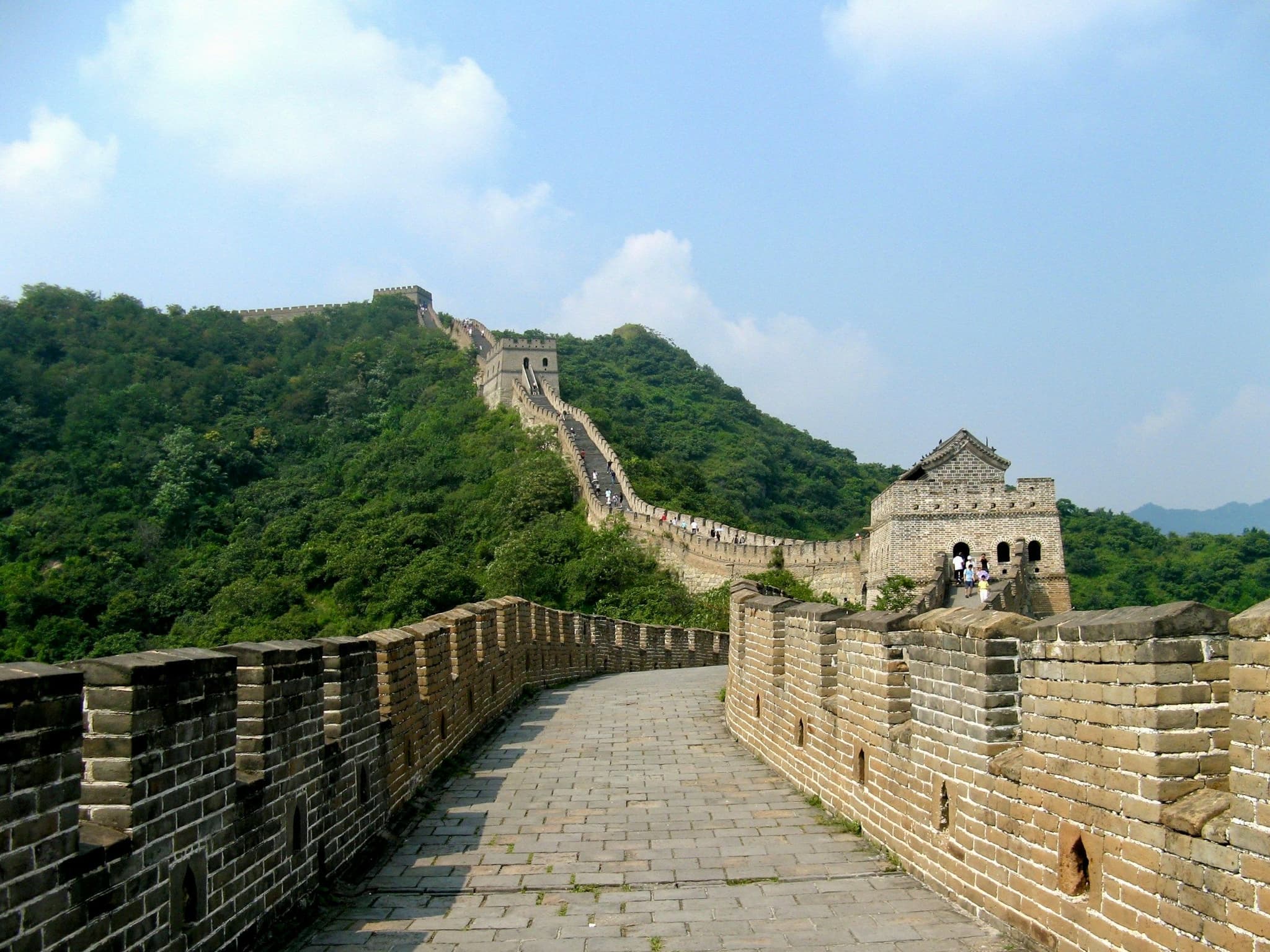
Walk the Great Wall at Mutianyu
Which section should you choose? For most people, Mutianyu. It's about 73 km from central Beijing, about 1h40 by taxi, with about 5.4 km of wall open. Entry is about ¥45, and the chairlift up with a toboggan down costs ¥140, the same as a return cable car. Book with your passport up to 15 days ahead. Badaling is the easy one by train, about ¥25 from Beijing North, but it's the most crowded section, with up to 50,000 to 60,000 visitors a day in summer. The whole wall, branches included, measures 21,196 km by the 2012 state survey.
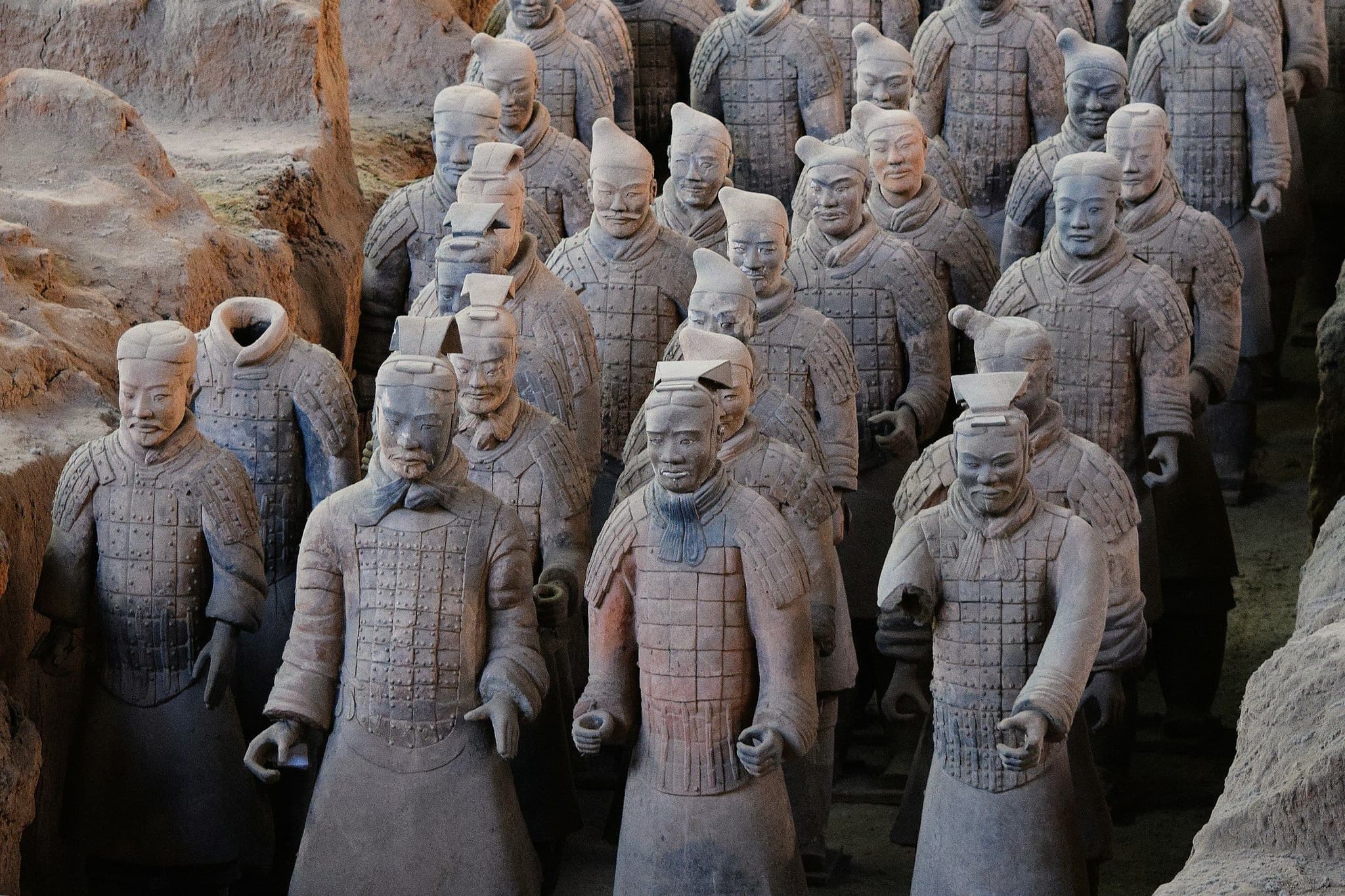
Stand in front of the Terracotta Army in Xi'an
Farmers digging a well in Lintong found the Terracotta Army on 29 March 1974. The pits hold more than 8,000 soldiers and 670 horses, buried for the First Qin Emperor around 210-209 BCE. The site is about 35 km east of the city, and a direct bus from Xi'an North station costs ¥5. Tickets cost ¥120 from March to November and ¥100 in winter, booked up to seven days ahead. Allow about three hours. We'd see the pits in reverse order and save Pit 1 for last. Back in town, ride the 13.74 km loop of the Ming City Wall at sunset (¥54 entry, plus ¥45 for a bike).
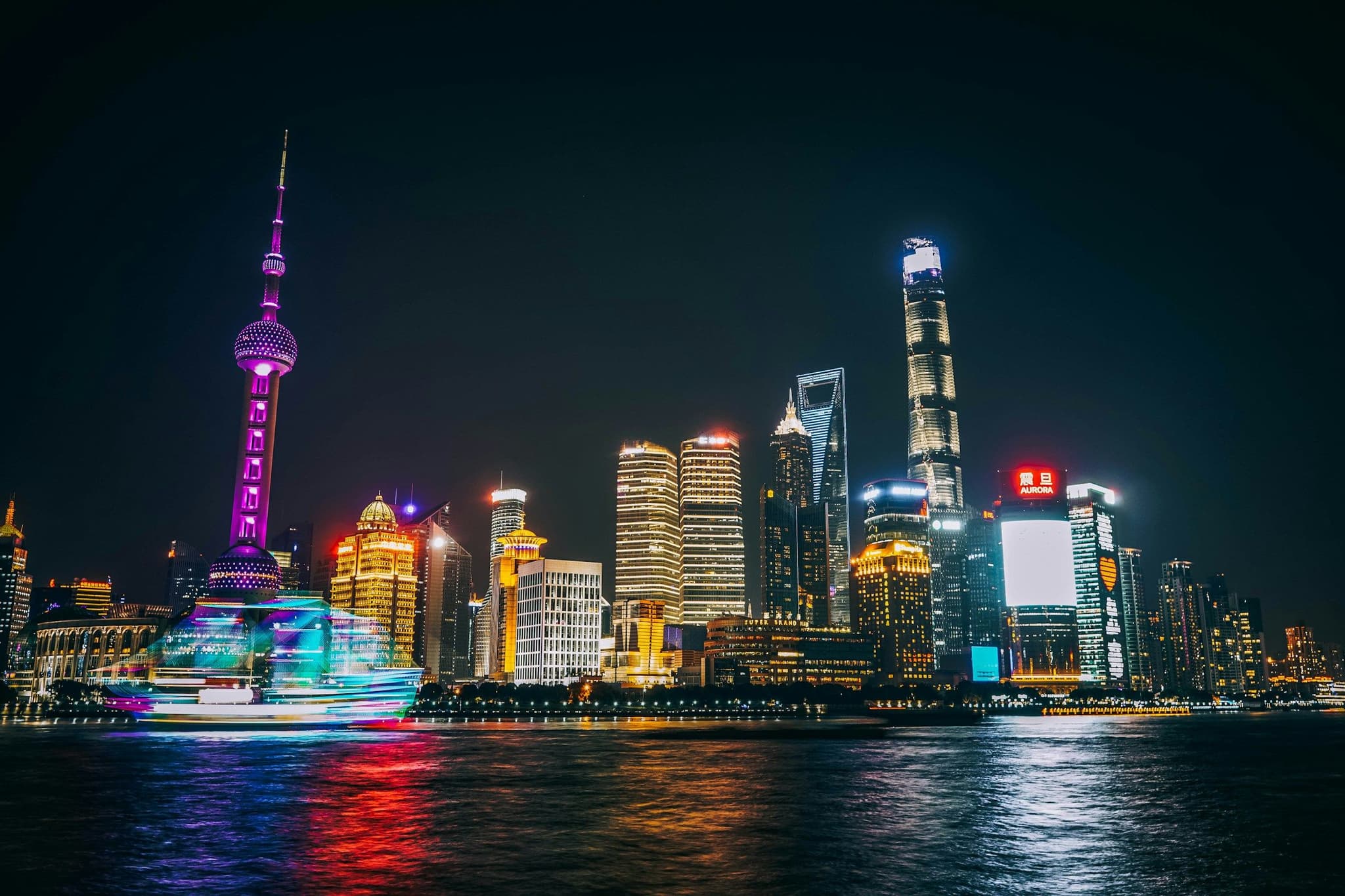
Finish on the Bund in Shanghai
End a first trip in Shanghai, where Suzhou and Hangzhou are both under 40 minutes away by train. Walk the Bund, the colonial-era waterfront facing the Pudong skyline, then cross the river to the 632 m Shanghai Tower, where the observation deck on floors 118 and 119 costs ¥180 at the gate. Yu Garden was started in 1559 and costs ¥30 to ¥40 depending on the month, and it's closed on Mondays except holidays. For the airport, the Maglev covers about 30 km to Pudong in about eight minutes, for ¥50 one way.
Cruise the Li River from Guilin to Yangshuo
The scene printed on the ¥20 note is near Xingping, on the stretch of the Li River between Guilin and Yangshuo. The cruise takes about four to five hours. Three-star boats leave from Mopanshan pier for ¥215 (lunch about ¥30 extra), and four-star boats from Zhujiang pier cost about ¥360 with lunch. Book about seven days ahead in the busy months, and expect a shorter route when the water is low, roughly between January and March. Yangshuo's West Street had 21.1 million visitors in 2023, so don't expect a quiet riverside town. We'd sleep out in the Yulong River countryside instead.
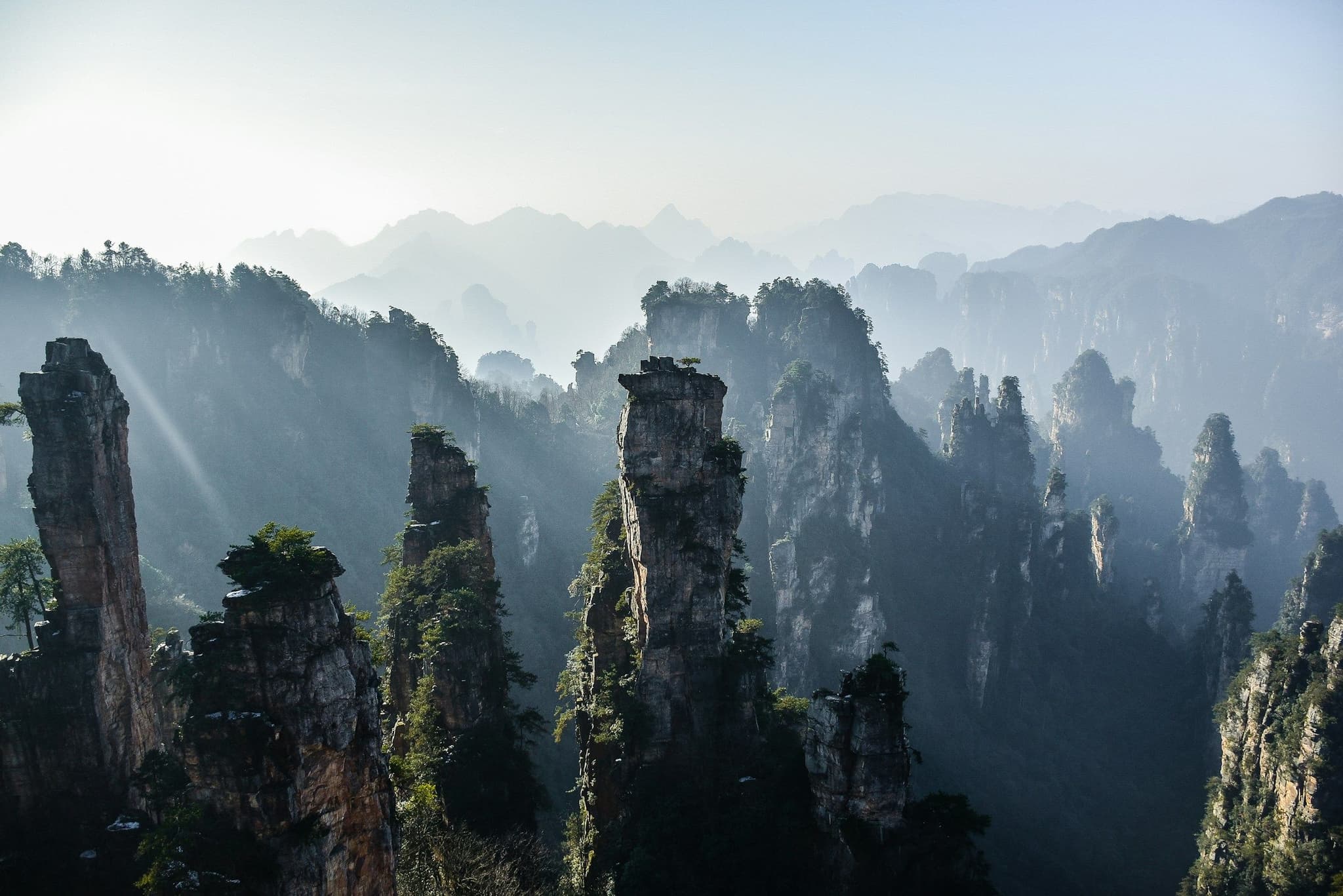
Ride the lifts up Zhangjiajie's sandstone pillars
Wulingyuan's sandstone pillars are said to have inspired the floating mountains in Avatar, and the area has been on the UNESCO list since 1992. The National Forest Park ticket costs about ¥240 including the eco-bus, lasts four consecutive days and has needed a daily reservation since June 2025. The Bailong Elevator (¥65 one way) saves a long climb. At Tianmen Mountain (¥288), 999 steps lead up to Heaven's Gate, a natural arch about 131.5 m high, but the upper section of the city-centre cable car has been closed for rebuilding since November 2025, so check before you go.
Meet the pandas in Chengdu, then see the Leshan Buddha
Pandas are most active at morning feeding, between 8am and 10am, so be at the Giant Panda Base when it opens (7.30am from March to October, 8am in winter). Tickets cost ¥55, booked up to 14 days ahead on WeChat or Trip.com, and the base is about 10 km north of the centre on Metro Line 3 plus a shuttle. Leshan is 50 to 60 minutes away by high-speed train, and its 71 m Giant Buddha was carved between 713 and 803 AD. Entry is ¥80. Arrive at 7.30am to beat a cliff walkway queue that can take two hours in peak season, or pay ¥70 more for the boat view.

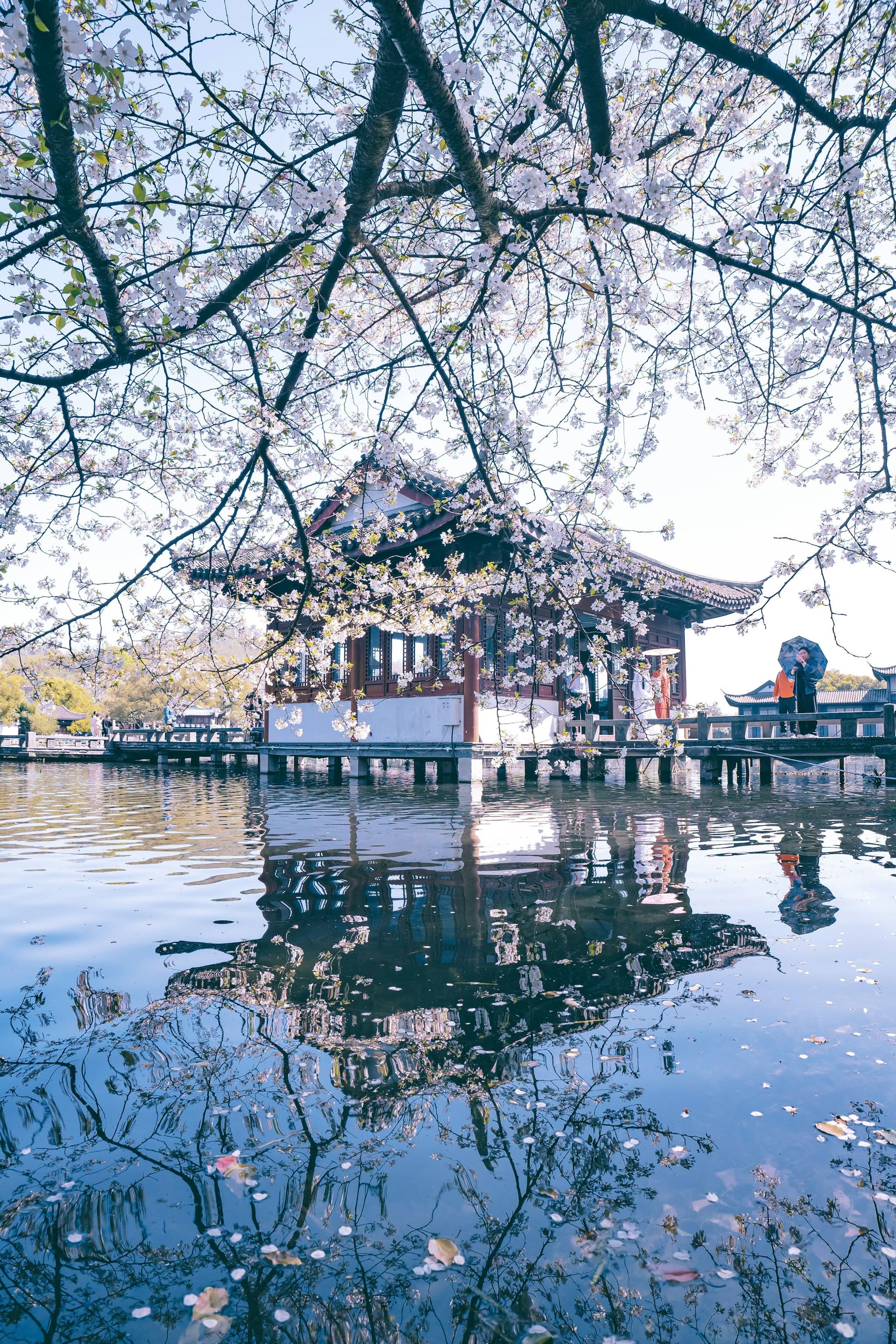
Take day trips to Suzhou's gardens and Hangzhou's West Lake
Suzhou is 23 minutes from Shanghai by high-speed train and Hangzhou is 34. Of Suzhou's UNESCO-listed classical gardens, the Humble Administrator's Garden is the one to see. It costs ¥80 from April to October and ¥70 in winter, with no tickets on site, so book through the "Suzhou Gardens Tourism" WeChat account and arrive between 7.30am and 9am. Hangzhou's West Lake has been free since 2002, and since 1 December 2025 Lingyin Temple and Feilaifeng have been free too, after costing ¥45 and ¥30. If you only have time for one, we'd pick Hangzhou, for the lake and the tea villages in the hills behind it.
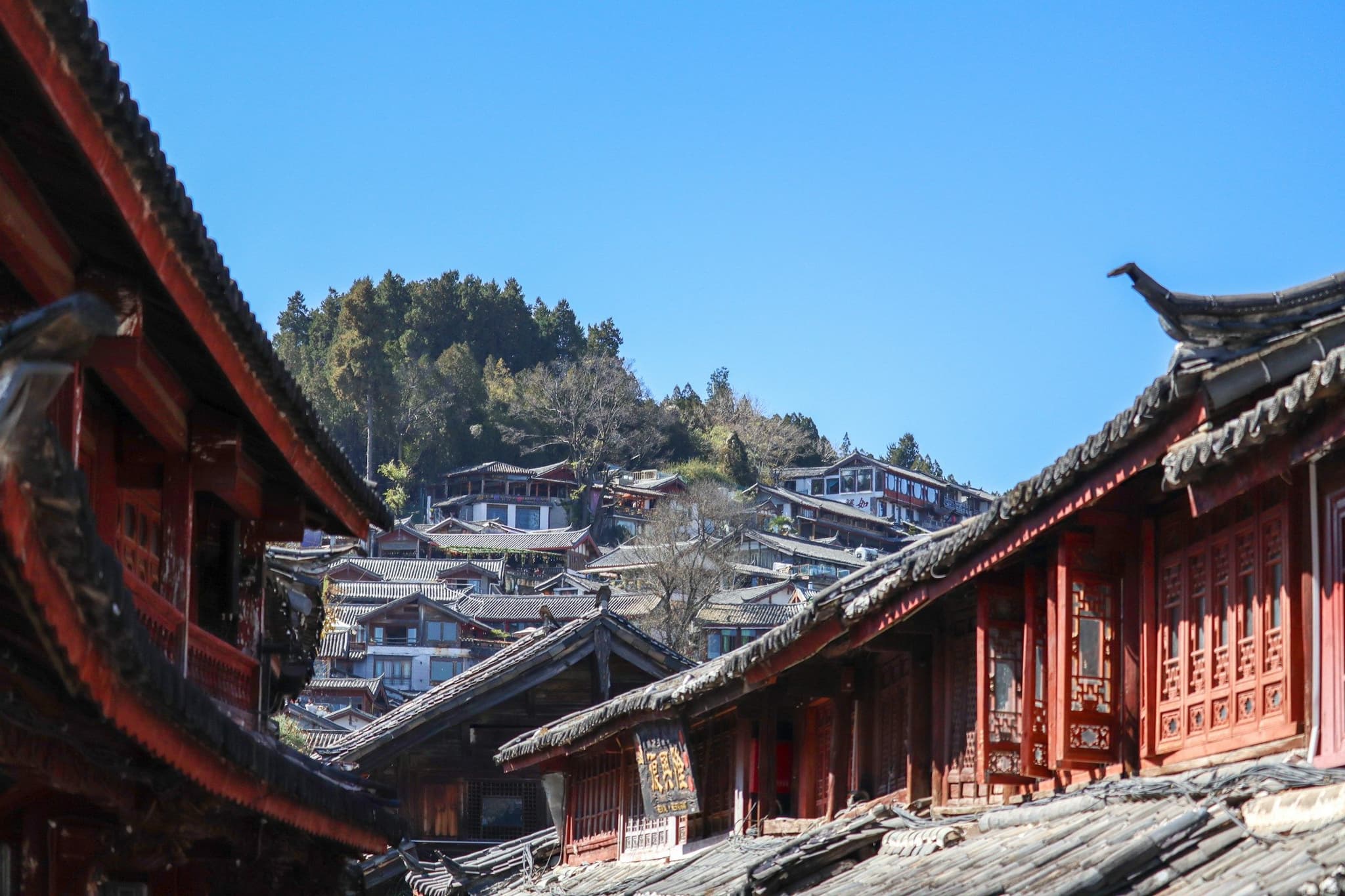
Slow down in Dali and Lijiang in Yunnan
Yunnan runs at a different pace from the eastern cities. It's mild all year and wet in summer, and Kunming, the "City of Eternal Spring", sits at about 1,888 m. A high-speed train reaches Dali from Kunming in about two hours. The station is about 15 km from the old town, and a hired e-bike (¥80-120) is the best way to follow the shore of Erhai Lake. Lijiang's UNESCO-listed old town sits at about 2,400 m and charges a ¥50 maintenance fee. Walk it before 9am or after 9pm. Tiger Leaping Gorge's High Trail, about two hours by bus from Lijiang, usually takes two days. Skip it in July and August, when rockslides are a risk.
See Chongqing after dark
Chongqing is about an hour from Chengdu by high-speed train, and it's a city to see after dark. Hongyadong, an 11-storey stilted building on the cliff, is at its best after 7pm, when the lights come on. At Liziba, the Line 2 train runs straight through an apartment block. The Yangtze cable car costs ¥10 each way for a three-minute crossing. July and August are very hot here, so aim for spring or autumn, and make one evening a hotpot dinner.
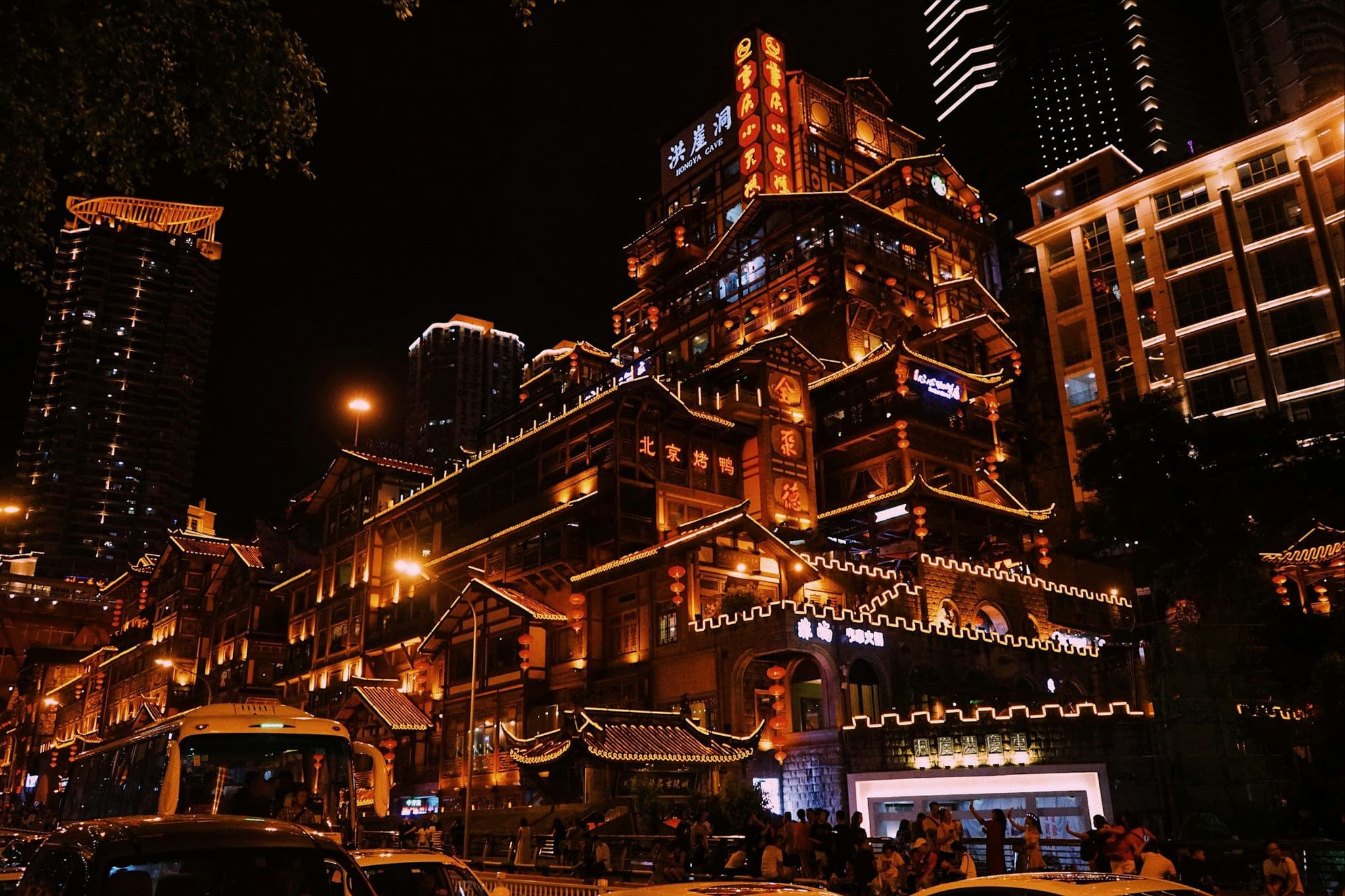
China itinerary ideas for your trip
China's high-speed train tickets go on sale 15 days ahead, and that rule shapes how you plan. For a first visit, stay on the rail line from Beijing to Chengdu, then add Guilin and Shanghai if you have two weeks.
5 to 7 day China itinerary
- Day 1-3: Beijing. Save one full day for Mutianyu, and don't plan the Forbidden City for a Monday.
- Day 4: High-speed train to Xi'an (about 4h10) and a City Wall bike ride at sunset.
- Day 5: The Terracotta Army, then dinner in the Muslim Quarter.
- Day 6: Train to Chengdu (about three hours) and a Sichuan opera show in the evening.
- Day 7: The Panda Base at opening, then fly home from Chengdu.
10 to 14 day China itinerary
- Day 1-3: Beijing.
- Day 4-5: Xi'an.
- Day 6-8: Chengdu, with the pandas and a day trip to Leshan.
- Day 9: Day trip to Chongqing, an hour away by train, for Hongyadong after dark and a hotpot dinner.
- Day 10: Train from Chengdu East to Guilin (about five hours), then on to Yangshuo.
- Day 11-12: The Li River and the Yulong River.
- Day 13: Fly from Guilin to Shanghai (about 2h10 to 2h45) and see the Bund at night.
- Day 14: Day trip to Suzhou or Hangzhou, then fly home.
Prefer mountains to cities? Swap Chongqing for Zhangjiajie, just under four hours from Chengdu East by train, and give it two days. You can build this route or move the days around in the Guided trip planner.
Fun things to do in China
The best things to do here are often the slow ones, between the big sights.
Hike the Great Wall at Jinshanling
Jinshanling is about 2.5 hours from Beijing by car and quieter than Badaling. The classic walk from the Middle Gate to Houchuankou covers about 7 to 8 km and takes four to four and a half hours. Entry is ¥65 from April to October (¥55 in winter), and a ¥40 one-way cable car takes the edge off the climb. September and October are the best months.
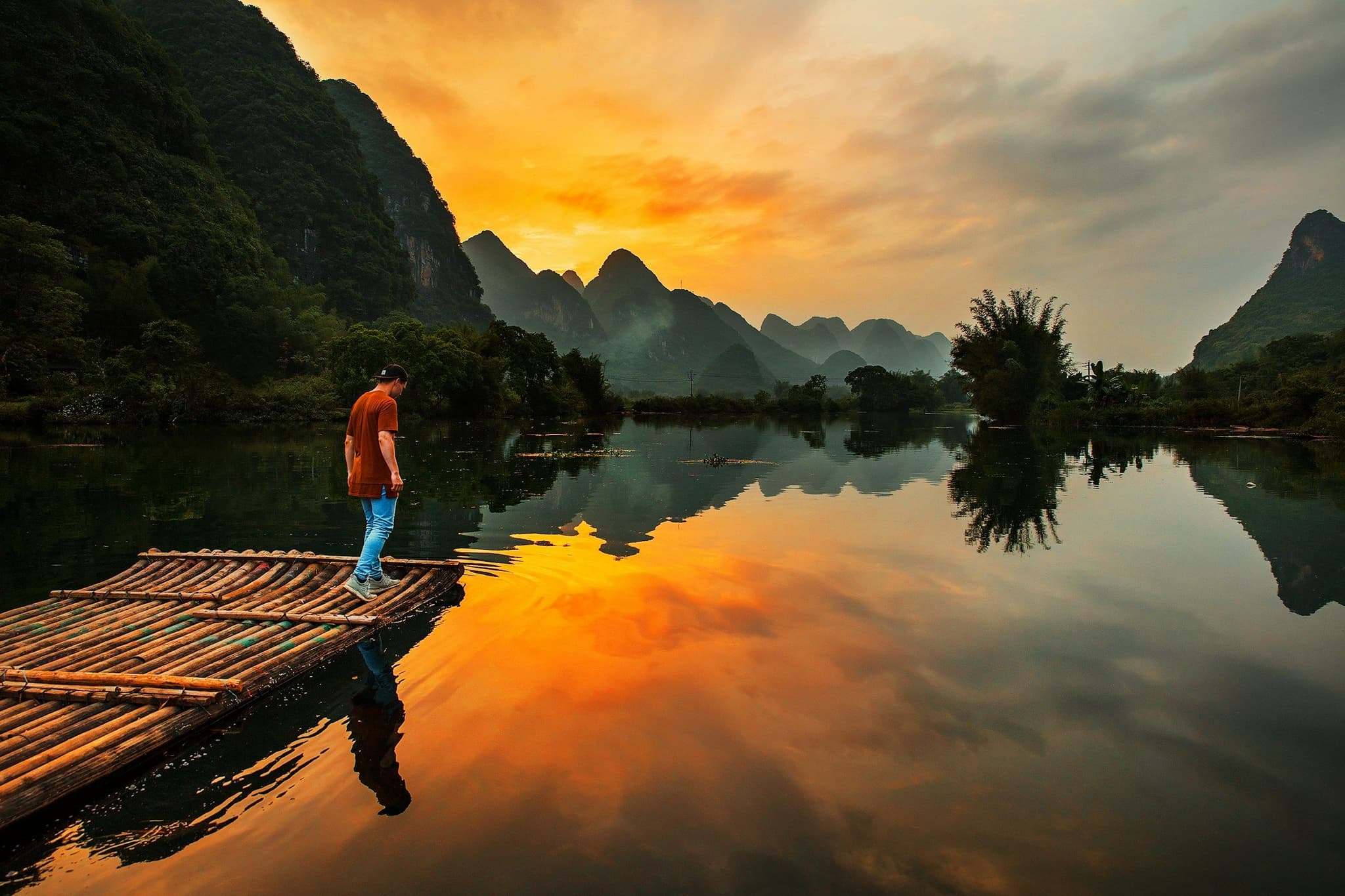
Drift down the Yulong River on a bamboo raft
Pick a bamboo raft on the Yulong over the bigger Li River boats. Rafts are priced per raft, not per person, at ¥320 from Jima to Gongnong Bridge (5.2 km) or ¥200 from Shui'erdi. On the Li River itself, a motorised raft between Yangdi and Xingping costs about ¥200 and passes the ¥20 note view. Afterwards, cycle the countryside lanes between the karst peaks.
Watch a face-changing show at the Sichuan opera
Bian lian is the trick where performers swap masks in a flash, and Chengdu is the place to see it. The Shufeng Yayun theatre in the Chengdu Culture Park has a show every night at 8pm, lasting 80 to 90 minutes, with tickets from about ¥150 including tea. Book about five days ahead.

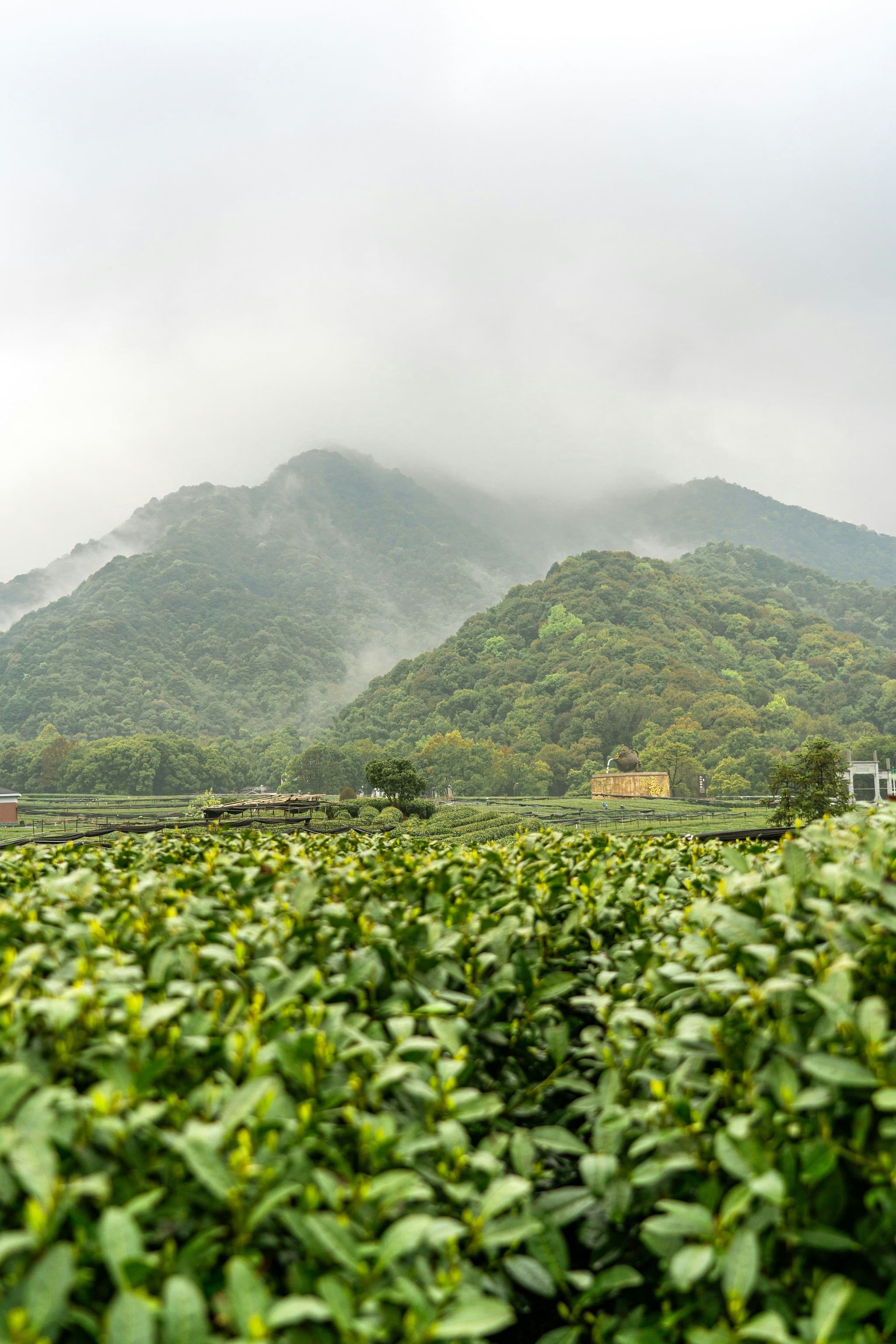
Drink Longjing tea in the hills above Hangzhou
Longjing Village and Meijiawu are 20 to 30 minutes from West Lake on bus 27 or 87. Meijiawu is the better pick for its more relaxed teahouses, while Longjing Village has the terrace views. A cup costs about ¥20-30, but the first-picked tea from before Qingming sells for ¥1,000-8,000 per 500 g, so ask the price before you sit down.
When to go to China?
Is there a best time for the whole country? Close to it. Late April and early to mid May (outside 1 to 5 May), and all of September, are the two best windows. September ends before the 1 to 7 October golden week, which saw 888 million domestic trips in 2025, when trains sell out and prices rise. Chinese New Year 2027 falls on Saturday 6 February, with a 40-day travel rush starting about two weeks before.
- Spring (Mar-May): Mild, with Beijing at 21°C and Guilin at 24°C in April. The best weeks come late in the season, as long as you avoid 1 to 5 May.
- Summer (Jun-Aug): Hot and wet. Beijing reaches 32°C in July, and Shanghai's plum rain falls from mid-June to mid-July. Yunnan stays mild but is in its wet season, and typhoons can hit the south and east coast between May and November.
- Autumn (Sep-Nov): The best season overall, with Shanghai at 24°C and Chengdu at 21°C in October, but stay away from 1 to 7 October.
- Winter (Dec-Feb): Cold in the north, with Beijing highs of 2°C in January and Harbin lows of minus 22°C. That's ice festival weather in Harbin, with the sculptures usually open from late December to late February. It's cheaper too, apart from Spring Festival.

Did you know you can create your own itinerary?
Now that you know what to see in China and where to stay, you can start creating your own trip. Do you want more days on the rail line from Beijing to Chengdu, or are you thinking more about bamboo rafts and karst peaks around Yangshuo? It’s all up to you. You can easily create your own trip in the Guided app for free, or use trips shared by others.
Where to stay in China?
Since May 2024, hotels in China haven't been allowed to turn away foreign guests for lack of a licence, and they register you with the police within 24 hours. Some small inns still refuse foreigners, so confirm before you book.
Beijing
The hutongs of Dongcheng, around Nanluoguxiang, are full of courtyard hotels with 5 to 15 rooms. They have the most atmosphere, but the lanes are uneven and the bathrooms small. Wangfujing, about 30 minutes' walk from the Forbidden City's east gate, is the practical choice, though it's touristy and noisy.
Shanghai
Stay in Puxi, the side of the river with the Bund. The Former French Concession is the most walkable area, with plane trees and Art Deco buildings, and it's the one to pick if the budget stretches. People's Square is more central, with Line 2 running to both airports.
Xi'an
Stay inside the city wall near the Bell Tower, a short walk from the Muslim Quarter and about 27 to 30 minutes from Xi'an North station on Line 2. Ask for a room facing inwards, away from the traffic.
Yangshuo
Guilin city is handy for the airport and the cruise piers but about 85 minutes from Yangshuo. West Street in Yangshuo is walkable and touristy, while the Yulong River countryside, 8 to 12 km out, is quiet but needs an e-bike or a driver.
Chengdu
Chunxi Road and Taikoo Li have the densest choice of restaurants, with crowds and touts to match. The Kuanzhai Alley area is slower, with courtyard boutique hotels on Line 4.
Guided tip: In Beijing, spend two nights in a hutong courtyard hotel for the atmosphere, but book Wangfujing instead if you have heavy luggage or mobility needs.
Getting around when visiting China
Should you drive? No. China doesn't recognise the International Driving Permit, and the temporary permit for foreigners is limited and, in some cities, only issued to residence-permit holders. Trains and flights cover nearly everything, and for countryside days a private driver costs ¥500-1,000 a day.
High-speed trains
China Railway's Fuxing CR400 trains run at 350 km/h. G and D trains are the high-speed ones, with G the fastest. Book on the 12306 app, which has an English mode and needs your passport to register (foreign cards are often declined), or on Trip.com, which charges the official fare plus a ¥30 fee. Your passport is the ticket, scanned at the gates, and you should arrive 30 to 40 minutes early for security.
Domestic flights
Large carriers such as Air China and China Southern cover the main routes, and Spring Airlines is the low-cost option out of Shanghai Hongqiao. Flying makes most sense for the long legs out to Guilin or Yunnan.
Metros
Beijing's metro, about 909 km, is the world's longest, and contactless foreign bank cards have worked at its gates since January 2025. Fares in Beijing and Shanghai start from ¥3, and in Shanghai you can pay by QR code in Alipay or WeChat.
DiDi and taxis
The DiDi app works in English and takes Visa and Mastercard, and it translates your chat with the driver. A 20-minute ride costs ¥15-35. Avoid unmetered taxis.
Guided tip: Book high-speed trains the day sales open, 15 days ahead, if you're travelling at a weekend or in a golden week. Use the same passport for every booking, because the name and number have to match.
Food and drinks you should try when visiting China
Sichuan pepper isn't a pepper at all. It's the husk of a Zanthoxylum plant, and it's only one of the reasons to plan a China trip around regional food.
Peking duck
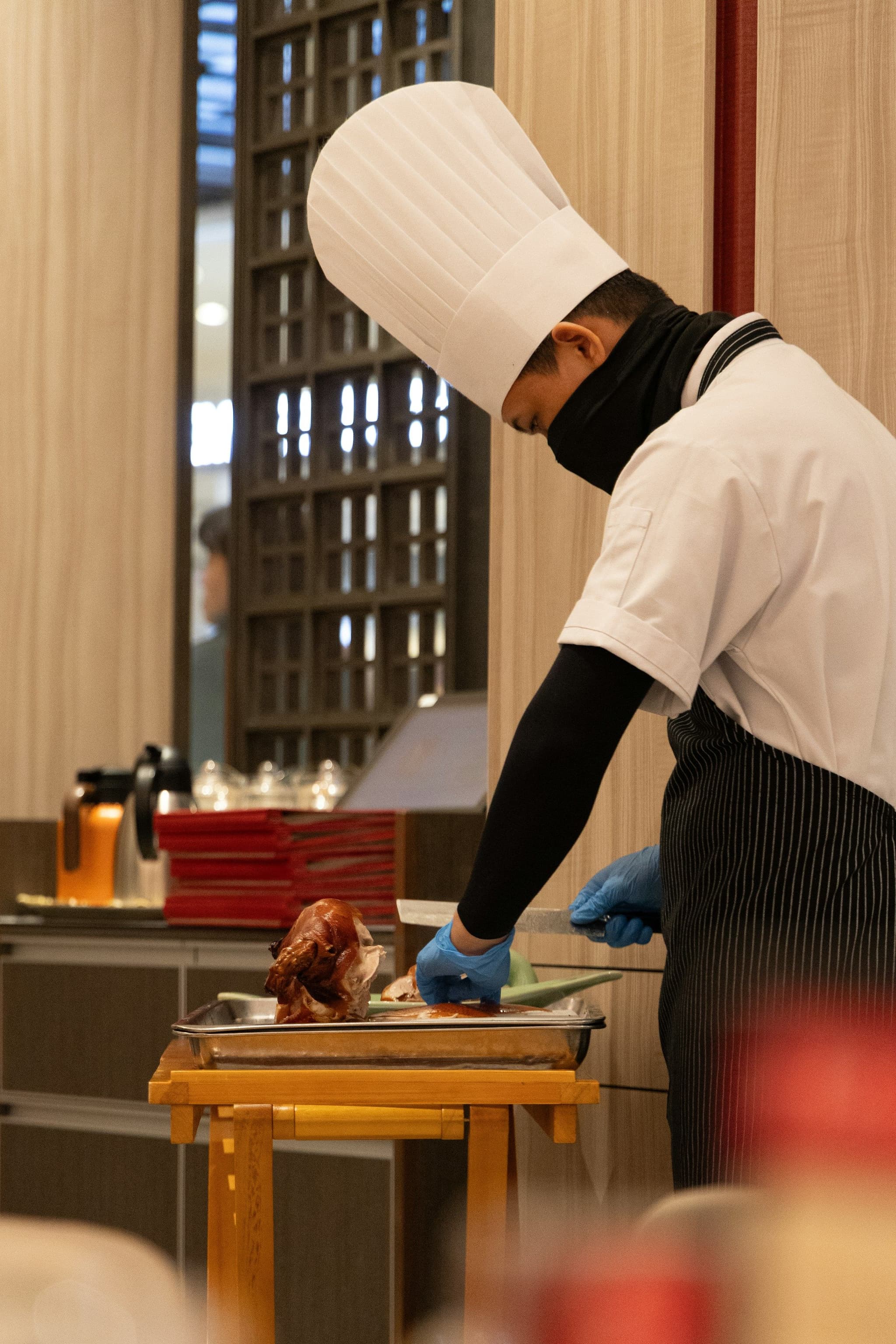
A roast duck recipe appears in Hu Sihui's cooking manual of 1330, and Beijing's two famous duck houses use different ovens. Bianyifang, founded in 1416, uses a closed oven, and Quanjude, from 1864, hangs its ducks over fruitwood. The crisp skin is wrapped in pancakes with sweet bean sauce, and the carcass often comes back as broth.
Xiaolongbao
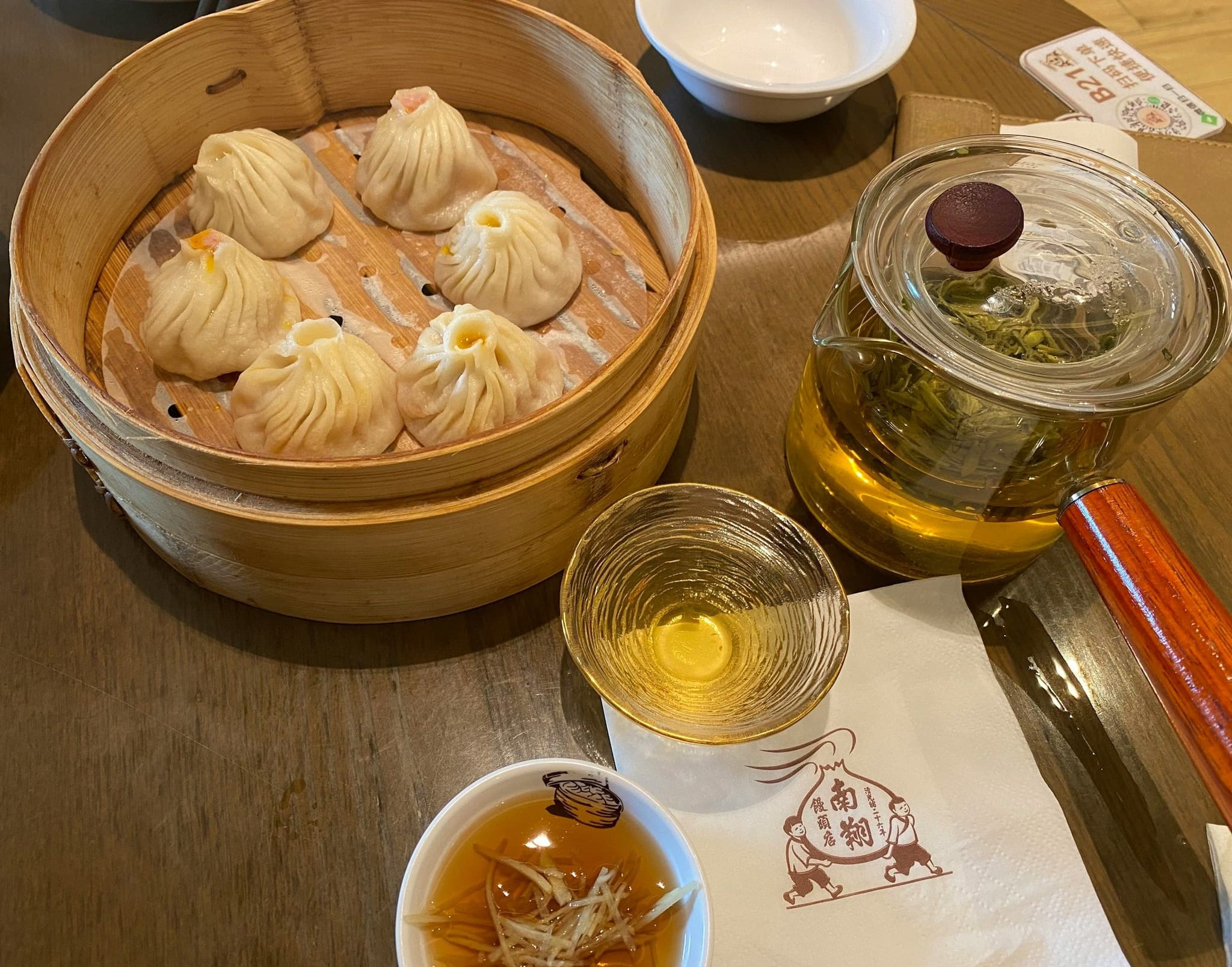
Shanghai-style xiaolongbao come from Nanxiang, where Huang Mingxian of Ri Hua Xuan is credited with them in 1871. The soup inside starts as aspic that melts in the steamer. Nanxiang Steam Bun Restaurant, at 87 Yuyuan Road, is the obvious place to try them.
Mapo tofu
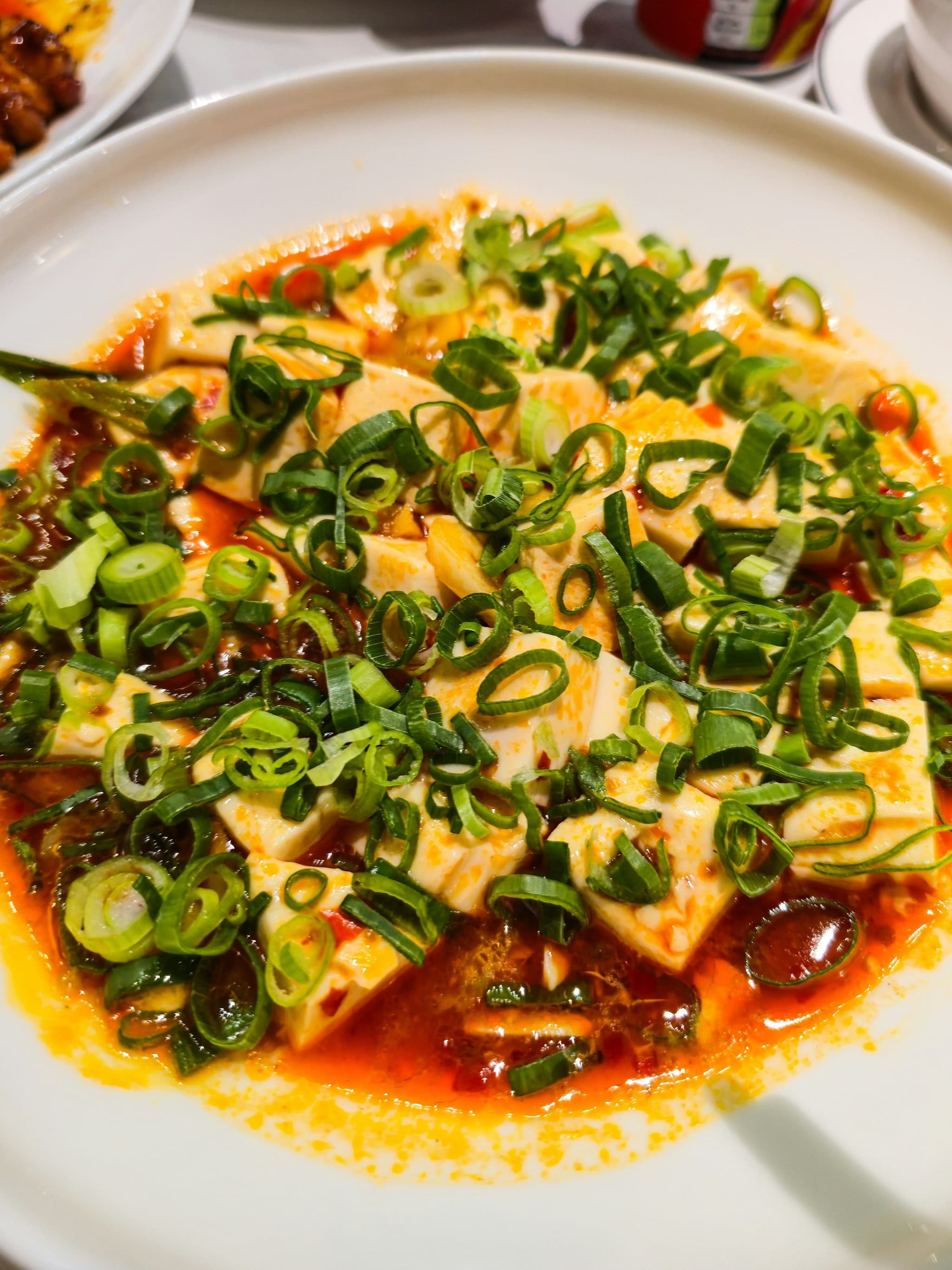
"Chen Mapo", a pockmarked grandmother, created this at the Chen Xingsheng restaurant in Chengdu in the 19th century. It's built on Pixian chilli bean paste and Sichuan pepper. That pepper gives you má, the numbing, while the chilli brings là, the heat. If you eat one dish in Sichuan, we'd make it this.
Biangbiang noodles and roujiamo
Xi'an's thick, belt-like biangbiang noodles have a name whose character takes 58 strokes in its traditional form. For roujiamo, meat is stuffed into baijimo flatbread, and in the Muslim Quarter that means cumin beef. Order both on the same evening.
Baijiu
Baijiu is usually 35 to 60% ABV and mostly made from sorghum. Kweichow Moutai, from Maotai in Guizhou, is about 53%. When a host says "ganbei", it means drain the glass.
Culture and local habits you'll notice when visiting China
Go to any park at dawn and you'll see tai chi and dancing, especially at the Temple of Heaven. In the evenings, squares fill with guangchang wu, or square dancing, led mostly by middle-aged and retired women known as dama. CCTV estimates more than 100 million people take part. Water and tea are served hot, and trains have boiling-water dispensers. People stand close and push when boarding, which isn't considered rude, and it's easier to go with the flow than to take it personally.
Tipping isn't expected, and staff may hand cash back, although private guides and drivers are exceptions and some upmarket restaurants in Beijing and Shanghai add 10 to 15%. Don't stand chopsticks upright in your rice, and never give a clock as a present. Give and receive things with both hands. Squat toilets are normal outside hotels and malls, so pack tissues.
Looking for more unique places, trips and activities?
Subscribe to our Guided Newsletter for more travel inspiration.
Costs of a holiday to China
Numbeo's mid-2026 cost of living index puts China at 30.7, between Vietnam (26.9) and Thailand (36.8), and well below Japan (47.6) and South Korea (56.7). A noodle lunch costs ¥15-35 and metro rides start from ¥3. The total still ends up higher than Southeast Asia, because distances are long and the nature parks charge for entry and again for lifts. Hostelz puts a backpacker budget at US$67 a day in China against US$36 in Thailand and US$94 in Japan. Plan on about ¥250-450 per person a day on a budget and ¥500-1,000 mid-range. Prices below are from October 2026, when €1 was about ¥7.45 and £1 about ¥8.85.
Food & Drink

Coffee
¥10 – ¥35
Lunch
¥15 – ¥100
Beer
¥8 – ¥45
Accommodation
Hotels
¥300 – ¥800
Serviced apartment
¥450 – ¥1,100
Hostel dorm
¥60 – ¥150
Transport
Trains
¥515 – ¥695
Public Transport
¥3 – ¥10
Taxi / Didi ride
¥15 – ¥50
Attractions

Museums
¥0 – ¥30
Big Attractions
¥40 – ¥240
Theatre
¥120 – ¥580
Practical tips for visiting China
Most of the work for a China trip happens before you leave home.
✔ Check the entry rules for your passport
Entry rules differ for many nationalities, including the UK, EU and US, so check yours before you book. Right now, citizens of about 50 countries, including the UK, most EU countries, Australia, New Zealand and Canada, can enter visa-free for up to 30 days per entry for tourism. That scheme currently runs until 31 December 2026, with no extension announced by mid-October 2026. US citizens normally need a visa, although they can use the 240-hour visa-free transit if they're travelling on to a third country with a confirmed onward ticket. Your passport needs six months' validity, and you can fill in the arrival card online through the National Immigration Administration platform. Confirm the details with the UK FCDO or the US State Department.
✔ Set up Alipay or WeChat Pay before you fly
The currency is the renminbi, counted in yuan (¥, CNY). Alipay and WeChat Pay both accept linked foreign Visa and Mastercard cards, with no fee on payments of ¥200 or less, and 3% of the full amount on payments over ¥200. Foreign cards mostly work only in big hotels and international stores, but cash is legal tender and businesses aren't allowed to refuse it, so carry some small notes.
✔ Sort out your phone for life without Google
Google, including Gmail and Maps, is blocked, and so are WhatsApp and Instagram. A foreign roaming SIM or eSIM routes your data outside the mainland, so those apps usually work on mobile data, though not on hotel Wi-Fi. Install it before you arrive, along with Amap for maps. Of all the prep, this is the one not to leave until the airport.
✔ Know the advisory and the everyday risks
Violent crime against foreigners is relatively rare, according to the UK FCDO. As of September 2026 the US State Department rates China Level 2, citing arbitrary enforcement of local laws and exit bans. Tibet needs a Tibet Travel Permit and an organised tour even if you're visa-free. Walk away from tea-tasting invitations and "art student" exhibitions, especially near Tiananmen Square and on Nanjing Road. Pedestrians don't have right of way, so look both ways twice. Tap water isn't safe to drink.
✔ Book trains and sights with the same passport
High-speed train tickets go on sale 15 days ahead, and major sights release tickets 7 to 15 days ahead. All of them are tied to your passport number, so book with one passport and carry that exact document at all times, since copies aren't accepted.
Fun facts about China
A few things about China that didn't fit anywhere else in this guide.
- All of China runs on one time zone, Beijing Time (UTC+8), though the country spans about five geographical zones.
- China has 61 UNESCO World Heritage sites, after the Jingdezhen porcelain sites were added in July 2026.
- The 2014 national survey counted 1,864 giant pandas in the wild, and the IUCN downgraded them from Endangered to Vulnerable in 2016.
- The Three Gorges Dam is the world's largest power plant by installed capacity, at 22.5 GW.
- Spring Festival was added to UNESCO's intangible heritage list in December 2024.
- Harbin's Ice and Snow Festival grew out of a 1963 ice-lantern show and has run as a festival since 1985.
Yunnan and the karst country around Guilin are the reasons to come back.
Ready to map out your trip to China?
We hope this China travel guide has given you a clear starting point for your trip. Stay tuned for more inspiration, itineraries and practical tips to help you shape your perfect holiday to China. And don’t forget to check out our Guided app, where you can create your own trip or use trips shared by other travellers for free.
FAQS about visiting China
How many days do you need in China?
Ten to 14 days covers Beijing, Xi'an and Shanghai plus one more region, such as Chengdu or Guilin. A week is enough for Beijing and Xi'an with Chengdu at the end, if you use the fast trains. Inside the Guided app, you can create your own trip route and find out how many places you can fit into your trip.
What is the best part of China to visit?
For a first trip, Beijing and Xi'an. Guilin and Yangshuo have the best landscapes, in our view, and Chengdu is the pick for food and pandas.
What is China known for?
The Great Wall and the Terracotta Army, along with giant pandas and the karst scenery of the south. Regional food is a big reason to visit too.
Can you travel around China without a car?
Yes, and you should. Foreign driving licences and International Driving Permits aren't valid, while high-speed trains and domestic flights cover nearly everywhere you'll want to go.
Is China expensive?
Day to day, it's cheaper than Japan and South Korea and close to Thailand, according to Numbeo. Entry tickets and cable cars at the big sights add up quickly, so budget for those separately.
Is China safe to visit?
The UK FCDO doesn't advise against travel to any part of mainland China, and the US State Department rates it Level 2, citing exit bans and the risk of detention. Violent crime against foreigners is relatively rare. Scams and traffic are the everyday risks.
Do you need a visa for China?
It depends on your passport. Citizens of about 50 countries, including the UK and most EU countries, can currently enter visa-free for 30 days until 31 December 2026, while US citizens normally need a visa or can use the 240-hour transit scheme. Check the official sources before you book.
Can you use Google, WhatsApp or Instagram in China?
Not on Chinese networks, where all three are blocked. A foreign eSIM usually gets around this on mobile data, and it's worth setting up Alipay or WeChat Pay before you go.
Plan your trip to China in Guided.
Save the places you find, then let Guided lay out the days, the map and the details.
More in Asia
All destinations IndiaIndia is a vast and diverse country celebrated for its rich history, spiritual traditions, unique food and stunning landscapes ranging from the Himalayas to tropical coastlines.
 IndonesiaIndonesia is a tropical paradise of islands with stunning beaches, breathtaking natural beauty, and rich cultural history.
 JapanJapan offers a blend of ancient traditions and cutting-edge technology, stunning natural landscapes, and globally influential culture.
 KazakhstanKazakhstan pairs Almaty's café streets and snowy Tian Shan peaks with red canyons, alpine lakes and Silk Road shrines in the world's largest landlocked country.