

Philippines
Philippines travel guide: everything you need to know before you go
With more than 7,000 islands scattered across the South China Sea, the Sulu Sea and the Pacific, the Philippines is one of the most spread out destinations on the map. If you’re only now starting to plan your Philippines trip, that scale can seem like a lot to take in at first. But you don’t need to see all 7,000 islands to fall for this country, you just need to pick a handful and give them your full attention. This travel blog about the Philippines walks you through where to go, what to eat and how to travel Philippines islands without losing half your trip to transfers.
5 reasons to visit the Philippines
You’ll find beaches here that range from long runs of white sand to tiny coves only reachable by boat.
Under the surface, diving and snorkelling spots pack in an unusual amount of marine life for what you pay to get in the water.
Even on a modest budget, a trip here goes further than in most of Southeast Asia.
From Sinulog in January to town fiestas nearly every weekend, there’s always a festival somewhere on the calendar.
You’ll rarely leave without a Filipino family offering you a meal or a place to stay, hospitality here runs that deep.
Best places to visit in the Philippines
Not sure where to start when you think about visiting? With so many islands, you sure have plenty of options in the Philippines. Where to travel first is usually the hardest part of the whole trip. We’ve picked out our favourites:
El Nido, Palawan
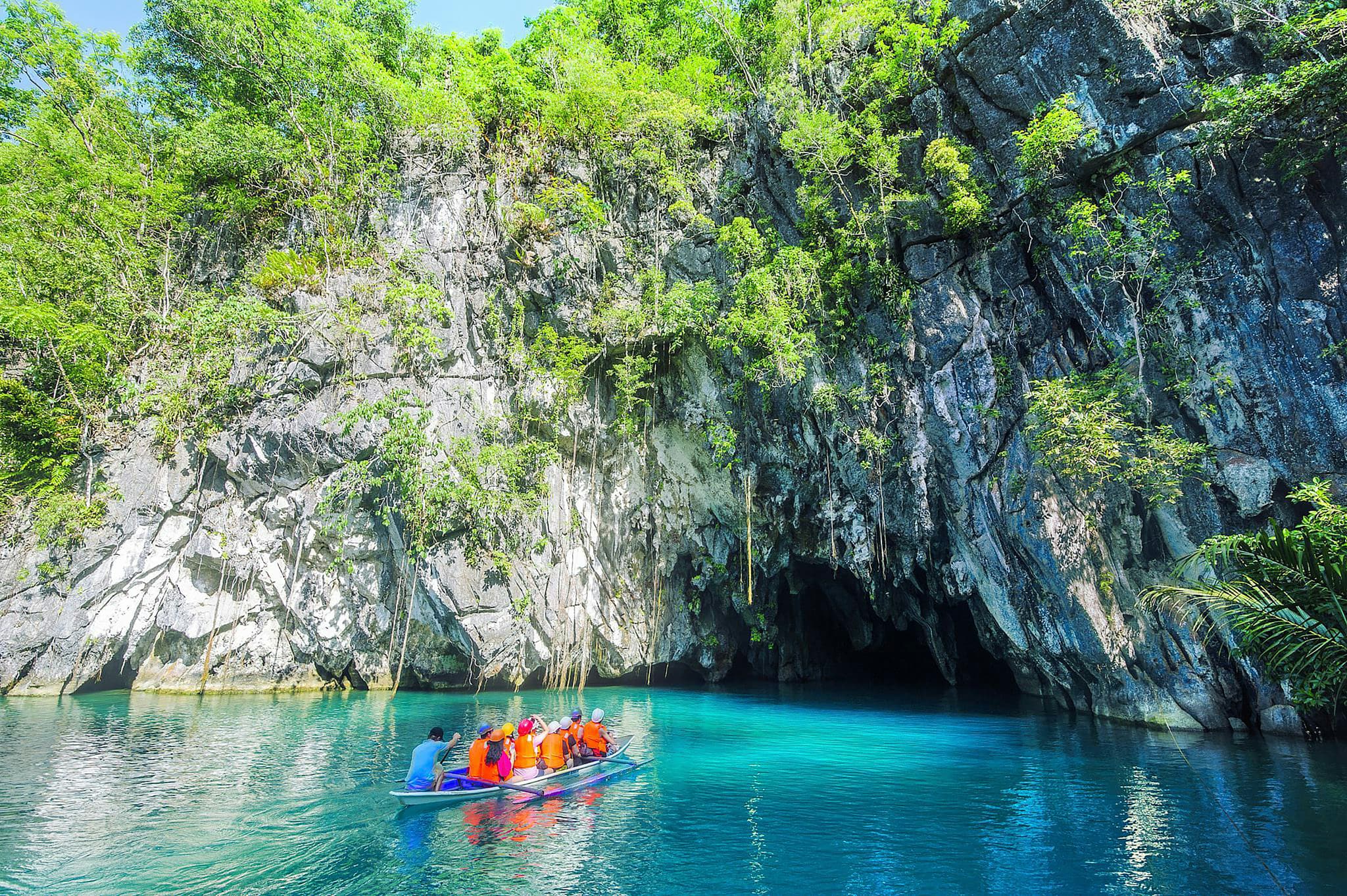
You’ll want to head to El Nido if lagoons and limestone cliffs are what brought you to the Philippines in the first place. Book Tour A or Tour C through your hotel or a local operator like The Couch El Nido, since between them they cover Big Lagoon, Snake Island and Secret Beach in a single day. Try to reach the pier by around 7am, the boats fill up fast and the light is much better before everyone else piles in.
Coron, Palawan
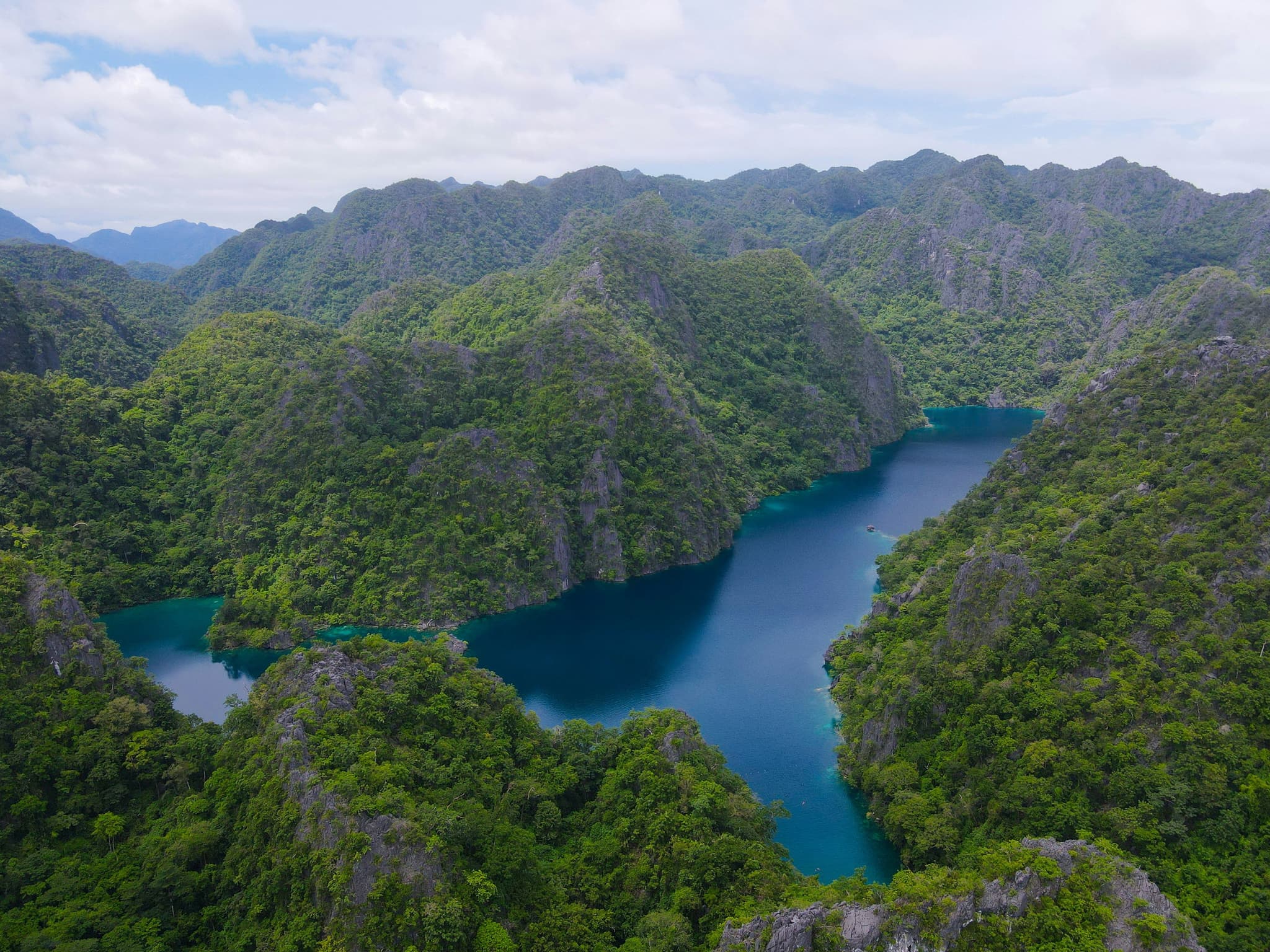
Coron is the pick for you if wreck diving and turquoise lakes rank higher on your list than beach time. Kayangan Lake and Barracuda Lake are the two spots you shouldn’t skip, so build a boat tour around them and arrive before 9am for the calmest water. Back in town, climb Mount Tapyas for sunset, nearly 750 steps but worth every one.
Siargao
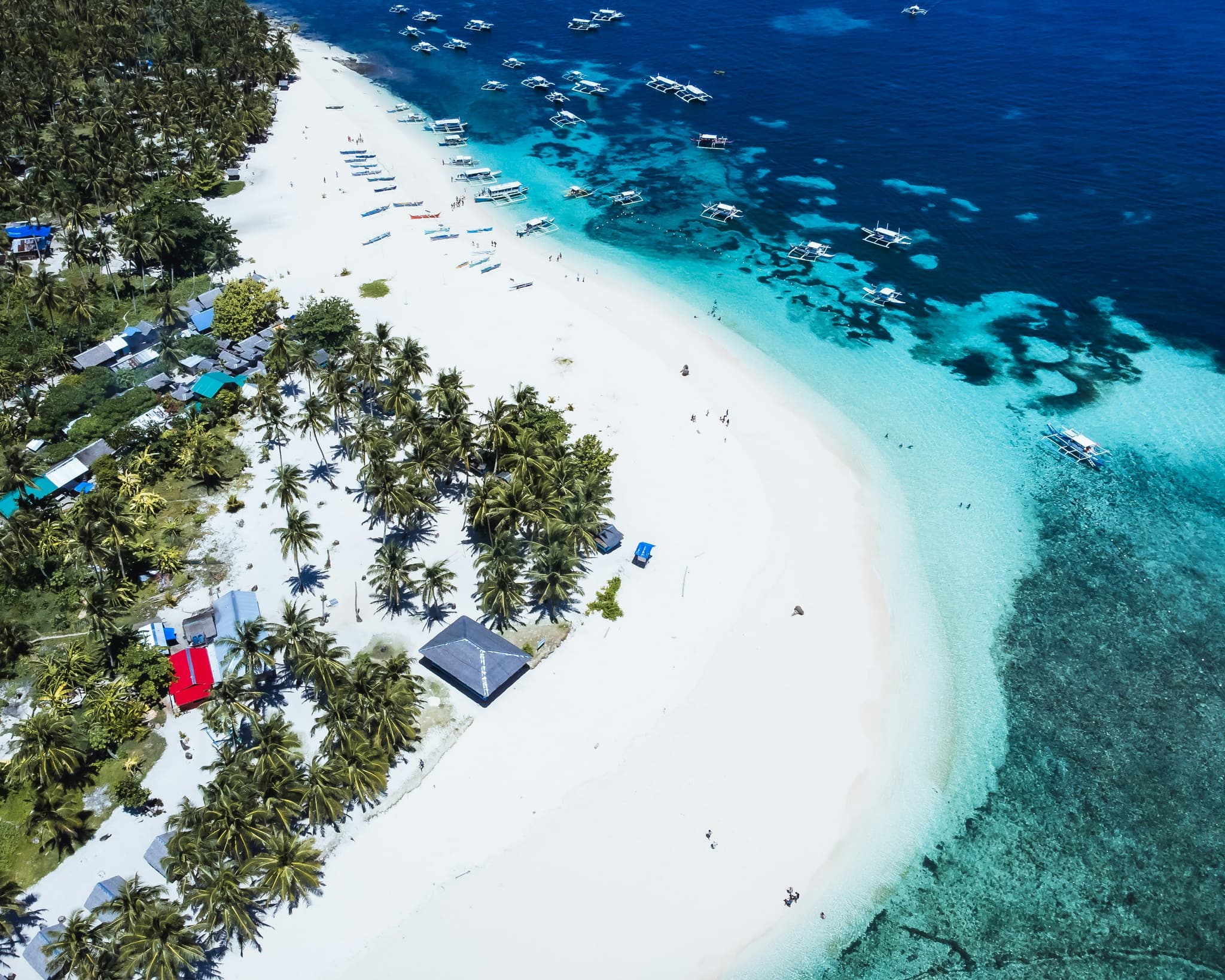
Surfers already know Siargao, but you don’t need to ride a board to fall for this teardrop island. Cloud 9 is the famous break, and beginners can book lessons at any of the surf camps lining the beach near it. Rent a scooter and spend a day chasing Sugba Lagoon and Magpupungko rock pools for calmer water after a morning in the waves. Plan around the September to November storm season if you can, ferries and flights get cancelled here more than you’d like.
Bohol
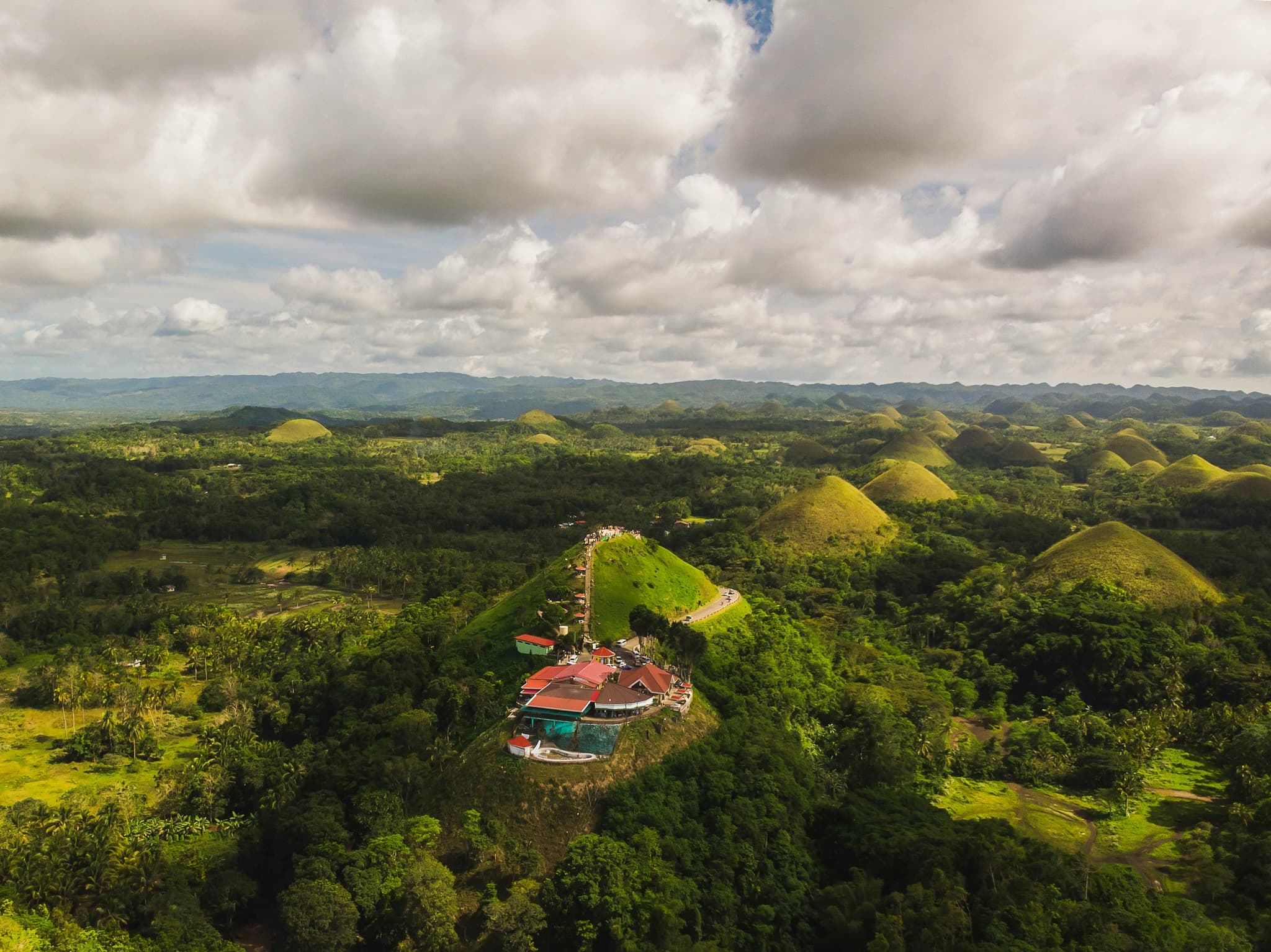
Bohol works well if you want variety packed into a couple of days. Hire a driver and you’ll cover the Chocolate Hills viewpoint in Carmen, a floating lunch cruise on the Loboc River, and the Tarsier Sanctuary, where you can see these tiny primates without the flash photography that stresses them out. Time your visit for the dry season if the hills are the main draw, they only turn brown when the grass dies back. Balicasag Island, a short boat ride from Panglao, gives you some of the calmest snorkelling around.
Cebu
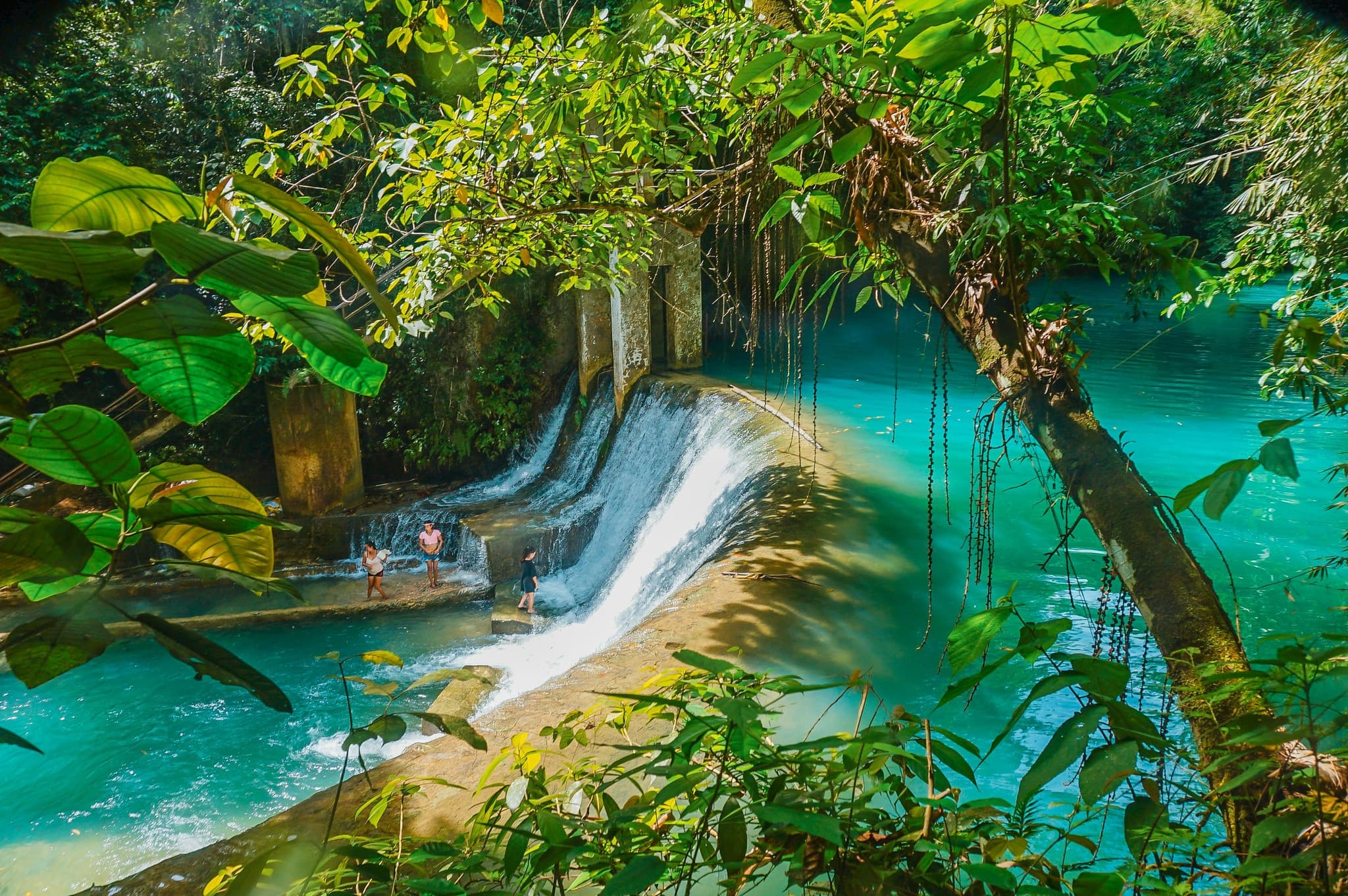
Cebu earns its spot for canyoneering, waterfalls and easy flight connections to almost everywhere else. Kawasan Falls in Badian is the big one, a half day of rappelling down waterfalls and swimming through pools. Pack water shoes and check conditions with a guide first, heavy rain upstream can make the water genuinely dangerous.
Boracay
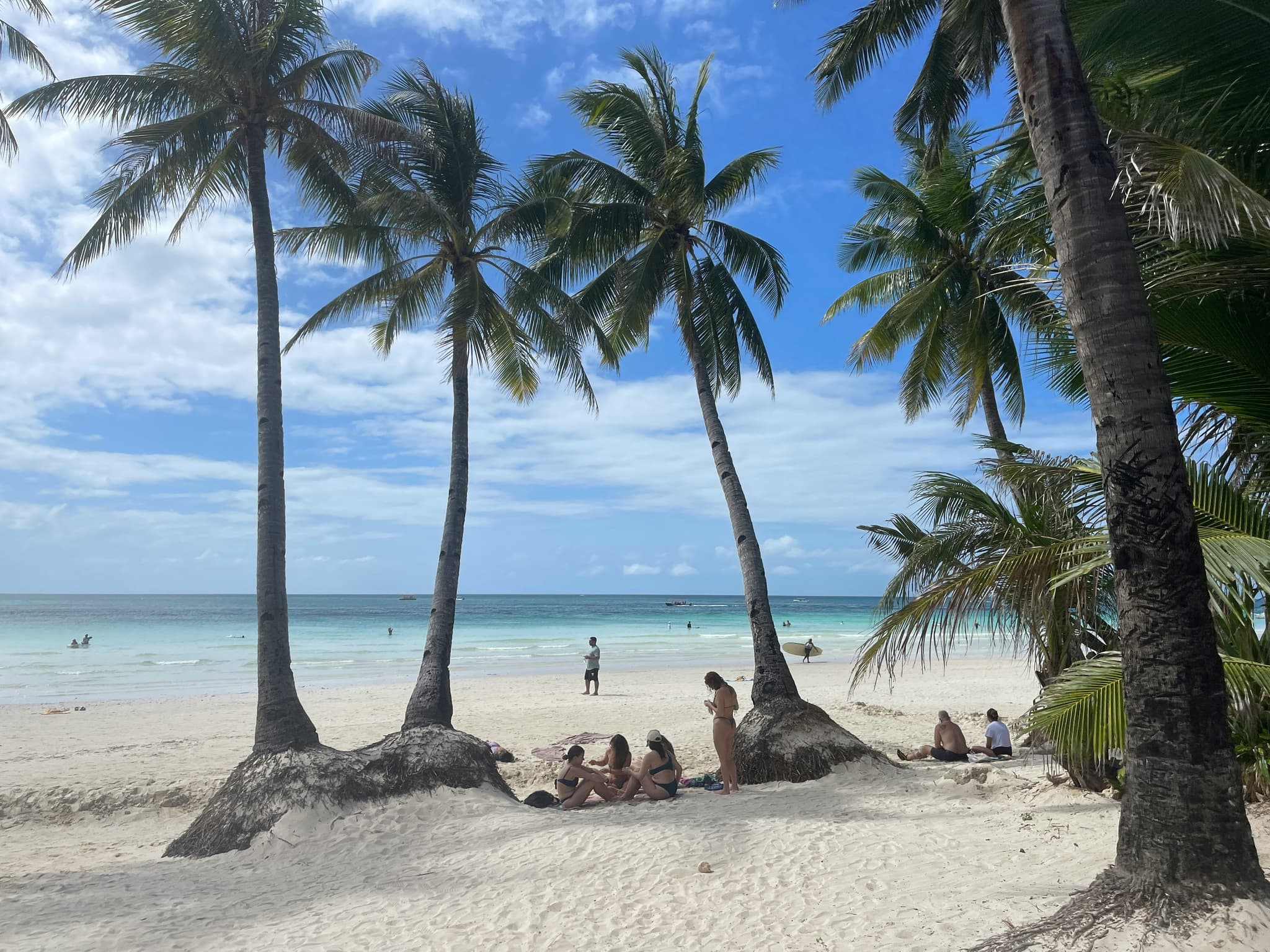
Boracay gets a mixed reputation, but White Beach genuinely earns the hype, the sand is that fine, powder-soft kind that squeaks under your feet. Station 1 has the widest stretch and the calmest water. Puka Beach, meanwhile, is a fifteen to twenty minute tricycle ride up the coast from White Beach, ask any driver outside your hotel and they’ll know it, and it gives you far fewer people and slightly coarser sand for a fraction of the price of the resorts down south.
Siquijor
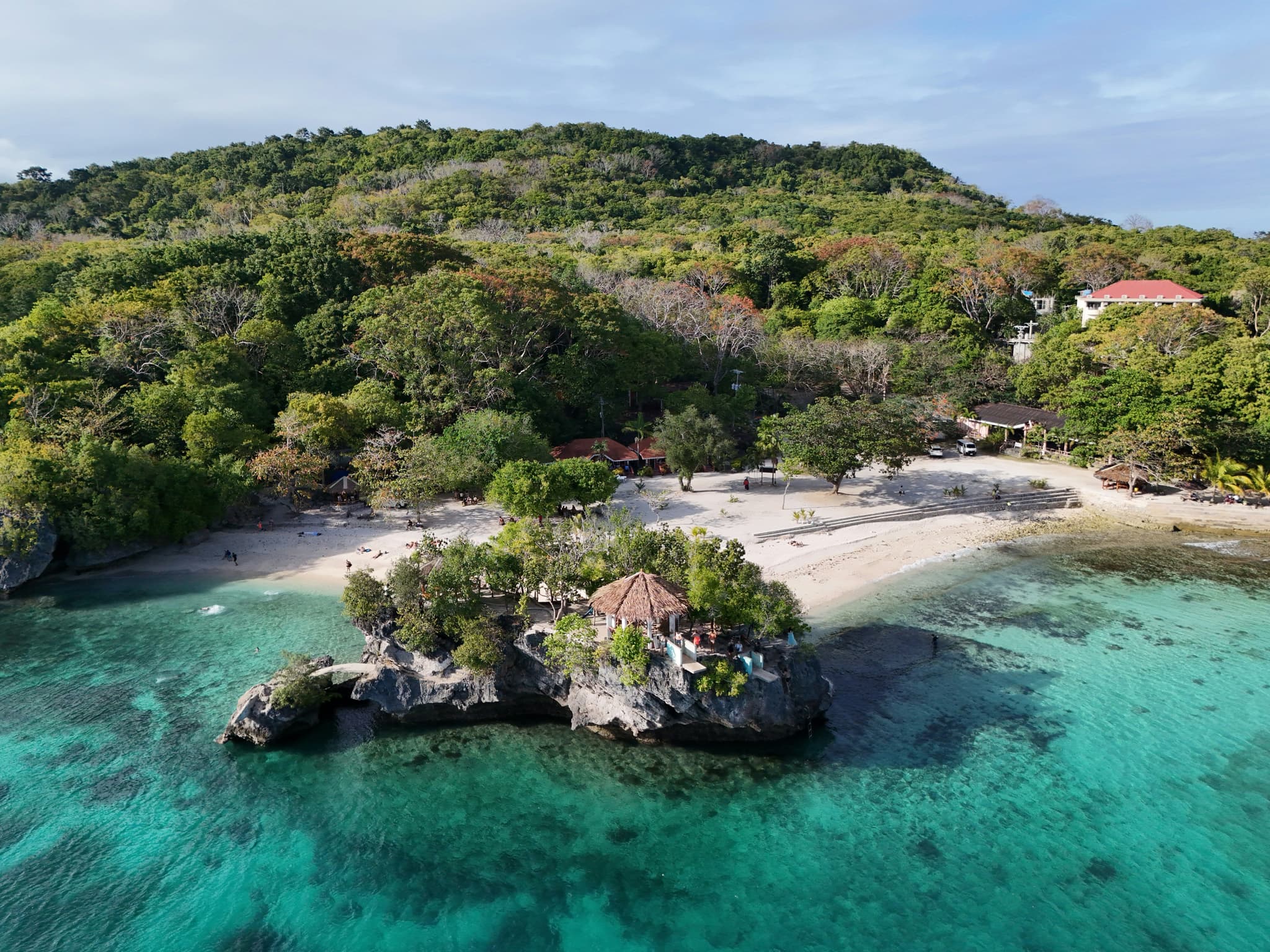
Siquijor has a reputation for folk healing and old superstition, and that mystique makes it one of the more memorable stops on a longer trip. Cambugahay Falls has three tiers you can jump from, with a rope swing at the second level. Salagdoong Beach is the spot for cliff diving, with two jump points depending on your nerve. Rent a scooter and circle the whole island in a single day, it’s small enough that you’ll see most of it without rushing.
Philippines itinerary ideas for your trip
The Philippines has no shortage of incredible places to visit, but some of them sit a long way from each other, so you’ll want to plan your route with a bit of care before you book anything. We’ve put together a few Philippines itinerary ideas that connect the best places without leaving you stuck on domestic flights every other day. Pick the one that matches how much time you have.
One week in the Philippines
Day 1: Fly into Puerto Princesa, transfer to Coron
Day 2: Coron, boat tour of Kayangan Lake and Barracuda Lake
Day 3: Coron, motorbike day trip to hot springs and Mount Tapyas at sunset
Day 4: Ferry or flight to El Nido
Day 5: El Nido, Tour A or Tour C island hopping
Day 6: El Nido, Taraw Peak sunrise hike and Nacpan Beach in the afternoon
Day 7: Fly home from El Nido or Puerto Princesa airport
Two weeks in the Philippines
Day 1-2: Manila, Intramuros and a first taste of Filipino food
Day 3-5: Coron, wreck diving and lake hopping
Day 6-8: El Nido, island hopping and Taraw Peak
Day 9-10: Port Barton, a laid-back stop with fewer people
Day 11-12: Fly to Cebu for Kawasan Falls canyoneering
Day 13-14: Bohol, Chocolate Hills, tarsiers and Panglao beach time
This two week Philippines plan gives you enough breathing room to enjoy each stop instead of spending half your trip on transfers, and it covers Luzon, Palawan and the Visayas without over-packing the schedule. Enjoy!
Want more inspiration? Check out the following trips:

What to do when visiting the Philippines?
After you’ve settled on where to travel in the Philippines, the next question is what you’ll actually spend your days doing. This part of any trip to Philippines planning is where the fun starts, the activities here range from lazy afternoons in the water to genuinely adrenaline-heavy days out. If visiting the Philippines is high on your list for adventure, these are worth building your route around:
Go island hopping in the Bacuit Archipelago
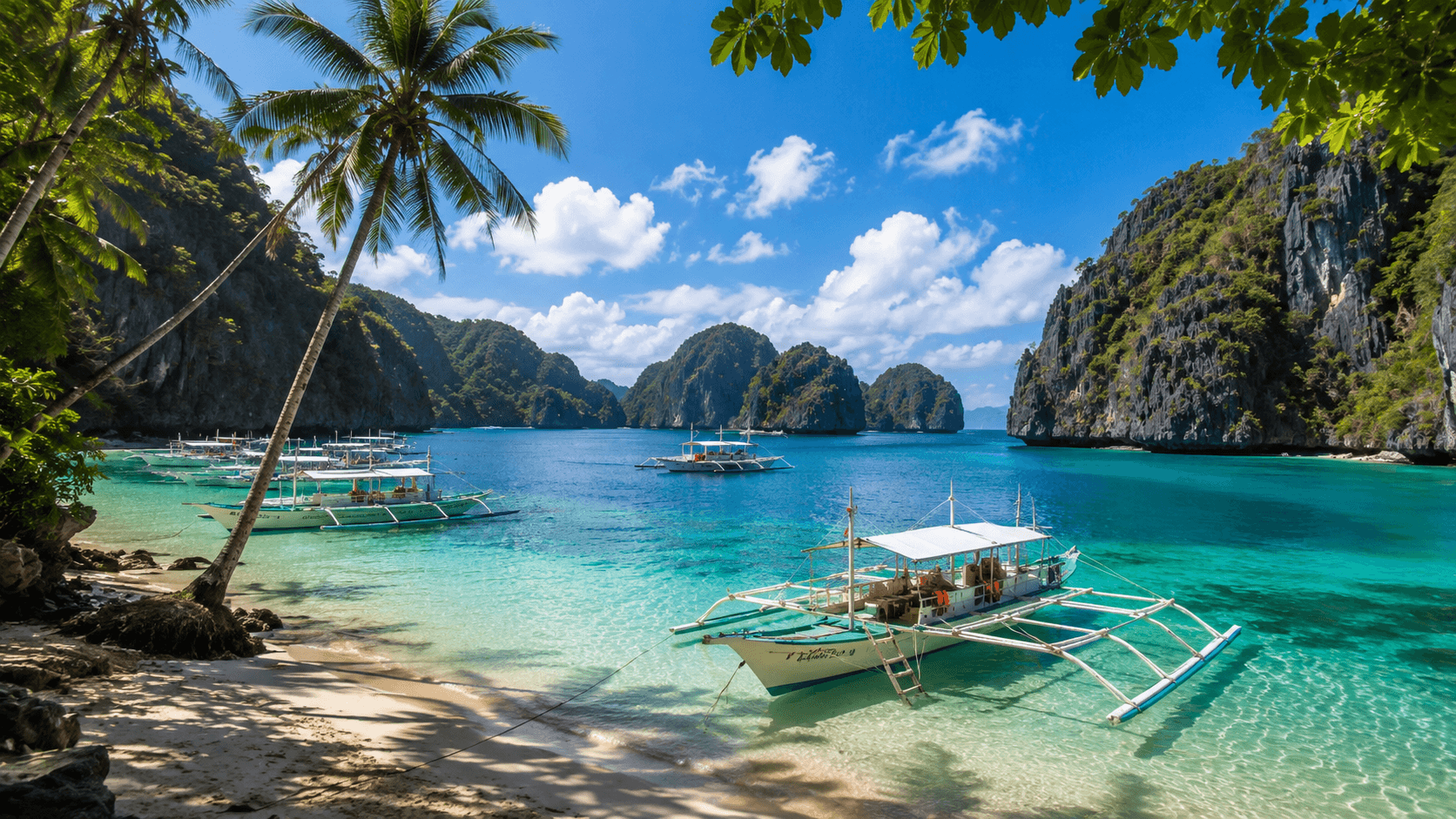
Island hopping around El Nido is the activity most people build their whole trip around, and honestly, it’s easy to sort once you’re actually there. Head to any of the tour offices along the main street in El Nido town, or just ask your hotel to book it for you, most operators send boats out the very next morning if you sign up the evening before. A private boat costs more than joining a group tour, usually a few thousand pesos more between a small group, but it means you choose your own stops and skip the busiest lagoons at the busiest times. Bring reef-friendly sunscreen too, a lot of these spots ban regular sunscreen to protect the coral.
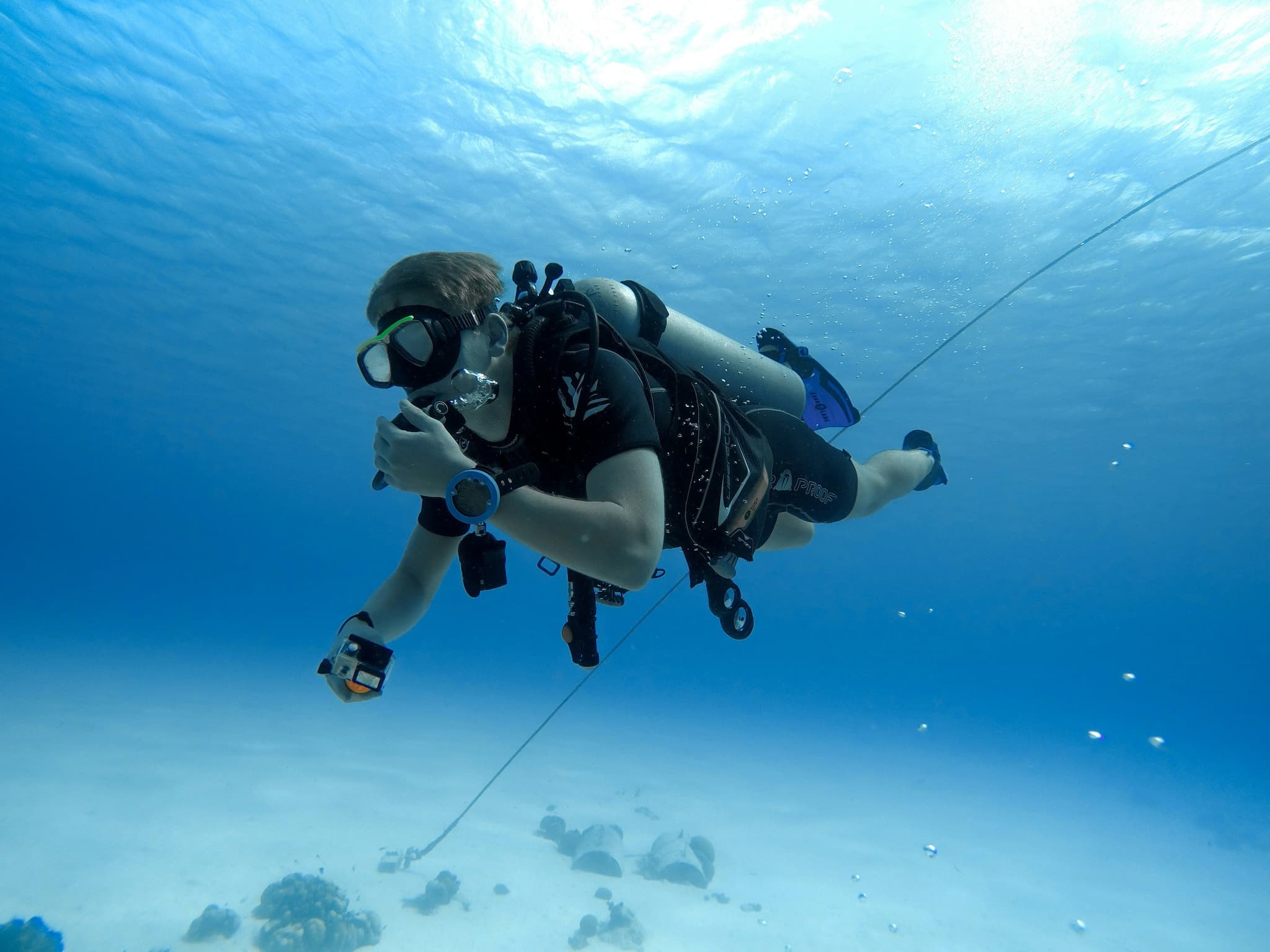
Dive the WWII wrecks in Coron
Coron’s wrecks are what put it on the map for divers, and you don’t need advanced certification to enjoy several of them. Okikawa Maru lies at a depth suited to open water divers. Irako and Akitsushima, meanwhile, reward those with more experience. Local dive shops in Coron town run day trips that hit two or three wrecks.
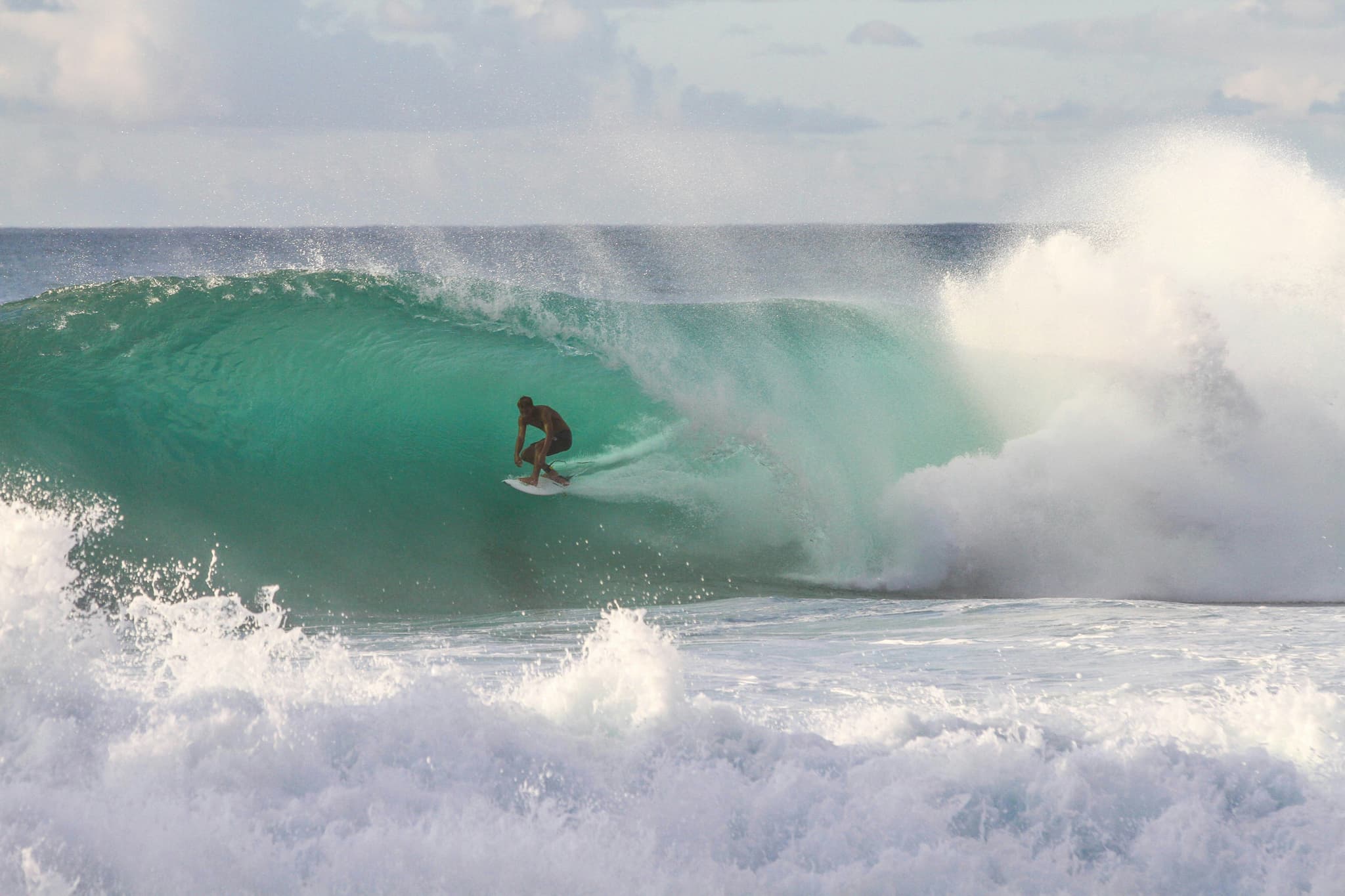
Surf Cloud 9 in Siargao
You’ll hear people talking about Cloud 9 before you’ve even landed in Siargao, and the moment you’re standing on the wooden viewing deck watching it break, you’ll understand why. If you’ve never surfed before, don’t paddle out here on your first try, book a lesson at Jacking Horse instead, it’s a gentler beach break just down the road and every camp in General Luna can set you up with a board and an instructor. Board hire is cheap all along the main strip, and most surf camps throw in a couple of lessons if you book a multi-day package rather than paying per session. Once you’ve had a go yourself, grab a cold drink and just watch from the deck at sunset, even non-surfers make an evening of it.
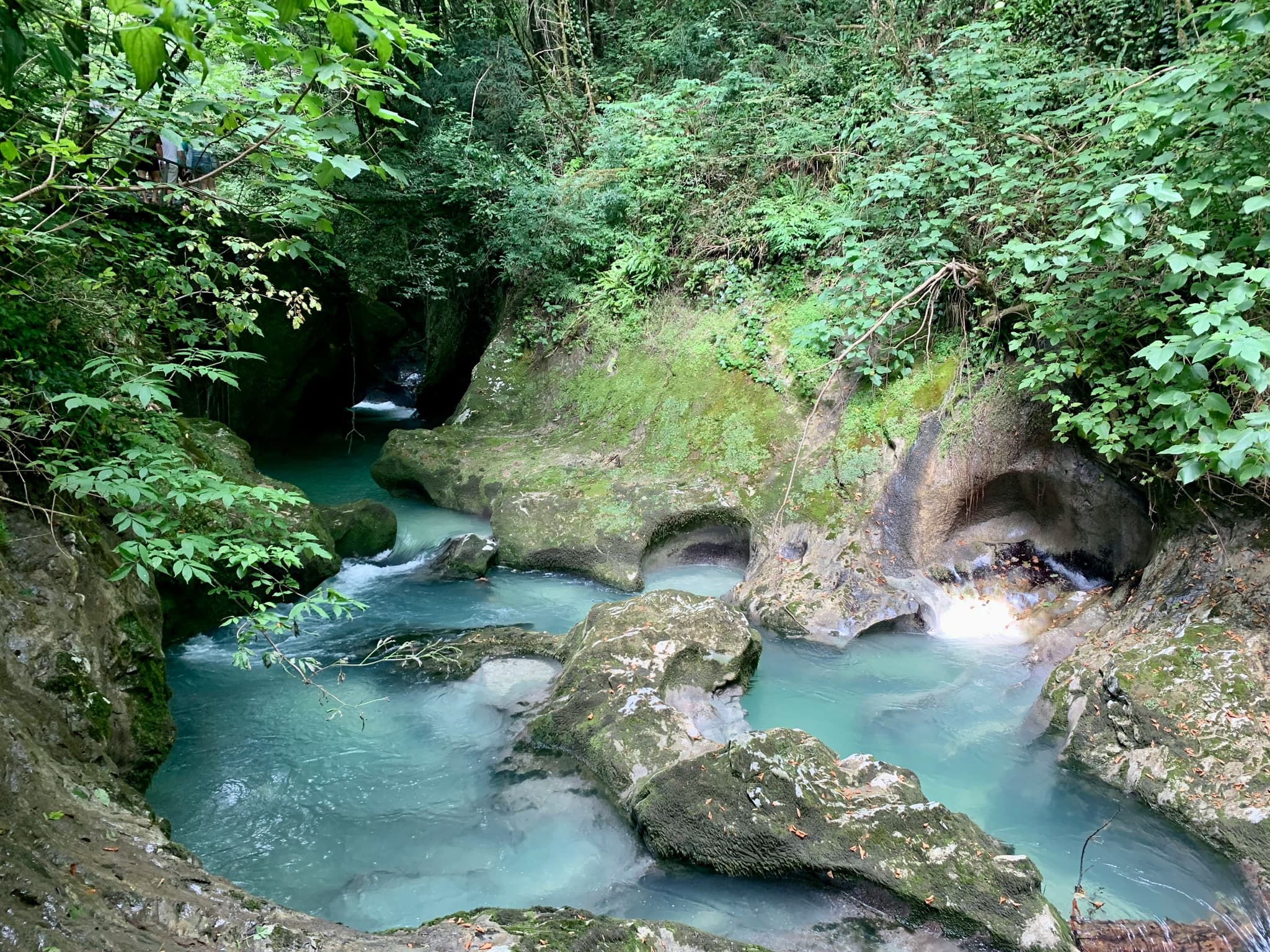
Canyoneer through Kawasan Falls
Canyoneering in Badian is a half day you won’t forget, part hike, part swim, part leap of faith off small cliffs into clear pools. Guides are compulsory and included in the standard package, so book through a registered operator in Badian town. Wear proper water shoes, the rocks along the route are sharper than they look.
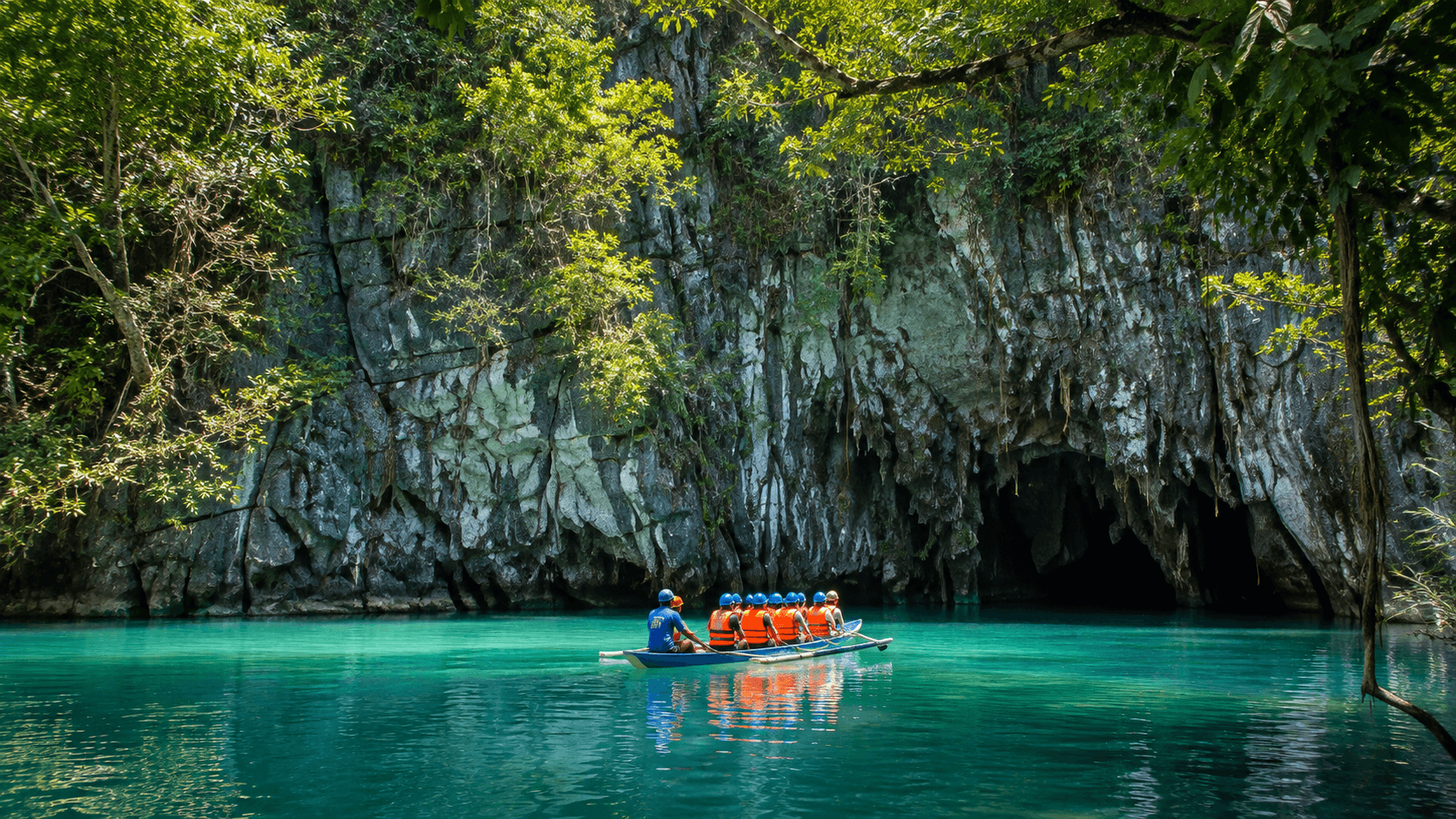
Explore the Puerto Princesa Underground River
The Puerto Princesa Subterranean River is one of the more unusual day trips in the Philippines, an 8km underground river that flows straight out to the sea. Book your slot online or through a tour operator well ahead of your visit, daily numbers are capped and it sells out fast in peak months. Read more about the site’s UNESCO World Heritage listing if you want the full backstory before you go.
When to visit the Philippines: dry and wet season
The Philippines doesn’t really have one single climate, it has several, changing quite a bit depending on where you are. Luzon and the Visayas broadly follow a clear dry and wet season. Parts of Mindanao in the south, meanwhile, sit outside the typhoon belt and stay fairly mild all year round. Palawan tends to have some of the most reliable weather of anywhere in the country, so it’s worth checking region-specific forecasts rather than assuming one calendar works for your whole trip.
Dry season, November to May: the most reliable weather for island hopping, diving and hiking, with December to April the busiest stretch
Wet season, June to October: typhoons are more likely, particularly from August to October, but you’ll find lower prices and greener terrain inland
Shoulder months, April to June: hot, but a good compromise if you want fewer people around without the storm risk
Where to stay in the Philippines? Best areas in the country
Picking where to stay in the Philippines isn’t just about finding a nice hotel, it’s about choosing the right base for what you actually want to do each day. The country is spread across so many islands and regions that staying in the wrong spot can mean hours of extra travel just to reach the activities you came for. Think about what’s pulling you here first, diving, surfing, waterfalls or simply beach time, and then pick your base around that rather than the other way round. Here’s how we’d split it up region by region.
Base yourself in El Nido if lagoons are the whole point of your trip
You’ll want to stay right in El Nido town if boat trips and island hopping are the reason you booked this in the first place. It puts you within walking distance of the pier, plus a decent spread of restaurants and dive shops for the evenings. We’d go for a guesthouse on the main street if you’re on a budget, or one of the calmer, pricier resorts along Corong-Corong Beach a short tricycle ride away if you’d rather wind down somewhere calmer after a day on the water.
Stay in Coron if wreck diving is what got you here
Coron is worth choosing over El Nido if the wrecks are the whole reason you’re in Palawan. Staying in Coron town puts you closest to the pier for both the wreck tours and the lake hopping trips, and it stays noticeably calmer than El Nido even during peak season. We’d recommend a dive-focused hostel near the pier if you’re travelling solo, or a resort on the outer islands if you’d rather wake up with a private beach right outside your room.
Choose Cebu City if you want to be close to everything else
Cebu City makes sense as your base if your trip is really about jumping between islands rather than settling in one spot. It connects by air or ferry to nearly everywhere else in the Visayas, so it works well between longer stops elsewhere. Stay near IT Park or Ayala Center for the best restaurant choice, or closer to the pier if you’re heading straight for Bohol or Camotes the next morning.
Pick Siargao if you came here to surf and switch off
Base yourself in General Luna if surfing and slow mornings are what you’re after. It’s close enough to Cloud 9 that you can walk or cycle over for a session, but far enough from the airport that it stays properly laid-back. Scooter hire is cheap here, so you’re never really stuck no matter where you end up staying.
Guided tip: book your first night or two ahead so you’re not arriving with nowhere to go, then hold off on the rest, prices on sites like Agoda and Booking.com regularly drop as soon as you can see live availability, and asking in person at smaller guesthouses can save you even more.

Did you know you can create your own itinerary?
Now that you have a better idea of the places to see in the Pilippines and things to do there, you can start creating your own trip. Do you want to travel from island to island, or would you rather spend more time in one area and really get to know it? It’s all up to you. You can easily create your own trip in the Guided app for free, or use trips shared by others.
Philippines travel tips for transport and getting around
Getting around in the Philippines usually means some mix of planes, ferries, vans and the odd tricycle ride, and most of it is cheap wherever you go. Some options move a lot faster than others though, so it’s worth knowing your choices before you book anything. Here’s what we’d actually recommend for each type of journey.
✔ Book domestic flights the moment your dates are set
We’d always book flights with Cebu Pacific or Philippine Airlines as soon as your dates are locked in, prices climb fast as soon as seats start filling up. Booking six to eight weeks out has saved us real money on routes like Manila to Puerto Princesa or Cebu to Siargao.
✔ Take the ferry when islands sit close together
If you’d rather see the coastline than fly over it, we’d take the ferry with 2GO Travel or OceanJet, it covers a lot of inter-island routes and usually costs less than flying, even if it takes longer. It’s a solid choice between Cebu and Bohol, or Manila and Puerto Princesa.
✔ Don’t rule out a private transfer
We’d book a private transfer on Palawan in particular, between Coron, El Nido and Port Barton, it costs more than a public van, but you won’t be sitting around waiting for every seat to sell before you leave.
✔ Get comfortable with tricycles and jeepneys
We’d use these for anything short, they’re the cheapest way to get around town, just agree the fare with the driver before you climb in since nothing runs on a meter.
✔ Build buffer days around inter-island travel
Give yourself a spare day around any flight, ferry or boat tour, weather delays happen here more than you might expect, and we’d rather you miss a lazy morning than an entire connection.
Guided tip: download your ferry or flight tickets to your phone before you head out for the day, signal on some of the smaller islands is patchy at best.
Food and drinks to try when visiting the Philippines
Filipino cuisine doesn’t get talked about as much as its neighbours in Southeast Asia, and we genuinely think that’s a shame! A few dishes do come with a proper kick of chilli, but don’t let that put you off, just ask before you order and most places will happily tone it down for you. Filipino people are some of the friendliest you’ll meet anywhere, and if you show a bit of curiosity about the food, you’ll usually walk away with a recommendation for somewhere even better down the road.
Adobo
We’d call adobo the closest thing the Philippines has to a national dish, meat slow cooked in vinegar, soy sauce, garlic and bay leaf until it’s properly fall-apart tender. Skip the tourist restaurants and order it at any local carinderia instead, a small canteen-style eatery, that’s where you’ll find the most honest version.

Sisig
Order sisig if you want it sizzling straight off the hot plate, made from chopped pork, calamansi and chilli, and just as good with rice for breakfast as it is with a beer at midnight. Manila’s Aristocrat restaurant claims a version of the dish’s history, but you’ll find brilliant sisig at basic street stalls too. Ask for a raw egg cracked on top, that’s how most locals order it.

Halo-halo
Order halo-halo on a hot afternoon and you’ll understand the name straight away, mix-mix, shaved ice piled with sweet beans, jelly, fruit and leche flan, finished with a drizzle of evaporated milk. It’s the dessert you’ll crave after a long day of island hopping. Chowking and Razon’s are good starting points if you’re not sure where to look.

Culture and daily life you’ll notice when you travel to the Philippines
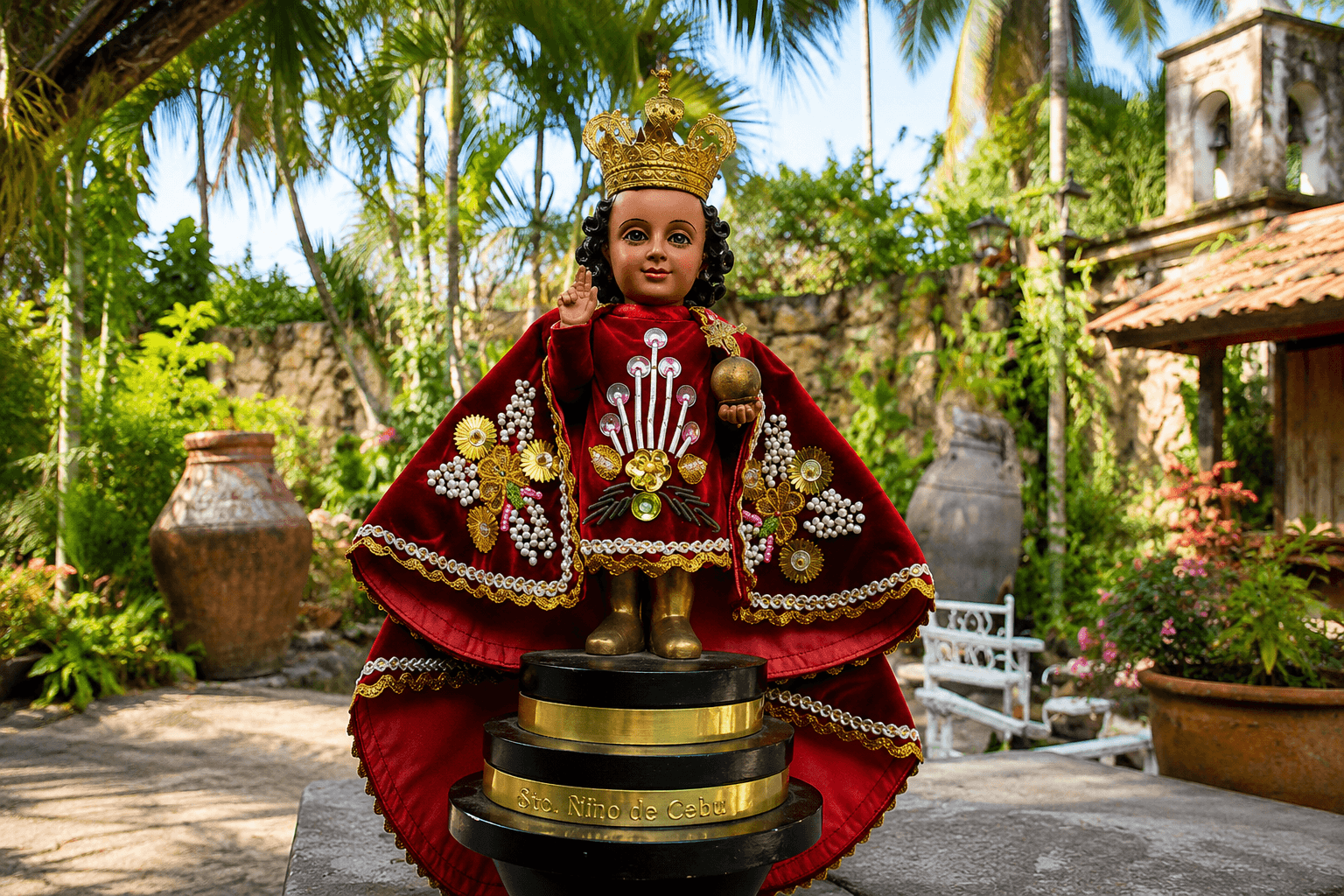
Did you know the whole character of Filipino culture today traces back to a single afternoon in 1521, when Ferdinand Magellan’s expedition arrived in Cebu and gifted a small statue of the Santo Niño to the local queen? That statue is still worshipped every January during Sinulog, and it’s a good example of how deep the layers of history run here. Spain held the islands for more than 300 years, long enough to leave behind the Catholic faith, Spanish surnames and the stone churches you’ll still find in towns like Vigan.
The Americans arrived next, staying from 1898 until independence in 1946, and one of the more surprising things they left behind is the language itself, English is still an official language today alongside Filipino, and you’ll notice it on street signs, menus and in conversation almost everywhere you go.
You’ll also notice pretty quickly that daily life outside the big cities moves on its own clock. Spend a Sunday anywhere outside Manila and you’ll see whole families walking to church together, then settling in for a long lunch that runs well into the afternoon, generations all around the same table. Also, everyone eats with their hands, a style called kamayan, with rice, meat and vegetables all shared from the middle of the table rather than portioned onto separate plates. If you walk past an open window most evenings and you’ll hear karaoke drifting out, it’s less a hobby here and more a way of life, and if someone waves you over to join in, just go for it, it’s one of the fastest ways to make friends on the road.
By midday in the smaller towns, you’ll notice things slow right down, shutters come down over shopfronts and the streets empty out until the heat eases off. Time your trip right and you might catch a fiesta too, every town has one, and events like Sinulog in Cebu blend that same Catholic devotion with dance rituals going back long before Magellan ever set foot here.
Looking for more unique places, trips and activities?
Subscribe to our Guided Newsletter for more travel inspiration.
Costs of a trip to the Philippines
Prices in the Philippines vary quite a bit depending on where you go. Manila, Boracay and popular parts of Palawan such as El Nido tend to be more expensive, especially for hotels, restaurants and activities. Cebu and Siargao sit somewhere in the middle, while less touristy islands, smaller towns and local neighbourhoods are usually much cheaper. Eating at local restaurants and travelling by jeepney or bus will also keep your daily costs considerably lower. Here’s what to expect:
Food & Drink

Coffee
₱100 – ₱200
Lunch
₱150 – ₱400
Beer
₱80 – ₱180
Accommodation

Hotels
₱1.5k – ₱4k
Airbnb
₱1.2k – ₱3.5k
Hostel dorm
₱400 – ₱1k
Transport

Train ticket
₱15 – ₱35
Bus ticket
₱1.5k – ₱3.5k
Car Rental
฿600 – ฿1.5k
Attractions

Museums
Free – ₱500
Big Attractions
₱75 – ₱1.5k
Theatre
₱1k – ₱4k
Practical tips for visiting the Philippines
Never been to the Philippines before? Here are a few tips from fellow Guided travellers:
✔ Carry more cash than you think you need
Card payments aren’t accepted everywhere, particularly on smaller islands, and ATM fees for foreign cards can eat into your budget fast.
✔ Check your visa entry window before you fly
Citizens of most Western countries, including the UK, get 30 days visa-free on arrival, but it’s worth double checking your own nationality’s rules first. The Philippine Bureau of Immigration publishes the most current requirements and extension process.
✔ Pack a dry bag and reef-friendly sunscreen
Boat trips and waterfalls come up constantly on any Philippines itinerary, so protecting your phone and your skin from day one saves you a headache later.
✔ Book inter-island flights early in peak season
December through April is when everyone else has the same idea as you, and seats on the smaller domestic routes sell out weeks ahead.
Fun facts about the Philippines
The Philippines is full of small details you don’t always expect, and a fair few of them you’ll only really notice after you’ve landed. Here are some of our favorites:
The Philippines has over 7,000 islands, but only around 2,000 of them are inhabited.
The Chocolate Hills in Bohol are made up of more than 1,200 individual mounds.
The Philippine tarsier is one of the smallest primates on the planet (it fits in your hands).
Jeepneys were originally built from leftover American military jeeps after the war ended in the 1940s.
The Philippines was named after King Philip II of Spain during the colonial period.
The Philippines lies on the Pacific Ring of Fire, giving it more than 20 active volcanoes.
Filipino households have around 4 people, and close family ties are a big part of everyday life.
We believe the Philippines is one of those countries you end up recommending to everyone you know, and it’s not just the beaches, though there are plenty of those to go around. It’s the way a short domestic flight can drop you somewhere that seems nothing like the island you just left. One morning you’re diving a WWII wreck, and by evening you’re watching a sunset from a hammock on the other side of the country. It’s the food you didn’t expect to love as much as you did, and the family who insisted you join them for lechon even though you’d only just met that afternoon. If a mix of beach days, genuinely good food and people who treat you like an old friend sounds like your kind of trip, this is a country that gives you all three!
Ready to map out your Philippines travel adventure?
We hope this Philippines travel guide has given you a clear starting point for your trip. Stay tuned for more inspiration, itineraries and practical tips to help you shape your own trip to the Philippines. And don’t forget to check out our Guided app, where you can create your own trip or use trips shared by other travellers for free.
Frequently asked questions about visiting the Philippines
- Where should you travel in the Philippines?
Palawan is the pick if lagoons, limestone cliffs and island hopping are what you’re after, El Nido and Coron above all. Bohol and Cebu suit you better if you want waterfalls, tarsiers and canyoneering packed into a shorter trip, and Siargao is the one for surfing and slower mornings. A Philippines in two weeks itinerary usually gives you enough time to combine two or three regions without rushing.
- Do you need a visa to visit the Philippines?
- Do you need to be cautious when visiting the Philippines?
- Is English widely spoken in the Philippines?
- What are places to visit beyond the recommendations of this Filipino travel blog?