
The Best Places to Visit in Northern Ireland
By Eva Alkemade
Jun 20, 2026
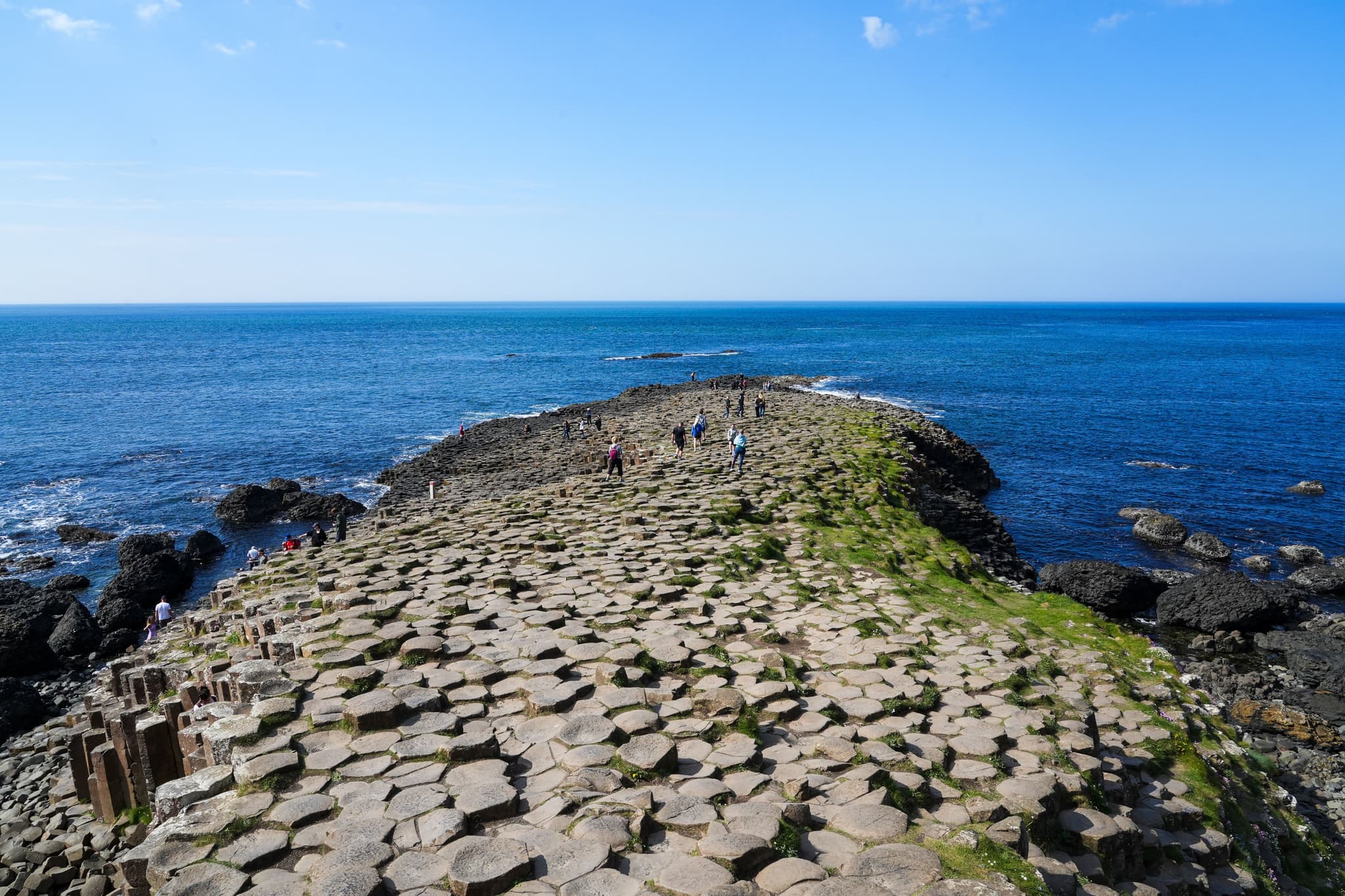
Northern Ireland catches people off guard in the best possible way. Crammed into roughly 14,000 square kilometres, you will find a UNESCO volcanic coastline, a city that built the most famous ship in history, medieval castles clinging to cliff edges, and pubs where the craic is entirely real and unscripted. The places to visit in Northern Ireland range from the well-known to the genuinely obscure, and the gap between what most visitors see and what is actually out there is considerable. We put this guide together to help you close that gap, whether you have three days or three weeks.
The Best Cities to Visit in Northern Ireland
Northern Ireland has two cities genuinely worth spending time in, and both will exceed what you expect. Neither is particularly large, which works entirely in your favour since you can cover a great deal on foot without needing to plan complicated logistics.
Belfast: The City That Built the Titanic
Belfast has rebuilt itself into one of the most genuinely enjoyable city breaks in the UK since peace returned in the late 1990s, and the transformation is visible on every street corner.
Top things to do in Belfast:
Titanic Belfast Museum: nine galleries built on the exact slipway where the RMS Titanic was designed and constructed. One of the best visitor attractions in the UK and Ireland. Book at titanicbelfast.com
Black Cab Tours: the most efficient way to understand the political murals, the Peace Wall, and the history of The Troubles in 90 minutes. Your driver will have lived through most of it
Cathedral Quarter: independent restaurants, street art, and traditional music sessions in pubs that do not require you to sit through a tourist show
St George’s Market: over 200 stalls on Fridays covering fresh seafood, antiques, and clothes. Completely free to enter
Crumlin Road Gaol: Victorian prison tour, genuinely atmospheric and not at all what you expect from a prison visit
Cave Hill: panoramic views above the city, free, about two hours return from the car park
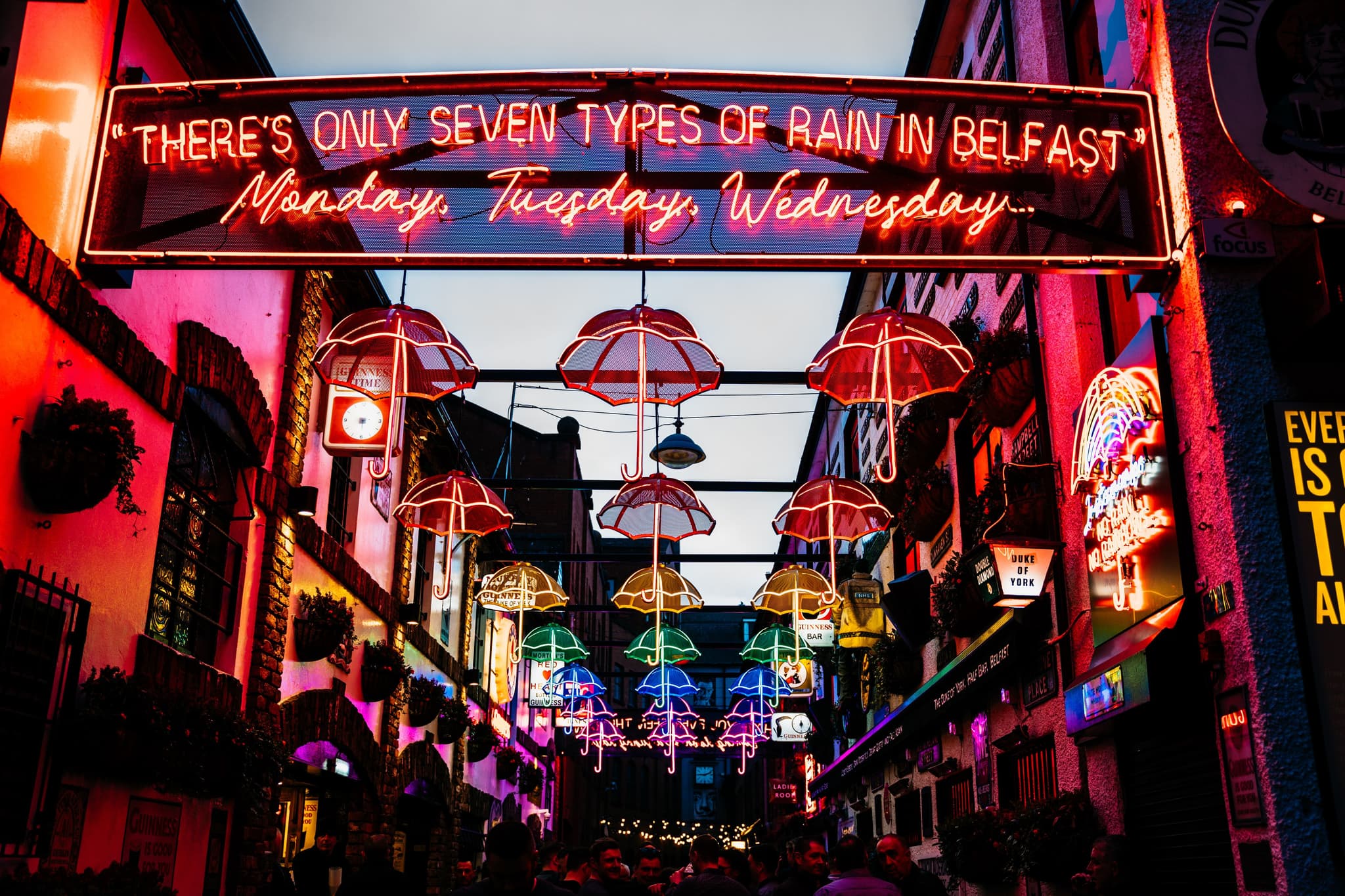
Derry/Londonderry: The Only Completely Walled City in Ireland
Derry is what most locals call it. Londonderry is the official UK legal name. You can use either and nobody will think less of you, though read the room depending on which part of the city you are in.
Top things to do in Derry:
The City Walls: over a mile of intact 17th-century walls free to walk, with cannons still at the bastions. Views over the Bogside are genuinely striking
Free Derry Corner: the iconic white gable wall and one of Northern Ireland’s sights that is most photographed.
The Guildhall: stunning neo-Gothic building with free exhibitions on the city’s history
The Peace Bridge: connecting the unionist and nationalist sides of the city, opened 2011
The Museum of Free Derry: tells the story of Bloody Sunday on 30 January 1972. Moving, thorough, and not something you will forget quickly
Guided Tip: The train from Belfast to Derry takes approximately 2 hours and costs around £12 to £15 return, and it is one of the most scenic rail journeys in the UK. Walking the full circuit of the city walls takes 30 to 45 minutes and is completely free. So make sure to check it out!
The Causeway Coastal Route and Antrim Coast
If you only do one thing in Northern Ireland, make it this. Running for 120 miles between Belfast and Derry, the Causeway Coastal Route passes more sights in Northern Ireland per mile than almost any road we know. Two to three days gives you time to actually stop and appreciate what you are looking at.
Car hire from Belfast City Airport starts at approximately £30 to £50 per day. Public transport covers the main towns but getting between smaller attractions without a vehicle involves either expensive taxis or a great deal of patience. Fill up with petrol in Belfast before you leave, as prices on the coast can be higher.
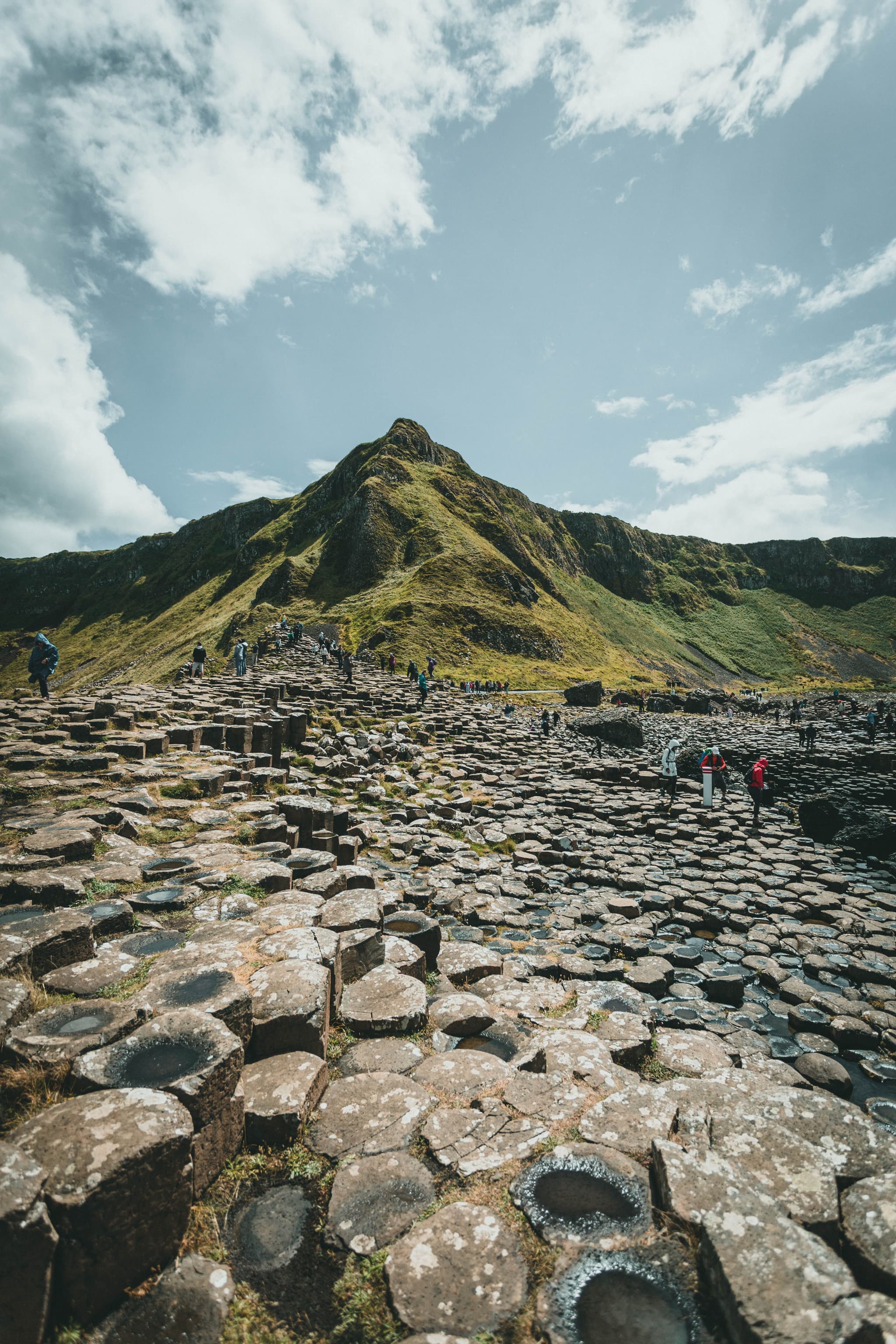
The Giant’s Causeway: 40,000 Hexagonal Columns and One Very Tall Story
Northern Ireland’s only UNESCO World Heritage Site and the most visited of all Northern Ireland tourist places. Ancient volcanic activity approximately 60 million years ago produced a lava flow that cooled and fractured into around 40,000 interlocking basalt columns, most of them hexagonal.
The legend tells it differently. The giant Finn McCool (Fionn mac Cumhaill) built the causeway as stepping stones to Scotland to fight the giant Benandonner. On arrival, Finn discovered Benandonner was considerably larger than expected, fled back to Ireland, and his quick-thinking wife disguised him as a baby. When Benandonner saw the size of the “baby,” he concluded the father must be enormous and tore up the causeway on the way home. We will let you decide which explanation you find more convincing.
What we recommend doing at the Giant’s Causeway:
The Wishing Chair: a natural throne-shaped rock formation most people walk straight past. Worth finding
The clifftop path: walk beyond the main causeway area in both directions for views that the visitor centre car park simply cannot give you
Go early morning: visit before 9am to avoid the peak numbers that gather around midday. The difference is genuinely startling
The causeway is free to access via a path around the visitor centre. Visitor centre admission costs approximately £13 to £15 for adults and parking approximately £8 to £10. A shuttle bus runs for approximately £2 each way for those who cannot manage the 1km walk. The main viewing area is accessible for wheelchair users though the basalt columns themselves are uneven and not suitable. Sandals are a bad idea and the rocks will punish you for wearing them.
Not sure when to visit? Read our guide on the best time to visit Ireland to find the season that suits your travel style.
Carrick-a-Rede Rope Bridge: Not for the Faint-Hearted
A 20-metre rope bridge strung 30 metres above the Atlantic, originally erected in 1755 by salmon fishermen to reach Carrick-a-Rede island so they could intercept migrating salmon along the coast. The crossing takes 30 seconds but the views from the island make staying much longer very easy. Combine with the Giant’s Causeway on the same day as the two sites are about 8km apart. Wear shoes with grip as the clifftop paths are uneven.
Guided Tip: Adult tickets cost approximately £14 to £16. Book in advance as it sells out regularly in summer. The bridge is not accessible for wheelchair users.
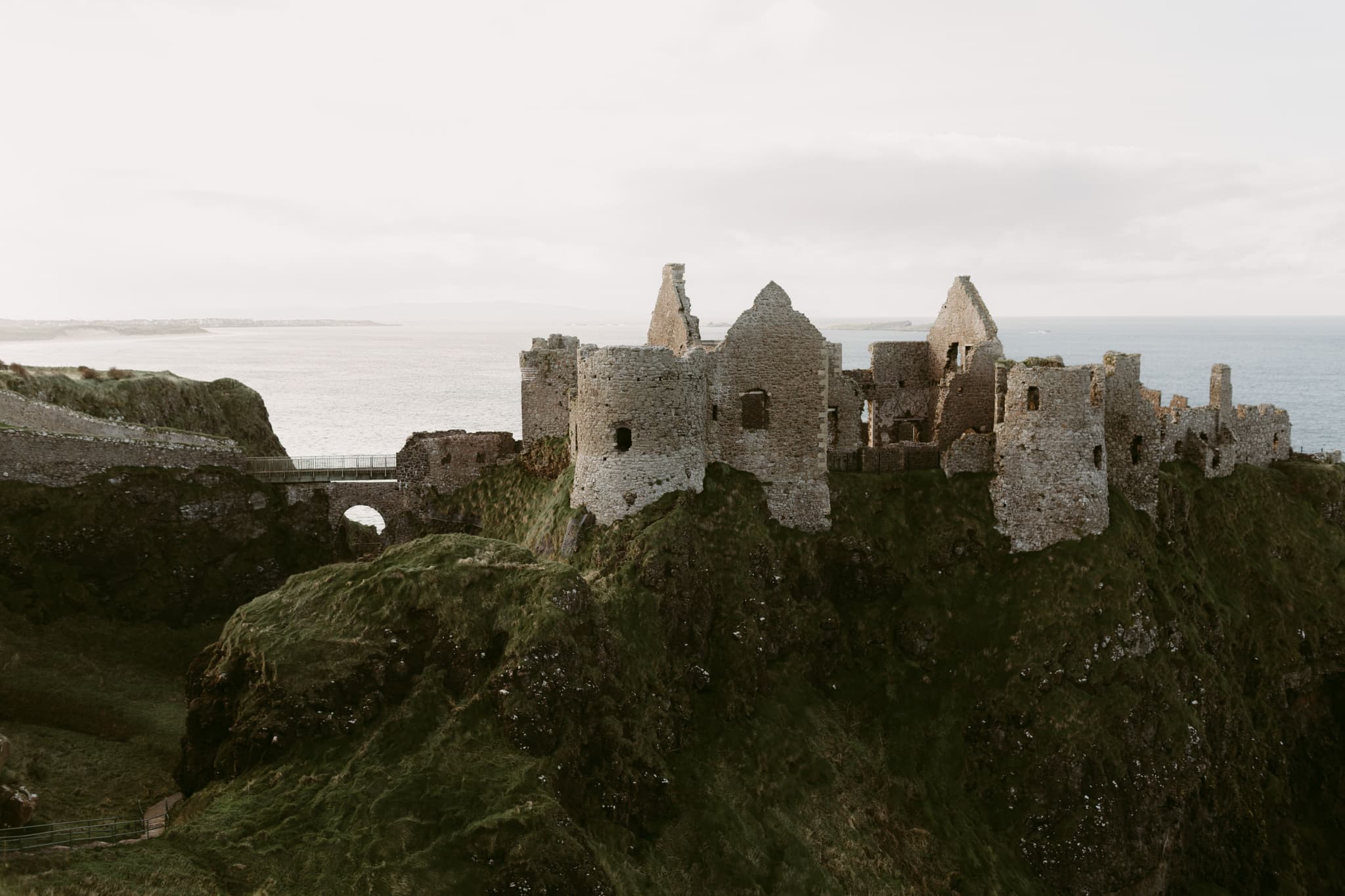
Dunluce Castle: The Medieval Ruin on the Edge of Everything
The 14th-century ruins of Dunluce Castle sit dramatically on a clifftop basalt headland on the Antrim coast, and were the stronghold of the MacDonnell clan, one of the most powerful families in medieval Ulster. In 1639, part of the kitchen fell into the sea during a dinner party. The staff survived by clinging to a window. The kitchen did not. The Earl’s wife subsequently refused to live there and the castle was largely abandoned not long after. We think that is a completely reasonable response.
For Game of Thrones fans, Dunluce was used as visual inspiration for Pyke Castle, the seat of House Greyjoy, and several scenes were filmed in and around the site.
Adult entry costs approximately £6 to £8. The site is about 3km west of Bushmills and 5km east of Portrush, making it an easy stop between the two. The ruins involve uneven ground and steep steps and are not suitable for wheelchair users, though the external views from the roadside are fully accessible without entering the site. Allow about 45 minutes for a thorough visit.
The Dark Hedges: A Tree-Lined Avenue That Went Viral Before Going Viral Was a Thing
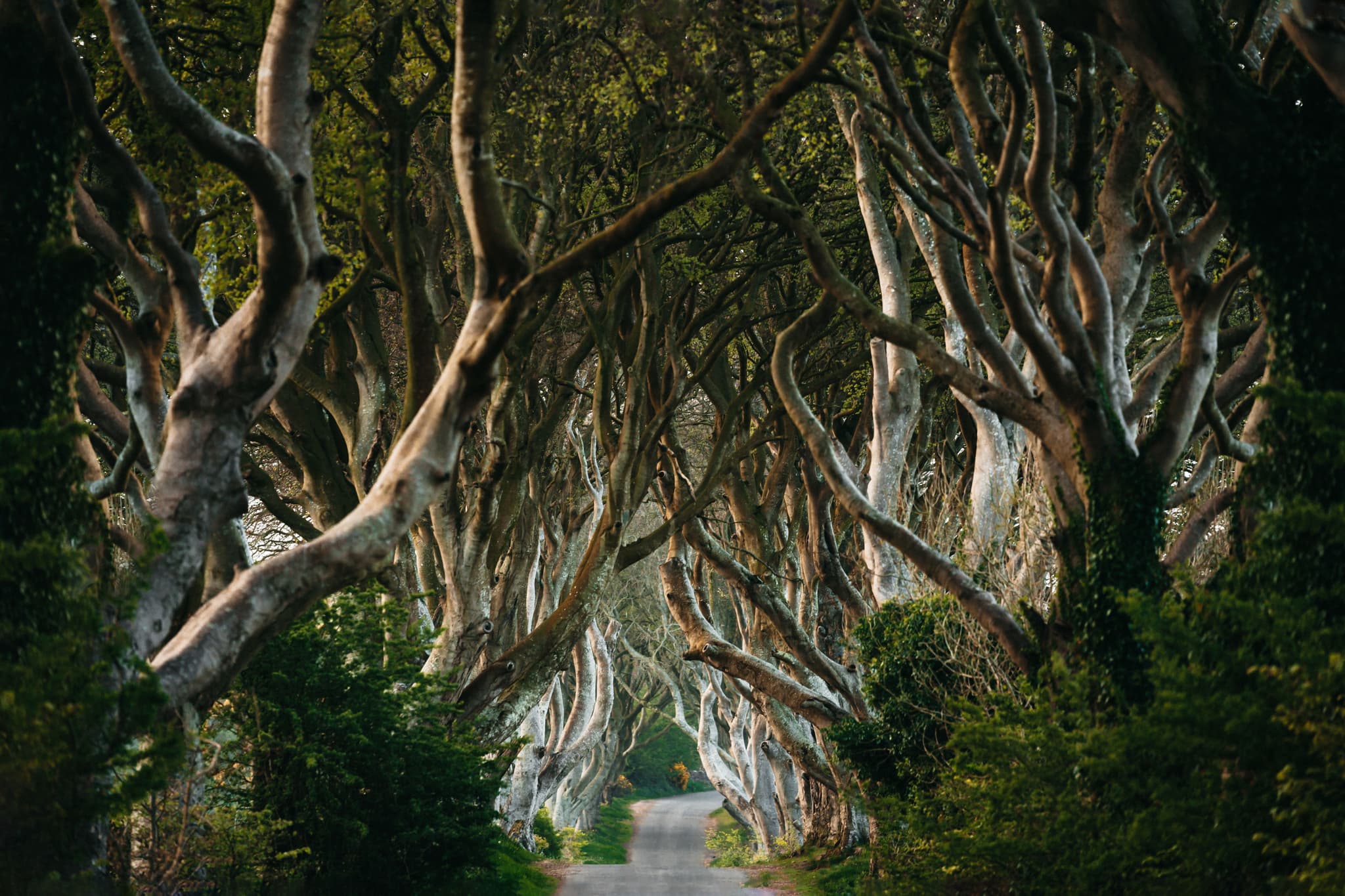
Near the village of Armoy in County Antrim, the Dark Hedges is a 150-metre avenue of beech trees planted around 1775 by the Stuart family to impress visitors approaching their estate. Then Game of Thrones used them as the King’s Road in season two, and they became one of the most photographed spots in Northern Ireland.
It is completely free to visit, no booking required. The avenue is about 150 metres long, and the road through it is still open to traffic in both directions, so watch out for cars while photographing. Dawn and dusk give the best light. The road surface is tarmac and fully accessible for wheelchair users. The car park fills fast in summer so arrive early.
The Old Bushmills Distillery: The World’s Oldest Licensed Whiskey Distillery
Licensed since 1608, the Old Bushmills Distillery is the oldest working distillery on the island of Ireland, producing Ireland’s only triple-distilled single malt whiskey. Tours last one hour and end with a tasting. The village of Bushmills itself is a pleasant short walk from the distillery and worth 20 minutes of your time.
Planning to continue beyond Northern Ireland? Explore our guide to the best places to visit in Ireland for inspiration across the entire island.
Must visit places in Northern Ireland If You Like Outdoor Adventures
Beyond the coast, Northern Ireland has a genuinely varied natural landscape that most visitors only scratch the surface of. This is where the country really earns its reputation among people who come back a second time.
The Mourne Mountains: Where C.S. Lewis Found Narnia
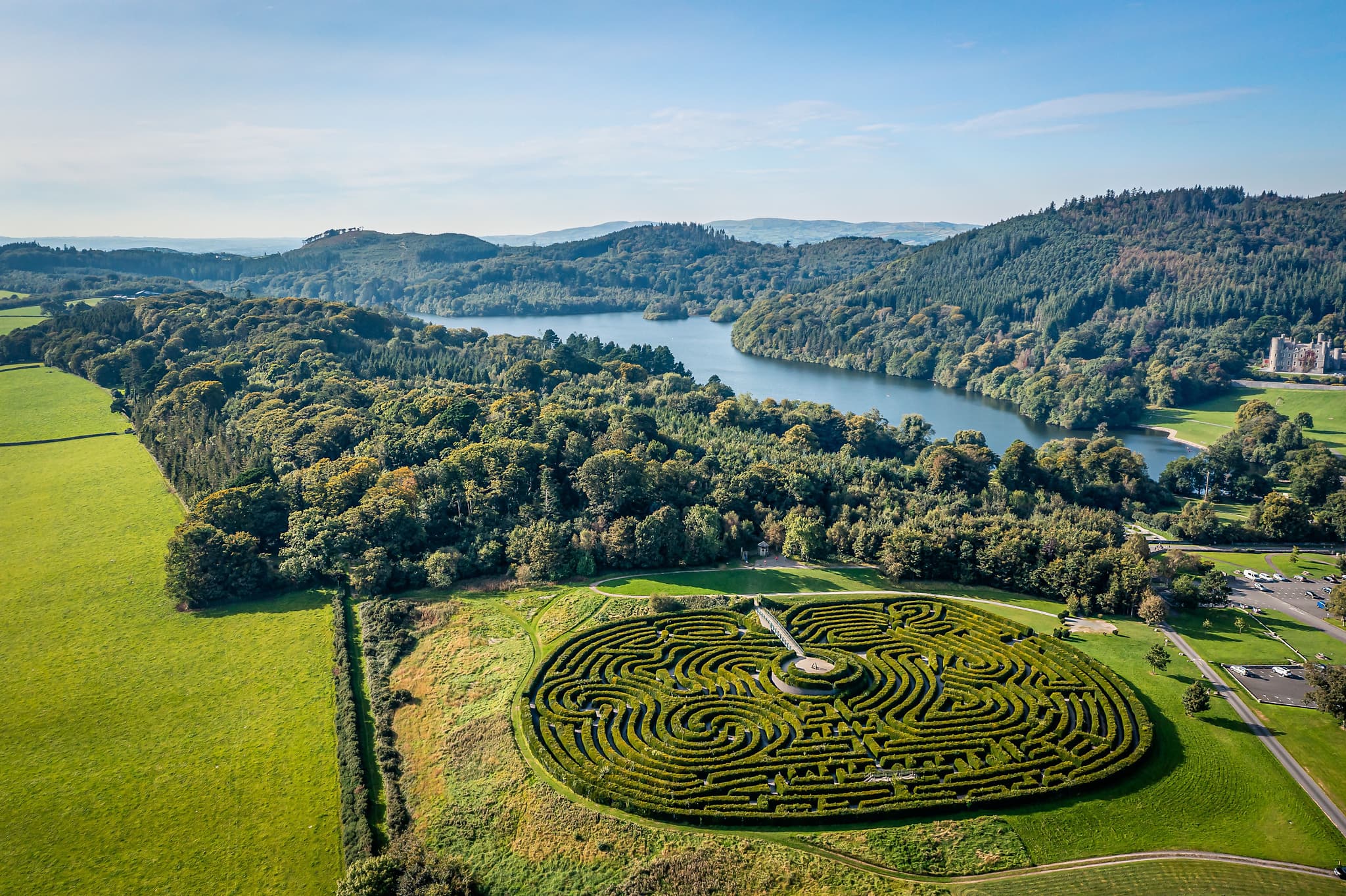
In County Down, the Mourne Mountains are one of the best places to go in Northern Ireland for anyone who likes walking, views, and the particular satisfaction of reaching a summit. Slieve Donard at 850 metres is accessible from the seaside town of Newcastle (Northern Ireland, not UK), with a path from the car park to the summit in about two and a half hours. Belfast-born C.S. Lewis is said to have drawn on the Mournes when imagining the world of Narnia, which makes the whole range feel slightly more magical.
What else to do in the Mournes:
Tollymore Forest Park: over 1,500 acres at the foot of the mountains, four waymarked trails, and the Game of Thrones Haunted Forest from episode one
Murlough Nature Reserve: ancient sand dunes, coastal heath, and a beautiful National Trust beach
Silent Valley Reservoir: flat paved 5km path, fully accessible for wheelchair users, with exceptional mountain views
Guided Tip: Allow at least 5 to 6 hours for the full Slieve Donard return trip. Start early, bring layers, waterproof clothing, and more food than you think you need.
The Glens of Antrim: Nine Valleys That Most Visitors Drive Past
Running parallel to the Causeway Coastal Route but largely overlooked, the nine Glens of Antrim are glacial valleys cutting from the Antrim Plateau to the sea. Each has its own name and character, and together they make up one of the most beautiful stretches of countryside in Northern Ireland.
The highlights we recommend:
Glenariff: known as the Queen of the Glens, with a gorge walk and waterfall trail of about 3km that is one of the finest short walks in the country
Cushendun: a National Trust village of whitewashed cottages, used as the Game of Thrones Stormlands caves filming location
Torr Head: a short detour most people miss entirely, with views across to Scotland on clear days
Rathlin Island: reachable by ferry from Ballycastle in 25 minutes, home to a large puffin colony between April and July
Fun Fact: Rathlin Island has a population of around 130 people, one pub, one café, and roughly 250,000 seabirds in summer. The seabirds actually outnumber the people.
The Fermanagh Lakelands: Water, Caves, and Northern Ireland’s Best-Kept Secret
Most visitors to Northern Ireland never make it to County Fermanagh in the southwest, which is exactly why we think you should. One of the must-visit places in Northern Ireland that most people simply drive around on the way to somewhere else, dominated by Upper and Lower Lough Erne, the county is a patchwork of water, islands, and gentle countryside, almost entirely free of tourist infrastructure.
What we recommend in Fermanagh:
Marble Arch Caves: a boat ride through an underground limestone cave system of stalactites and underground rivers. One of Europe’s finest show caves, open March to September. Book at marblearchcaves.net
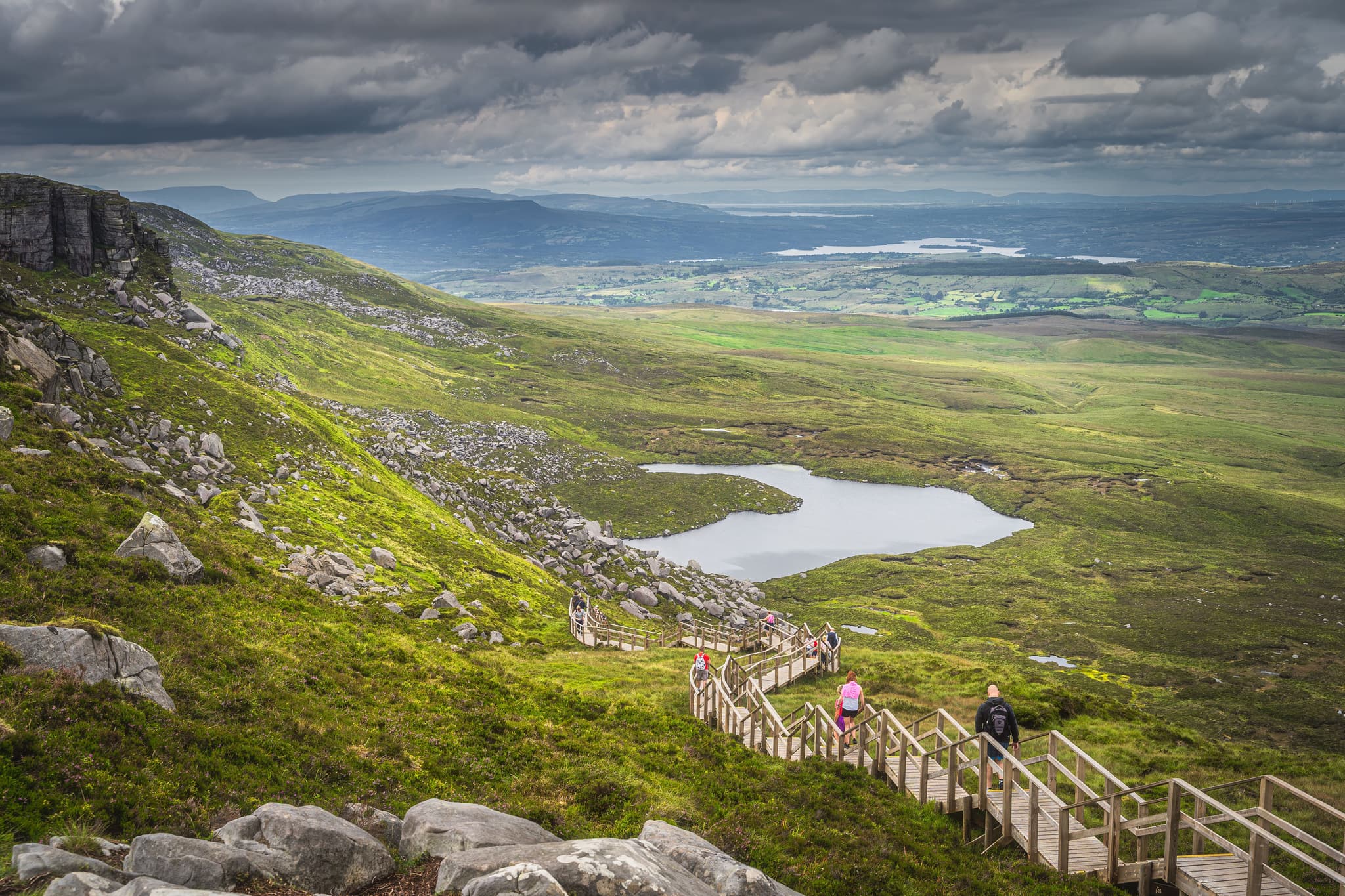
Cuilcagh Mountain: known as the Stairway to Heaven, a 7.5km return boardwalk trail across blanket bog to a Bronze Age cairn at the summit taking around 3 to 4 hours
Enniskillen Castle: a 15th-century castle on the banks of the River Erne with an excellent heritage museum inside
Guided Tip: Marble Arch Caves tours last 75 minutes and the temperature inside is a constant 10 degrees Celsius regardless of outside temperature, so bring a layer even on a warm day.
What to see in Northern Ireland: Historic Sites and Heritage Attractions
Northern Ireland’s history is complicated, layered, and genuinely fascinating. We think the best way to engage with it is to get out and see it, and these three attractions are among the most rewarding attractions for anyone who wants more than a coastal drive.
Mussenden Temple: The Clifftop Library Nobody Talks About Enough
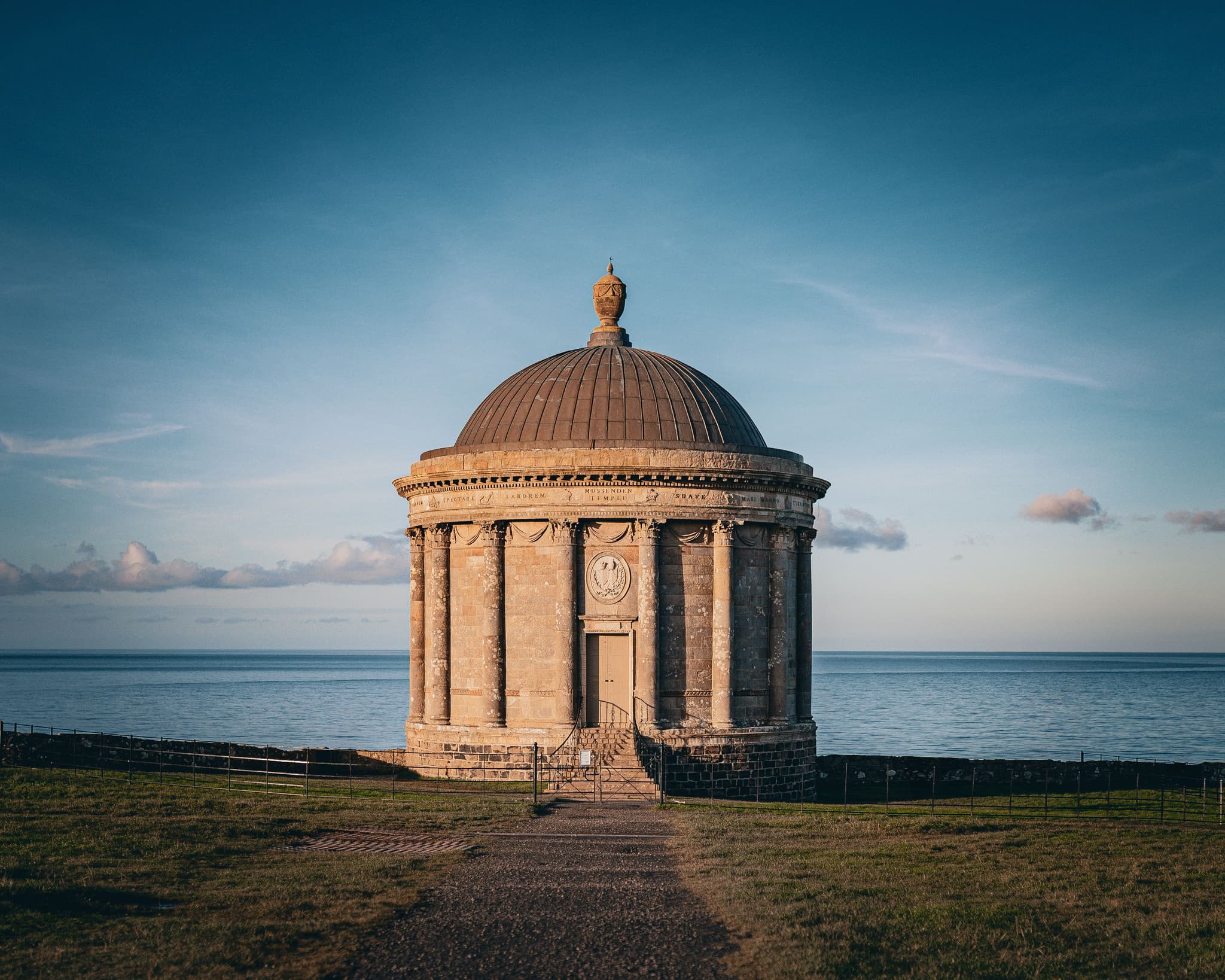
Perched on a 120-metre cliff above the Atlantic at Castlerock, County Derry, Mussenden Temple is a small circular domed building built in 1785 by Frederick Hervey, the eccentric Earl of Bristol, as his personal cliff-edge library. He allowed local Catholics to hold Mass inside at a time when this was illegal under Penal Law, which was either a genuine act of religious tolerance or simply the behaviour of a man who enjoyed doing things his own way. Possibly both. The grounds are managed by the National Trust and are free to visit year-round.
Ulster American Folk Park: The Story of Those Who Left
In County Tyrone, about 5km north of Omagh, the Ulster American Folk Park tells one of the most significant and least celebrated stories in Irish history: the story of the millions who emigrated to America. Over 30 recreated buildings, split between an Old World section representing pre-emigration Ireland and a New World section representing life in America, are connected by a full-sized replica emigrant ship. Costumed guides demonstrate traditional crafts including blacksmithing, weaving, and bread-making. Among the most genuinely moving of all Northern Ireland’s tourist attractions, this consistently surprises people who arrive expecting something dry and educational and find themselves absorbed for three hours.
Seamus Heaney HomePlace: For Anyone Who Loves Words
In the County Derry village of Bellaghy, the Seamus Heaney HomePlace is dedicated to Northern Ireland’s most celebrated literary figure, the Nobel Prize-winning poet who grew up in this part of rural Derry and drew on it for the rest of his working life. The interactive exhibition covers hundreds of artefacts, photographs, manuscripts, and recordings, and the 191-seat Helicon theatre hosts regular literary events throughout the year. It is one of Northern Ireland’s sights and attractions that feels genuinely personal rather than institutional.
Did You Know?: Seamus Heaney won the Nobel Prize for Literature in 1995 and is widely regarded as the greatest Irish poet since W.B. Yeats. Check the programme at seamusheaney.com before visiting as events sell out.
Hidden Gems and Off-the-Beaten-Track Places to Go in Northern Ireland
The places most people miss are sometimes the ones that leave the deepest impression. Here are some of the best places to go in Northern Ireland if you’re looking for something more unique!
Davagh Forest Dark Sky Park: Stargazing Above the Sperrins
In the Sperrin Mountains of County Tyrone, Davagh Forest is Northern Ireland’s only International Dark Sky Park, one of the darkest locations on the island of Ireland and one of the best places for stargazing anywhere in the UK. The OM Dark Sky Park and Observatory has telescopes and a programme of events, and on a clear night, the sky above the Sperrins is genuinely extraordinary. The park sits near the ancient Beaghmore Stone Circles, a collection of Bronze Age stone rows and cairns dating back over 4,000 years that are fascinating in daylight and genuinely eerie after dark. We recommend combining both into the same visit.
Guided tip: The Beaghmore Stone Circles are always free and open year-round. Bring a red-light torch for night visits as white torches destroy your night vision. Best visited on clear moonless nights between October and March.
Armagh: Two Cathedrals, One Hill, and St Patrick’s Entire Legacy
Most visitors to Northern Ireland never make it to Armagh, and we think that is a genuine oversight. One of Ireland’s oldest cities and its spiritual capital for both Catholic and Protestant traditions, Armagh has a character and a history entirely its own. The city has two St Patrick’s Cathedrals, both named after the same saint, both on separate hills, and both clearly visible from each other across the city. St Patrick founded his first stone church here in 445 AD.
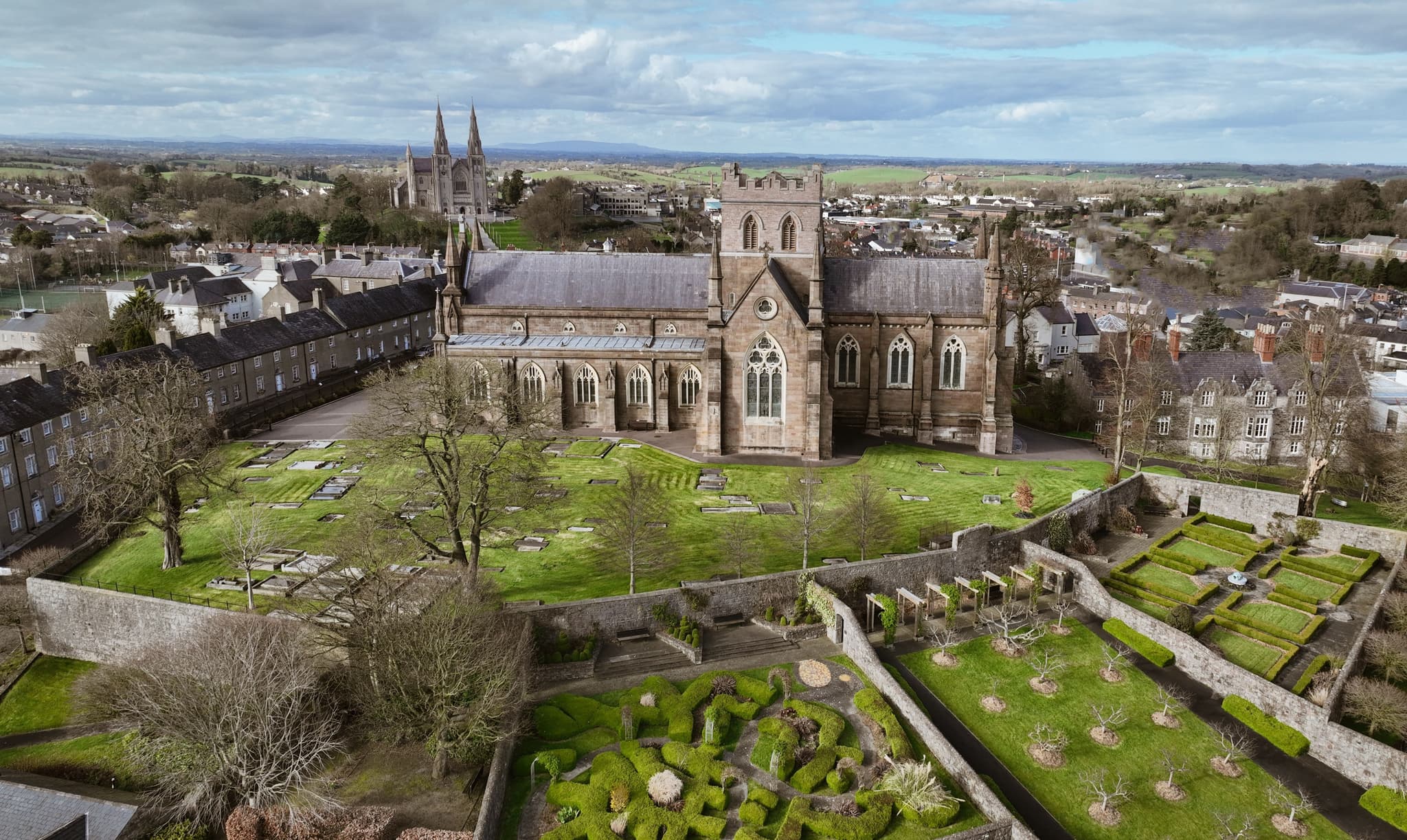
What else to do in Armagh:
Armagh Observatory and Planetarium: one of the oldest active scientific institutions in Ireland, with digital dome shows and public stargazing events
The Navan Centre: just outside the city, an ancient Celtic ritual landscape and the legendary seat of the Kings of Ulster
Visit in late April or early May: when the apple orchards of the surrounding countryside are in full blossom. Armagh is the Orchard County and the blossom is genuinely beautiful
Did You Know?: Both cathedrals are free to enter and the walk between them takes only 10 minutes through the city centre.
Ready to Start Planning?
Northern Ireland is the kind of destination that's best explored at your own pace. One minute you're walking along dramatic cliffs, the next you're stopping at a hidden beach, a cosy pub, or a viewpoint you hadn't planned to visit. With the Guided app, you can save your favourite places, build your own route, and keep all your travel plans in one place. Instead of jumping between maps, blogs, and screenshots, you can organise everything into a personalised itinerary and adjust your plans as you go.
Want a complete overview before you start planning? Explore our Ireland destination guide for travel tips, must-do activities, and itinerary ideas.
Enjoyed This Blog? Continue Reading!
There is more travel inspiration waiting for you on our blog. You can take a look below and start mapping out your next travel adventure!


