
Two weeks in Colombia, from Bogotá to the coffee region and Cartagena
By Sandra Romano
Oct 16, 2026
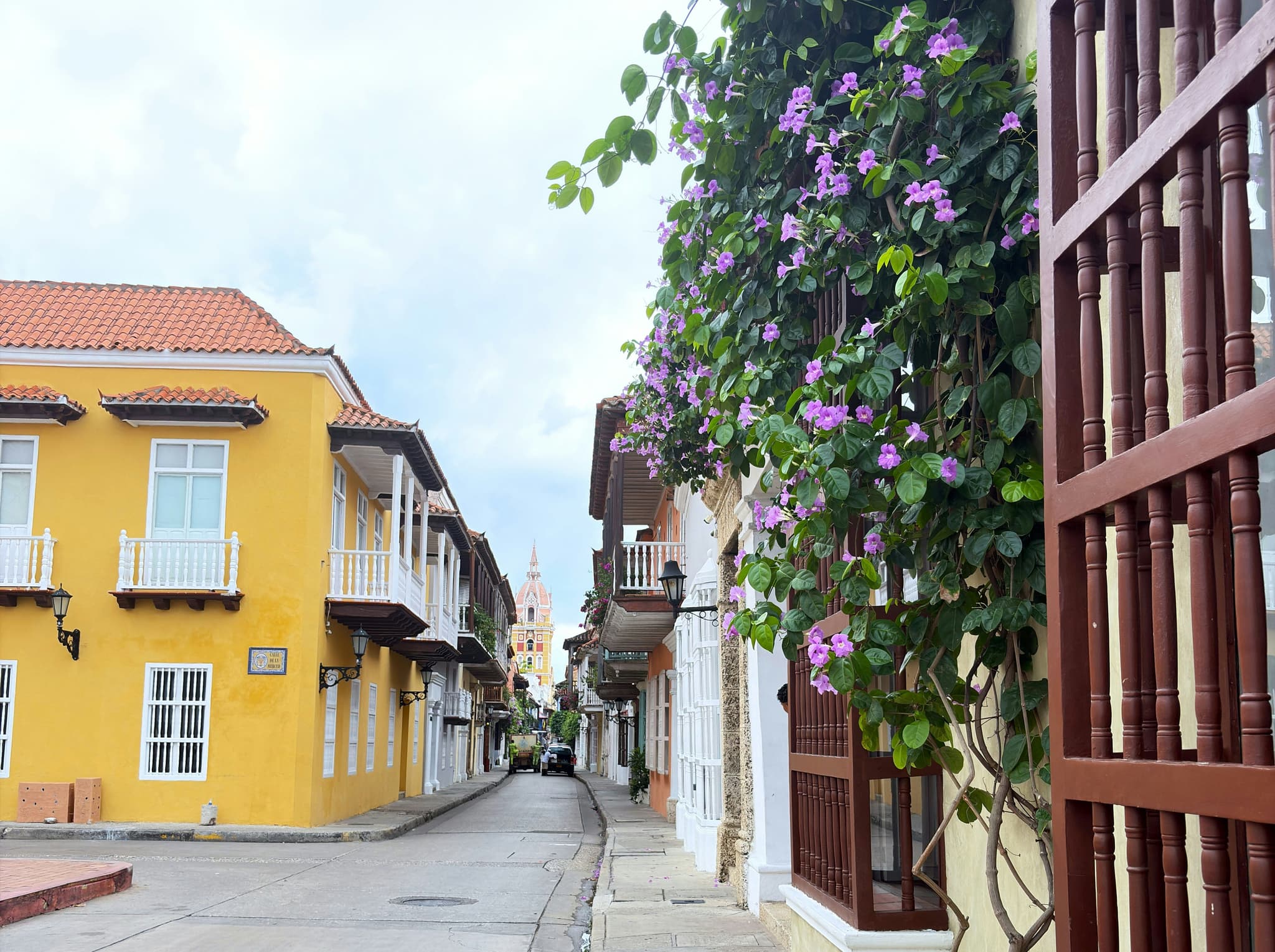
Start in Bogotá, spend the middle of the trip in the coffee region and finish on the Caribbean in Cartagena. For a first visit we wouldn't change that order. Three stops sound simple until you try to link them. No single bus runs from Bogotá to Salento, and the bus routes that do get you there take anywhere from 8h45m to 13h. So the real work in planning two weeks in Colombia is turning three very different places into a route that makes sense.
This Colombia itinerary does it in 14 days. Below is how we'd split the nights and how the stops connect, which is mostly by short domestic flight. There's a section on when to go, and one on adding Barranquilla Carnival if your dates cover 6-9 February 2027. We also say plainly what the US travel advisory does and doesn't cover on this route.
Colombia in two weeks, in a nutshell
The trip is thirteen nights across three stops, connected by two domestic flights. We wouldn't run it in any other order.
Stops: Bogotá (4 nights), the coffee region around Salento (4 nights) and Cartagena (5 nights)
Total duration: 14 days, 13 nights
Main transport: a flight from Bogotá to Armenia or Pereira, then a flight from the coffee region to Cartagena
Flight costs: about $35 for Bogotá to Armenia, and from about $42 to $140+ for the coffee region to Cartagena, depending on carrier and date
Best timing: December to February is the core dry season, and Cartagena stays dry through April
Optional add-on: Barranquilla Carnival, Saturday 6 to Tuesday 9 February 2027, 2-2.75 hours by road from Cartagena (longer during carnival week itself)
US advisory: Level 3 overall, with Level 4 limited to specific areas, none of them on this route
What is the Bogotá to Cartagena route?
We'd call it the first-timer's line through Colombia, and the thinking behind it is altitude. Bogotá and the coffee region sit high in the Andes and are much cooler than Cartagena on the Caribbean coast. Here, temperature changes more with altitude than with the season. So the route goes from the capital to the Eje Cafetero, Colombia's coffee-growing heartland in Quindío around Armenia and Salento, and then down to the coast.
Ending on the coast is deliberate. You do the city and the hiking while you're fresh. Then you finish with warm evenings in Cartagena and, in 2027, the option of a carnival a couple of hours up the road.
How long do you actually need?
Could you do this in ten days? You could, by cutting a night from each stop, but we think 14 is the right length for a first trip.
The reason is time in transit. Flying from Bogotá via Armenia takes 2h30m-3h door to door once you add the transfer to Salento. The flight on to Cartagena can be 1h20m nonstop or several hours with a connection. Ten days gives each stop three nights, and with travel days cut out that leaves about two full days in each place. That leaves no slack if the Cocora Valley is wet the morning you planned to hike it.
Fourteen days also leaves room for things that only happen on certain dates. Usaquén's flea market is on Sundays, and carnival is fixed to four days.
The classic route, city by city
Four nights in Bogotá, four in the coffee region and five in Cartagena add up to 13 nights, which is the split this itinerary uses. If you add Barranquilla, take those nights out of Cartagena's five or add them to the end.
Bogotá (4 nights)
We'd begin in Bogotá rather than Cartagena for a practical reason. The flight to Armenia or Pereira is the easy way into the coffee region, and we'd rather get the capital done first and save the coast for the end.
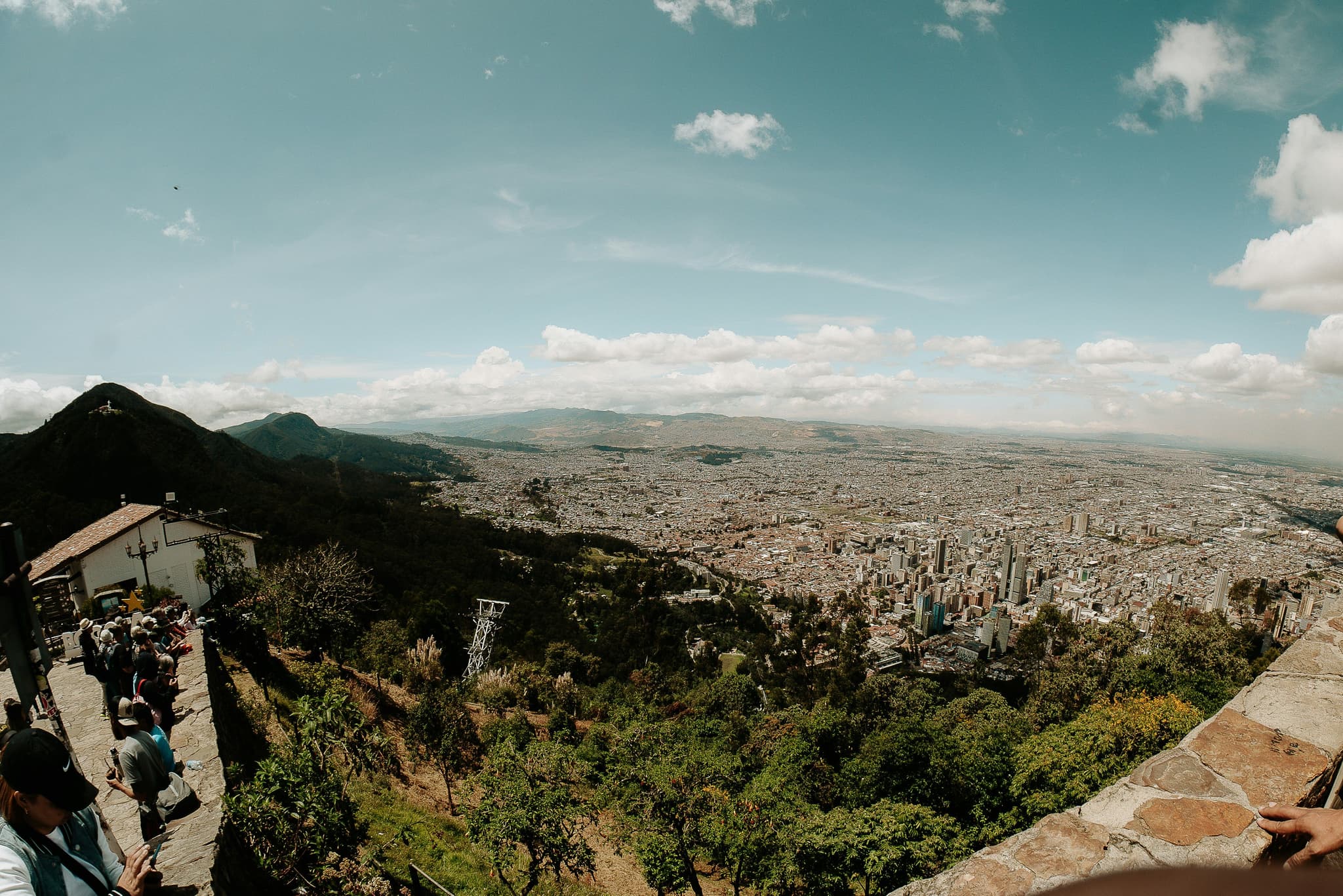
Go up Monserrate early on your first clear morning, when the hilltop church has the whole city laid out below it. Then give a day to La Candelaria, the historic center, where you'll find Plaza Bolívar, the Catedral Primada and the Capitolio Nacional. The Museo del Oro, the gold museum, is also part of a Candelaria day. The Botero Museum is free, so it's easy to fit in between the rest.
Eat ajiaco, Bogotá's chicken, corn and potato soup, at Paloquemao Market. For dinner, head to Zona G in Chapinero. If one of your four days falls on a Sunday, spend the morning at the Usaquén flea market. If none of them does, we'd move your dates so one does.
Onward to the coffee region. Fly to Armenia (AXM) or Pereira (PEI). Via Armenia it's 2h30m-3h door to door to Salento. Via Pereira it's sometimes quicker, at around 2h15m.
The coffee region around Salento (4 nights)
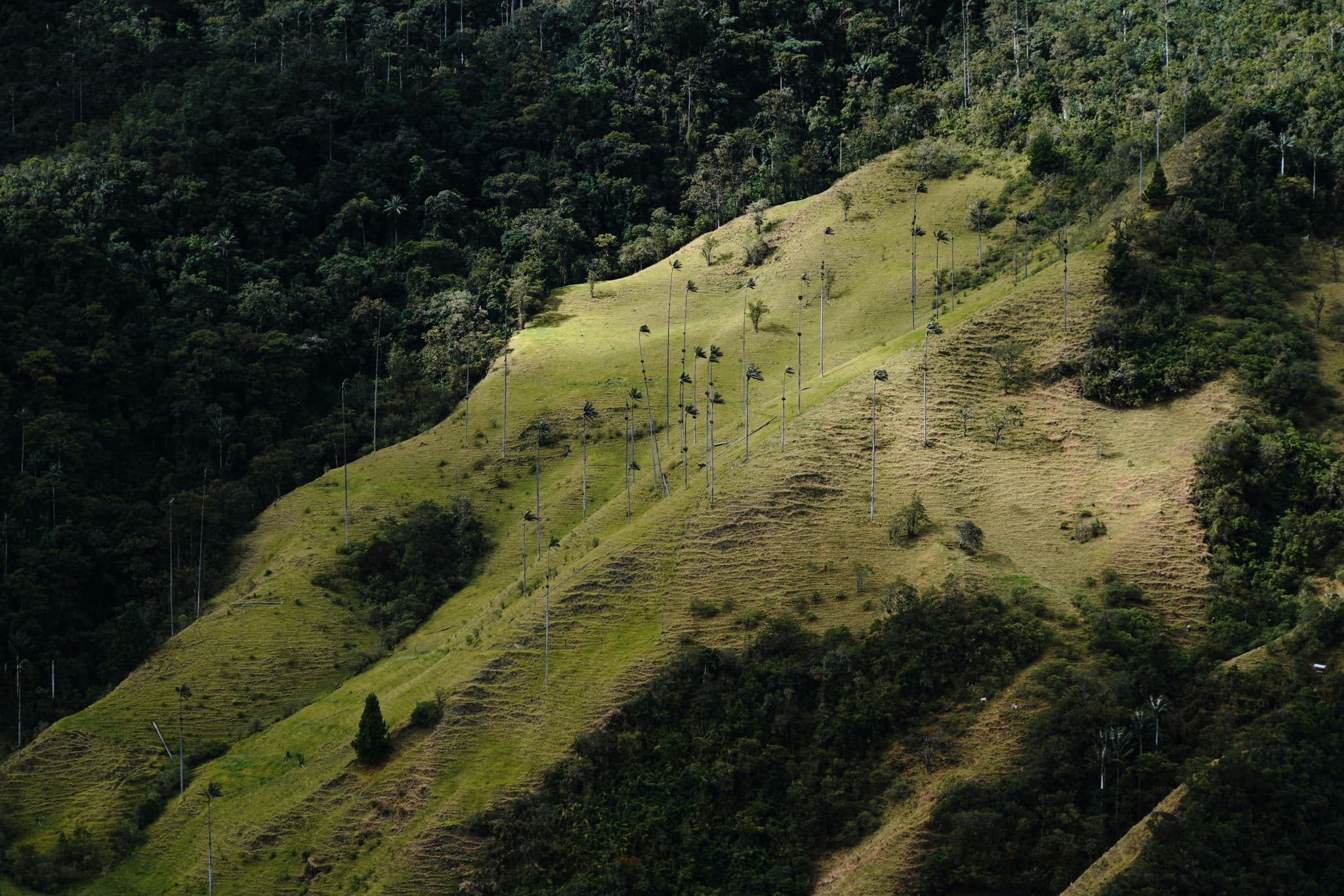
The tall wax palms of the Cocora Valley are Colombia's national tree, and they're the main reason to come to Salento. Get there the classic way, in one of the vintage WWII-era Willys jeeps that leave from Salento. Then choose between a short walk to the main palm grove and a longer loop trail. January is the best month for hiking in the Andes, and in January we'd do the loop.
Salento sits in the middle of the Eje Cafetero, so book a tour of a working coffee farm for one of your four days. Walk up to Mirador Alto de la Cruz above town for sunset. Order trout (trucha) at least once. Do the same with patacones con hogao, fried green plantain with a tomato and onion sauce.
Onward to Cartagena. Fly to Cartagena, usually from Pereira and sometimes from Armenia. A nonstop takes about 1h20m and a connection can take several hours. Fares run from about $42 to $140+ depending on carrier and date.
Cartagena (5 nights)
Why give Cartagena the most nights? Because this is where the trip slows down, and because it's the base for the Barranquilla add-on if you want it.
The airport is about 15 minutes from the center, so your arrival day isn't lost. Spend it in the Walled City, the Centro Histórico, around Plaza Bolívar. This is Cartagena's own Plaza Bolívar, a different square from the one in Bogotá.
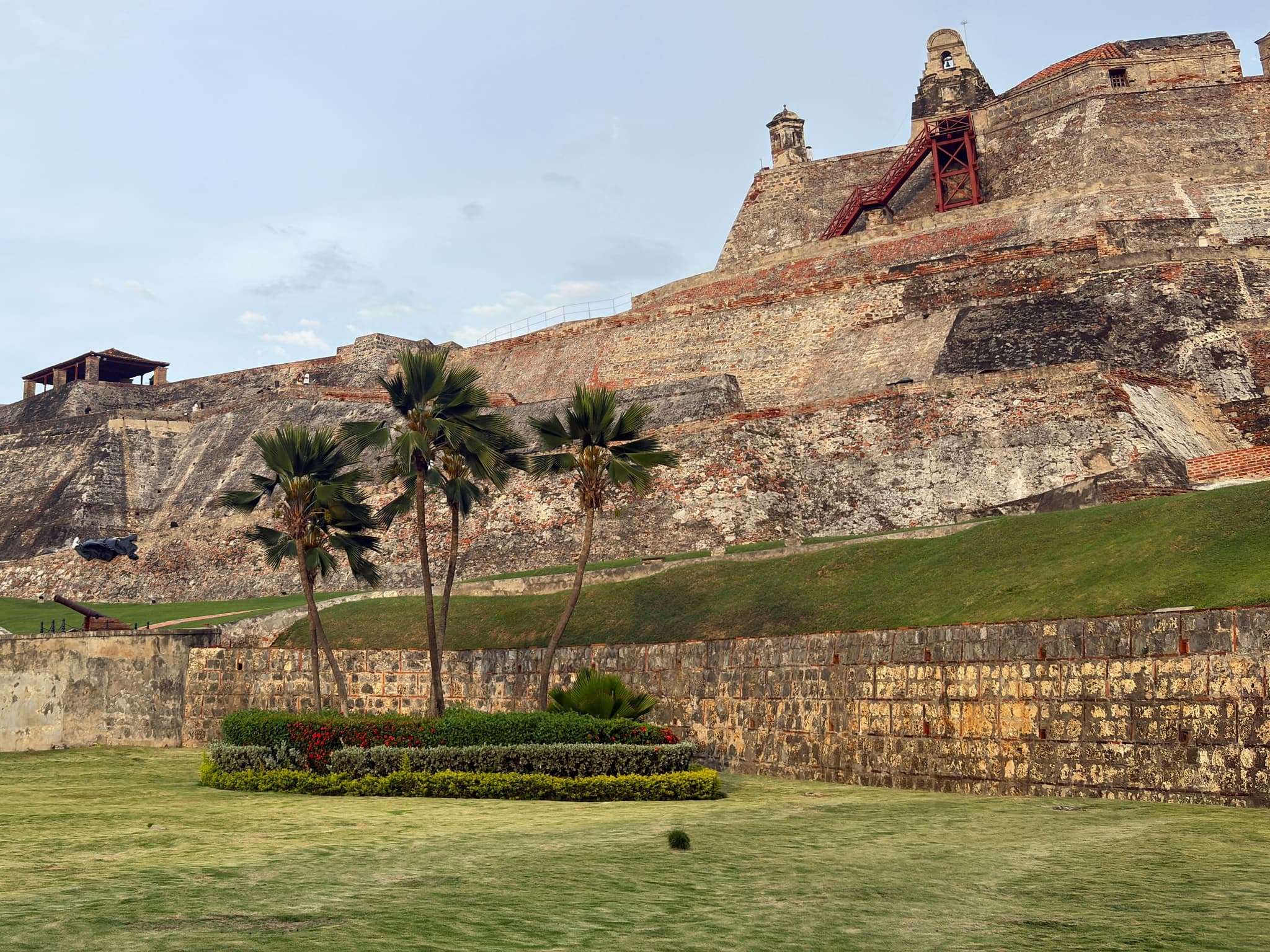
Give one day to Castillo San Felipe de Barajas, the Spanish colonial fort on its hill. Give another to the Convento de la Popa, for views over the city and out to the Caribbean. In the evenings, walk the city walls at sunset and end with a drink at Café del Mar.
For food, ceviche and arroz con coco (coconut rice) are the two to order.
Onward. Fly home from Cartagena, or in February 2027 take the road to Barranquilla.
Barranquilla Carnival 2027, the optional add-on
Barranquilla Carnival 2027 runs from Saturday 6 to Tuesday 9 February. Those are the four days before Ash Wednesday, the start of Lent, which is why the dates move every year. Colombia's National Congress proclaimed it a Cultural Masterpiece of the Nation in 2002. On 7 November 2003 UNESCO named it a Masterpiece of the Oral and Intangible Heritage of Humanity. It's one of the biggest carnivals in the world and mixes European, African and Indigenous traditions.
Saturday 6 February. The Battle of Flowers (Batalla de Flores), the biggest event of the carnival. Flower-themed floats, led by the carnival queen, run down Vía 40, a parade that dates to 1903.
Sunday 7 February. The Gran Parada de Tradición y Folclore, where traditional folkloric and cumbia groups have paraded without floats since 1967.
Monday 8 February. The Gran Parada de Fantasía and the Festival de Orquestas, which blend traditional and international rhythms and award the Congo de Oro.
Tuesday 9 February. The burial of Joselito Carnaval, a citywide mock funeral for a figure who "dies" every year and is "revived" the next.
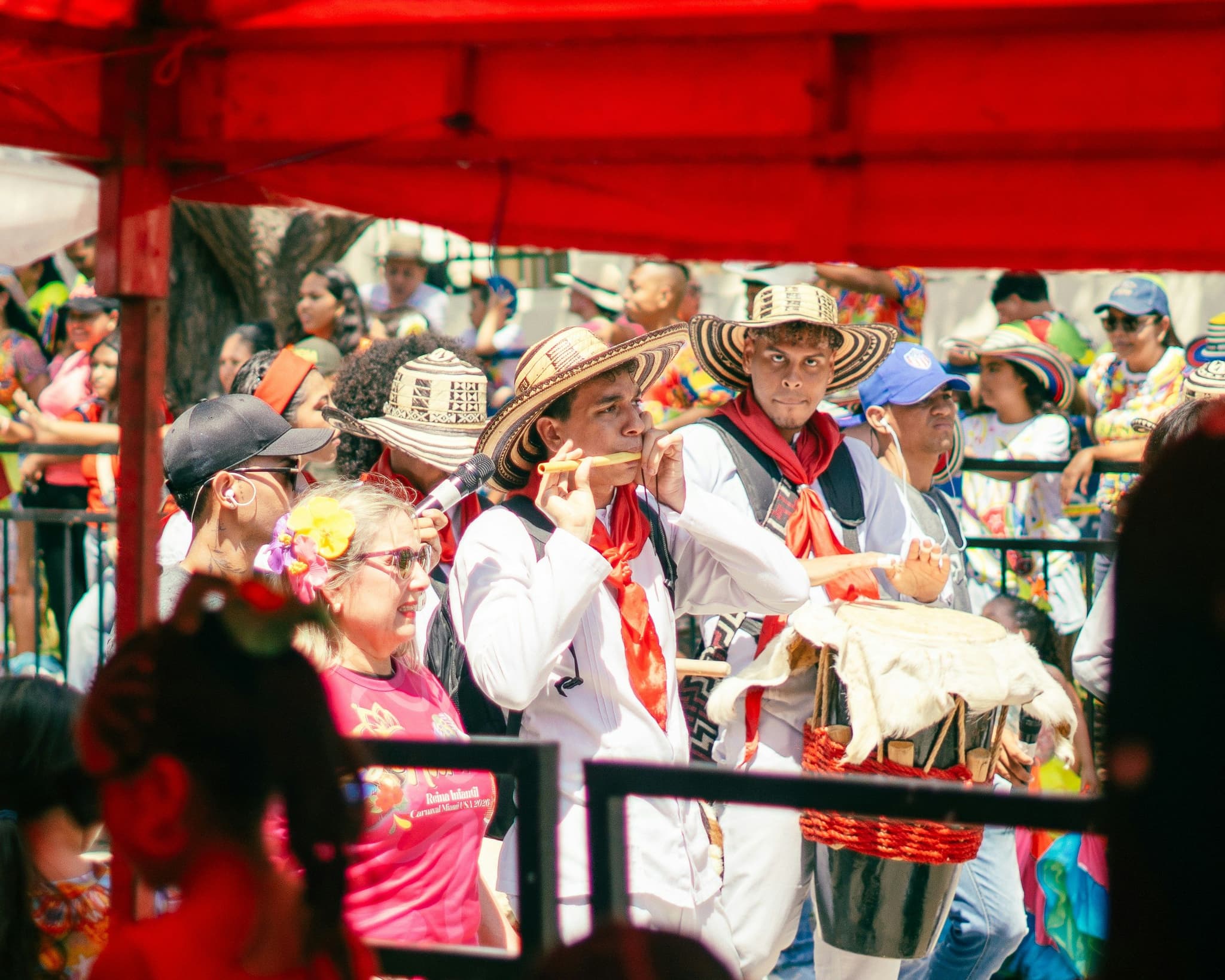
The season starts before the main four days. La Guacherna, a night parade held since 1974, takes place on the Friday before carnival week. The Carnaval de los Niños is the season's first official parade, with children's dance groups and child-sized floats. King Momo and the carnival queen preside over the festivities, and both are elected the year before. One recent Gran Parada had about 300 dancing groups.
Barranquilla is 100-120 km from Cartagena, normally 2-2.75 hours by road. A shared minivan with door-to-door pickup is usually quickest at 2h-2h20m, for around $25-40. Intercity buses cost $8-10 and take 1h40m-3h30m. Add the terminal transfers at each end and the total is 2h40m-5h. A private taxi takes 2h-2h45m and costs $60-90. Those are normal-week figures. During carnival, road closures and traffic in Barranquilla will probably make the trip slower and more expensive, so treat those times as the minimum.
We'd take the shared minivan and stay at least Saturday night in Barranquilla, not see the Battle of Flowers as a day trip. To fit carnival into this itinerary, start in Bogotá on Thursday 28 January 2027. That gives you Sunday 31 January in Bogotá for Usaquén. You fly to the coffee region on Monday 1 February and to Cartagena on Friday 5 February, which puts you in place for Saturday's parade. Day 14 is Wednesday 10 February, Ash Wednesday, and by then carnival is over.
Getting around
Fly between the regions, and keep the roads for the short trips at each end.
This matters most between Bogotá and Salento. No single bus does the trip in one go, and the bus routes take 8h45m-13h depending on where you change. A private transfer takes about 7h45m and costs around $235 for a carful. A flight to Armenia costs about $35, and with a $9-25 transfer it gets you to Salento in 2h30m-3h. On a 14-day trip, the flight is the obvious choice.
Armenia and Pereira both work. Pereira is sometimes the fastest, at about 2h15m door to door, but its buses to Salento run only once an hour and the last one leaves around 6.30pm. From Armenia they run every 20 minutes until around 8pm.
Guided tip: If your flight lands in the late afternoon, book Armenia rather than Pereira. Armenia has three buses an hour and a later last bus, so a delayed landing won't leave you looking for another way up to Salento.
Flights from the coffee region to Cartagena vary by carrier and by day. Check what's running on your dates, not a fixed timetable. Expect a short flight, with one or more options most days.
From the airport in Bogotá you can take an official taxi, Uber or Cabify, a pre-booked shuttle, or TransMilenio, which is awkward with luggage. We'd take a taxi or an Uber on arrival day. Cartagena's airport is about 15 minutes from the center and barely needs planning.
Worth detouring off the route?
Should you add Medellín? Many two-week itineraries do, and it's a very defensible choice, but on a first trip we'd save it for a second visit and give its days to the coffee region and the coast.
With 14 days and three stops, the better use of extra time is going deeper where you already are. Do Cocora's longer loop rather than the short walk, and add a second evening at Mirador Alto de la Cruz if the first one clouds over. The one real extension we'd make is Barranquilla, and only if your dates cover 6-9 February 2027.
Guided tip: If you find a spare day, don't spend it on a fourth city. Use it in Salento, where a dry morning in the Cocora Valley is worth more than another airport transfer.
Best time to travel this route
December through February is the dry season at all three stops and in most of Colombia outside the Amazon. January is the best month for hiking in the Andes, with dry trails and clear views. On the Caribbean coast this is the most beautiful time of year and also the busiest, with warm temperatures and low humidity. Cartagena and Santa Marta get very crowded in early January, and the crowds thin out by late January.
March is different. In Bogotá it leads into a second rainy season in April and May, while Cartagena stays dry through April. If March is your only option the route still works, but we'd move a night from the Andes to the coast.
Our pick is late January into early February. By then the coast has quietened down and the Andes are still dry. In 2027 that window also includes carnival.
Did you know: Barranquilla Carnival's dates are tied to Ash Wednesday, so they can move by weeks from one year to the next. It ran 1-4 March in 2025 and 14-17 February in 2026. In 2027 it's 6-9 February, and in 2028 it will be 26-29 February.
Travel tips
Of everything below, the packing advice is the part we'd least want you to skip.
Pack for altitude, not the month
In Colombia, temperature follows altitude more than season. Bogotá and the coffee region sit much higher than Cartagena on the coast and are much cooler, so the same two weeks need clothes for cool Andean evenings and for Caribbean heat. Pack layers for the first eight days and light clothes for the last five.
What the US advisory says about this route
We'd rather you read the advisory yourself than rely on our summary, but here is the short version. The US State Department rates Colombia Level 3, "Reconsider travel," in an advisory issued on 31 March 2026. Level 4, "Do not travel," applies only to specific areas. These are the departments of Arauca and Norte de Santander, Cauca excluding the city of Popayán, Valle del Cauca excluding the city of Cali, and anywhere within 10 km (6 mi) of the border with Venezuela.
None of those areas is on this route. Bogotá, Quindío (where Armenia and Salento are), Cartagena and Barranquilla are all outside the Level 4 list. Level 3 still covers the country as a whole, so read the full advisory on travel.state.gov before you book.
If you're also weighing a trip to Guatemala, we've covered its own safety picture in a separate guide.
A short glossary for the route
Which Spanish words will you actually use? On this route they're mostly food words, plus a few that show up in place names and events.
Ajiaco: Bogotá's chicken-corn-potato soup
Trucha: trout, the dish to order in the coffee region
Patacones con hogao: fried green plantain with a tomato and onion sauce
Arroz con coco: coconut rice, one to order in Cartagena
Mirador: lookout, as in Mirador Alto de la Cruz above Salento
Eje Cafetero: Colombia's coffee-growing region, where Salento sits
Batalla de Flores: the Battle of Flowers, the Saturday of Barranquilla Carnival
How to start planning your Colombia itinerary?
Two dates shape most of this trip. One is the day you land in Bogotá. The other, if you're going to carnival, is Saturday 6 February 2027.
Fix those first. Then book the two domestic flights, and check your Armenia or Pereira arrival time against the last bus to Salento. After that, it's a matter of putting the four, four and five nights in order. We'd lay that split out in the Guided trip planner first and fit the flights and the coffee farm tour around it. That way the Sunday in Usaquén and the sunset on Cartagena's walls fall on the days you meant them to.
It's the same two-week shape we used for our Golden Route itinerary through Japan, if a different continent is calling for your next trip.


