
The ultimate guide to the best beaches in Portugal
By Eva Alkemade
Jul 8, 2026
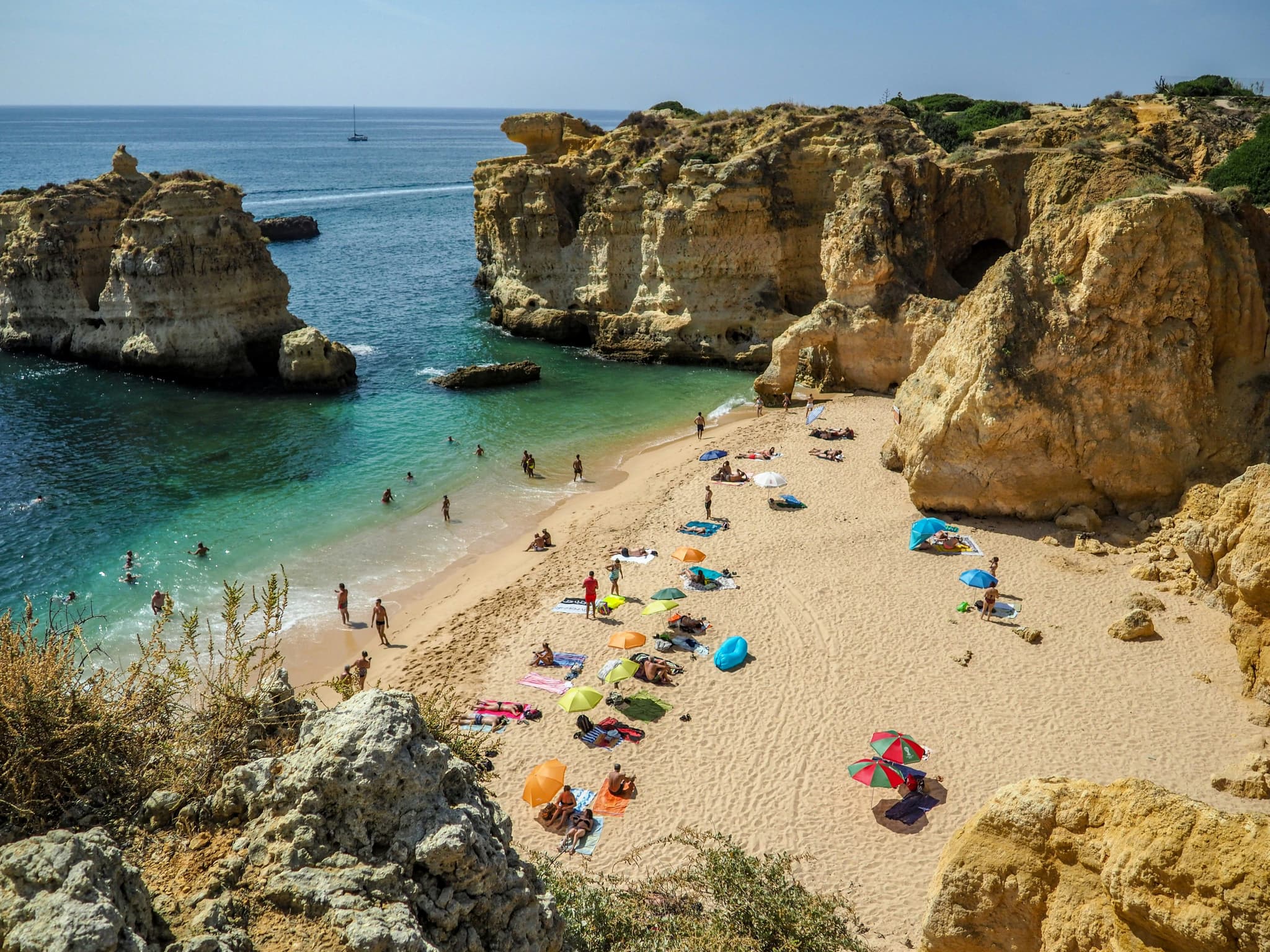
You've got roughly 1,700 kilometres of Portuguese coastline to pick from, and honestly, that's the whole problem with settling on just one favourite spot. Every Portuguese beach seems to carry its own personality: down south in the Algarve, golden cliffs drop into coves so calm the water barely moves, and further north, the Atlantic becomes a completely different beast, throwing up wild dunes and swells that pull in surfers from every corner of the planet. We’ve narrowed down the Portugal beach towns that are actually worth using as a base and the stretch of sand that genuinely earns a spot among the best beaches in Portugal. Here's our region-by-region breakdown.
How to choose the best beaches in Portugal for your trip?
It isn't as simple as glancing at a map and circling the biggest dot, not when it comes to picking your base. Portugal's coast splits into five pretty distinct zones: the Algarve down south, the wilder Alentejo coast, the Silver Coast in the middle, Lisbon's own beaches, and the stretch up near Porto. Each one has a genuinely different personality, so it helps to know roughly what you're after before booking anything.
How to choose the best beaches in Portugal:
The Algarve: best for golden cliffs, easy beach days and classic summer holidays.
Alentejo coast: best for wild beaches, quieter towns and a more local feel.
Silver Coast: best for surf, cooler weather and dramatic Atlantic scenery.
Lisbon coast: best for combining city life with easy beach trips.
Porto and the north: best for rugged coastlines, local seafood and fewer beach crowds.
Everything changes the moment you add a rental car into the mix. You'll find plenty of the coves mentioned below at the end of a bumpy track, nothing but a gravel lot and a steep set of steps down to the sand, with public transport simply not reaching that far. If a proper road trip along the coast sounds like your kind of holiday, picking up a car in Lisbon or Faro and driving south, or north, gives you the freedom to chase all of Portugal’s beaches that catch your eye.
Curious about everything else Portugal has beyond its coastline? Our guide on the best places to visit in Portugal covers cities, wine regions and more!
The Algarve's beautiful beaches and famous coves
Nowhere else in Portugal gets talked about quite like the Algarve, and after seeing it in person, you'll understand why. Limestone cliffs drop straight into water that swings between turquoise and deep blue depending on the light, and every cove seems to hide something a little different around the corner.
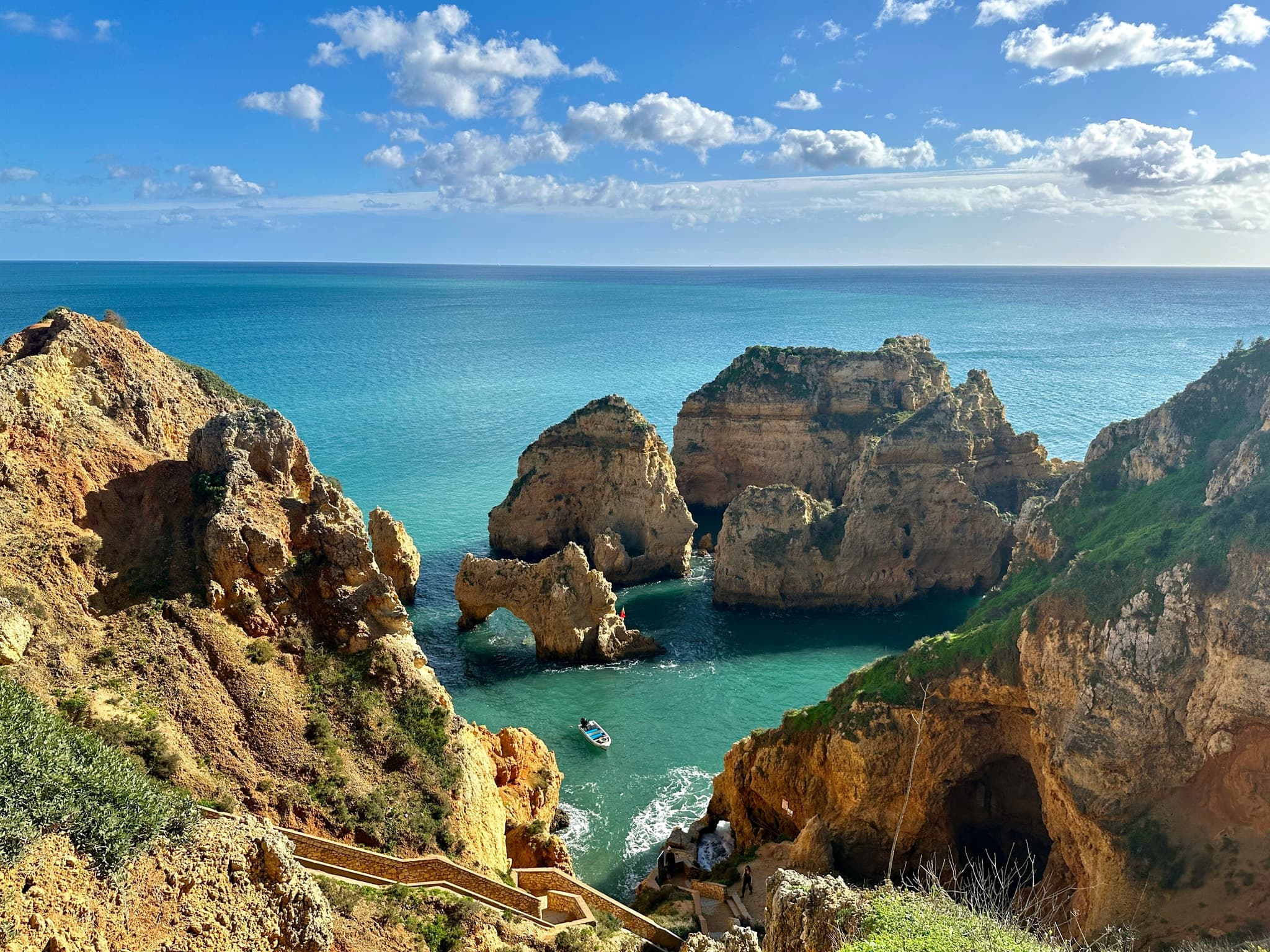
Praia da Marinha usually tops every list of beaches in the Algarve, and it's easy to see why so many Guided travellers call it the best beach in Portugal. The far end of the sand gets framed by twin rock arches, and the whole picture looks almost too perfect to be real. Just along the coast, the Benagil sea cave has become one of the most photographed spots in the country, its dome shaped roof pouring sunlight straight onto a tiny hidden beach below. You'll find boat tours running out to Benagil constantly from nearby Carvoeiro and Portimão, and paying for one beats trying to swim in yourself, since the currents around the entrance can get tricky.
Ponta da Piedade near Lagos is less of a beach and more of a rock formation, all golden cliffs, arches and grottoes best explored by kayak or a short boat ride. It's the kind of place you have to see in person.
Guided tip: Before 10am is the best window for Marinha and Benagil. Both get seriously busy by lunchtime, as soon as the day trip boats start arriving from Albufeira.
Best beach towns in the Algarve to base yourself
Where you sleep matters just as much as which beach you visit, since the Algarve's towns differ wildly from one another. Lagos probably works best for most people, since it's walkable, has a proper old town, and puts half a dozen incredible coves within a short stroll or a five-minute drive.
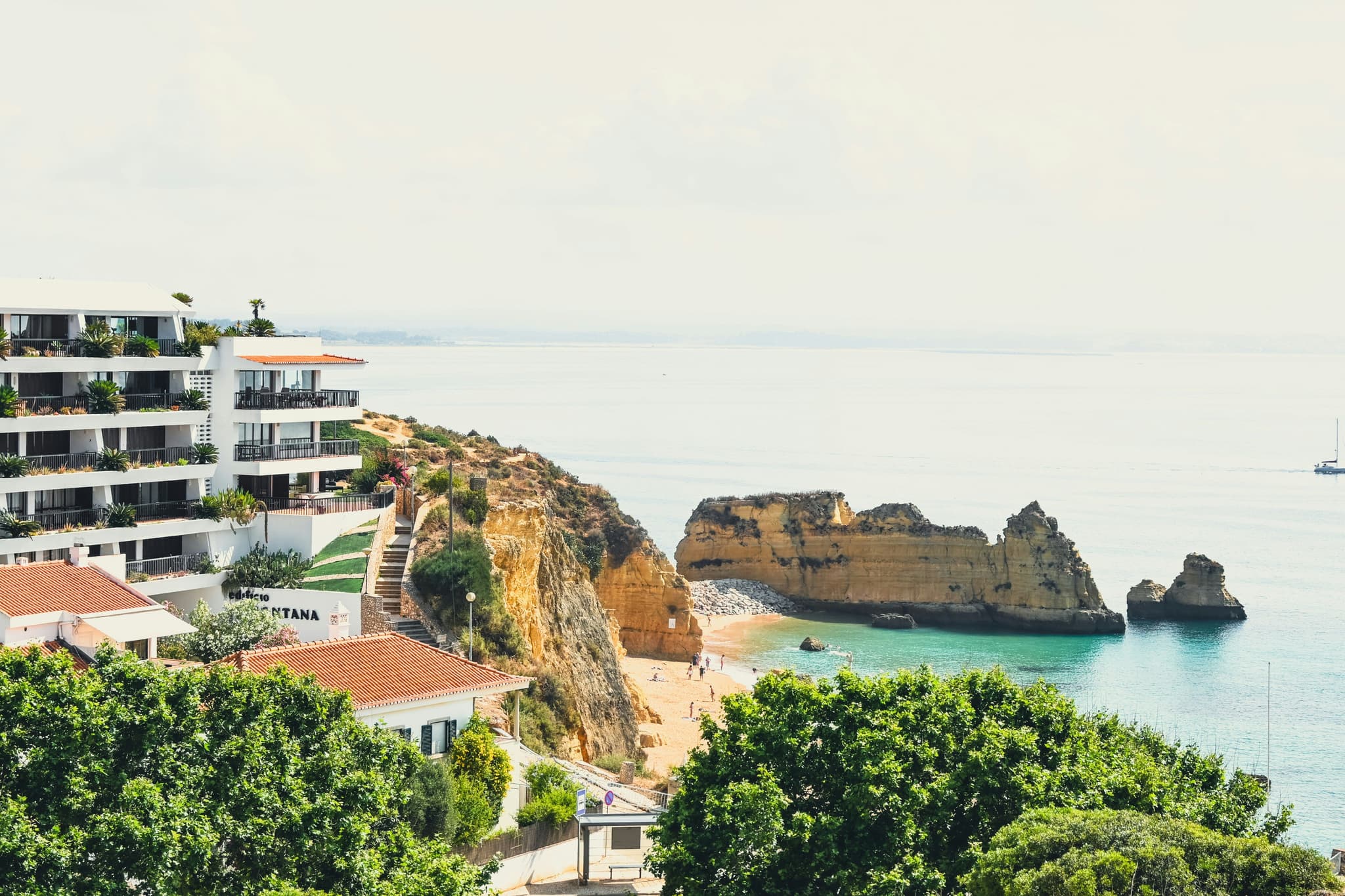
Carvoeiro started life as a small fishing village, and even though tourism found it decades ago, plenty of that original charm has stuck around. A boardwalk now runs along the cliffs on both sides of town, giving you sea views without needing to book a single tour. Alvor's Praia dos Três Irmãos throws in a handful of tiny coves separated by low rock arches, worth a stop if you're driving between Lagos and Portimão.
Tavira, further east, takes things down several notches, complete with a proper old town, a Roman bridge, and beaches you reach by ferry rather than on foot. And Albufeira occupies the opposite end of the spectrum entirely: bars, clubs and late nights, which is either exactly what you want or the last thing you're after.
Fancy building a full route around all of this? Our 1 week in Portugal: Lisbon and the Algarve coast itinerary lays out a route covering the capital and several of these towns in one trip.
East Algarve's lagoon islands and Ria Formosa
Sand behaves completely differently once you head east past Faro, and some of the nicest beaches in Portugal hide out here. Ria Formosa Natural Park runs along this whole section of coast, a maze of lagoons, salt marshes and barrier islands keeping the open sea at arm's length from the mainland.
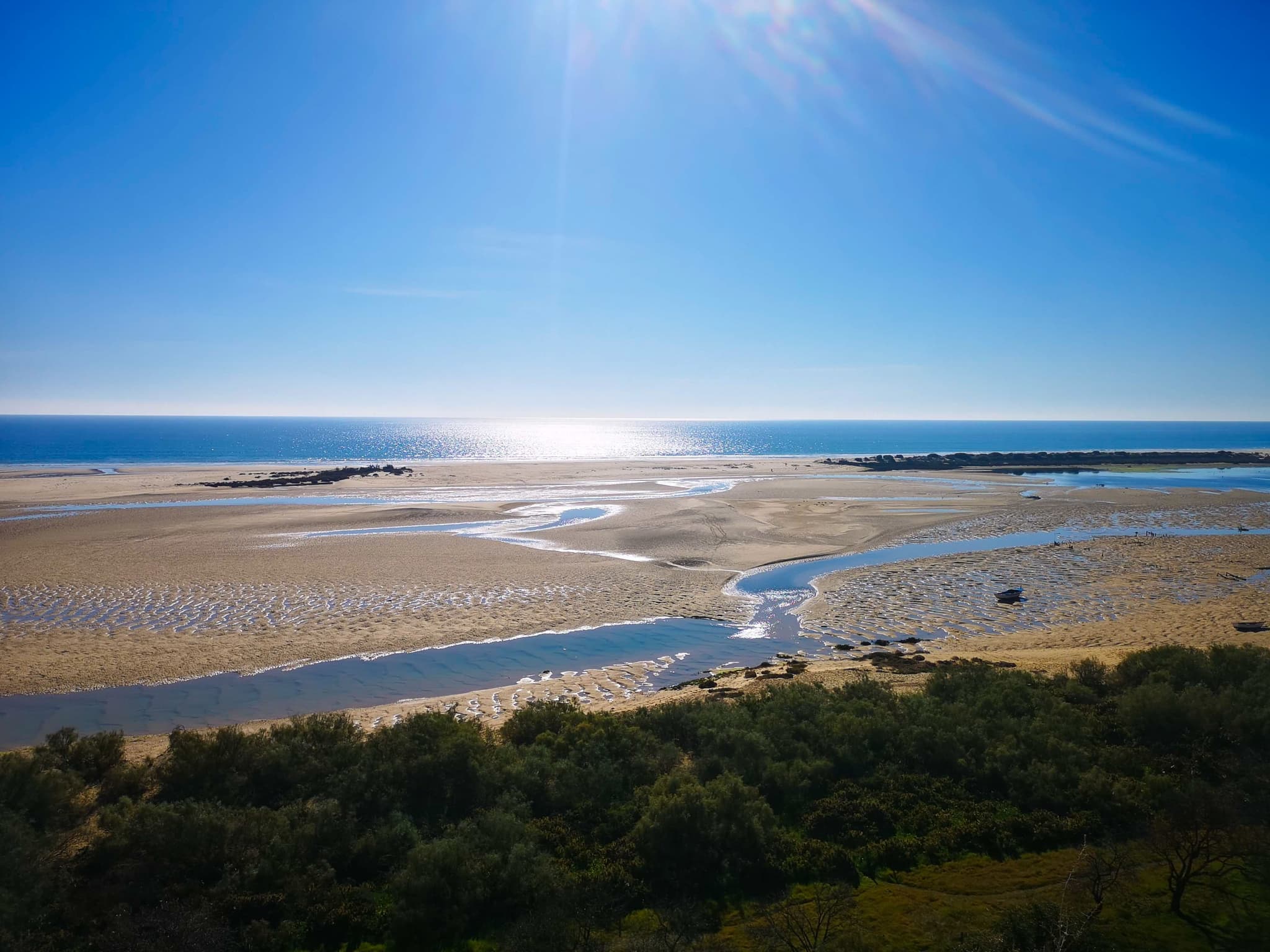
Ilha de Tavira is reachable only by a short ferry ride, and the beach keeps going in both directions the moment you step off, with barely anyone around. Praia do Barril lies nearby and comes with a genuinely strange bonus: hundreds of old ship anchors planted in the sand, left behind from the town's tuna fishing days and now known locally as the anchor cemetery. Near Faro itself, Ilha Deserta lives up to its name, a genuinely empty stretch of sand you'd never guess lies so close to an international airport.
The wild west coast: Costa Vicentina's beaches for surfers
Round the corner past Sagres, the Atlantic stops pretending to be gentle. This is Portugal's west coast, and the whole mood changes: bigger cliffs, rougher water, and barely a beach umbrella in sight. Most of it falls inside the Parque Natural do Sudoeste Alentejano e Costa Vicentina, which has kept development at bay and left the coastline genuinely wild.
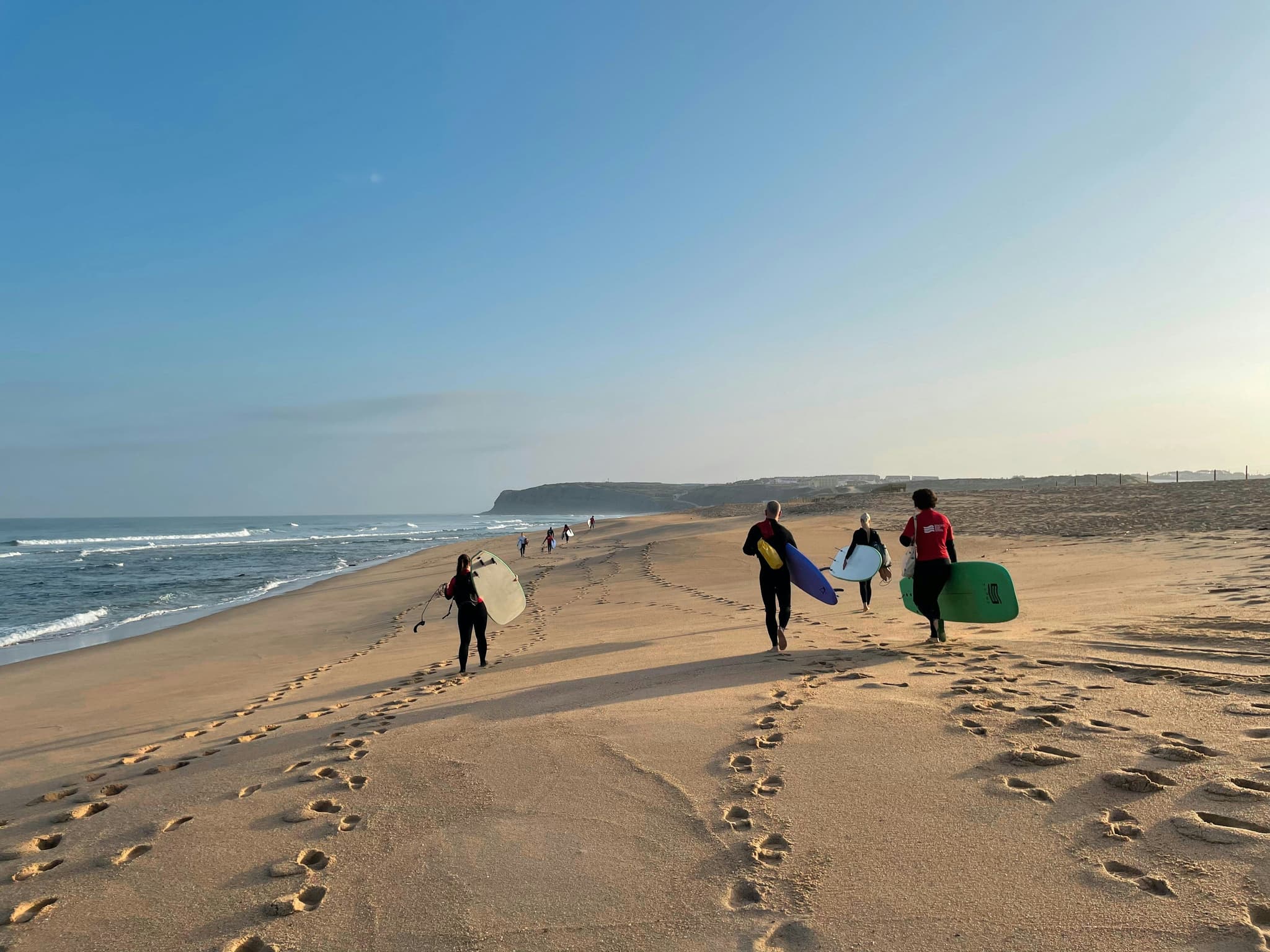
Arrifana draws surfers from all over Europe, its orange sandstone cliffs wrapping around a beach that somehow still has room for everyone. Further south, Praia do Amado brings some of the most reliable waves in the country, with a handful of surf schools set up right at the entrance for anyone wanting a lesson.
Odeceixe lies right on the border with the Algarve and does something none of the other beaches manage: a river winds down through the dunes and meets the sea here, so you get calm water on one side and proper surf on the other, all in the same spot.
Plenty of Portugal’s coastal towns barely register on a standard Algarve itinerary, which is exactly the appeal if you fancy something rougher around the edges. Anyone wanting to walk this whole coastline rather than drive it can follow the Rota Vicentina trail network, which links most of these beaches on foot.
Did you know: The Atlantic on this side of the country stays noticeably colder than the sheltered south coast, even in August.
Comporta and the Alentejo's beautiful, quieter beaches
Trade the cliffs for pine forest and rice paddies, and you land somewhere completely different. Comporta and the wider Alentejo coast have steadily earned a reputation for some of Portugal's most beautiful beaches, minus the packed beach days you'd find further south.
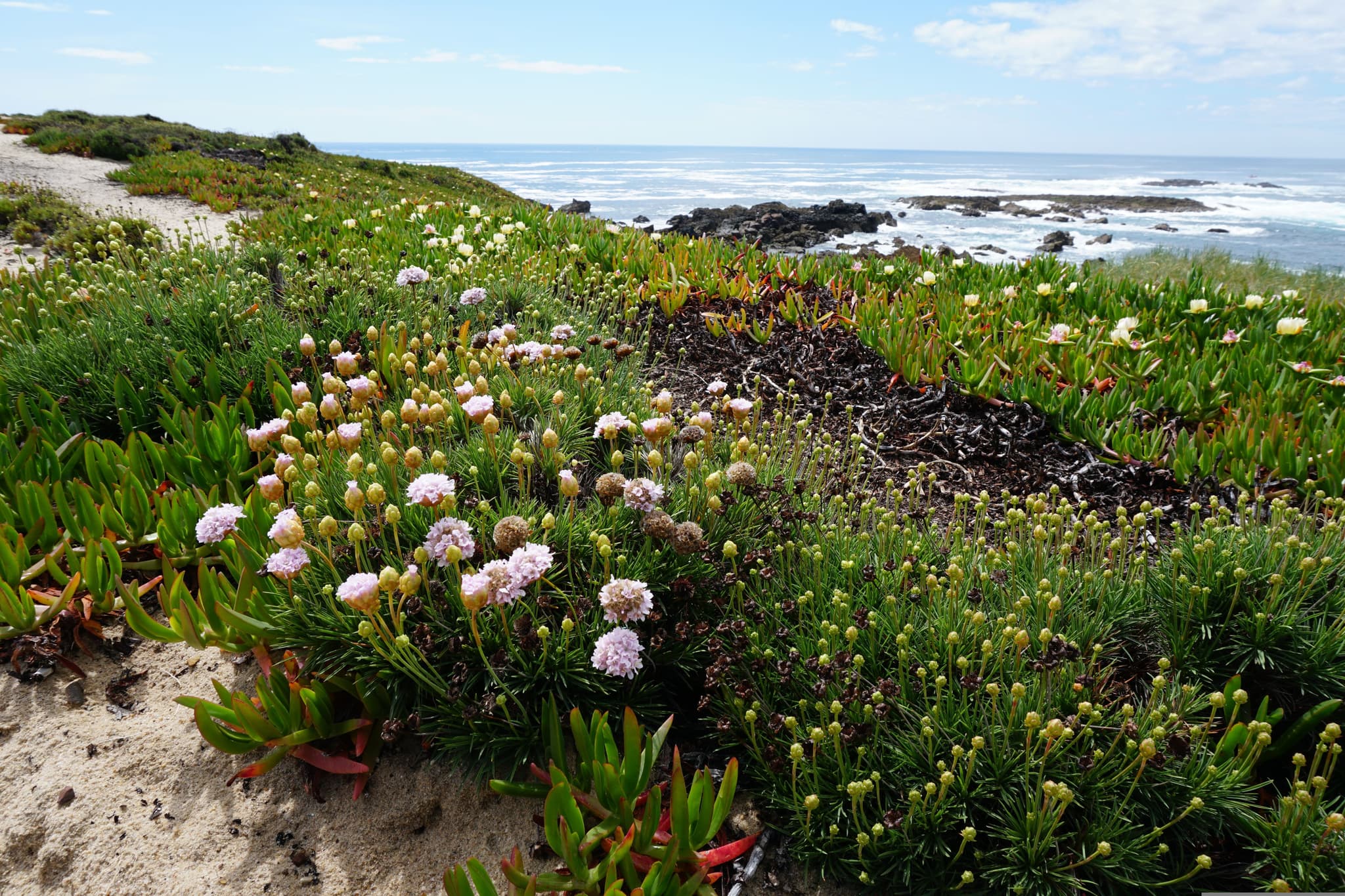
Sand dunes roll on for what feels like forever here, backed by pine trees rather than restaurants or beach bars. Carvalhal and Melides lie just up the coast and bring more of the same: wide open sand, dunes, and barely another soul around on a weekday.
Head further south past Sines and you'll hit Vila Nova de Milfontes and Zambujeira do Mar, both wilder again and both worth the extra drive if you've got the time. Nobody comes to this coast for nightlife or beach clubs. They come for space, and this stretch doesn't get much more spacious than that.
The Silver Coast: Nazaré, Peniche and Ericeira's big waves
Past Lisbon, the coast becomes something else entirely. Winter waves at Nazaré have made global headlines for over a decade now, with surfers chasing swells that regularly top 20 metres just off Praia do Norte. Head up to the Sítio viewpoint for sweeping views of the cliffs, lighthouse and Atlantic Ocean. Afterwards, wander back down to the harbour for a plate of freshly grilled fish.
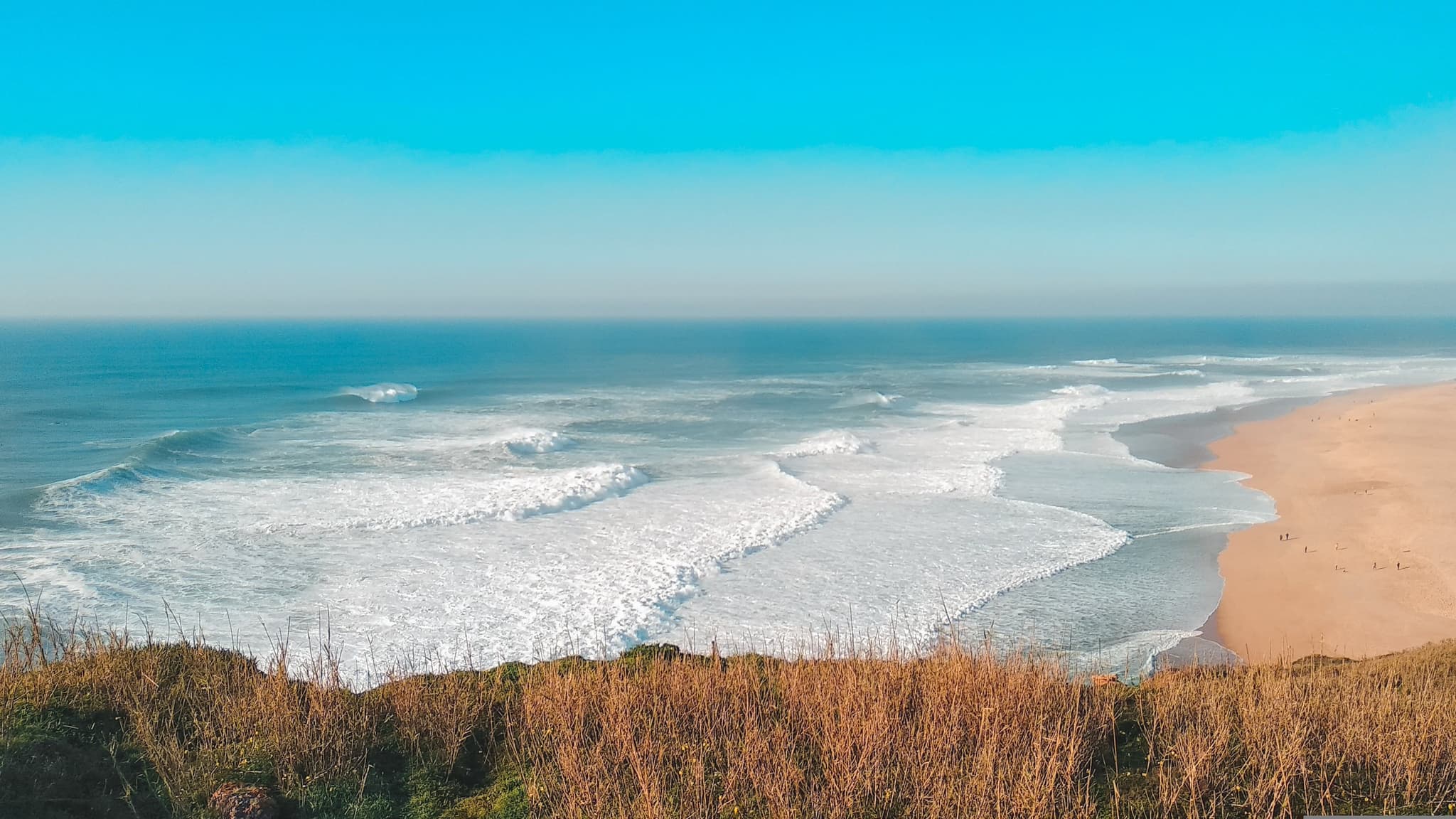
Nazaré in summer barely resembles its winter self, calm enough for a normal swim and a normal towel on the sand. São Martinho do Porto, just down the coast, takes that calmness even further with its almost perfectly shell shaped bay, keeping the water so still it's become a go to spot for families with small kids.
Further north, Peniche and Ericeira have built entire identities around surfing. Ericeira even holds official World Surfing Reserve status, the first of its kind in Europe, and its rocky reefs produce some genuinely exceptional breaks. If you're after some of the nicest beaches in Portugal for watching waves rather than braving them, this whole coast delivers.
Not sure which season suits your trip best? We've written a full guide on the best time to visit Portugal, covering weather, prices and crowd levels.
Fun fact: Nazaré's biggest recorded wave came in at over 26 metres, a record that still stands today.
City beaches near Lisbon and Porto
Around Lisbon, you don't have to choose between city and beach. Just half an hour from the centre, Cascais blends elegant villas, a stylish marina and sandy beaches, a legacy of its days as the summer retreat of Portuguese royalty. A little further along the coast, Guincho offers something completely different, with strong Atlantic winds and some of Europe's best conditions for windsurfing and kitesurfing.
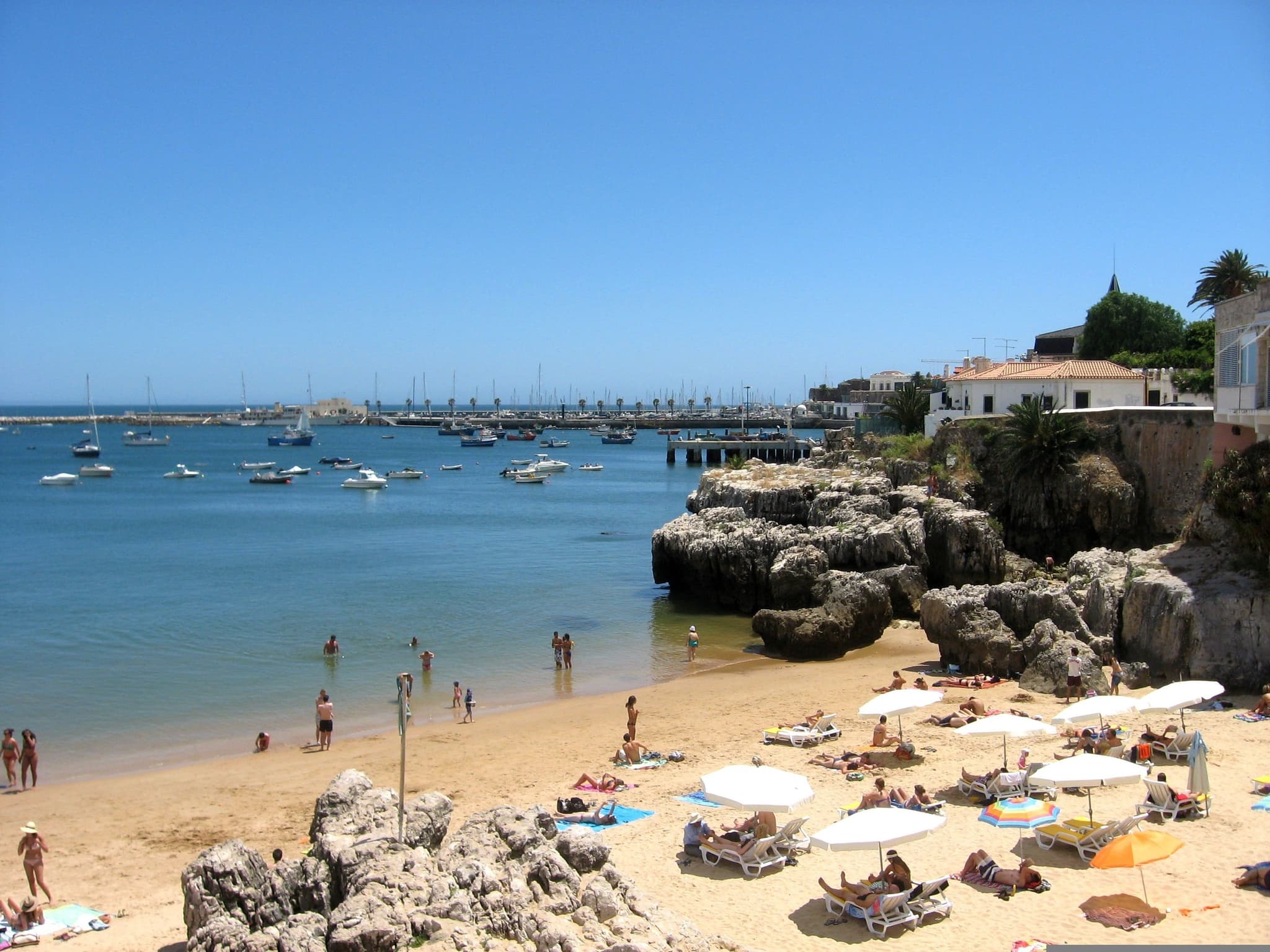
Costa da Caparica lies on the opposite side of the river from central Lisbon and somehow still gets overlooked, despite kilometres of open sand reachable by a quick bus or ferry ride. Among the beach cities in Portugal worth a day trip, this one probably gives you the best return for the least effort.
Spending a few days in the capital first? Our 3-day Lisbon trip covers the city itself, with day trip ideas for exactly this kind of coastal detour.
The beaches around Porto have a much more local feel than those further south. Instead of big holiday resorts, you'll find working fishing towns, long sandy beaches and some of Portugal's best seafood. Matosinhos is where locals head for fresh grilled fish after a morning by the sea, while nearby Espinho has built a reputation as one of the country's top surfing beaches.
Looking for somewhere quieter? Praia de São Jacinto, near Aveiro, rewards the extra drive with wide dunes, pine forests and far fewer crowds.
Adding a stop up north to your trip? Our 3-day Porto trip covers the city itself, and both connect easily by train if you fancy doing the whole coast in one go.
Practical tips for beach hopping in Portugal
Planning a beach trip sounds easy enough, but Portugal's coastline is bigger and more varied than many people expect. Before you go, here are a few tips that will save you time and help you make the most of your trip.
Blue Flag status: awarded to beaches meeting strict safety and cleanliness standards, and Portugal holds one of the highest counts in Europe. ABAE, the body behind Portugal's Blue Flag programme, publishes the full list every year.
Tides: cove beaches like Marinha or Benagil can lose their sand completely at high tide, so check a tide table before setting off rather than guessing on the day.
Parking: lot space runs out fast at the famous spots between June and September, and arriving before 9am genuinely means a five-minute walk instead of a long, sweaty search for a spot.
Pace yourself: we highly recommend building in a rest day or two between beach days, particularly on the west coast, where currents demand a bit more respect than the sheltered south.
Timing your trip: not sure which season suits you best? We've written a full guide on the best time to visit Portugal, covering weather, prices and crowd levels month by month.
Wondering about safety? Our guide on Portugal's safety covers everything from swimming conditions to staying safe in the cities, worth a read before you go.
So, which of Portugal's beaches are best for you?
Picking one single favourite beach in Portugal is genuinely impossible. It really depends on the kind of beach day you want: cliffs and coves point you toward the Algarve, peaceful dunes and pine forest point you toward Comporta, and big winter swells point you straight to Nazaré.
To make things easier, here's how we'd break it down:
Cliffs, arches and postcard coves: Praia da Marinha, Benagil and Ponta da Piedade.
Lagoon islands and quiet beaches: Ilha de Tavira, Praia do Barril and Ilha Deserta.
Space, dunes and barely another soul around: Comporta, Carvalhal and Melides.
Wild waves and surfing: Arrifana, Amado, Nazaré, Peniche and Ericeira.
Easy beach days from the city: Cascais, Guincho, Matosinhos and São Jacinto.
Whichever region wins you over, Portugal's coastline rarely disappoints the moment you're standing on the sand. Curious what else the country has beyond its coastline? Our travel guide for Portugal rounds up everything else worth seeing on your trip.
Enjoyed This Blog? Continue Reading!
More travel inspiration is waiting for you on our blog. You can look below and start planning your next trip to Portugal!


