
Montenegro

Montenegro travel guide: Everything you need to know before visiting Montenegro
Every 22 July at dusk, people from Perast row out into the Bay of Kotor and drop stones into the water around a tiny island called Our Lady of the Rocks. The island, church and all, is man-made. According to legend, sailors found an icon on a rock here on 22 July 1452 and began laying a stone after each safe voyage. The custom, known as Fašinada, keeps it growing.
Montenegro fits that much history into a very small space. The country covers 13,883 km², yet the walled towns of the Bay of Kotor sit only about 2.5 to 3 hours by road from the Tara Canyon, so you can swim in the Adriatic in the morning and walk round a glacial lake in Durmitor that evening. Next to Croatia, the interior is wilder and the prices are lower; next to Albania, the coast is more polished. It suits road-trippers and hikers. If you only want long sandy beaches, though, most of the northern coast is pebbles and concrete bathing platforms. This guide covers the places, routes, costs and rules to know before you go.
5 reasons to visit Montenegro
For a first trip to the Balkans, Montenegro is the country we'd pick, and these five things are why.
- Climb Kotor's 1,350 steps at opening time and have the view of the bay before the cruise-day crowds arrive.
- Take a boat from Perast to a church on an island that people built by hand.
- Raft the Tara, which runs through what's often called the deepest canyon in Europe.
- Eat Njeguški pršut and cheese in Njeguši itself, the village on the road from Kotor to Cetinje that gave them their name.
- Pay euro prices that are lower than in Croatia next door.
Where to visit in Montenegro?
So where do you start in a country with only 295 km of coast? With the Bay of Kotor, then work outwards towards the lake in the south and the mountains in the north. These are the 12 places we'd build a trip around.
Kotor and its city walls
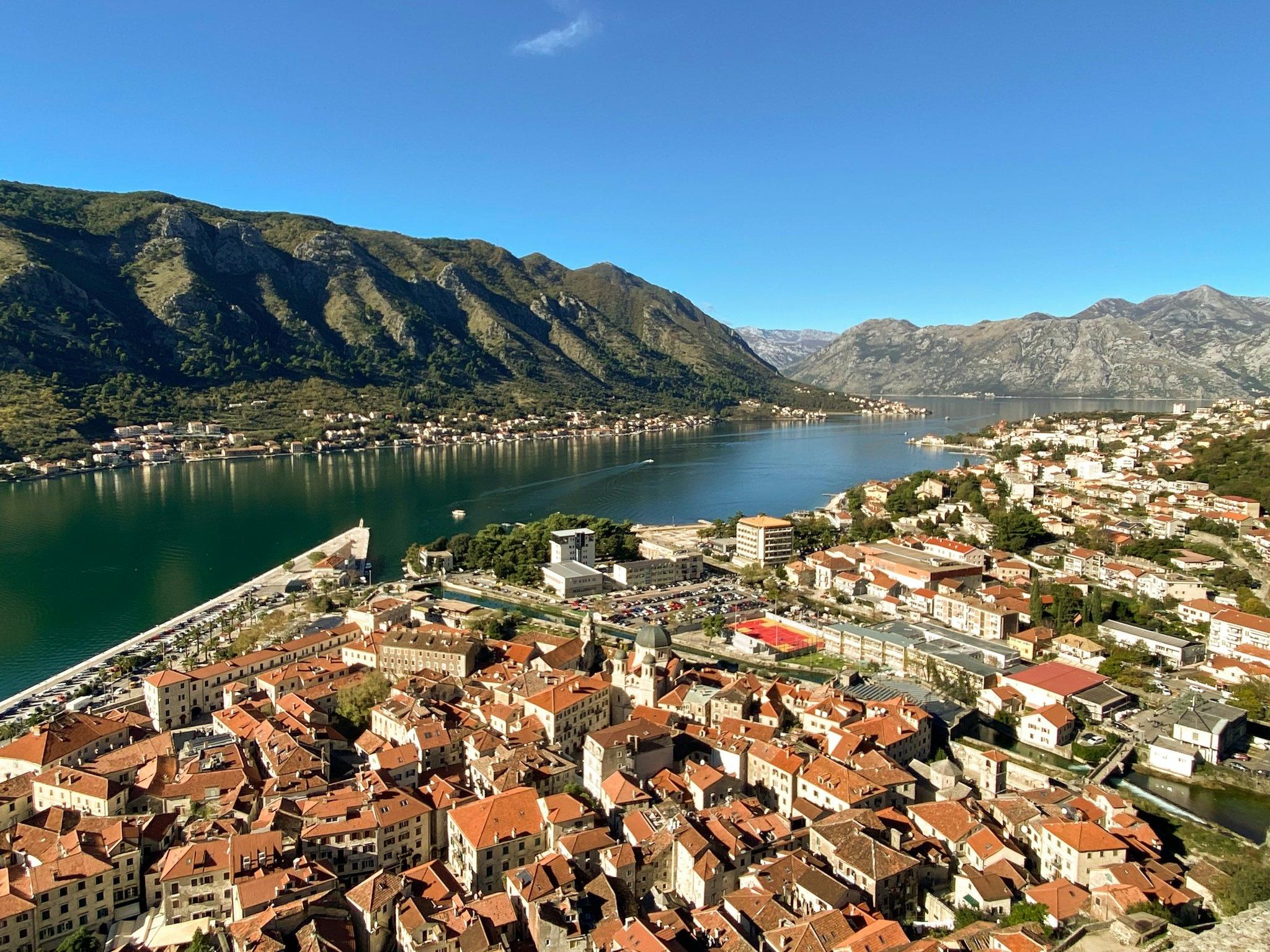
The 1,350 steps up Kotor's walls climb about 280 m to San Giovanni fortress, 45 to 60 minutes from the old town. Below is a maze of Venetian lanes and squares; Venice ruled Kotor from 1420 to 1797, and the Cathedral of St Tryphon dates from 1166. It's been on UNESCO's list since 1979. Entry to the walls costs €15 from 1 March to 30 November and nothing in winter. Go at opening time (7am from May to September, 8am otherwise) and avoid the old town at midday on cruise days. Look out for the cats on the way down. They're the town's unofficial symbol, with their own museum and a Cats' Square.
Perast and Our Lady of the Rocks
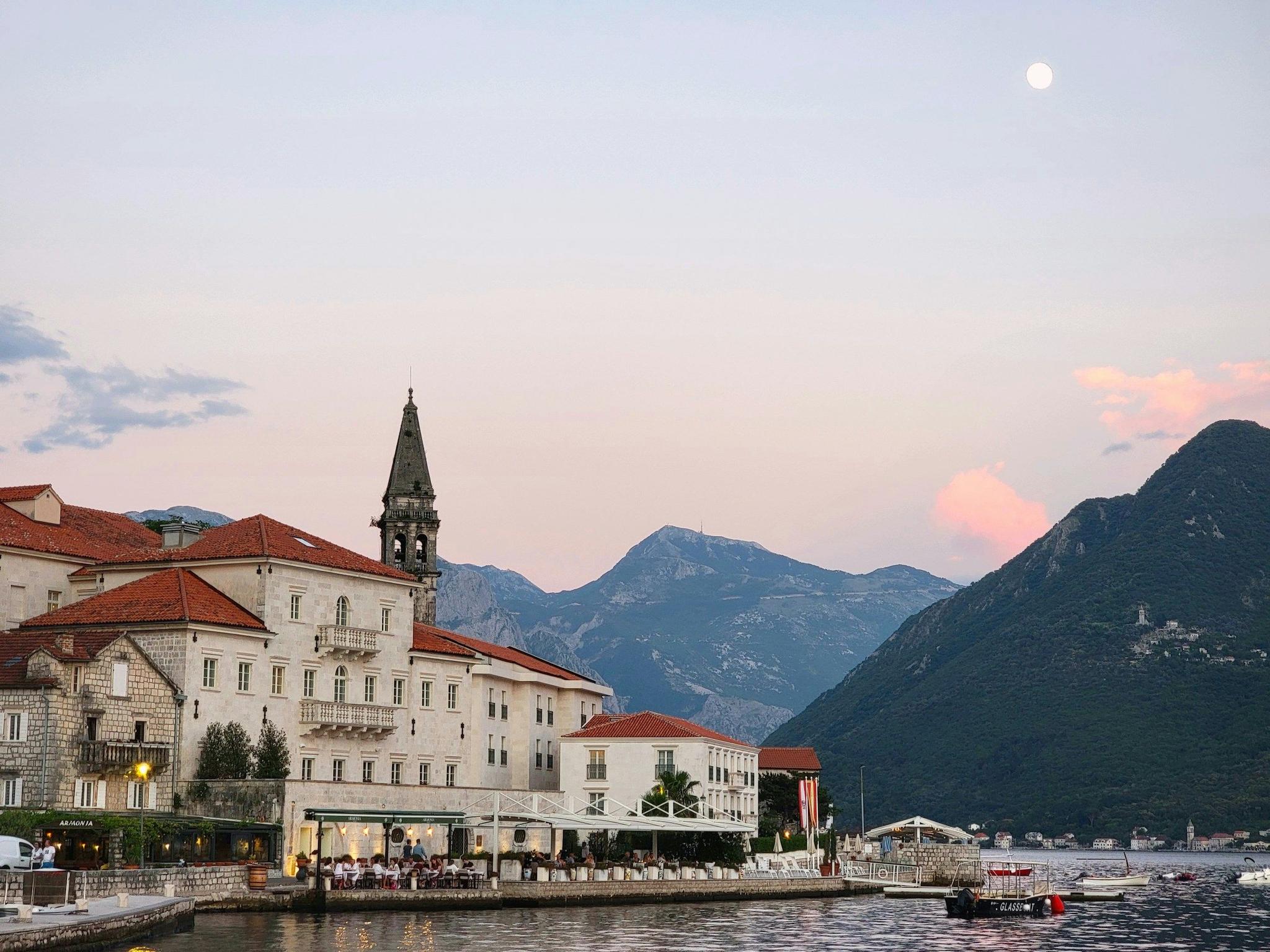
Perast is a small Baroque village 14 km up the bay from Kotor, about 15 minutes by car or 35 minutes on the Blue Line bus (€2). Boats run out to Our Lady of the Rocks for about €5 return; agree the fare before you step in. The church museum holds 68 paintings by Tripo Kokolja and an embroidery that Jacinta Kunić-Mijović worked on for 25 years, stitching in her own hair. Come late in the afternoon, or better still stay a night, because Perast empties once the day boats leave.
Budva and Sveti Stefan
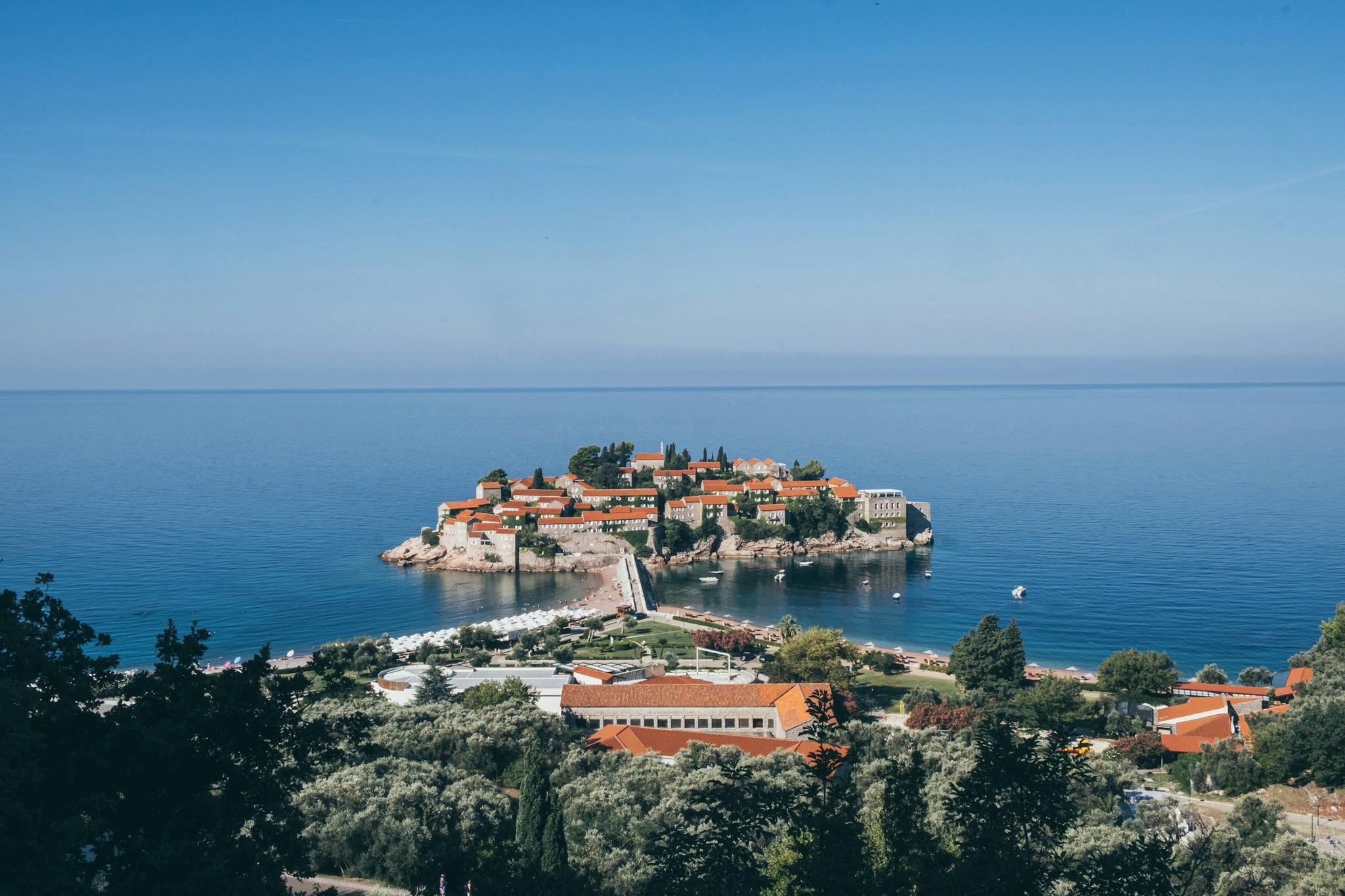
Unless nightlife is the point, we'd visit Budva for a day and sleep somewhere quieter. It's the party town of the coast, loudest in July and August. The walled old town is free to wander, and a pair of sunbeds on the beach costs about €10 to €25 in summer. Sveti Stefan, a 15th-century fishing village on an islet further south, is now an Aman resort that reopened on 1 July 2026 and is for hotel guests only. Sveti Stefan Beach and King's Beach are public; Queen's Beach stays private. Photograph the island from the road above.
Herceg Novi
Driving in from Dubrovnik? Herceg Novi is the first town after the border, about 40 to 60 minutes away, longer when the summer border queues build. It's a town of stairs, climbing from Forte Mare (about €4), a summer cinema since 1952, up to Kanli Kula, an Ottoman fortress from 1539. The Pet Danica promenade runs about 7 km along the water to Igalo. Mamula's fortress is now a hotel, so you'll only see it from a boat. We think Herceg Novi is the best base if you arrive from Dubrovnik and want a calmer town than Budva.
Lovćen National Park and Njeguši
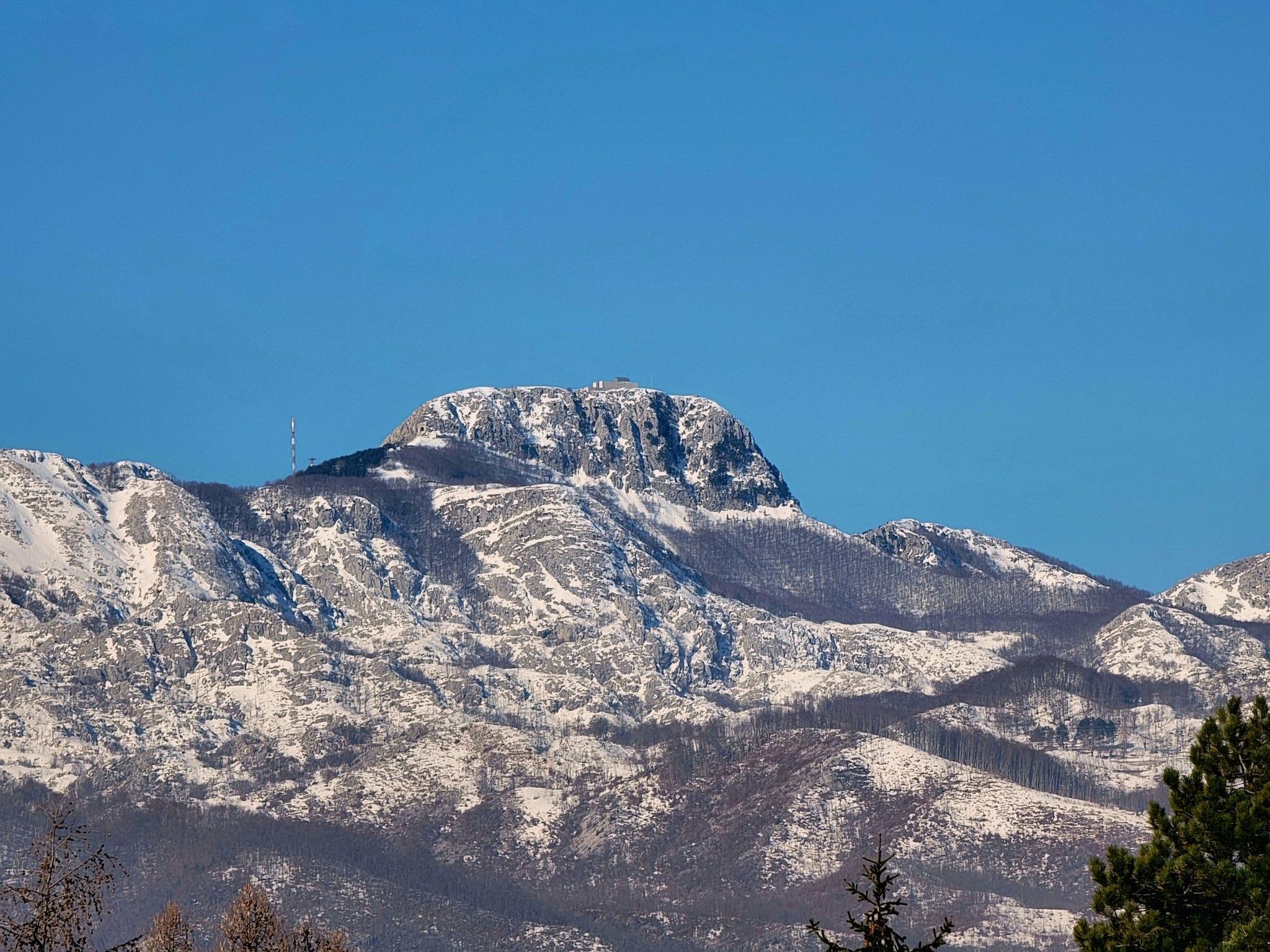
The old road out of Kotor climbs through about 25 hairpin bends to Njeguši, and it's best driven uphill, early. Njeguši is where the Petrović-Njegoš dynasty began and where the smoked pršut and cheese come from, so stop for a plate. The road then climbs into Lovćen National Park (€3) to the Njegoš Mausoleum at 1,657 m. Tickets are €8 for adults, and the 461 steps up take about 15 to 20 minutes. On a clear day the view covers much of the country. Without a car, take the cable car up from Kotor (see below), though the mausoleum is still about a 90-minute hike from the top station.
Cetinje
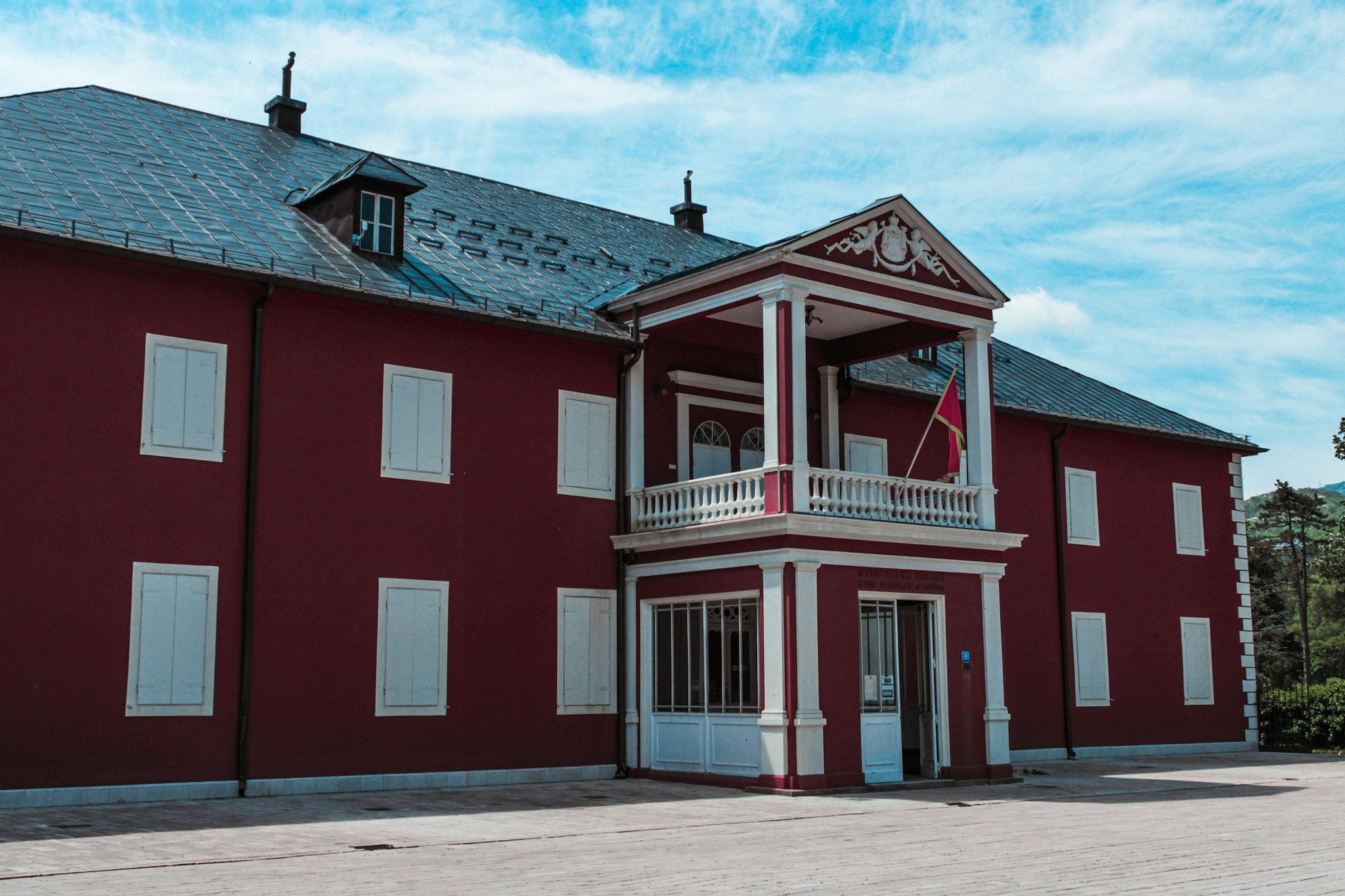
Half a day is enough for Cetinje, so pair it with Lovćen. This quiet town was Montenegro's royal capital from the 15th to the early 20th century, and the old embassy buildings from its peak still stand. Cetinje Monastery is free (cover shoulders and knees), and its relics are said to include the right hand of St John the Baptist. Biljarda, Njegoš's residence from 1838, is now a museum with a large relief map of Montenegro in its courtyard.
Lake Skadar National Park
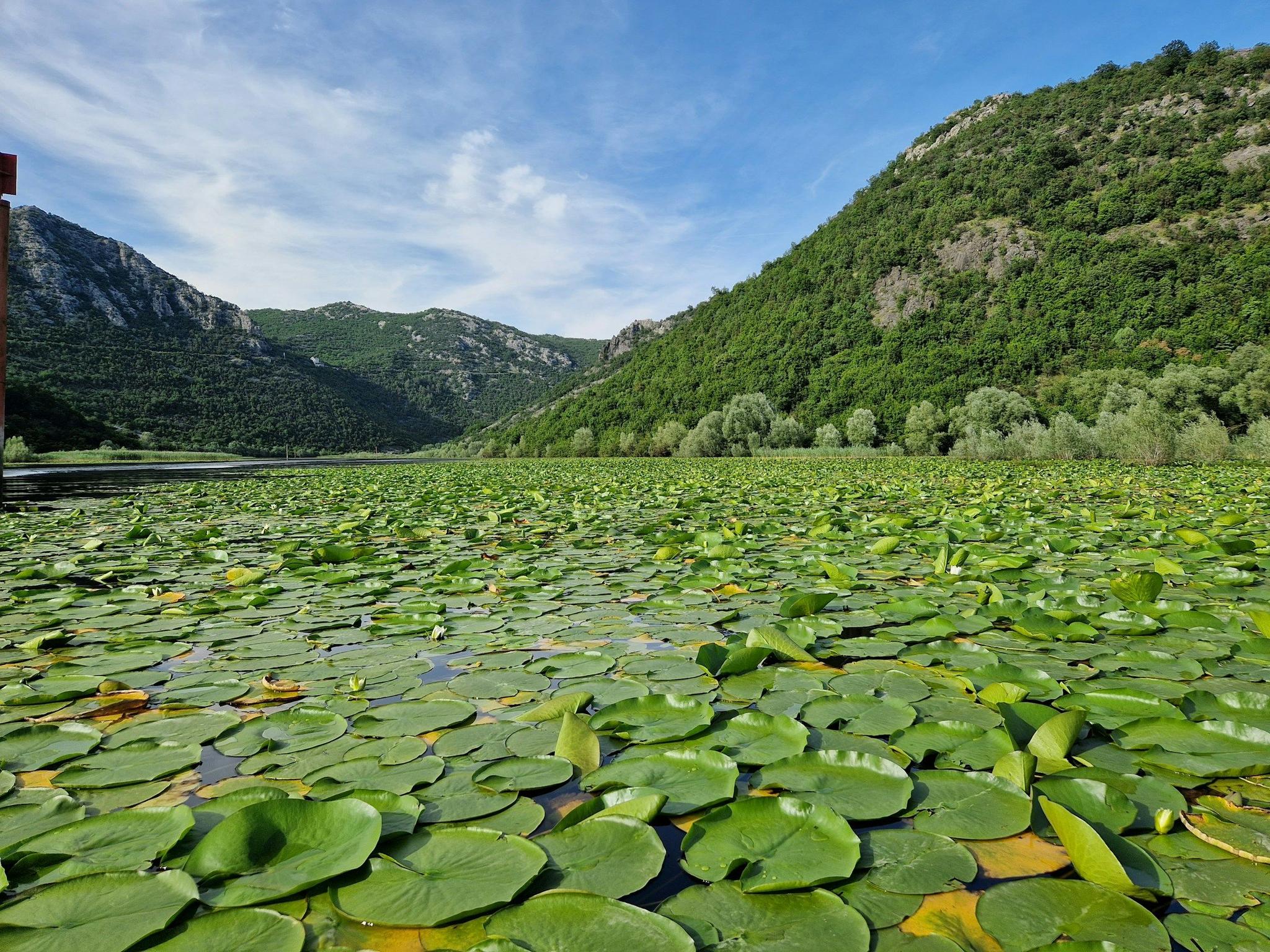
Lake Skadar is the largest lake in the Balkans, shared with Albania, and it's home to about 280 bird species, including Dalmatian pelicans and pygmy cormorants. The park fee is €5 a day. Most boats leave from Virpazar, where a two-hour group trip costs about €15 to €25. Rijeka Crnojevića is quieter and a little pricier, and close to the Pavlova Strana viewpoint over the river's horseshoe bend. Our pick is a small boat from there rather than a big group cruise, early in the day for the birds. Budva is about an hour away.
Ostrog Monastery
Ostrog's upper monastery is built straight into a sheer cliff, and St Basil of Ostrog, who died in 1671, is buried inside. It's a major pilgrimage site, so cover shoulders and knees; women cover their hair in the chapels, and photos aren't allowed in the cave chapels. Entry is free. From the car park at the lower monastery it's a narrow 3 km road, a forest path of about 2 km or a minibus for about €2. Avoid 12 May, St Basil's feast day, unless you want to see the pilgrims. Stop on the drive north and arrive at about 8am in summer.
Durmitor National Park and Žabljak
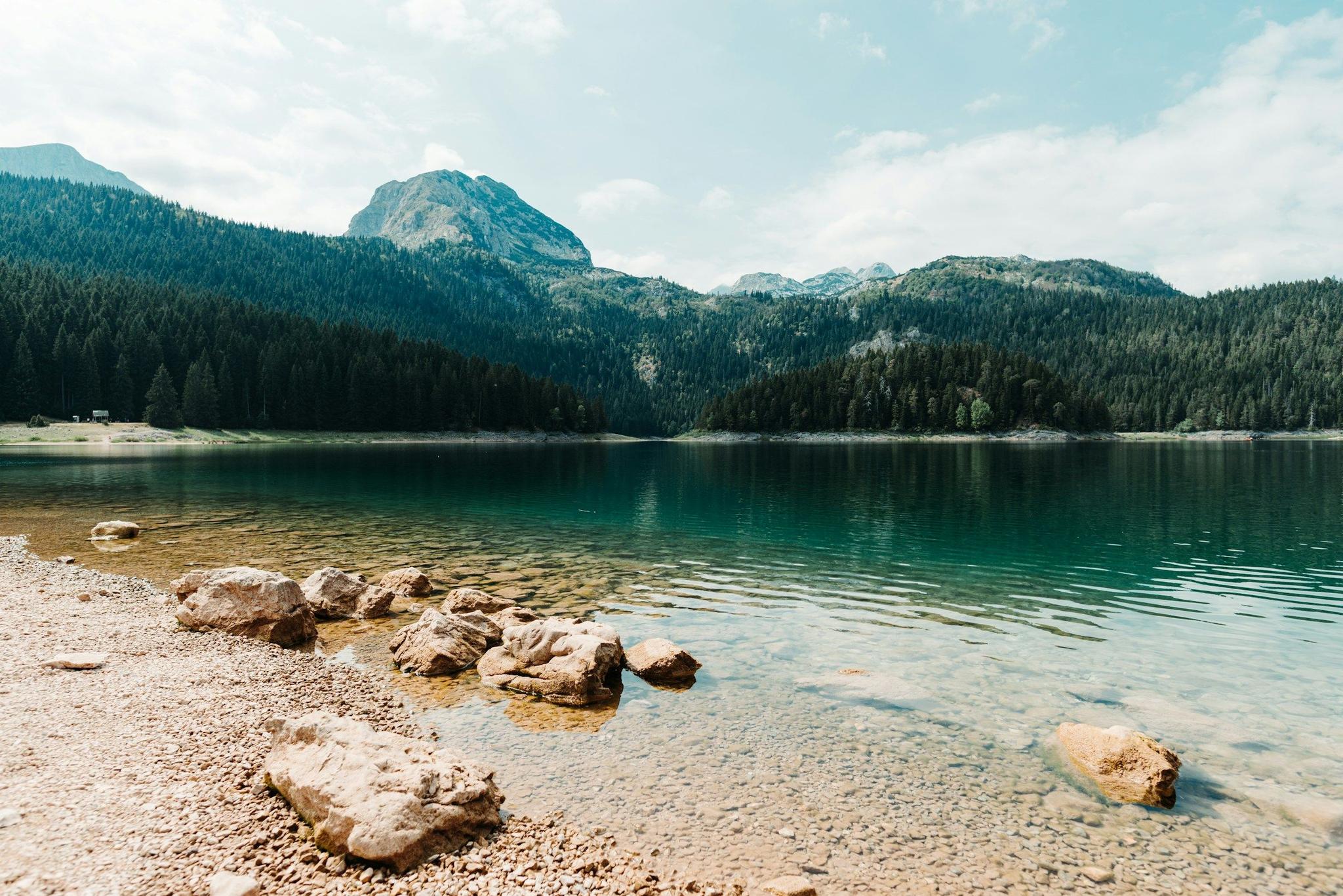
Give Durmitor at least two nights; the bus from Kotor takes about three hours each way. Žabljak is the base, and the Black Lake (Crno jezero) sits just outside town, with a 3.5 km trail around it and boats for €10 an hour. The park, on UNESCO's list since 1980, charges €5 a day. Serious hikers aim for Bobotov Kuk at 2,523 m; everyone else can take a Durmitor Ring tour by van (€20) or jeep (€30), park fee included. Hike between June and September. We'd pick September, because May and June bring afternoon storms.
Tara Canyon and the Đurđevića Tara Bridge
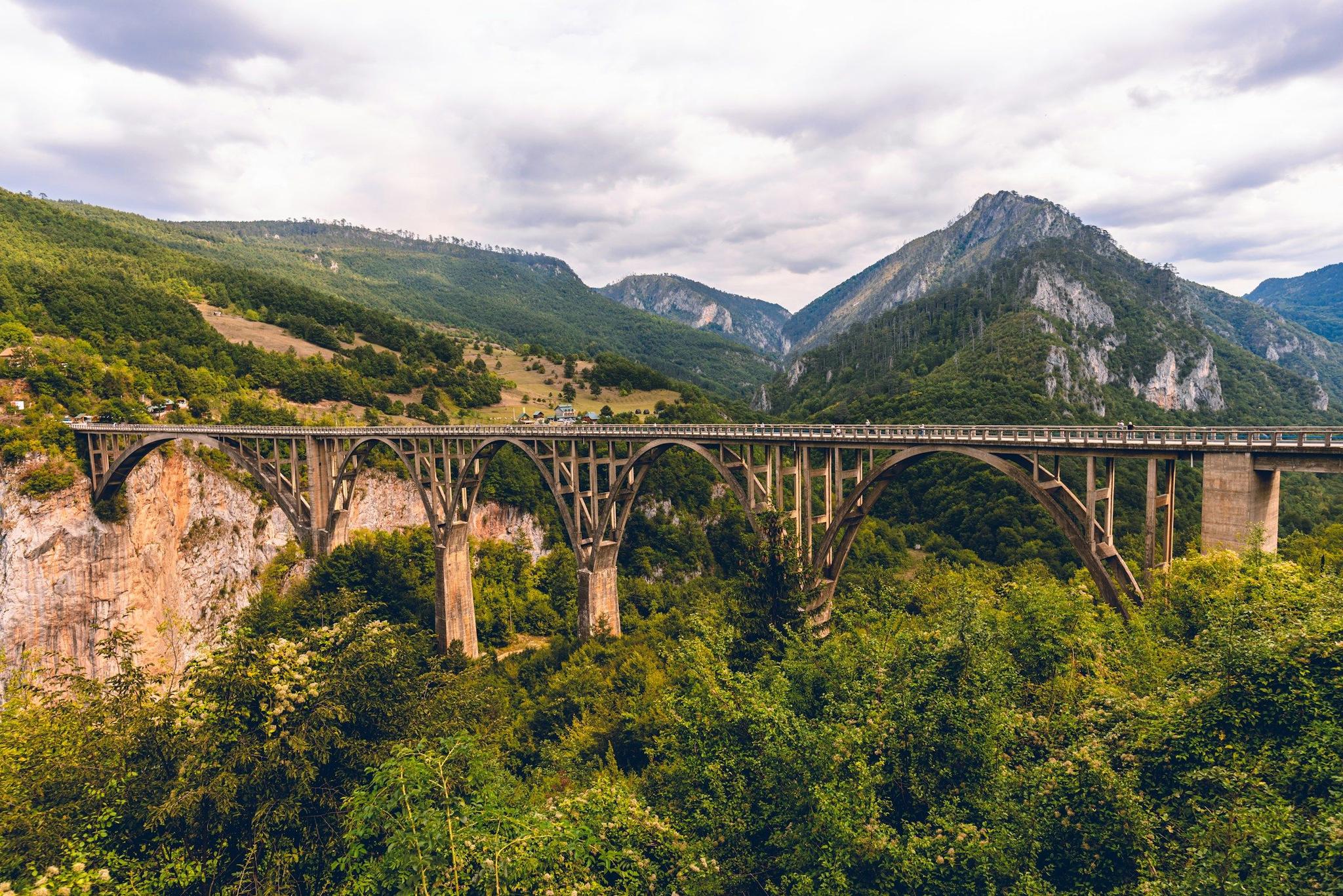
The Tara Canyon runs for 82 km and is up to 1,300 m deep, often called the deepest canyon in Europe. The best place to see it is the Đurđevića Tara Bridge, about 24 km from Žabljak. It's 365 m long, stands about 172 m above the river and was built between 1937 and 1940. In 1942 the engineer Lazar Jauković blew up one of its arches, and he was later executed on the bridge. Walking across is free, and a short zip-line over the gorge costs from about €10. Cross on foot, then spend the next day rafting from Šćepan Polje.
Kolašin and Biogradska Gora
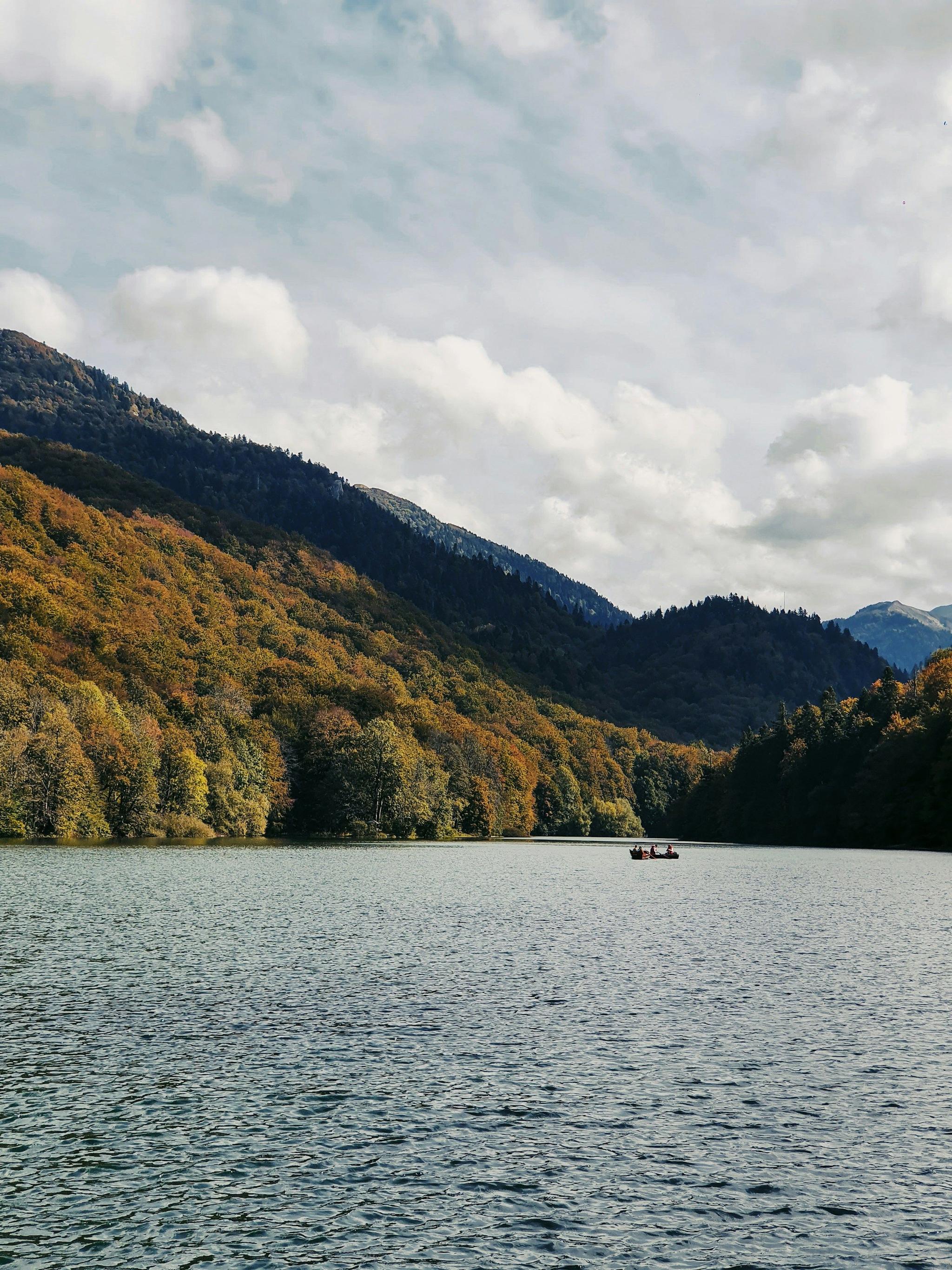
Kolašin is the mountain base for anyone who doesn't fancy the long drive to Žabljak. At 954 m, it's about an hour from Podgorica on the motorway (toll €3.50) and has a station on the Belgrade to Bar railway. Biogradska Gora, 30 minutes away, is one of Europe's last primeval forests, where an easy 3.5 km loop circles the glacial Biogradsko Lake (fee €4). Check winter access before you go, as snow and ice closed the forest in January 2026.
Ulcinj, Velika Plaža and Ada Bojana
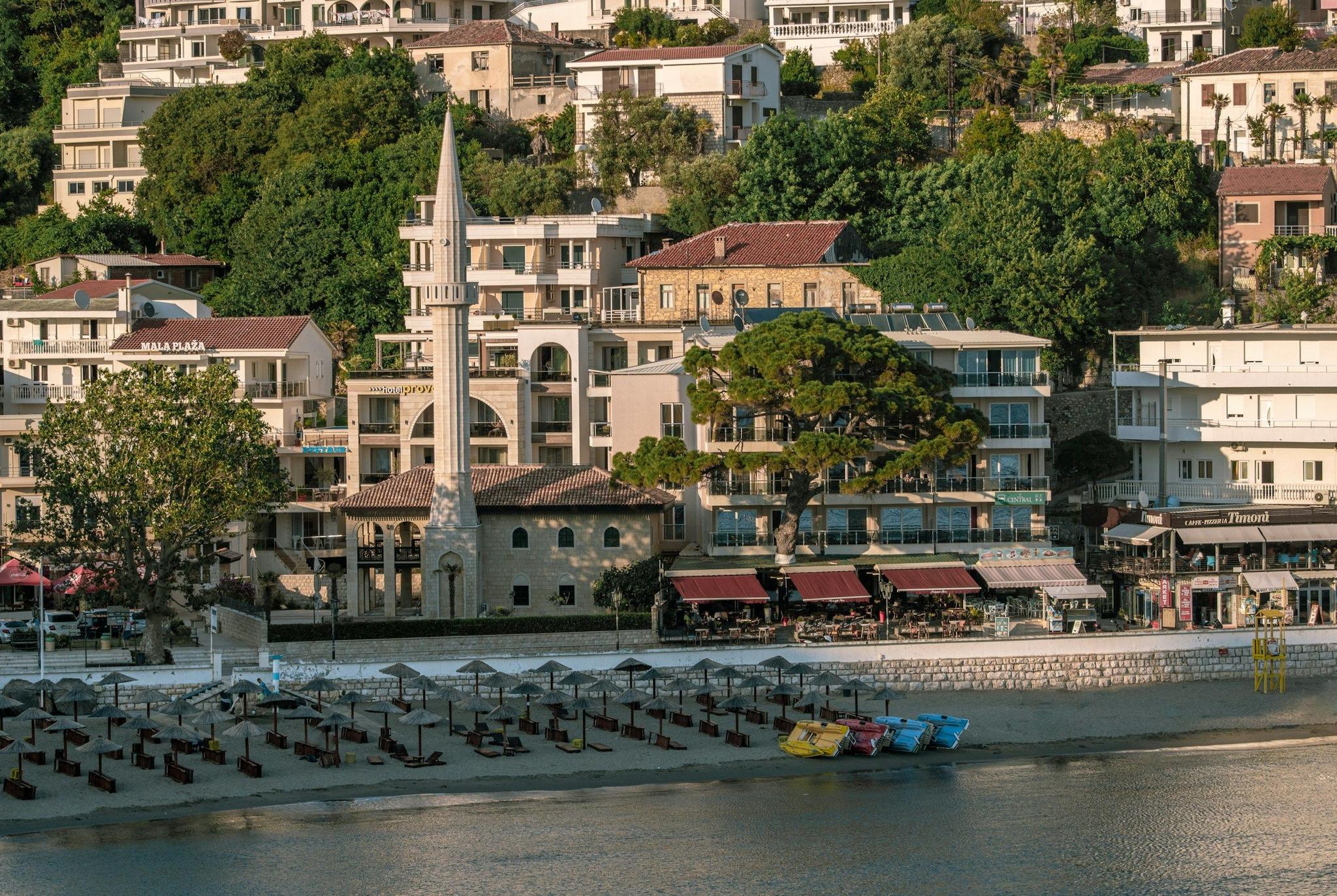
If you want a long sandy beach in Montenegro, Ulcinj is the answer. The southernmost town is about 70% Albanian, with minarets above old walls that sheltered pirates from the 1600s. Velika Plaža runs for about 12 to 13 km of dark sand to the Albanian border, with shallow water for families and kite schools from May to September. At the far end, Ada Bojana is a river island with fish restaurants on stilts. We'd go in June or September rather than in the August peak.
Montenegro itinerary ideas for your trip
Montenegro has two airports, Podgorica all year round and Tivat mostly in summer, and many people cross the border from Dubrovnik instead. Whichever way you arrive, both itineraries start on the coast and finish inland. With only five days, we'd stay on the coast rather than rush the mountains.
5 to 7 day Montenegro itinerary
- Day 1-2: Kotor, with the walls at opening time, then an evening in Perast.
- Day 3: Boat trip to the Blue Cave and Our Lady of the Rocks, or a day in Herceg Novi.
- Day 4: The Kotor serpentine to Njeguši, then the Lovćen mausoleum and Cetinje.
- Day 5: Lake Skadar by boat from Rijeka Crnojevića or Virpazar, then a night in Budva or back in Kotor.
- Day 6-7: Ostrog on the way north, then two nights in Žabljak for the Black Lake and the Tara Bridge.
On a 5-day trip, drop Durmitor and spend the time in Budva and at Sveti Stefan instead.
10 to 14 day Montenegro itinerary
- Day 1-2: Herceg Novi, about an hour from Dubrovnik plus the border crossing.
- Day 3-5: Kotor and Perast with a Blue Cave boat trip; take the Kamenari to Lepetane ferry to skip the drive round the bay.
- Day 6: Lovćen National Park and Cetinje.
- Day 7: Budva and Sveti Stefan.
- Day 8-9: Ulcinj and Velika Plaža, with Stari Bar on the way.
- Day 10: Lake Skadar.
- Day 11-13: Ostrog, then Žabljak for Durmitor hikes and rafting on the Tara.
- Day 14: Biogradska Gora and Kolašin, then on to Podgorica airport, about an hour away.
Want to add a night in Žabljak or swap Budva for Ulcinj? You can build or adjust this route in the Guided trip planner.
Fun things to do in Montenegro
Book the Tara and the Blue Cave first. The cable car, the train and a ski day are easy to fit around them.
Raft the Tara from Šćepan Polje
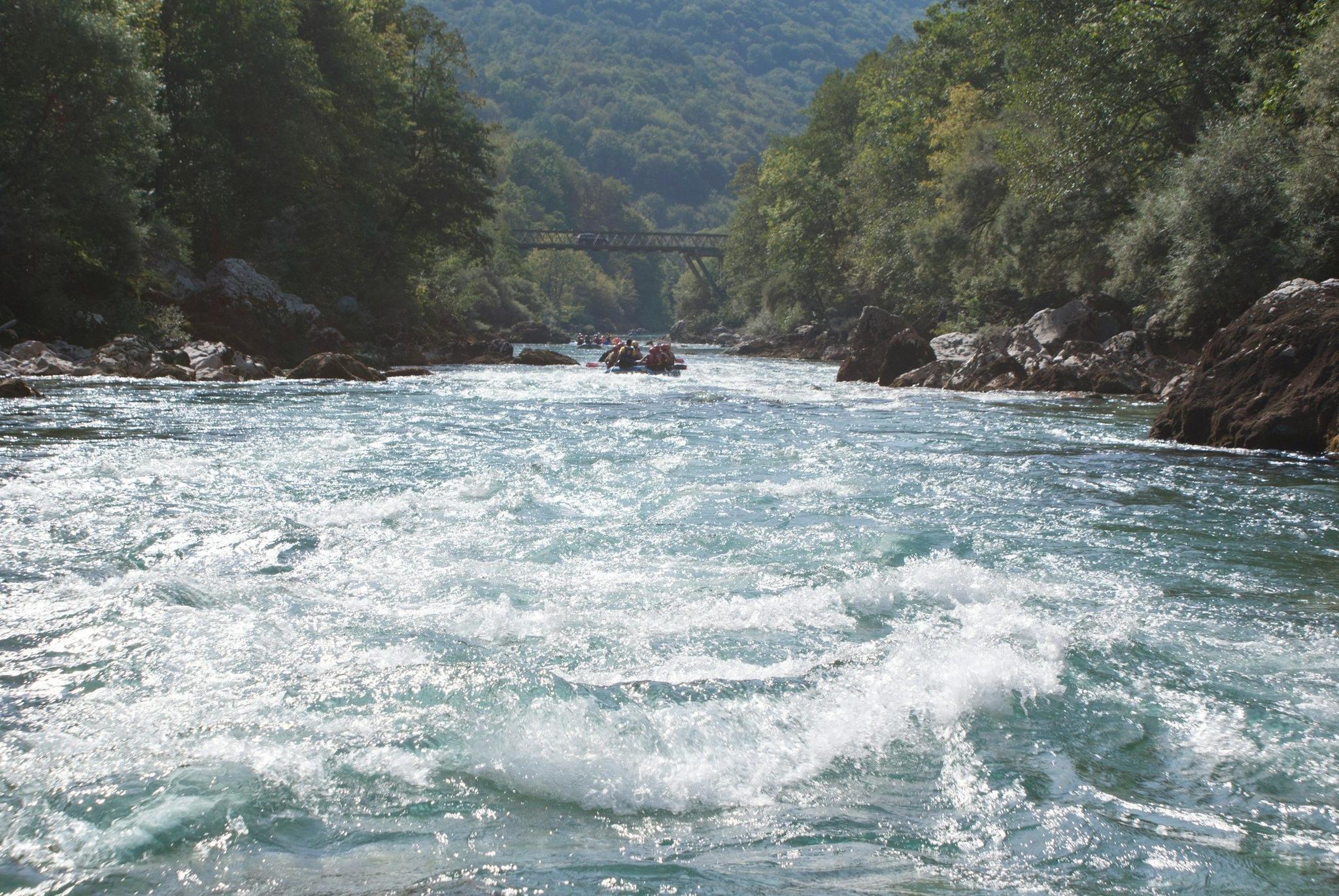
Rafting trips on the Tara start near Šćepan Polje by the Bosnian border. A half day covers about 18 km for €70 to €75, and a full day of about 33 km costs €100 to €150. Trips run from April to October. The rapids are strongest in May and early June, when the water is only 6 to 10 °C, and the minimum age moves between about 8 and 12 depending on the water level. We'd go in late May for the wildest ride and wait until summer with children.
Take a boat to the Blue Cave
Book the first departure. Boats to the Blue Cave (Plava Špilja) on the Luštica peninsula leave at about 9am, and that early slot gets the best light inside the cave and the fewest other boats. Tours from Kotor or Tivat cost €40 to €45; from Herceg Novi they start at €25 to €30. Most trips also pass Mamula island and a former submarine tunnel before stopping at Our Lady of the Rocks.
Ride the Kotor to Lovćen cable car
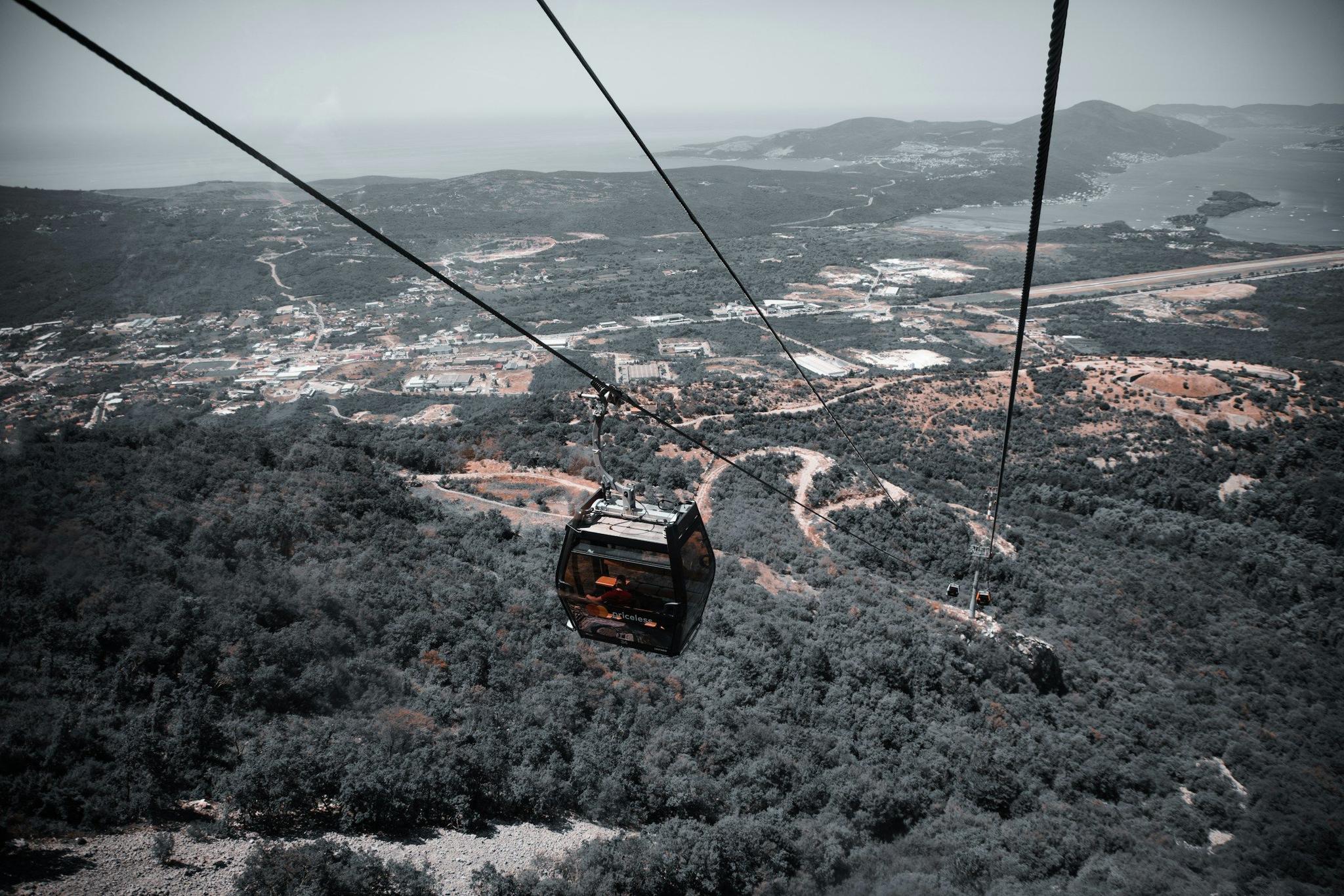
The cable car from Kotor climbs to Lovćen in about 11 minutes and costs €20 return. It runs from about 1 May to mid-October and shuts in strong wind. At the top there's an alpine coaster for €10.
Take the Belgrade to Bar railway inland
How many railways have 254 tunnels and 435 bridges? The line from Belgrade to Bar does, and its Mala Rijeka viaduct, 200 m high, was the world's highest railway bridge until 2001. You don't need to ride all 11 hours of it. The stretches from Podgorica to Kolašin or Podgorica to Bar are an easy scenic ride, and since July 2026 you can book online through ZPCG or Srbijavoz.
Ski in Kolašin or Žabljak
January and February are the most reliable months for snow. Kolašin 1450/1600 has about 45 km of runs and a day pass costs about €25, while Savin Kuk at Žabljak is cheaper at about €15.
When to go to Montenegro?
Is September the best month? For most trips, yes. The coast has hot, dry summers and mild, rainy winters, while the mountains get proper snow. July and August bring a sea of 25 to 26 °C and coastal highs of 30 to 31 °C, along with peak crowds, prices that can reach about double the shoulder season and queues at the Croatian border. Summer wildfires can also bring smoke and road detours. In mid to late September the sea is still about 23 to 24 °C, though storms are more common than in August. Swimming usually ends in the second half of October.
- Spring (March to May): green mountains, the Tara at its wildest in May, a sea still cool at about 18 to 19 °C by May, and Budva's carnival around the start of May.
- Summer (June to August): June is the pick; July and August bring the warmest sea along with peak crowds and prices, plus Perast's Fašinada on 22 July.
- Autumn (September to November): starts with the best all-round month for swimming and hiking; the sea cools in late October and rain picks up in November.
- Winter (December to February): skiing in Kolašin and Žabljak, a mild, rainy coast with quiet old towns, and Kotor's carnival and Herceg Novi's Mimosa Festival in February.
Did you know you can create your own itinerary?
Now that you know what to see in Montenegro, you can start creating your own trip. Do you want more days on the Bay of Kotor, or are you thinking more about glacial lakes and rafting in Durmitor? It's all up to you. You can easily create your own trip in the Guided app for free, or use trips shared by others.
Where to stay in Montenegro?
On a first trip, base yourself in Kotor rather than Budva, then add a second base in the mountains. Family guesthouses charge about €30 to €60 for a double and 3 and 4-star hotels about €60 to €120, while seafront hotels go over €150 in season. For July and August, book at least three months ahead.
Kotor old town or along the bay
Sleeping inside or near Kotor's old town puts you at the wall gate for opening time and at the harbour for the morning boats. Dobrota and Prčanj, strung along the bay just outside town, are quieter and still close.
Perast for a quiet night
Once the day boats leave, Perast is one of the calmest places on the coast, with views out to the two islands. It's small, so book early.
Herceg Novi if you're arriving from Dubrovnik
It's the first town over the border and calmer than Budva, with water taxis to nearby beaches. If your flight lands in Dubrovnik, this is where we'd spend the first two nights.
Budva for beaches, or Bar and Ulcinj for lower prices
Budva is the pick if beaches and nightlife come first, with dorm beds from about €12 to €20. Head further south to Bar or Ulcinj and July and August rates drop noticeably.
Žabljak or Kolašin for the mountains
Žabljak has guesthouses and mountain lodges right on the edge of Durmitor, with dorm beds at about €12 to €19. Kolašin has resort hotels such as the Swissôtel Resort, which opened in 2024.
Getting around when visiting Montenegro
Montenegro has one railway line, and it misses Kotor, Budva, Herceg Novi, Cetinje and Žabljak. That leaves buses and a hire car. Podgorica (TGD) is the main airport all year, Tivat (TIV) is a seasonal hub close to Kotor, and many travellers fly into Dubrovnik instead.
Take the bus along the coast
Buses run often and cheaply between the coastal towns. Operators include Blue Line, Božur and Elite Express, and you can pay cash at the station or book online through busticket4.me. Kotor to Budva costs €2 to €4, Podgorica to Kotor €9 to €12 (2 to 2.5 hours) and Podgorica to Žabljak €10 to €12.
Hire a car for the mountains
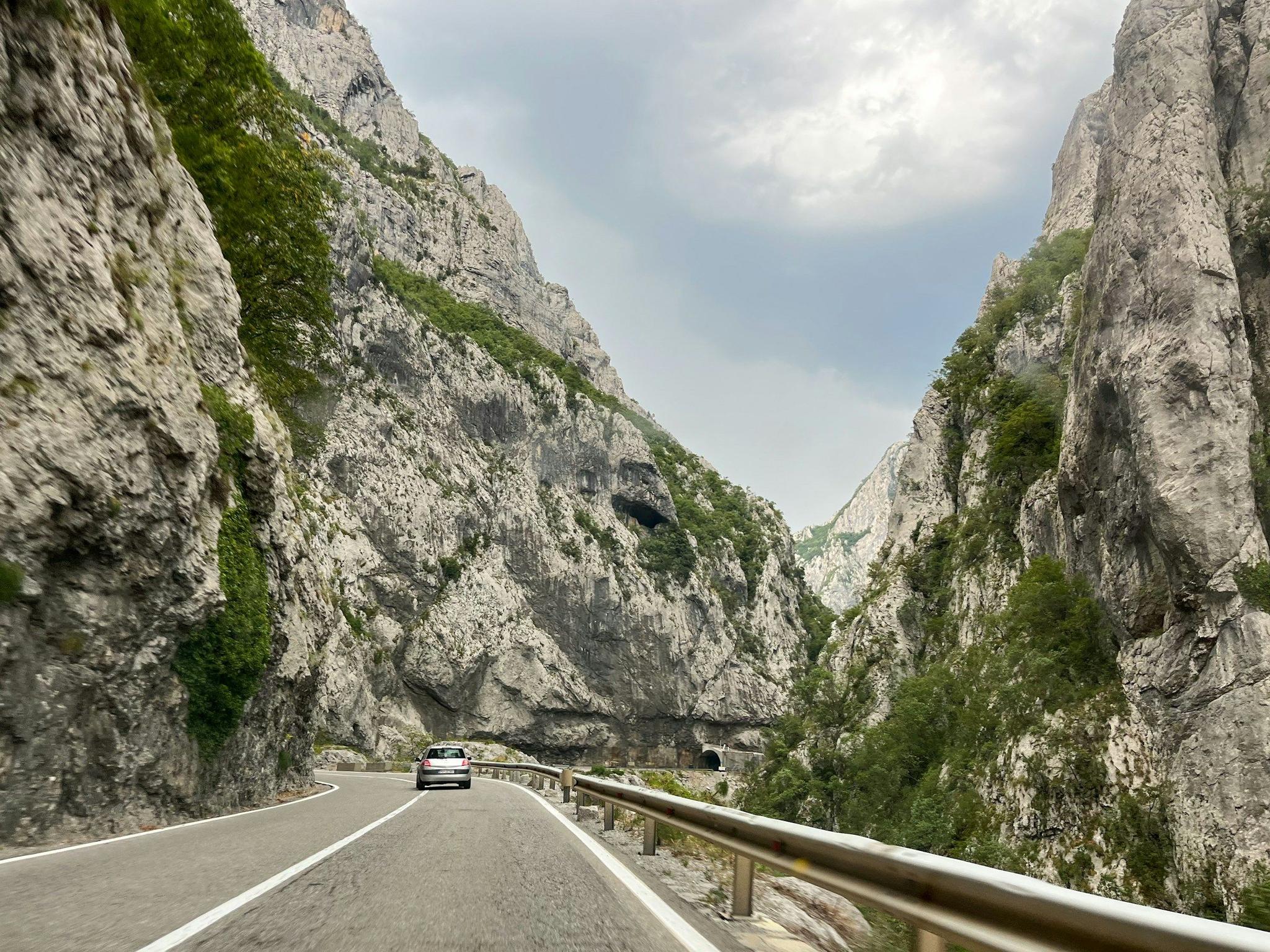
For Lovćen, Ostrog, the back roads round Lake Skadar and Durmitor, we'd hire a car. An economy car costs about €25 to €35 a day off-season and €60 to €100 in July and August. If you plan to drive into Croatia, Bosnia and Herzegovina or Albania, check cross-border permission and insurance when you book. Mountain switchbacks often have few barriers, so plan those drives for daylight.
Cross the bay on the Kamenari to Lepetane ferry
This short ferry saves about 40 minutes of driving round the Bay of Kotor. It costs €5 per car and foot passengers ride free, with boats every 20 minutes by day. On peak August afternoons the queue can reach 45 to 60 minutes, and then the drive is quicker.
Use licensed taxis and water taxis
Order a licensed taxi or use a taxi app, and agree the fare first; some firms aren't licensed to pick up at Podgorica airport. Water taxis in Herceg Novi run to Žanjice beach for €5 return.
Food and drinks you should try when visiting Montenegro
Montenegrin food changes with the altitude, from seafood on the coast to cornmeal and cream in the mountains. A cheap meal costs about €10, and we'd eat in konobas, the family taverns, which are 30 to 40% cheaper than the restaurants on the promenade.
Njeguški pršut and Njeguški sir
This dry-cured, smoked ham comes from Njeguši, and it's served thinly sliced with the village's own cheese and olives. It tastes best at a table in Njeguši itself.

Kačamak
Kačamak is often called the national dish, a mountain plate of cornmeal or flour cooked with potato, then made rich with kajmak (salted cream) and cheese. It usually comes with a glass of sour milk or yoghurt. For breakfast in a mountain guesthouse, look out for priganice, fried dough balls with honey or cheese.
Black risotto and buzara
On the coast, look for two dishes. Black risotto is coloured and flavoured with cuttlefish ink, and buzara is mussels or other shellfish cooked in wine with garlic and parsley.
Vranac, Krstač and rakija
Order a glass of Vranac with dinner. It's the native red grape, and Krstač is the white, both grown around Lake Skadar and in the Crmnica wine villages. If you're invited into a home, expect a glass of rakija, usually lozovača (grape brandy), as a welcome.
Culture and local habits you'll notice when visiting Montenegro
Mosques stand next to Orthodox and Catholic churches in the same towns here. About 71% of Montenegrins are Orthodox and about 20% are Muslim, mostly in the Albanian-majority south and the north-east, while Catholic communities live on the coast. Montenegrin is the official language, though more people name Serbian as their native language (43%) than Montenegrin (35%), and both Latin and Cyrillic scripts are in use. Independence passed narrowly in 2006, and views on Serbia differ a lot, so we'd leave that topic alone unless your host brings it up.
Smoking indoors is common despite a ban. Tipping isn't required; round up at cafés and leave up to 10% in cash for good restaurant service unless a service charge has been added. Learn these three phrases.
- Dobar dan: good day
- Hvala: thank you
- Živjeli: cheers
Looking for more unique places, trips and activities?
Subscribe to our Guided Newsletter for more travel inspiration.
Costs of a holiday to Montenegro
For a country that uses the euro, Montenegro is good value next to its neighbours. Numbeo's 2026 figures put restaurant prices here below Croatia, Greece and Slovenia, though above Albania and Bosnia and Herzegovina. In July and August the coast around Budva and Kotor can match Croatian prices, while the mountains in the north and Bar and Ulcinj in the south stay cheap. A backpacker can get by on about €40 to €50 a day, and a mid-range trip costs about €100 to €130 a day before car hire.
Food & Drink

Coffee
€1.50 – €3
Lunch
€8 – €15
Beer
€2.50 – €4.50
Accommodation
Hotels
€60 – €150
Airbnb
€35 – €90
Hostel dorm
€12 – €30
Transport
Intercity bus
€3 – €12
Public Transport
€1 – €2
Car Rental
€25 – €100
Attractions
Museums
€2 – €8
Big Attractions
€5 – €20
Cinema
€4 – €6
Practical tips for visiting Montenegro
Most trouble in Montenegro comes from paperwork and roads. Sort these before you arrive.
✔ Get registered within 24 hours of arriving
This is the one rule we'd never skip. Every visitor has to be registered with the local tourist office or police within 24 hours. Hotels and most licensed rentals do it for you, but in a private rental you may have to do it yourself, and fines run from €60 to €600. Registration goes with a tourist tax of about €1 per adult per night on the coast (half for ages 12 to 18, free for under-12s, and €0.70 in Podgorica).
✔ Check the entry rules for your passport
Many nationalities, including the UK, EU and US, can visit visa-free for up to 90 days in any 180, counted separately from Schengen. GOV.UK says British passports must have been issued less than 10 years before you arrive and be valid for at least 3 months after you leave. Entry rules have recently changed for some nationalities, as Montenegro aligned its visa policy with the EU's from 1 November 2026, so check GOV.UK's entry requirements or the Montenegrin government's visa page before you book. Declare cash of €10,000 or more. Crossings to and from Croatia now include the EU's Entry/Exit System checks, so allow extra time in July and August.
✔ Carry cash
Montenegro uses the euro, but boat skippers, park gates and small konobas often want cash, and card fees and conversion can cost you 3 to 5%. Use ATMs inside banks to avoid card fraud.
✔ Know the road rules before you drive
Dipped headlights stay on at all times, day and night. The drink-drive limit is 0.3‰, the speed limits are 50, 80 and 100 km/h, a reflective vest is required, and winter tyres are compulsory from 15 November to 1 April. The Sozina tunnel toll is €2.50.
✔ Watch for pickpockets, speedboats and summer wildfires
The UK Foreign Office doesn't advise against travel to any part of Montenegro, and the US State Department has it at Level 1, exercise normal precautions. Pickpockets work the summer crowds in Kotor and Budva. Swim in marked areas, because speedboats run close to the shore in summer, and stick to marked trails in the mountains. Wildfire season runs from about April to October; don't light fires or barbecues outside designated areas, and expect smoke or short power and water cuts near a fire. The emergency number is 112.
✔ Keep photo ID on you
Police can fine you for not carrying photo ID. Drug penalties are severe, including for cannabis, and photographing police or military is illegal.
Fun facts about Montenegro
Six facts worth knowing before you go.
- The name means "Black Mountain", after the dark forests that once covered Mount Lovćen.
- Montenegro uses the euro without being a member of the EU or the eurozone.
- An olive tree in Bar is said to be more than 2,000 years old.
- The constitution describes Montenegro as an "ecological state".
- Nikšićko, the pale lager you'll see everywhere, has been brewed in Nikšić since 1896.
- The highest peak, Zla Kolata (2,534 m), only overtook Bobotov Kuk after measurements in 2018.
If you only have time for one trip inland, make it Durmitor. From Žabljak you can walk round the Black Lake in the morning and stand on the Tara Bridge, 172 m above the river, that afternoon.
Ready to map out your trip to Montenegro?
We hope this Montenegro travel guide has given you a clear starting point. Stay tuned for more itineraries and practical tips for your holiday to Montenegro. And don't forget to check out our Guided app, where you can create your own trip or use trips shared by other travellers for free.
FAQS about visiting Montenegro
How many days do you need in Montenegro?
Five days covers the Bay of Kotor with a day at Lovćen and Cetinje. A week adds Lake Skadar and Durmitor, and 10 to 14 days covers the full loop. You can plan and adjust your route in the Guided app.
What is the best part of Montenegro to visit?
For a first trip, the Bay of Kotor, with Kotor and Perast, is the part we'd never skip. Durmitor and the Tara Canyon are the best of the mountains, and Ulcinj has the only long sandy beach.
What is Montenegro known for?
The Bay of Kotor and Kotor's city walls come first, followed by the island village of Sveti Stefan and the Tara Canyon. It's also known for Ostrog Monastery and Njeguški pršut.
Can you travel around Montenegro without a car?
Yes, for the coast. Coastal buses are frequent and cheap, and a bus runs to Žabljak. A car or a tour makes Lovćen, Ostrog, the back roads round Lake Skadar and the Durmitor Ring much easier.
Is Montenegro expensive?
It's cheaper than Croatia and Greece overall. The coast in July and August can come close to Croatian prices, but the mountains and the south around Ulcinj are cheap.
Is Montenegro safe to visit?
The UK Foreign Office doesn't advise against travel to any part of the country, and the US State Department rates it Level 1, exercise normal precautions. The main things to watch are pickpockets in summer crowds, mountain roads and summer wildfires.
Do you need to register in Montenegro?
Yes. Every visitor must be registered with the tourist office or police within 24 hours of arriving. Hotels do it for you; in a private rental, check that your host has.
Is Montenegro in the EU?
No. Montenegro uses the euro and has been an EU candidate since 2010, but it isn't a member and isn't in Schengen. Your Schengen days don't apply here.
Plan your trip to Montenegro in Guided.
Save the places you find, then let Guided lay out the days, the map and the details.
More in Europe
All destinations AlbaniaAlbania pairs a turquoise Ionian coast with Ottoman stone towns and wild mountains.
 AndorraAndorra is a tiny Pyrenean country known for ski slopes, Romanesque churches and hiking valleys.
 AustriaAustria is a beautiful alpine country known for its mountains, music, and imperial charm.
 BelgiumBelgium is known for medieval canal cities, beer, chocolate and the forested Ardennes.