Albania

Albania travel guide: Everything you need to know before visiting Albania
From 1967 to 1990 Albania was an officially atheist, closed communist state, so tourism here is still recent. It is growing fast, with a record 12.4 million foreign visitors in 2025, yet outside July and August the pebble coves of the Ionian Riviera are far quieter than the Greek islands you can see across the strait. Berat and Gjirokastër, two Ottoman stone towns, share a UNESCO listing, and the Albanian Alps around Theth and Valbona are only a day's travel from the beach.
It's cheaper and less built-up than Croatia or Greece, and it doesn't sound like its neighbours either. Albanian is its own branch of the Indo-European family, unrelated to the Slavic and Greek languages spoken around it. Besa, the old code of honour around guests, still shapes the welcome. Road-trippers and hikers will get the most out of it, and it suits beach lovers on a budget too. In this Albania travel guide we cover the best places to visit, itineraries, where to stay, getting around, costs and practical tips for planning your trip.
5 reasons to visit Albania
The mountains are the bigger surprise here, even though the beaches get the headlines.
- Swim off the pebble coves of the Albanian Riviera at prices well below the Greek islands across the water.
- Sleep inside Berat's castle walls, where people still live, or in a stone tower house in Gjirokastër.
- Ride the Koman ferry through a narrow mountain lake, then hike the pass from Valbona to Theth.
- Walk through 2,500 years of history at Butrint, from a Greek theatre to a Venetian tower.
- Go underground in Bunk'Art, Hoxha's five-level bunker turned museum.
Where to visit in Albania?
Where should a first trip start? For most people it's the south, with its UNESCO towns and the Riviera, but the north is where the country gets properly wild. These are the places we'd build a route around.
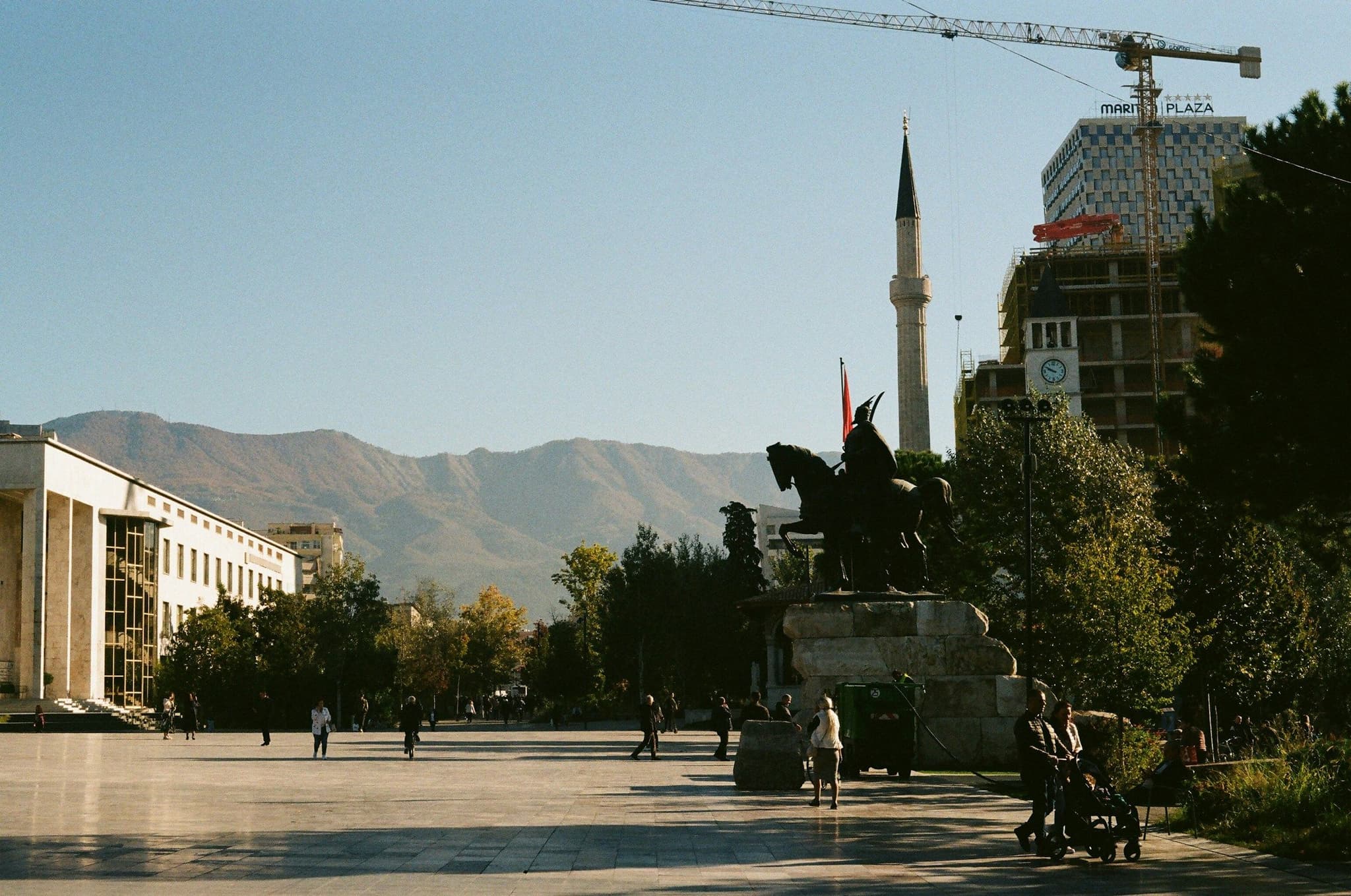
Start in Tirana, a capital that wears its past openly
Most visitors fly into Tirana, whose airport is 19 km outside the city. The best stop is Bunk'Art 1, the bunker of communist leader Enver Hoxha on the edge of town, with 106 rooms over five levels that opened as a museum in 2014. Its smaller sibling, Bunk'Art 2, sits beside Skanderbeg Square. The Dajti Ekspres cable car leaves from right next to Bunk'Art 1 (it's closed on Tuesdays), so treat the pair as one half-day. In the evening, head to Blloku, the old communist-elite quarter and now the bar district. Don't plan on the National History Museum, which is closed for renovation until 2028. One or two nights is plenty.
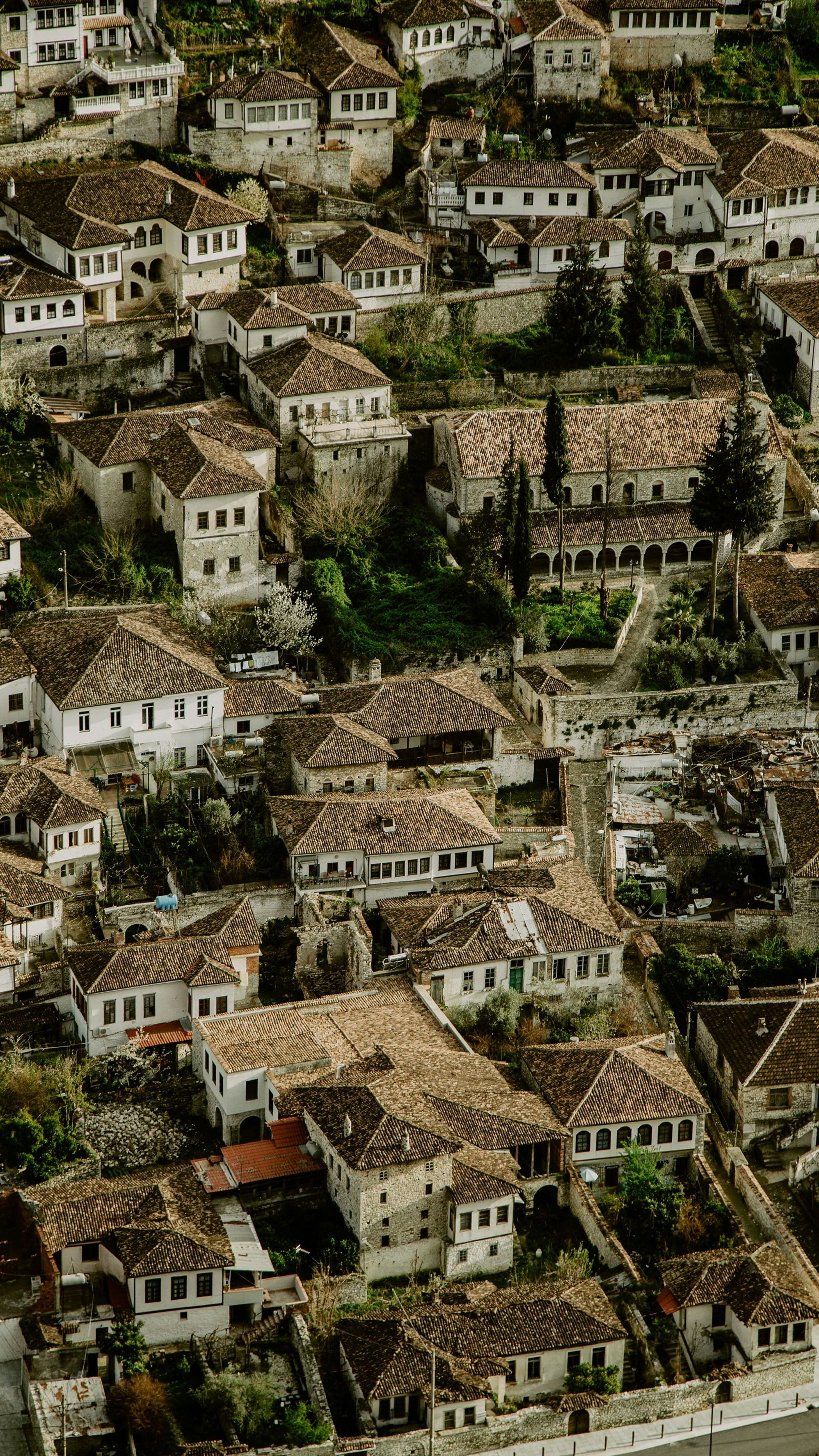
Wander Berat, the City of a Thousand Windows
Berat got its nickname from the rows of Ottoman house windows stacked up the hillside in Mangalem, the quarter directly under the castle. Cross the Osum river to Gorica for the best view of them. The castle itself, the Kala, is mostly 13th century and once held about 20 churches, and people still live inside its walls. It's open around the clock and charges a small fee by day, so go up at sunset when it's free and the day trippers have left. Berat joined Gjirokastër on the UNESCO list in 2008. Frequent buses from Tirana take about two hours and cost 400 to 500 lek.
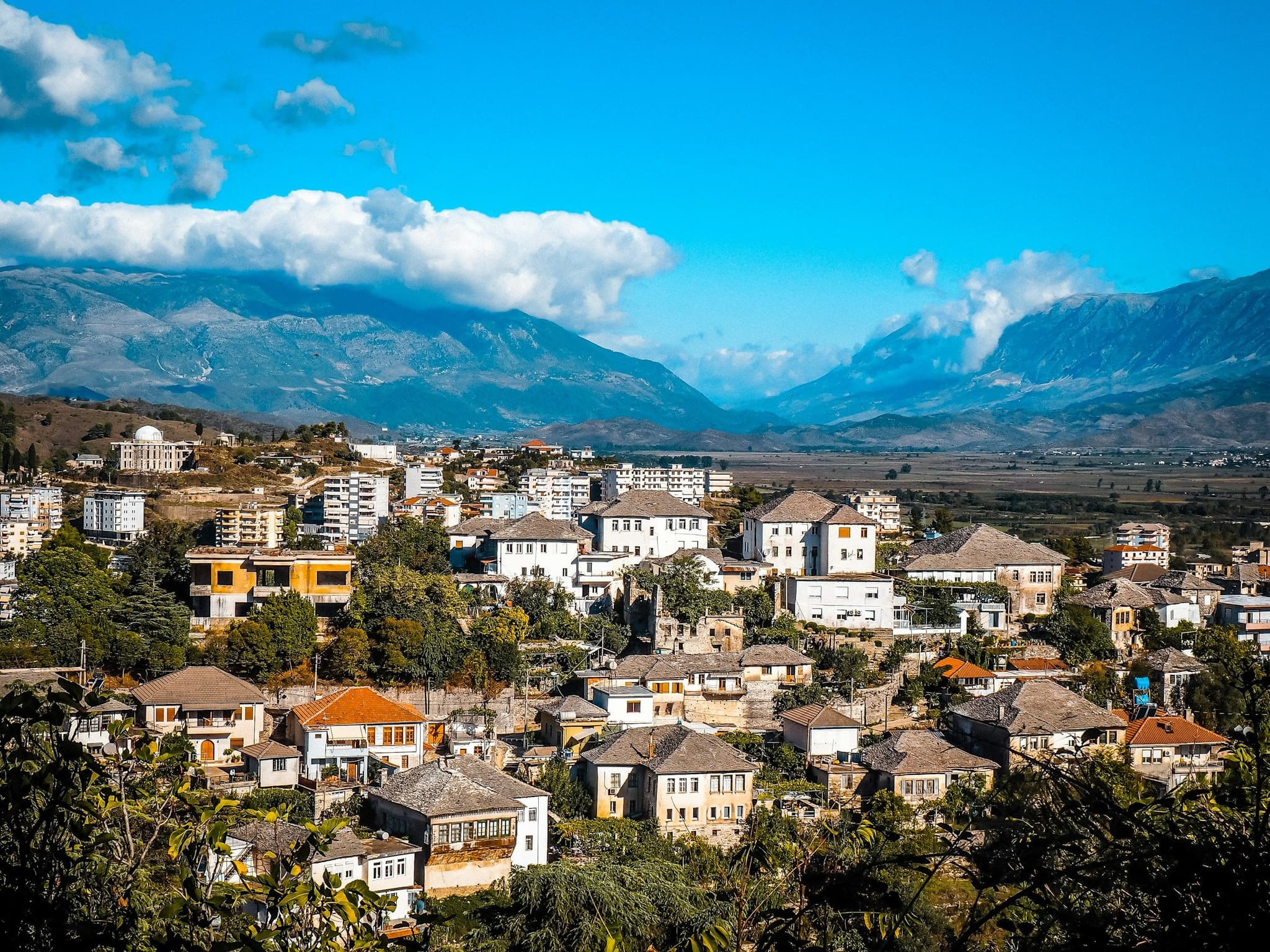
Climb the stone streets of Gjirokastër
Gjirokastër is built from grey stone tower houses, known as kullas, piled up a steep hill under a huge castle. It has been a UNESCO site since 2005. The castle costs 400 lek and opens daily from May to September, with shorter hours and Monday closures the rest of the year. The cobbles are steep, so ask your hotel for a lift up with your bags. It also works as a base for the Blue Eye, about 36 km away. Buses take about four hours from Tirana and about three from Berat.
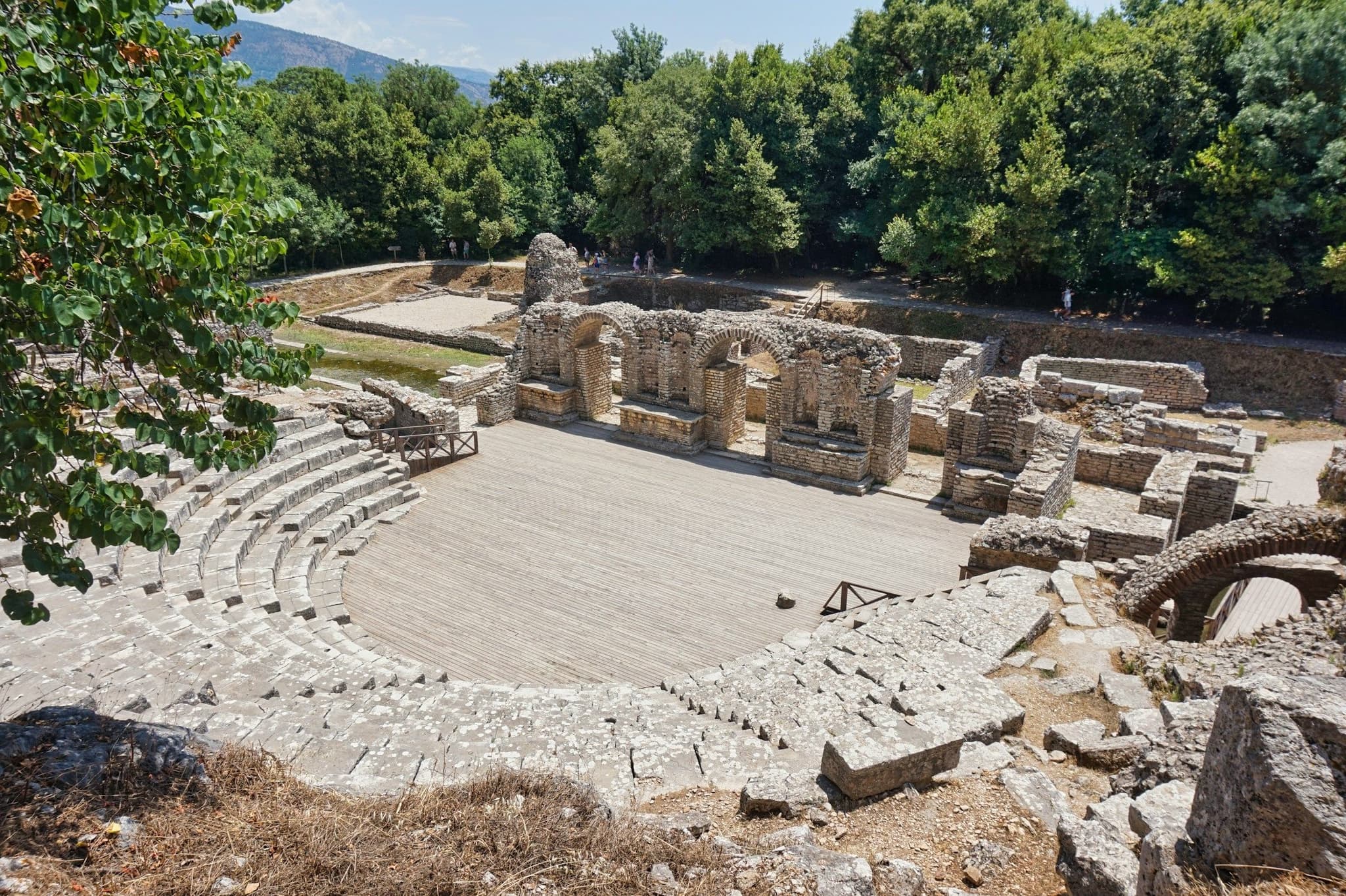
Walk through 2,500 years at Butrint
Butrint packs Greek, Roman, Byzantine and Venetian remains into one site in the far south, and it has been on the UNESCO list since 1992. Every adult pays the same 1,000 lek, Albanian or foreign, with 500 lek for ages 12 to 18 and free entry for under-12s. From April to October it opens from 8.30am to 8pm (last entry 6pm), with shorter winter hours. Buses from Sarandë take about 45 minutes for 200 to 250 lek and run roughly hourly, with the last one back around 7.30pm. Give it three hours, and arrive at opening time or late in the afternoon.
Swim off Ksamil and base yourself in Sarandë
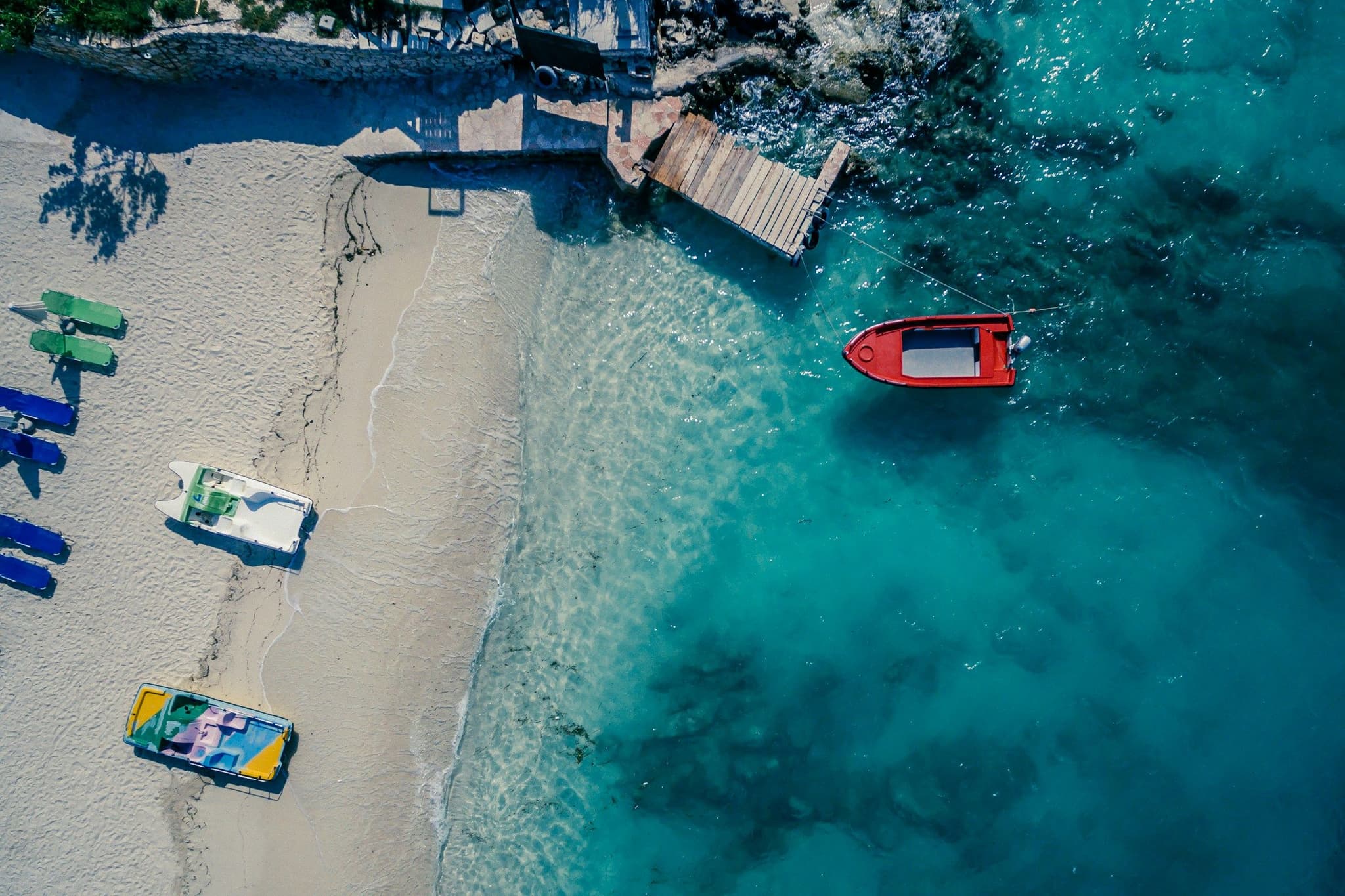
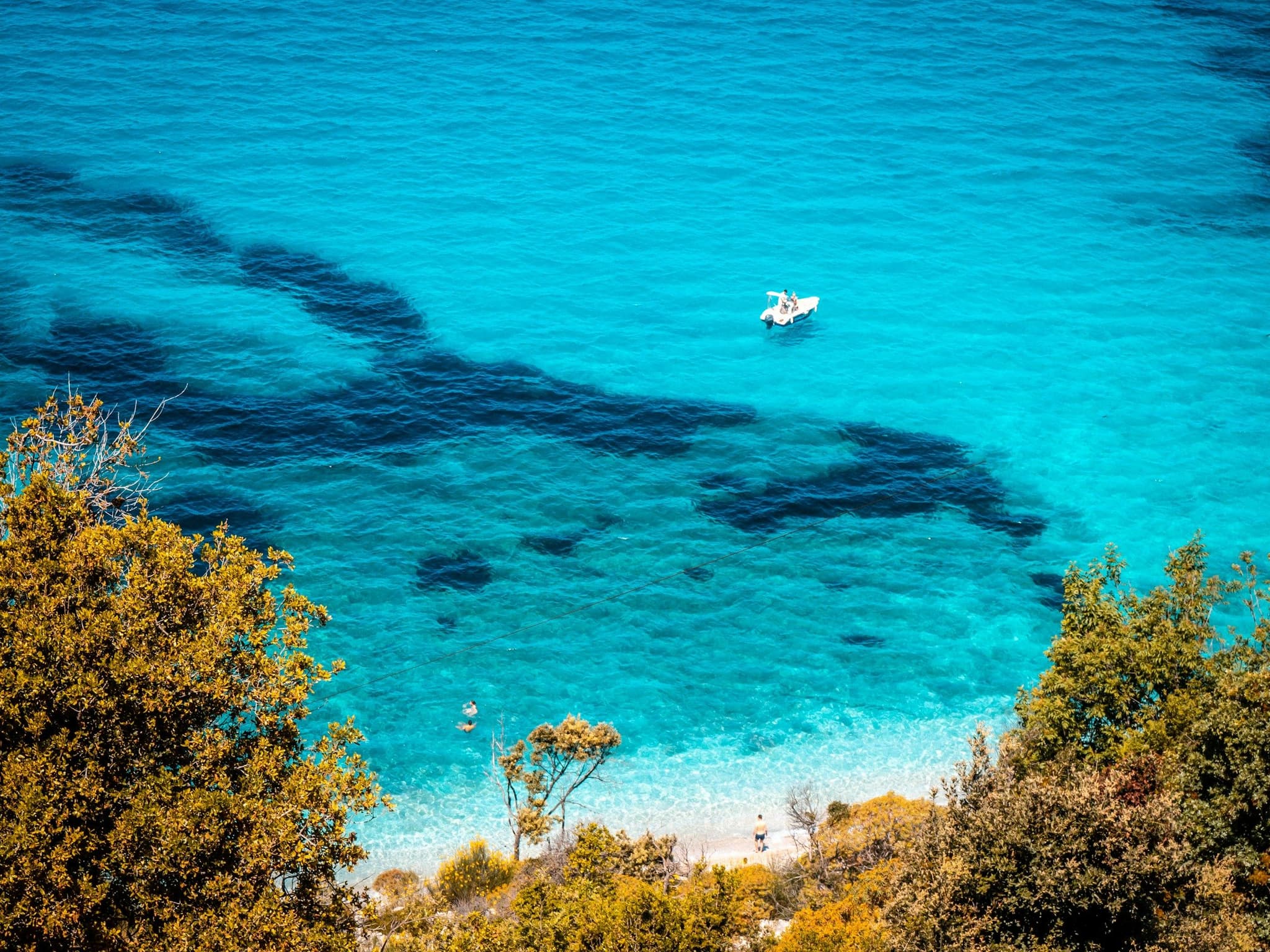
Ksamil sits about 12 km south of Sarandë, with shallow, calm water and small islets just offshore. You can swim or kayak to the nearest ones or take a boat from about €20. August is another story, with heavy crowds and temperatures above 35 °C, and sunbeds for two cost €20 to €40. Beaches are public by law, but sunbeds cover most of the sand. Go in June or September instead. Without a car, we'd stay in Sarandë. Its town beach is pebbly and the promenade gets loud in summer, but it has the buses to Butrint and the Blue Eye, plus the ferry to Corfu.
Find your beach on the Riviera around Himarë and Dhërmi
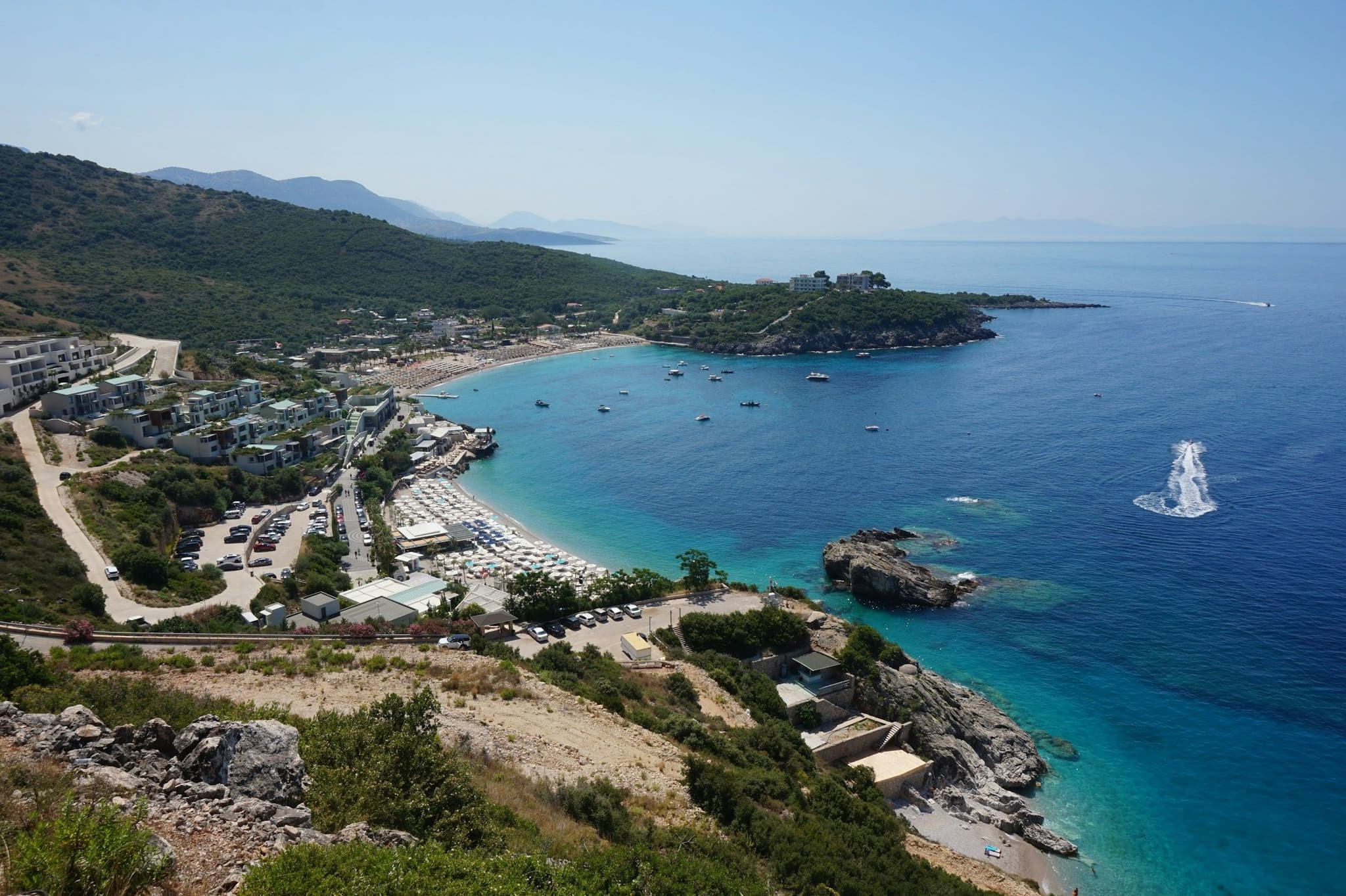
The Riviera is a string of coves rather than one long beach. Dhërmi is the more upmarket stop. Jale, 12 km north of Himarë, turns into a party beach on July and August weekends, while Livadhi, 4.5 km north of Himarë, is the easy pick with children. Gjipe is the one worth the effort. It's about 30 minutes from Himarë, then a steep half-hour walk down to a beach where camping is allowed. The castle at Porto Palermo makes a short stop on the coast road, with entry at 200 lek.
Drive over the Llogara Pass for the view
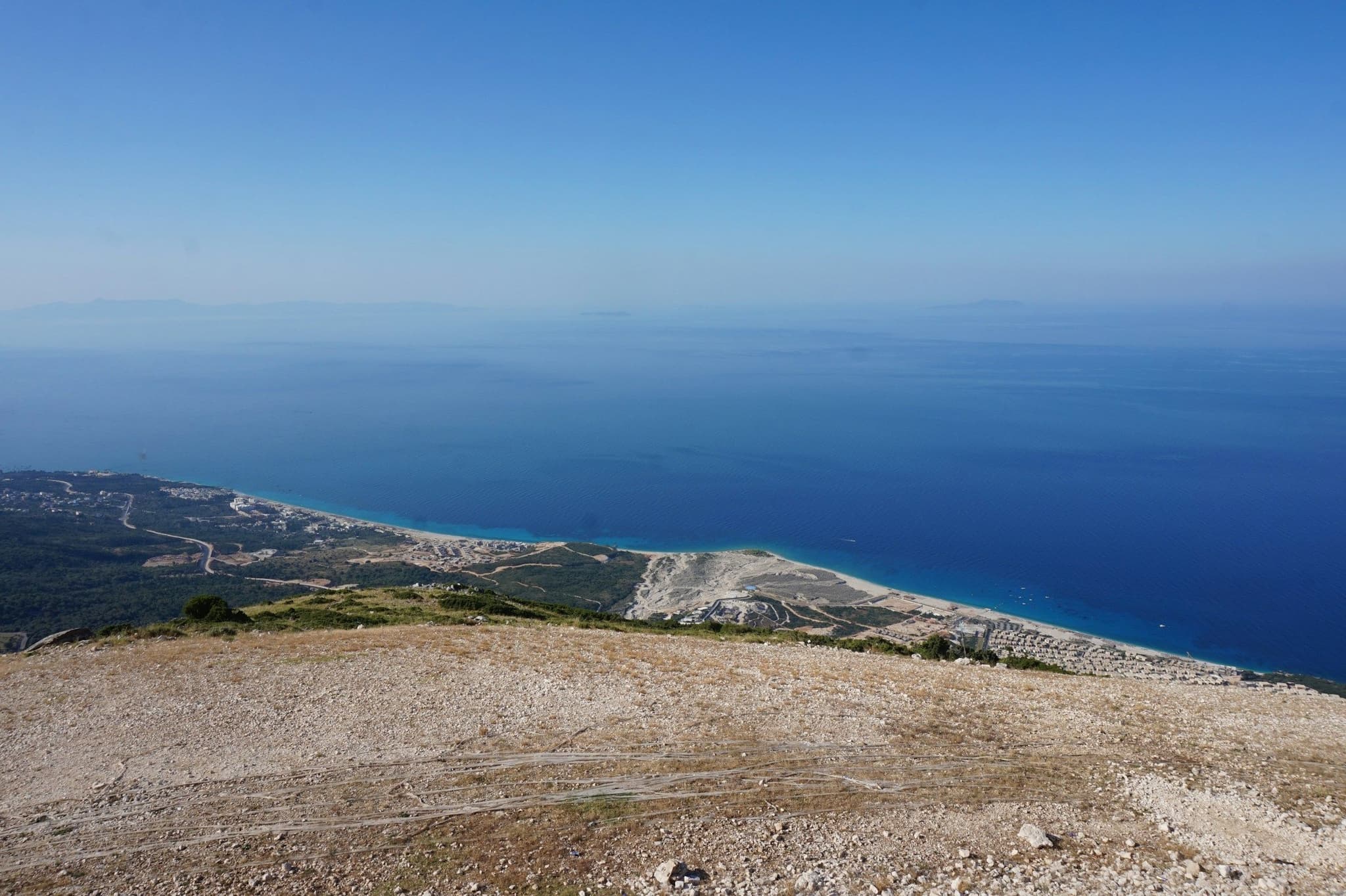
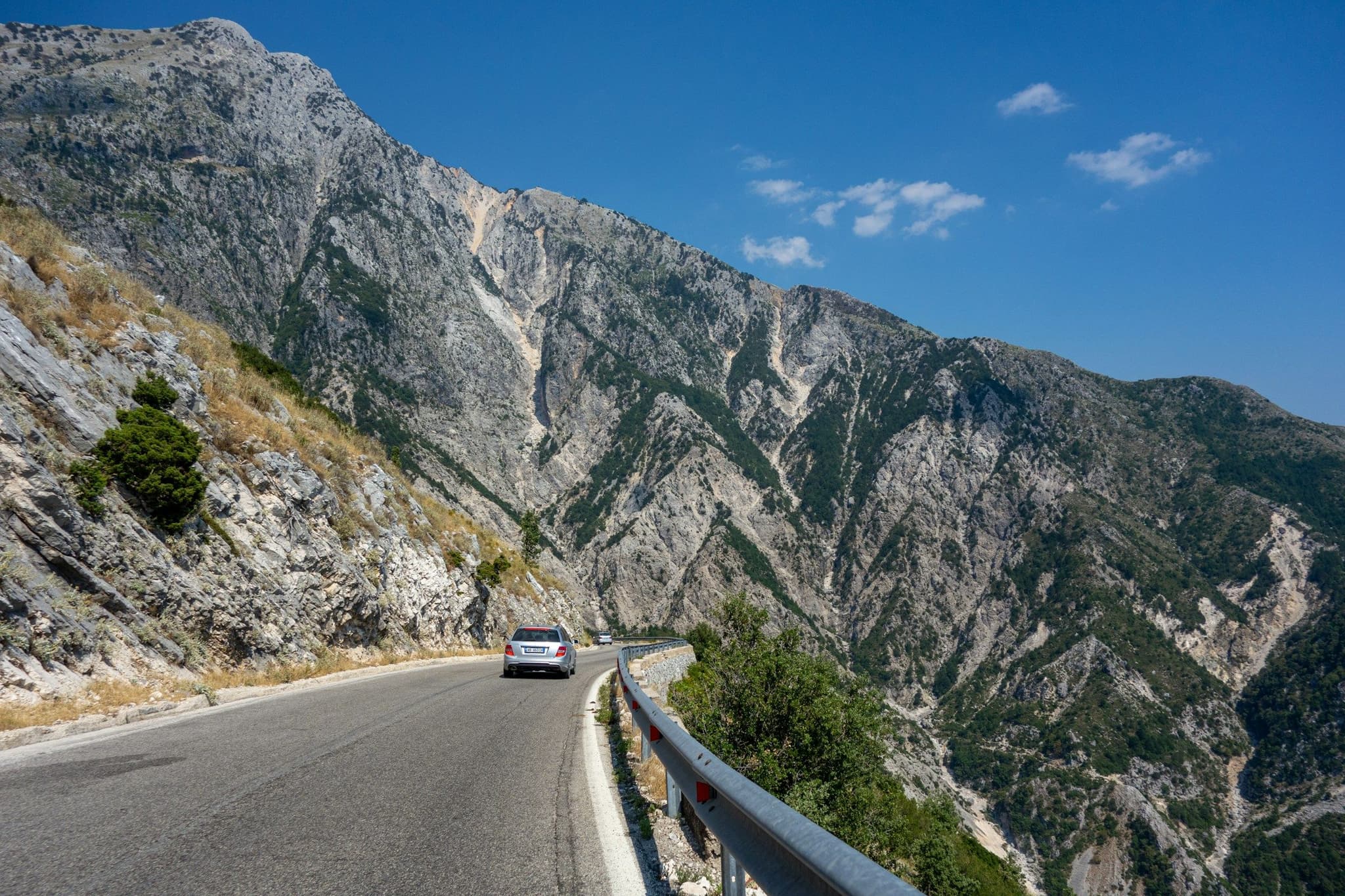
The 5.9 km Llogara Tunnel opened in July 2024 and fully reopened in May 2025 after finishing works. It cuts the drive between Dukat and Palasë from about 30 minutes to about seven. It's the quicker way to reach the Riviera, but drive the old pass road at least once. It climbs to 1,027 m and the view down to the coast is the best on this stretch. From July to October, tandem paragliding flights land at Palasë or Dhërmi. The pass road can close for snow between November and March.
See the Blue Eye early, or not at all
Our advice for the Blue Eye (Syri i Kaltër) is simple. Go at 7am, or skip it in July and August. Divers have gone past 50 m into this spring without finding the bottom, and the water stays at about 10 °C. Swimming is officially banned and signposted, so this is a place to look, not jump in. Entry is 50 lek in cash, parking about 300 lek, and the last 2 km are on foot or along a track. It's about 40 minutes from Sarandë.
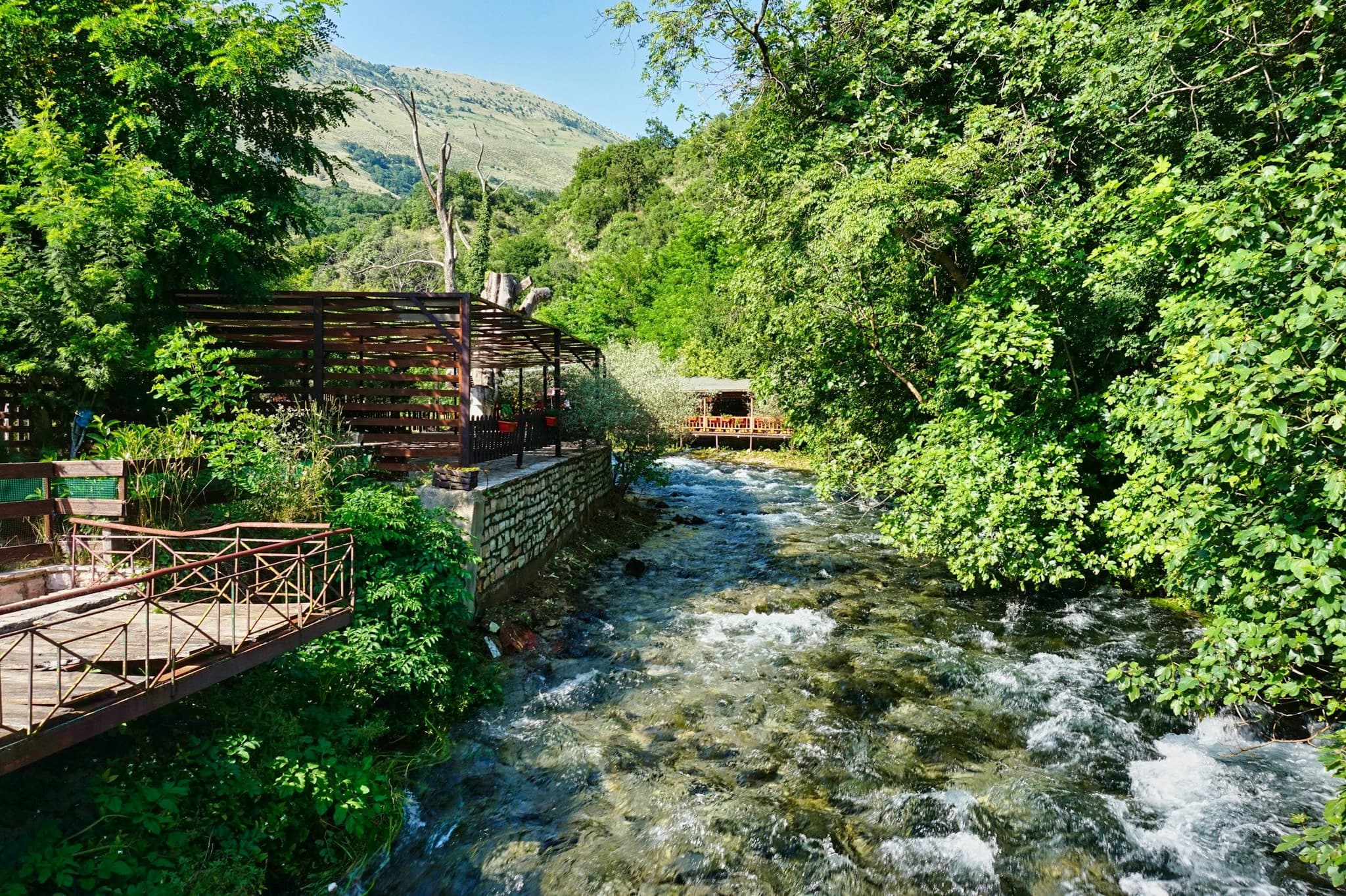
Head into the Albanian Alps at Theth and Valbona
Theth and Valbona sit in the Accursed Mountains, inside the Alps National Park created in 2022. The road from Shkodër to Theth is now paved, and a minibus leaves Shkodër at about 7am (around €10, two hours), returning around midday. That makes Theth a possible day trip, but stay a night to see it empty. From the village, a 30-minute walk reaches the Grunas waterfall, about 30 m high, and Theth's own Blue Eye is a pool where swimming is allowed. The season runs from June to September.
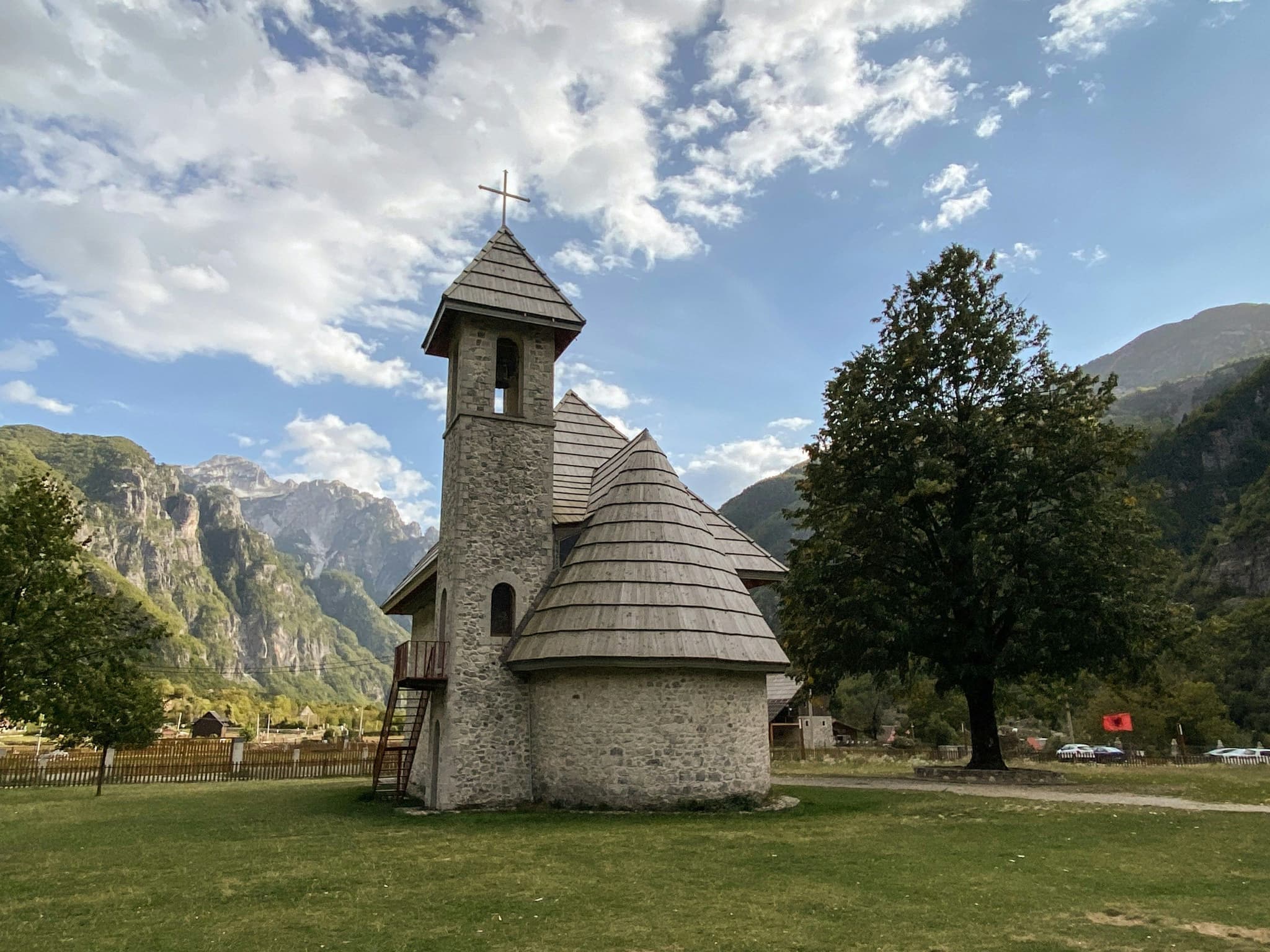
Take the Lake Koman ferry through the gorges
Lake Koman is a 34 km reservoir hemmed in by steep gorges, and a ferry has run along it since 1984. Berisha and Rozafa boats leave Koman at 9am and Fierzë at 1pm, take two to two and a half hours and cost about 1,000 lek per passenger. Shkodër pickups leave around 7am. Do it one way, as part of a loop from Koman to Valbona and over to Theth, not as an out-and-back. From Fierzë, Valbona is 45 to 60 minutes by road.
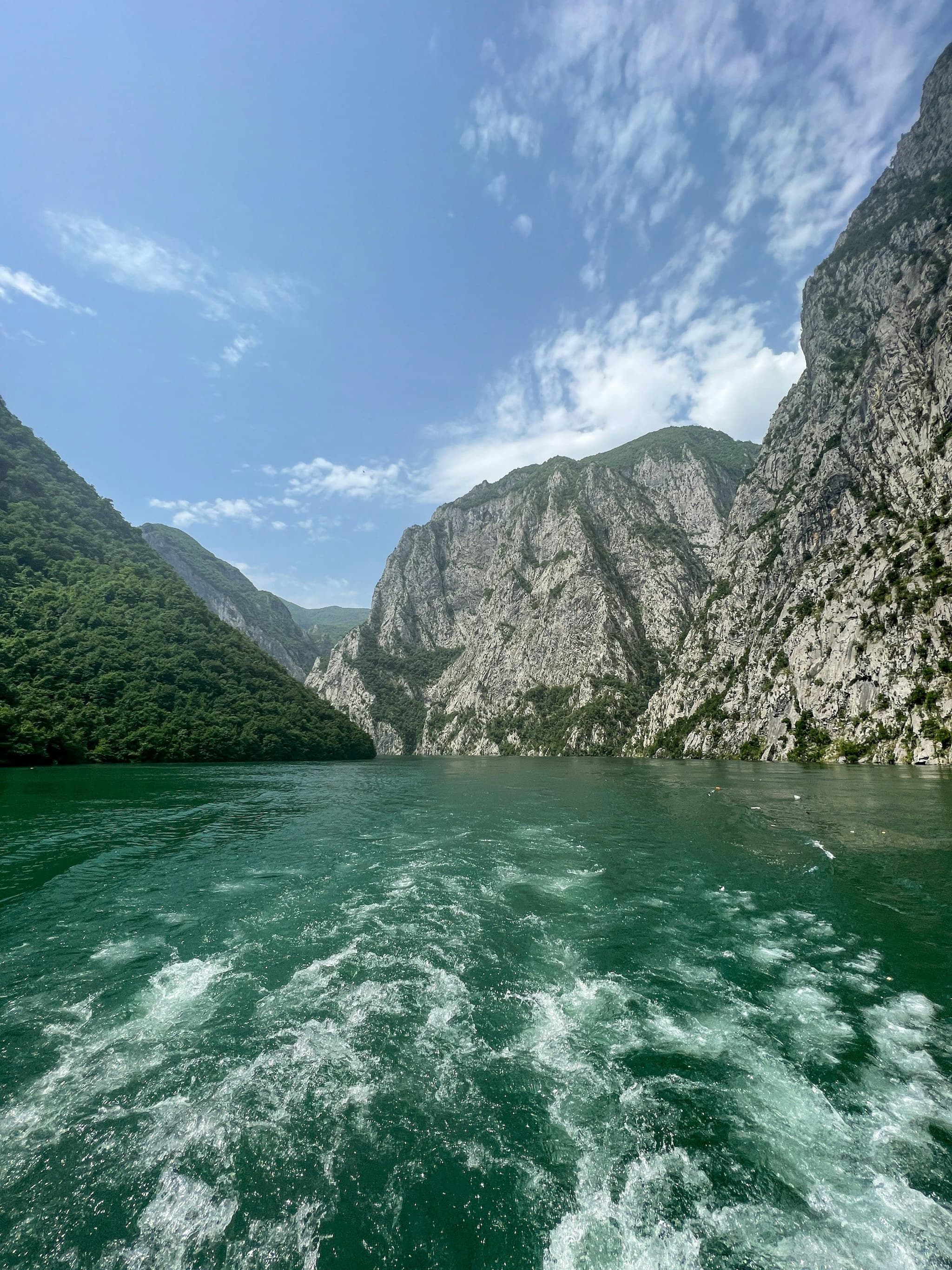
Stay two nights in Shkodër
Shkodër is the gateway to both Theth and the Koman ferry, so plan two nights rather than one. Rozafa Castle sits 30 to 45 minutes' walk from the centre and costs 400 lek, plus 150 lek for its museum, and from May to October it stays open until 8pm. In town, look for the Mesi Bridge, the largest Ottoman bridge in Albania, and Lake Shkodër is right on the edge of the city. Buses from Tirana take about two and a quarter hours and cost 500 lek.
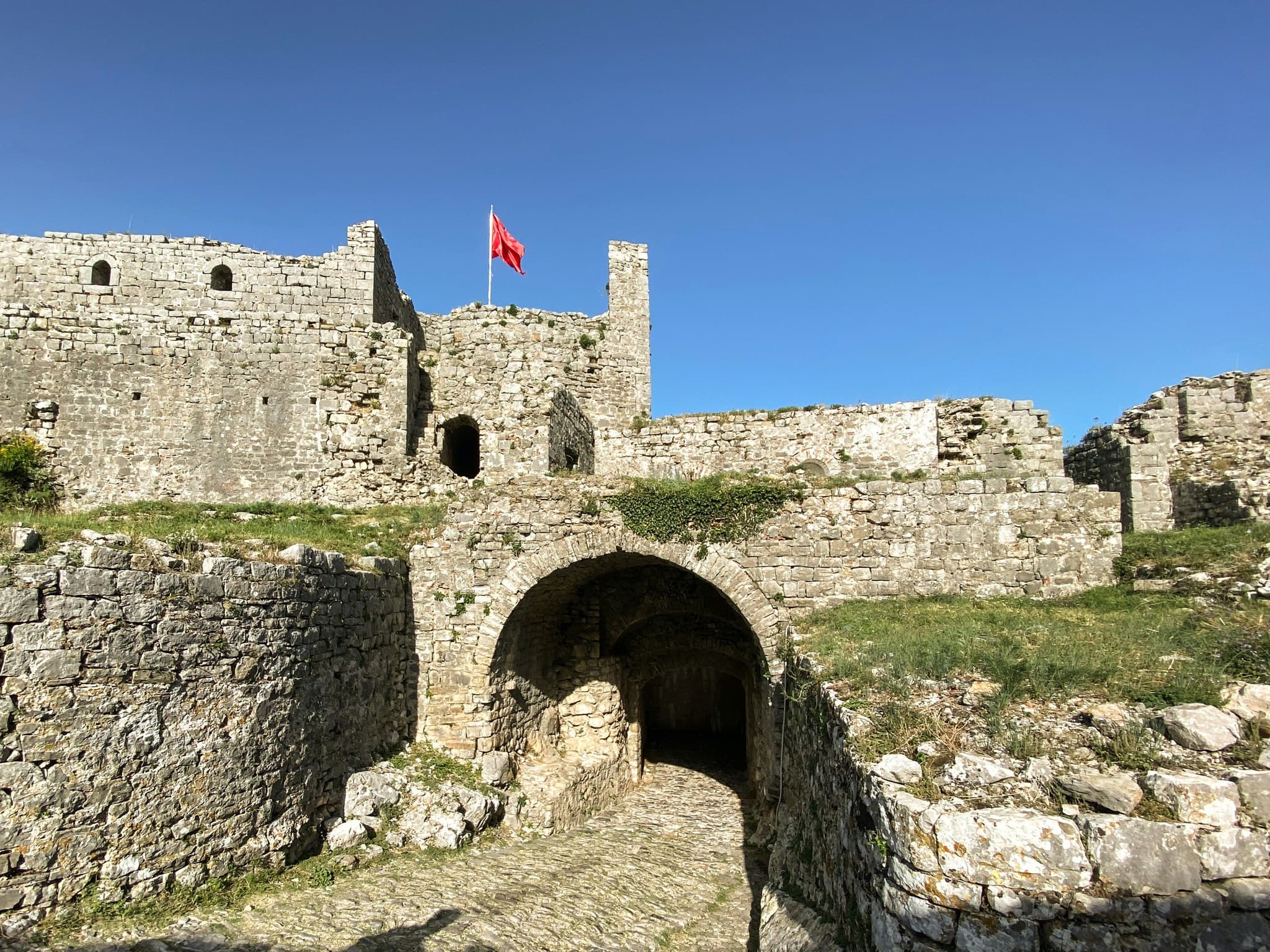
Soak in the Benja thermal pools near Përmet
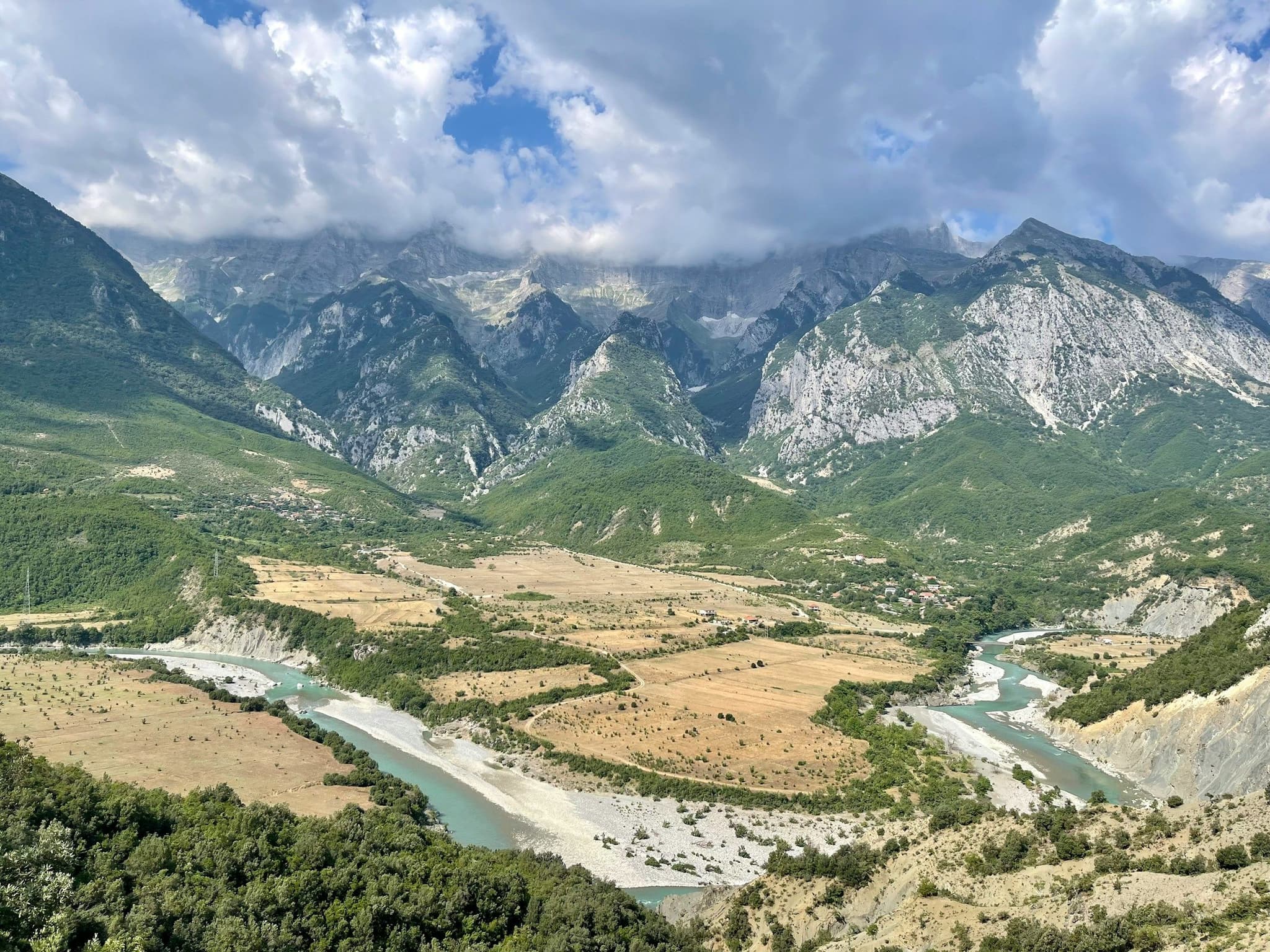
Përmet is the stop we'd add first on a longer route. The Benja thermal pools, 14 km from Përmet, are free and sit at 23 to 32 °C beside the Ottoman Katiu bridge, with the Lengarica canyon behind. The Vjosa runs past Përmet too. In March 2023 it became Europe's first wild-river national park, covering 12,727 hectares, and rafting trips near town cost €25 to €35 from April to October. Përmet is about an hour and a quarter from Gjirokastër.
Albania itinerary ideas for your trip
Tirana to Sarandë takes about five hours by bus, longer than the map suggests. These two routes keep the long legs short.
5 to 7 day Albania itinerary
Day 1-2: Tirana, with Bunk'Art and either the Dajti cable car or a half-day in Krujë.
Day 3: Berat, with sunset up at the castle.
Day 4: Gjirokastër and its stone old town.
Day 5-6: Sarandë and Ksamil, stopping at the Blue Eye on the way and visiting Butrint.
Day 7: Himarë and the Riviera beaches, then back north over the Llogara Pass, or a ferry to Corfu.
10 to 14 day Albania itinerary
Day 1-2: Tirana and Bunk'Art.
Day 3: Shkodër and Rozafa Castle.
Day 4: Koman ferry to Fierzë, then on to Valbona.
Day 5-6: Hike from Valbona to Theth and stay the night.
Day 7: Back to Shkodër, then Tirana or straight on to Berat.
Day 8-9: Berat, with a side trip to the Osumi Canyon in spring.
Day 10: Përmet and the Benja thermal pools.
Day 11: Gjirokastër.
Day 12-13: Butrint and the beaches, based in Sarandë or Ksamil.
Day 14: Himarë and Dhërmi, then back to Tirana over Llogara, stopping at Apollonia.
The mountain days only work from June to September. You can build this route yourself, or move the days around, in the Guided app.
Fun things to do in Albania
If you only do one active thing here, make it the walk from Valbona to Theth.
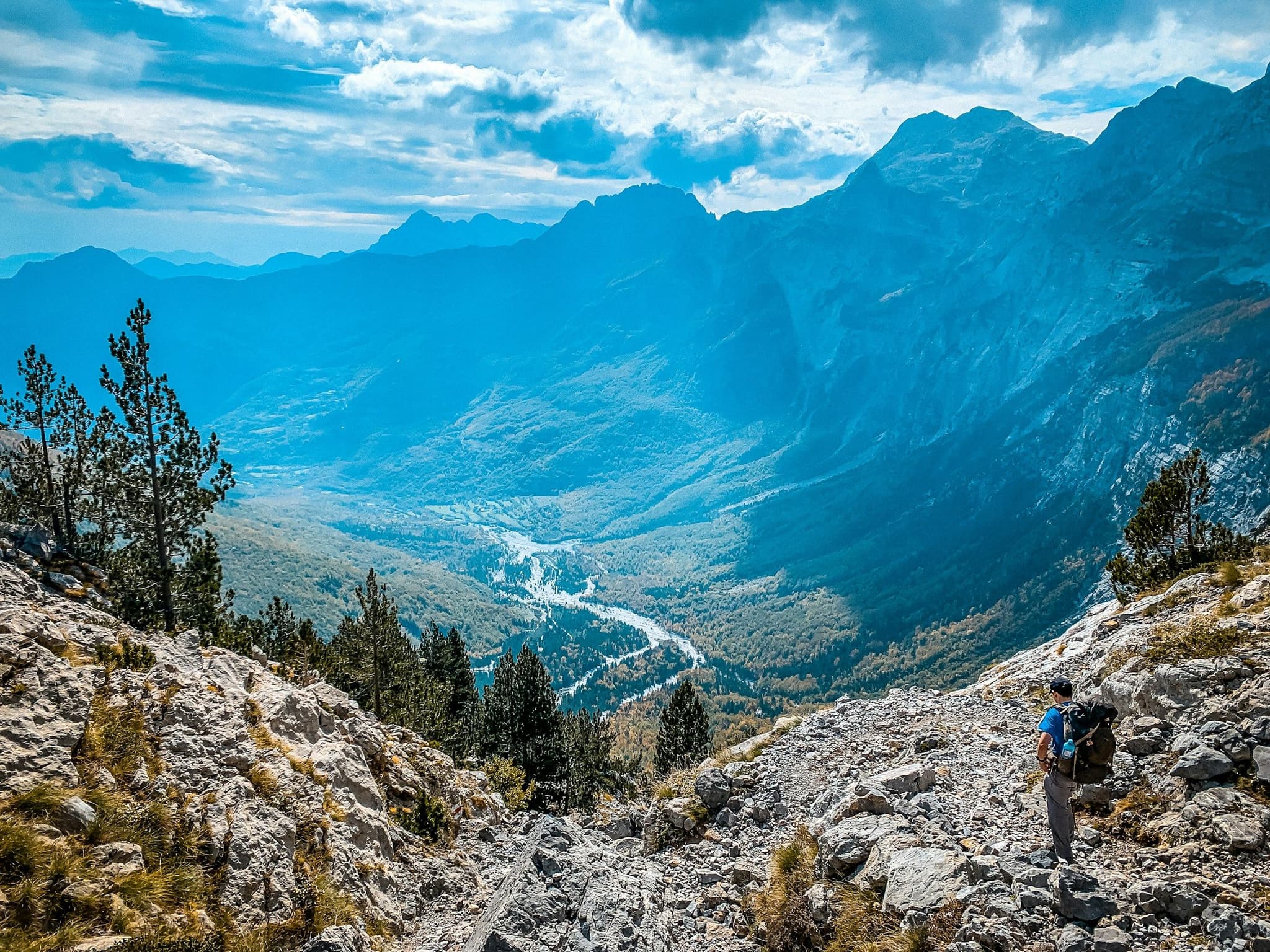
Hike the pass from Valbona to Theth
The route is 13.9 km with about 1,068 m of climbing, and most people take around seven hours, though anywhere from five to ten is normal. It's only realistic from June to September. Combine it with the Koman ferry and you get the best two days in the country.
Go underground at Bunk'Art
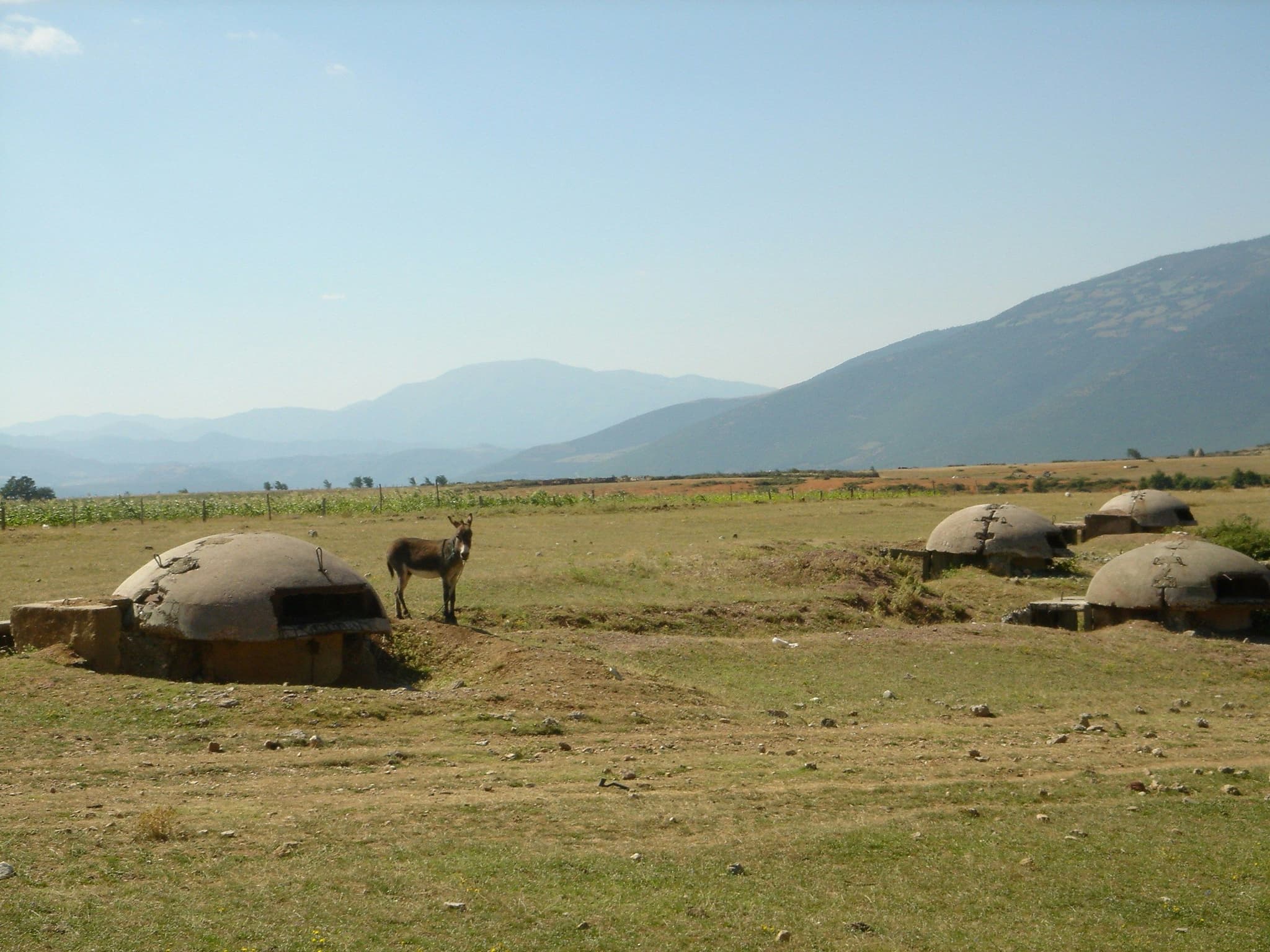
Between 1967 and 1986, Hoxha's regime built hundreds of thousands of concrete bunkers across Albania. Tickets for Bunk'Art 1 and 2 cost about 900 lek each (1,000 lek with the audio guide), cash only.
Raft the Vjosa or the Osumi Canyon
Two rivers, two seasons. The Vjosa near Përmet runs rafting trips from April to October for €25 to €35. The Osumi Canyon, 26 km long near Çorovodë, is best for rafting on the spring snowmelt from February to June, with tubing and kayaking from June to October. Trips from Berat cost €45 to €85. If you're in Albania in spring, pick the Osumi.
Kayak out to the Ksamil islets
The islets off Ksamil are close enough to swim or paddle to, and a boat out costs from about €20. Go early, before the sunbeds fill. Check the life jackets on any boat or jet ski you rent, because safety kit can be missing.
Paraglide off the Llogara Pass
Tandem flights cost €100 to €145 and run from July to October, landing at Palasë or Dhërmi.
When to go to Albania?
Tirana gets about 2,544 hours of sunshine a year, and July and August are the driest months, with average highs of 32 to 33 °C. August is the peak, when Italian and diaspora holidays fill the coast. For us, June and September are the best months overall, with a warm sea and far more space on the beaches.
- Spring (April to May): highs of 20 to 25 °C and the best rafting in the Osumi Canyon, though the sea is still cool at 16 to 19 °C.
- Summer (June to August): 29 to 33 °C with the sea at 22 to 25 °C and the Koman ferry running. August is the busiest and dearest month.
- Autumn (September to October): the sea stays at 22 to 24 °C and September is good for hiking, while the rain comes back in October.
- Winter (November to March): the wettest months, with many coastal hotels closed. Tirana and Berat stay open, and 14 March brings Dita e Verës (Summer Day), a public holiday celebrated most in Elbasan.
Did you know you can create your own itinerary?
Now that you know what to see in Albania and where to stay, you can start shaping your own trip. Would you rather spend more days on the Riviera beaches, or head north for the Koman ferry and the walk over to Theth? You can create your own trip for free in the Guided app, or use trips shared by others.
Where to stay in Albania?
Pick each base for what you want to do the next morning, because buses leave early and mountain roads are slow.
Stay central in Tirana
Blloku is the place for bars and cafés, but it's pricier and noisy at night. For a short stay we'd pick the centre around Skanderbeg Square and Tregu Cam (Pazari i Ri), where you can walk to the sights.
Sleep inside the castle in Berat
Gorica is the quieter side of Berat, with the best view across the river, but the Kala itself is the most atmospheric choice. It's 700 to 800 m uphill with no car access, so drivers park on the flat streets below.
Choose a tower house in Gjirokastër
Stone tower-house hotels fill the old bazaar area. The streets are steep, and budget places often want cash.
Pick Sarandë, Ksamil or Himarë for the coast
Sarandë is the practical base without a car, with the Corfu ferry and buses to Butrint and the Blue Eye. Ksamil is best for beaches and families in June and September, but it's packed in summer and has few services out of season. Himarë is our favourite of the three. Food is better value, there are more than 14 beaches nearby, and the only downsides are the lack of a ferry and a longer trip from Tirana.
Use Shkodër as the gateway to Theth
Shkodër has the bus links to Tirana and the transfers to Koman and Theth. In Theth itself, guesthouses do half board for about €20 to €35 per person. Wherever you stay, a small local tourist tax may be added, so ask whether it's included.
Guided tip: In Theth and Valbona, book half board and bring enough lek for the whole stay. Valbona has no ATM, and the single one in Theth can run dry.
Getting around when visiting Albania
Albania has no useful passenger rail, and a Tirana-Durrës-airport line is promised for 2027. Until then you have buses and a hire car, plus taxis in the cities. From the airport, the Rinas Express bus (400 lek, hourly from early morning to after midnight) takes 30 to 45 minutes to Skanderbeg Square, and an official taxi costs about €20 to €25.
Take buses and furgons between towns
There's no central bus station in Tirana. Most intercity routes use the North & South Bus Terminal (Terminali i Autobusëve të Jugut dhe Veriut), an open lot off the airport road towards Kashar. A city bus signed "Kamëz" gets you there for 40 lek. Seats are unreserved and some furgons only leave when full. Timetables change with the seasons, and Gjirafa Travel (travel.gjirafa.com) sells tickets online for many domestic and cross-border routes. Tirana to Berat costs 400 to 500 lek and Tirana to Sarandë about 1,500 lek.
Rent a car for the coast and the mountains
On the main line from Tirana through Berat and Gjirokastër to Sarandë, the bus does the job for far less. We'd hire a car for the Riviera beaches and the mountain roads, and leave it behind in Tirana, where parking is hard. Expect about €20 to €45 a day off-season and €50 to €90 or more in summer. Road deaths ran at 85 per million people in 2025, nearly double the EU's 43, so drive defensively and avoid driving at night. There's zero tolerance for drink driving. Taking the car across a border needs the rental firm's written permission. Licence rules vary, so check them for your nationality with your rental firm and the FCDO or US State Department page.
Use local taxi apps in Tirana
Uber and Bolt don't operate in Albania. Use Patoko, Speed Taxi, Clust or Vrapon instead. Rides around the city cost about €2 to €4.
Cross to Corfu by ferry
Finikas Lines and Ionian Seaways run ferries from Sarandë to Corfu all year, about once a day in winter and many times a day in summer. The hydrofoil takes 30 minutes and the car ferry 50 to 70. Fares start from €15 and are usually €19 to €30. It's an easy way to tie this trip to a holiday in Greece, but remember that Corfu is in the Schengen area.
Guided tip: Carry small lek notes for buses and furgons, because drivers rarely have change for big ones.
Food and drinks you should try when visiting Albania
What should you eat first? Byrek, straight from a bakery. For a long lunch, Mrizi i Zanave, a farm-to-table agriturismo at Fishtë near Lezhë, is the place Slow Food calls "a national institution". Finish anywhere with trileçe, a three-milk sponge cake.
Tavë kosi
Tavë kosi is baked lamb or mutton (sometimes chicken) and rice under a set topping of yogurt and egg. It's thought to come from Elbasan and is one of the national dishes.
Byrek
Byrek is a savoury filo pie filled with cheese, spinach or meat. A slice from a bakery costs about 50 to 150 lek, and it's the best cheap breakfast in Albania.
Fërgesë
Fërgesë is Tirana's signature dish, made from peppers and tomatoes baked with gjizë curd cheese in a clay pot. The traditional version adds liver. Order it with qofte, the local grilled meatballs with herbs, and bread.
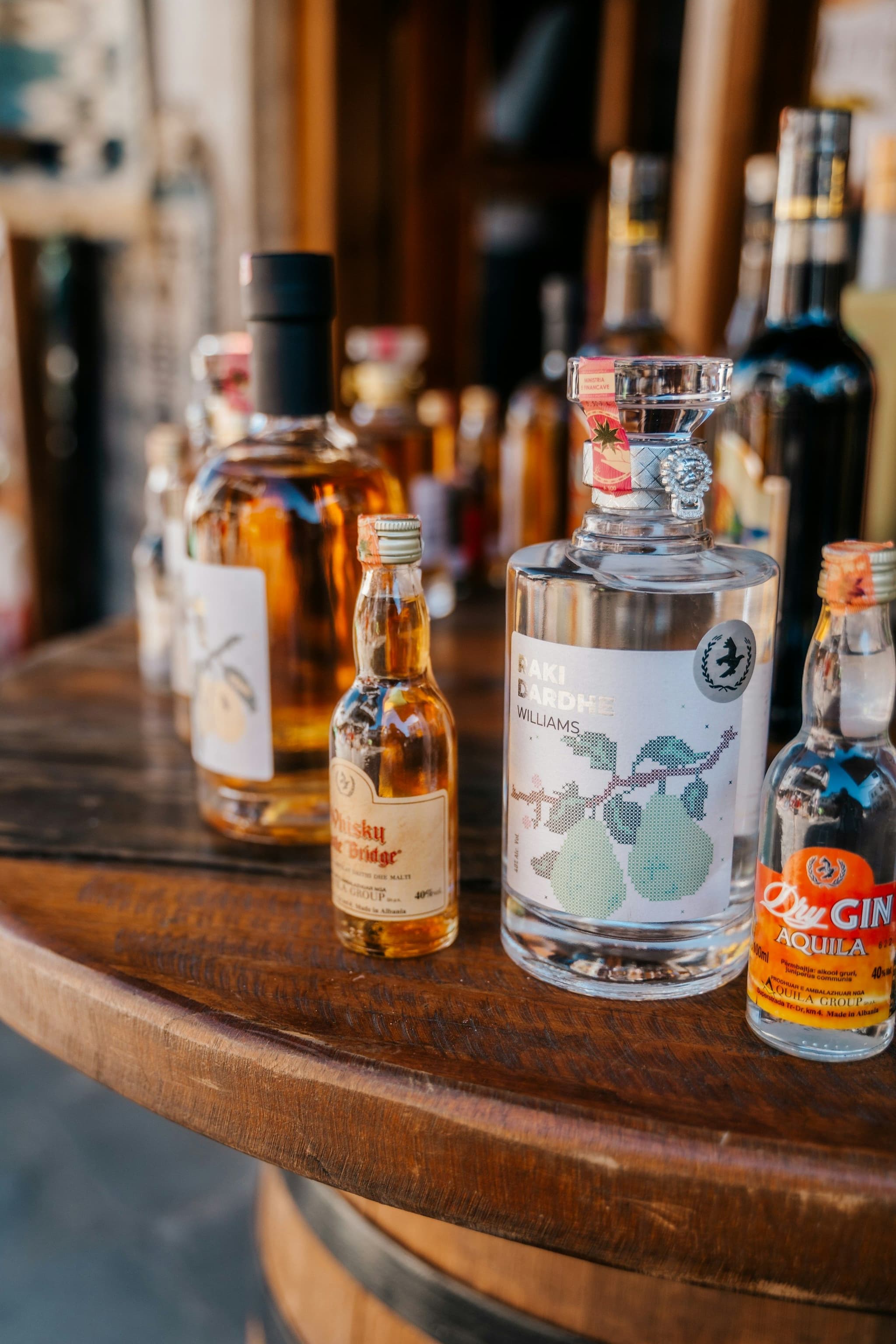
Raki
Raki is the most popular drink in Albania, usually distilled from grapes but sometimes from plums or mulberries. Raise the glass and say "Gëzuar!"
Birra Korça and Skënderbeu brandy
Birra Korça has been brewed in Korçë since 1928, making it the country's first brewery. Skënderbeu brandy has been made since 1967.
Culture and local habits you'll notice when visiting Albania
In 1967 the state closed every place of worship and declared Albania officially atheist, and the ban lasted until December 1990. Today the 2023 census counts 45.86% of people as Sunni Muslim, 8.38% Catholic and 7.22% Orthodox, while 13.82% say they believe without a denomination. Day to day, the thing you'll notice most is besa, a pledge of honour tied to hospitality. Tipping isn't obligatory, but rounding up or leaving about 10% in cash is normal in restaurants.
Watch heads, too. In much of Albania, especially the south, a shake of the head can mean "yes" and a nod can mean "no", though younger people often use the international gestures. Say po or jo out loud to be sure. At sunset many people take the xhiro, the evening stroll. Albanians call their language shqip, and these are the phrases worth learning first.
- Mirëdita: good day
- Faleminderit: thank you
- Ju lutem: please
- Po / Jo: yes / no
- Gëzuar: cheers
- Mirupafshim: goodbye
Looking for more unique places, trips and activities?
Subscribe to our Guided Newsletter for more travel inspiration.
Costs of a holiday to Albania
Albania is good value rather than cheap. On Numbeo's 2026 cost of living index it scores 45.8, below Croatia (52.4), Greece (54.0) and Italy (61.4), and short-term rentals average about €57 a night, under half the price in those three. It now sits slightly above Montenegro overall (42.7), even though rentals there cost more (€79 a night). The lek also rose about 6.7% against the euro in 2026. Byrek, buses and coffee stay cheap, but sunbeds in Ksamil and Riviera hotels in August cost much more.
Food & Drink
Coffee
80 L – 200 L
Lunch
450 L – 1,200 L
Beer
200 L – 400 L
Accommodation
Hotels
4,000 L – 8,000 L
Airbnb
3,500 L – 6,500 L
Hostel dorm
900 L – 2,300 L
Transport
Intercity bus
200 L – 1,600 L
Public Transport
40 L – 400 L
Car Rental
2,300 L – 5,500 L
Attractions
Museums
200 L – 1,000 L
Big Attractions
400 L – 1,000 L
Theatre
1,000 L – 3,000 L
Practical tips for visiting Albania
If you only sort one thing before you land, make it cash in lek.
✔ Check the entry rules for your passport
Albania isn't in the EU or the Schengen area, so days spent here don't count toward your Schengen 90 days in 180, and the EU's Entry/Exit System doesn't apply at Albanian borders. Many nationalities, including the UK, EU and US, can visit without a visa. UK and EU visitors get 90 days in any 180 (EU citizens can enter with a national ID card), and US citizens can stay up to a year. Other nationalities may need an e-visa from the official e-visa site. Rules change, so check the official entry requirements for your passport before you book.
✔ Pay in lek and carry cash
Euros are taken in tourist areas, but at poor rates and with change in lek, so pay in lek. Outside the cities you need cash for guesthouses and buses, and card payment at Butrint isn't reliable. No ATM is fee-free, and most charge about 500 to 900 lek per withdrawal, so take out larger amounts less often and decline dynamic currency conversion. Some people still quote prices in "old lek", ten times the real price, so a "500" might mean 50 lek.
✔ Confirm bus times the day before
Timetables shift with the seasons, so ask at your guesthouse the night before you travel.
✔ Stay alert in crowds and avoid protests
The FCDO says crime targeting foreigners is rare, and the US rates Albania at Level 2, increased caution, for crime including organised crime. Pickpockets do work tourist areas and buses. Protests have taken place in central Tirana in 2026, so avoid demonstrations and check the FCDO or US State page before you go. Unexploded landmines remain in some remote areas near the northern border with Kosovo, so stay on marked paths. Don't drink the tap water. The emergency number is 112.
✔ Say po and jo out loud
Because head gestures can mean the opposite of what you expect, use the words instead. Dress modestly when you visit mosques and churches.
✔ Get travel insurance
Since summer 2026, foreign tourists pay set fees for treatment in Albania's public health care, which makes insurance worth having even on a short trip.
Fun facts about Albania
Six facts about Albania, starting with its wartime record.
- Albania had about 200 Jews before the Second World War and about 1,800 to 2,000 after it, the only directly affected European country to end the war with more Jews than it started with.
- Albanian is the only surviving language of its branch of the Indo-European family.
- Mother Teresa was born in Skopje in 1910 to an Albanian family, and Tirana's airport is named after her.
- Albanians call their country Shqipëria, widely read as "land of the eagles", and the flag carries a black double-headed eagle.
- That flag was first raised at Vlorë when Albania declared independence on 28 November 1912, still the national day.
- Albania joined NATO in 2009.
A week here takes you from a Cold War bunker to a cove on the Ionian, and a second week gets you over the mountains to Theth.
Ready to map out your trip to Albania?
We hope this Albania travel guide has given you a clear starting point for your trip. Stay tuned for more inspiration, itineraries and practical tips for your holiday to Albania. And don't forget to check out our Guided app, where you can create your own trip or use trips shared by other travellers for free.
FAQS about visiting Albania
How many days do you need in Albania?
Five to seven days covers Tirana, Berat, Gjirokastër and the coast. With 10 to 14 days you can add the north, with the Koman ferry and the hike from Valbona to Theth. You can map out both versions and see what fits in the Guided app.
What is the best part of Albania to visit?
For a first trip, the south is hard to beat, with Berat, Gjirokastër and Butrint all within reach of the Riviera. Hikers should go north to Theth and Valbona between June and September.
What is Albania known for?
Albania is best known for the beaches of the Riviera and the UNESCO towns of Berat and Gjirokastër. It's also known for the bunkers of its communist past and for besa, its code of hospitality.
Can you travel Albania without a car?
Yes. Buses and furgons link the main towns for about 400 to 1,600 lek a ride, though they are slower and timetables are loose. A car helps for the Riviera beaches and Apollonia, and there are no useful trains.
Is Albania expensive?
Not by Mediterranean standards. It scores 45.8 on Numbeo's 2026 cost of living index, against 54.0 for Greece and 61.4 for Italy, and it's now around Montenegro's level. August on the Riviera is the exception, when hotel and sunbed prices jump.
Is Albania safe to visit?
Yes, with ordinary precautions. The US rates it Level 2 for crime, including organised crime, and the UK says crime targeting foreigners is rare. Take care on the roads and avoid demonstrations in Tirana.
Does Albania use the euro?
No, the currency is the lek. Euros are accepted in tourist areas, but at poor rates and with change given in lek, so it's better to pay in lek. Watch for prices quoted in "old lek", which are ten times the real amount.
Is Albania in the EU or Schengen?
Neither. Albania has been an EU candidate since 2014 and many nationalities can visit visa-free, but your days here don't count toward the Schengen limit. A day trip to Corfu does take you into Schengen.
Plan your trip to Albania in Guided.
Save the places you find, then let Guided lay out the days, the map and the details.
More in Europe
All destinations AustriaAustria is a beautiful alpine country known for its mountains, music, and imperial charm.
 BelgiumBelgium is known for its medieval canal cities, world-famous beer and chocolate, and the forested valleys of the Ardennes.
 CroatiaCroatia pairs Roman palaces and walled medieval towns with turquoise lakes and more than a thousand islands along the Adriatic coast.
 CzechiaCzechia is a charming Central European country known for its fairytale castles, medieval towns, hearty cuisine, and stunning architecture.