
Bosnia and Herzegovina

Bosnia and Herzegovina travel guide: Everything you need to know before visiting Bosnia and Herzegovina
At the northern end of Sarajevo's Latin Bridge, on 28 June 1914, Franz Ferdinand was shot, and the First World War followed. From that corner you can walk past an Ottoman bazaar, a Catholic cathedral, an Orthodox church and a synagogue within a few minutes, then take the cable car up Trebević and walk to the graffiti-covered bobsleigh track from the 1984 Winter Olympics. That density sets Bosnia and Herzegovina apart. It's more Ottoman in character than Croatia or Montenegro, has only about 20 km of sea at Neum, and gets far fewer visitors than its neighbours, about 1.96 million tourist arrivals in 2025.
What you get instead is emerald rivers and Olympic ski mountains close to the capital, at prices well below coastal Croatia and Slovenia. It suits history lovers, rafters, budget travellers and anyone adding a few days from Dubrovnik or Split. It's the wrong country for a beach holiday, or for off-trail hikers who won't take a guide. This guide covers where to go, two itineraries, food, costs and the rules worth knowing before you cross the border.
5 reasons to visit Bosnia and Herzegovina
Bosnia and Herzegovina belongs near the top of any Balkan list, and these are the reasons we'd give a friend.
- Find a mosque, a cathedral, an Orthodox church and a synagogue within a few minutes' walk in Sarajevo.
- Watch divers drop from Mostar's Stari Most, about 20 m above the Neretva, on a summer afternoon.
- Raft the Neretva or the Una for a fraction of Western European prices.
- Ski the 1984 Olympic slopes at Jahorina or Bjelašnica.
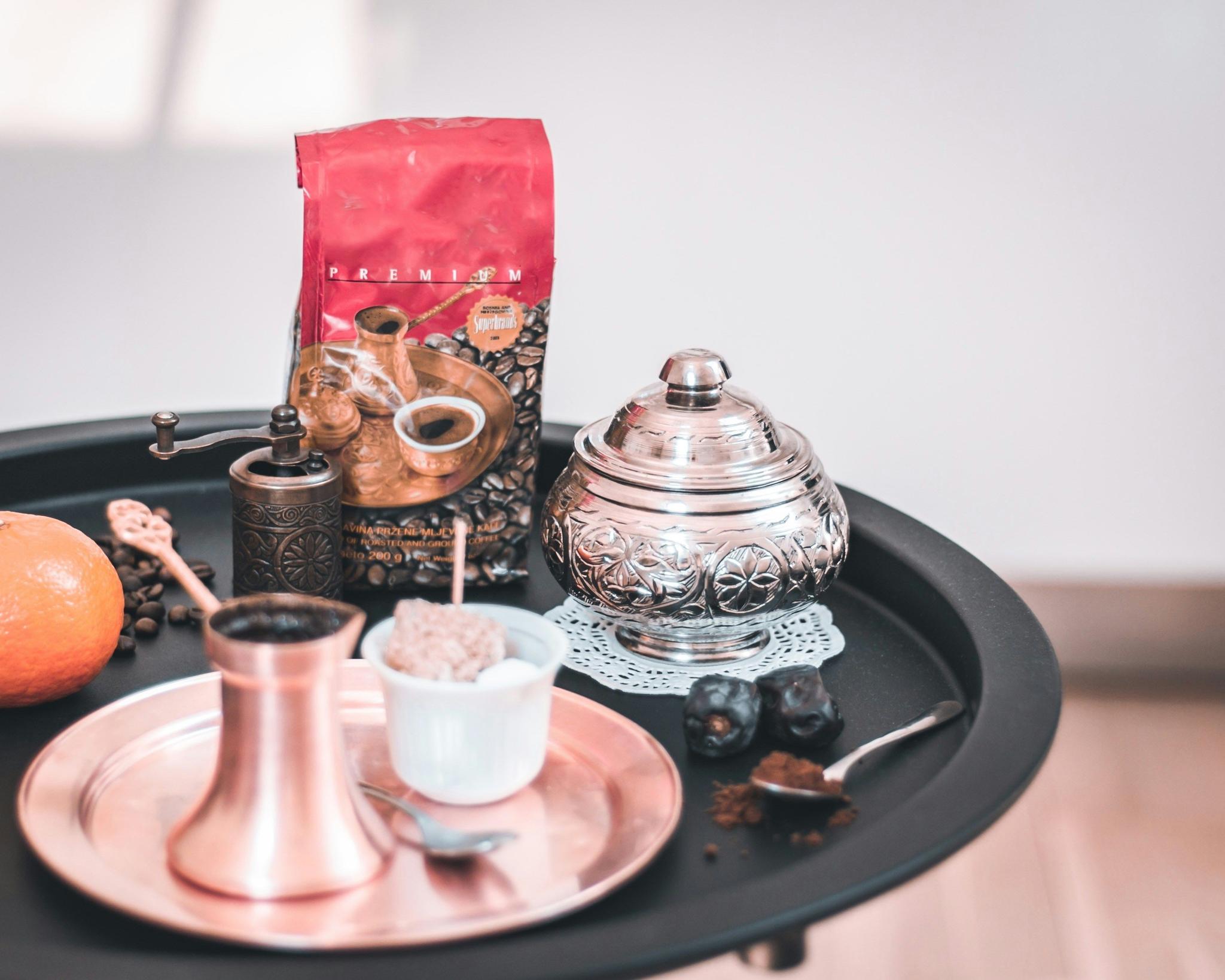
- Sit over Bosnian coffee poured from a copper džezva, with a cube of rahat lokum on the side.
Where to visit in Bosnia and Herzegovina?
How much can you fit in? More than you'd think, though two-lane mountain roads slow everything down. Most of Herzegovina's highlights sit close to Mostar, while the northwest needs a car or real patience with buses. These are the 12 places to prioritise.
Wander Sarajevo's Old Town and Baščaršija
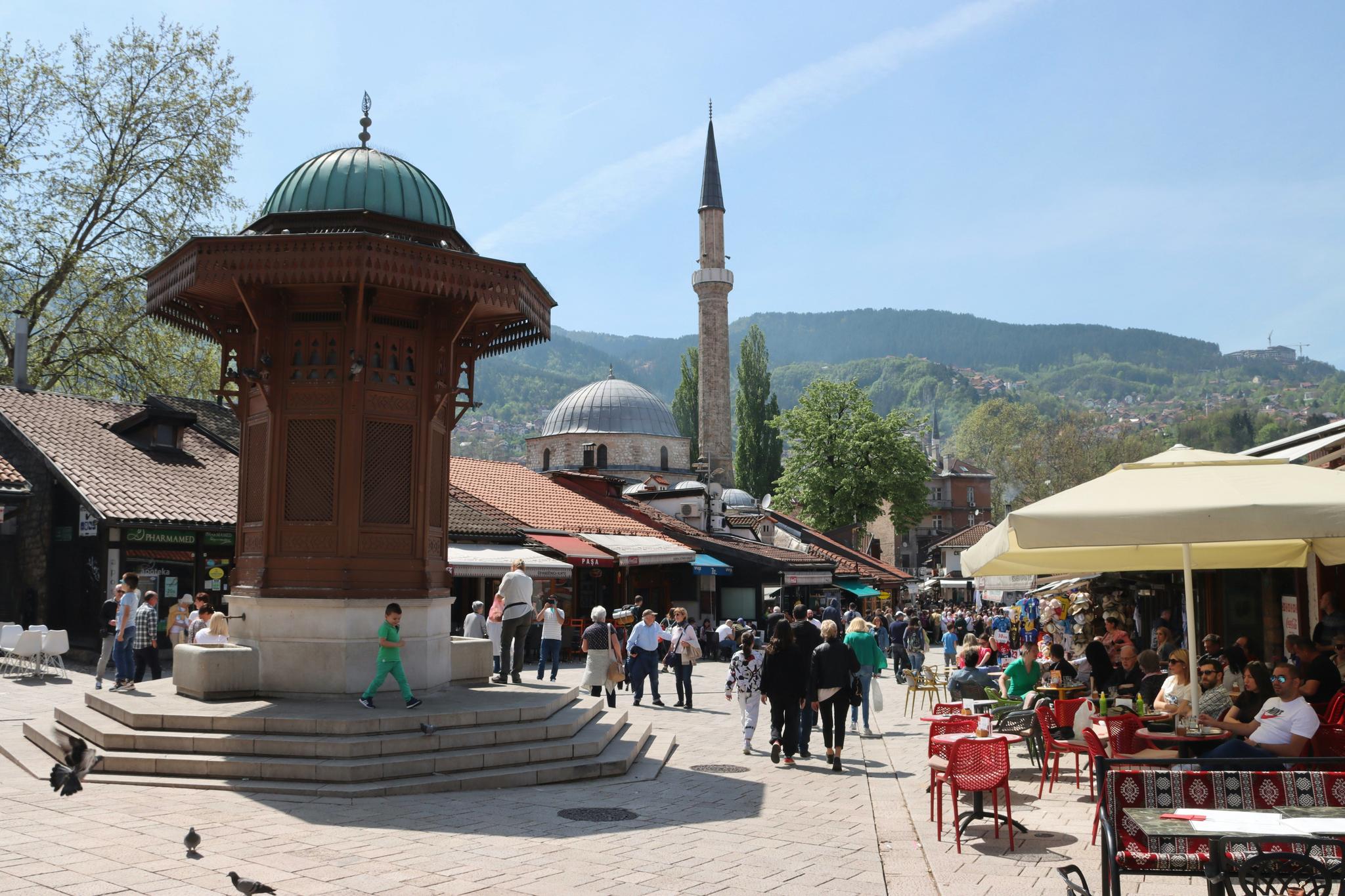
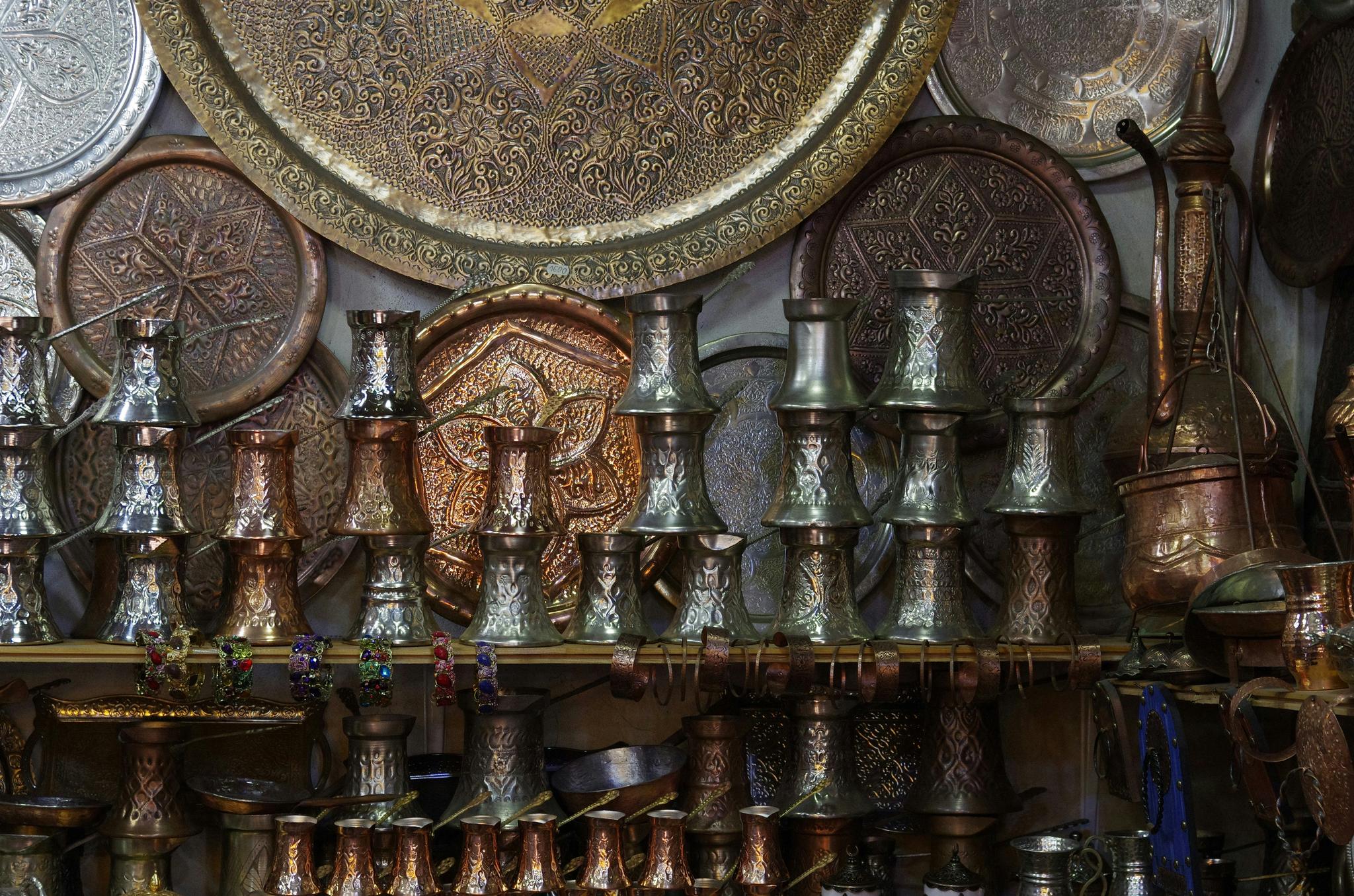
Start at the Sebilj fountain, an 1891 rebuild of a 1753 original. Within a few hundred metres the Ottoman bazaar gives way to Austro-Hungarian façades, and that one walk explains the city better than any museum. Baščaršija holds Morića Han, a caravanserai from 1551, and Kazandžiluk, the coppersmiths' street, where a copper coffee set costs 30 KM to 150 KM. Gazi Husrev-beg Mosque dates from 1531, and during visiting hours you can go in with a guide for 3 KM. Vijećnica, the 1894 City Hall, reopened in 2014. Give it a full day.
Understand the siege and ride up Trebević
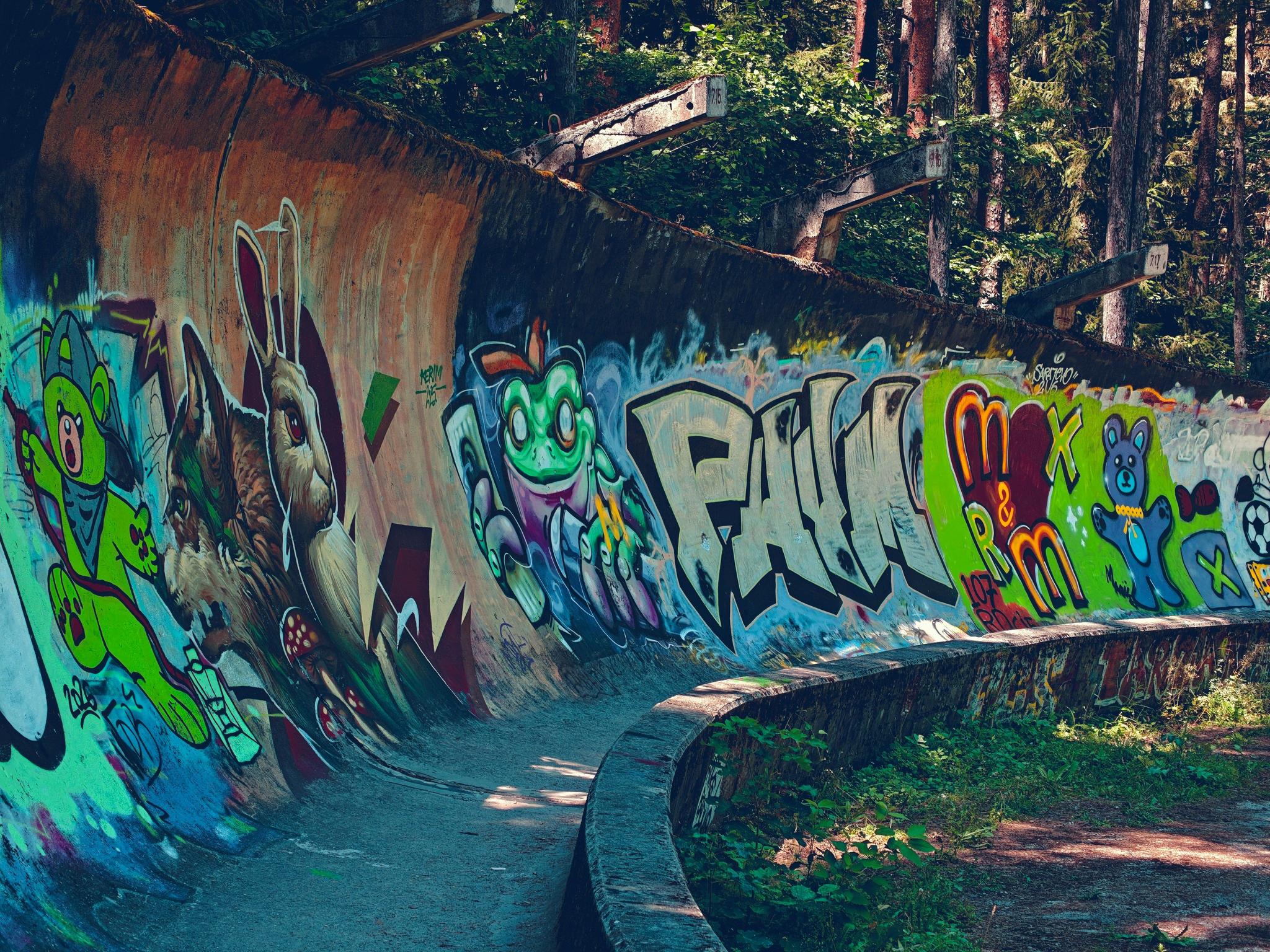
Sarajevo was besieged from 5 April 1992 to 29 February 1996, 1,425 days and the longest siege of a capital city in modern history. The Sarajevo Tunnel Museum at Butmir makes it concrete. About 125 m of the 800 m tunnel is open to visitors, entry is 20 KM in cash, and it's about 15 minutes by taxi from the centre. In town, the War Childhood Museum (15 KM) is the one we'd make time for if you only manage one, and Galerija 11/07/95 covers the Srebrenica genocide. Afterwards, the Trebević cable car, reopened in 2018, climbs in 7 to 9 minutes to a top station a few minutes' walk from the old Olympic bobsleigh track.
Stay overnight in Mostar
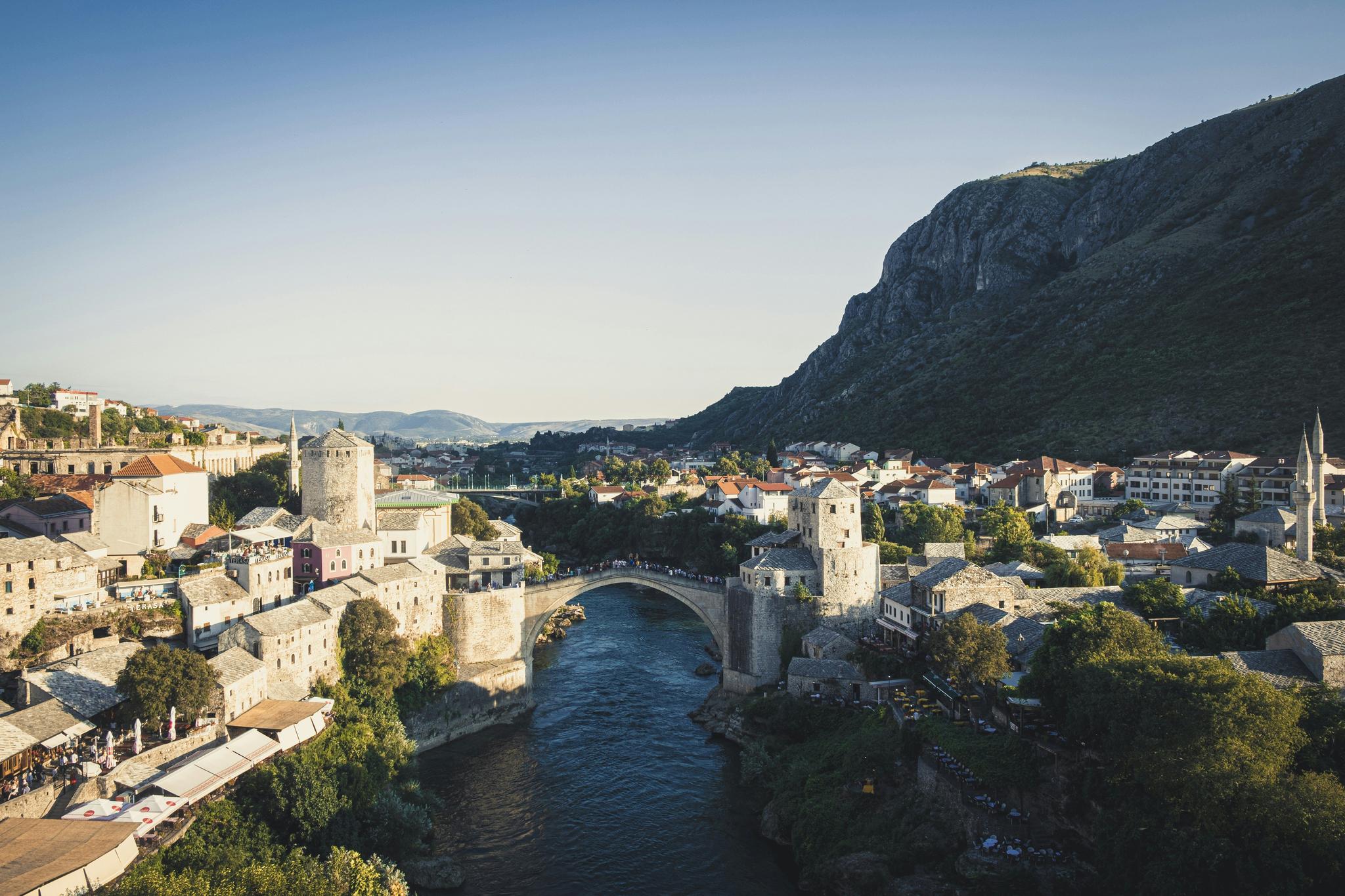
We'd sleep in Mostar's old town rather than see it on a day trip. Coaches from the coast fill Kujundžiluk by day, and the lanes go quiet after dark. Stari Most was built between 1557 and 1566, destroyed on 9 November 1993 and reopened on 23 July 2004, rebuilt in local tenelija stone. It's free to cross. In summer, divers collect money from onlookers before dropping about 20 m into the Neretva, a tradition with formal competitions since 1968. Watch rather than try it, as untrained jumpers have been badly hurt and killed. For the classic view of the arch, pay the small fee at the Koski Mehmed-pasha Mosque and look from its courtyard or minaret. Then come back at dusk.
See Blagaj Tekke at the source of the Buna
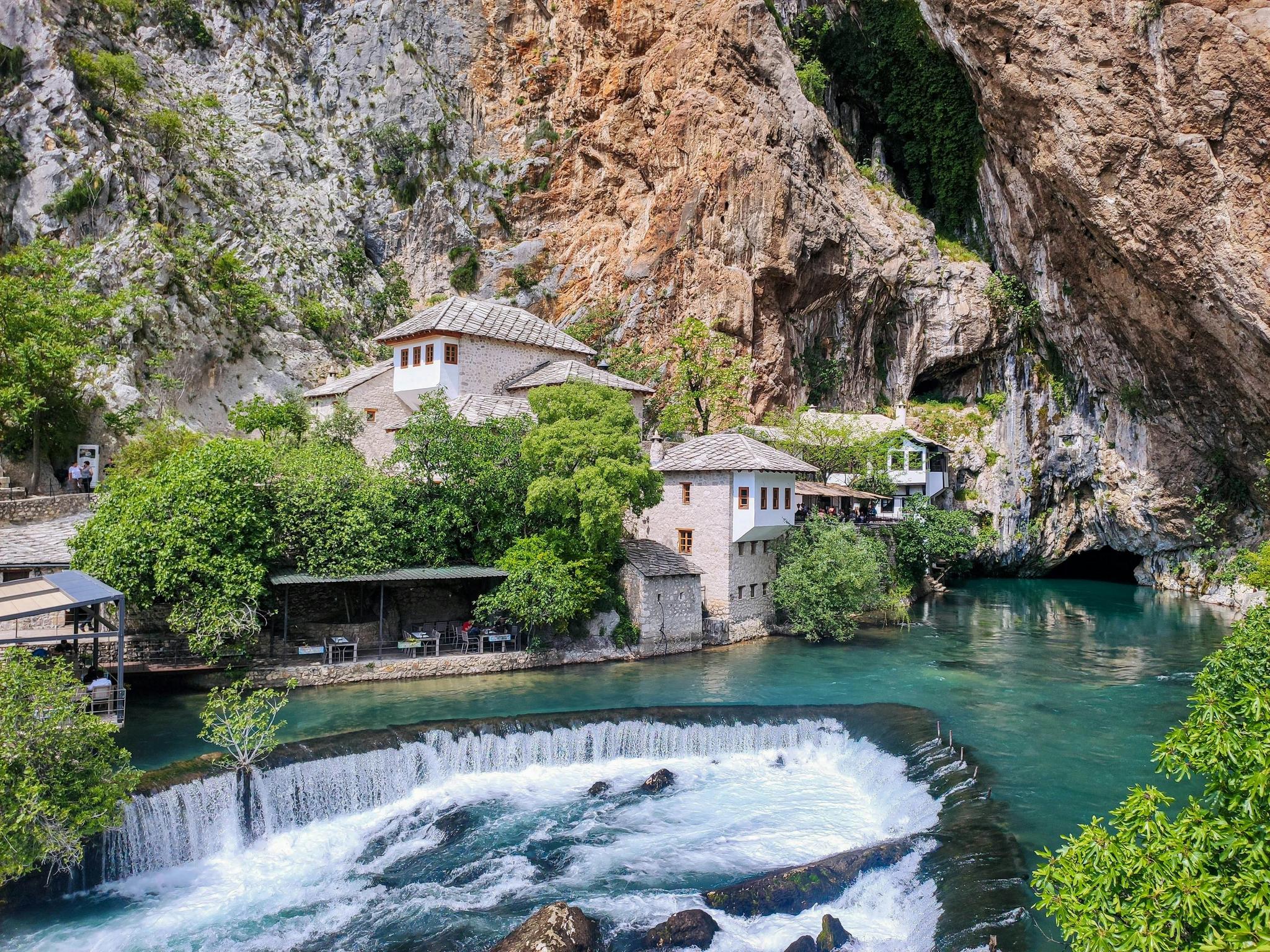
Is Blagaj worth the detour? Yes, if you get there before the coach tours. The dervish house was built around 1520 at the Buna spring, one of Europe's strongest karst springs, where water emerges at an average of about 43 m³ a second and about 11 °C all year. It's 12 km to 14 km from Mostar, about 30 minutes on local bus 11 from Španski trg, or about 20 KM to 30 KM by taxi. There's a small entry fee, and modest dress is expected inside. Summer opening starts at 8am. Be there for it.
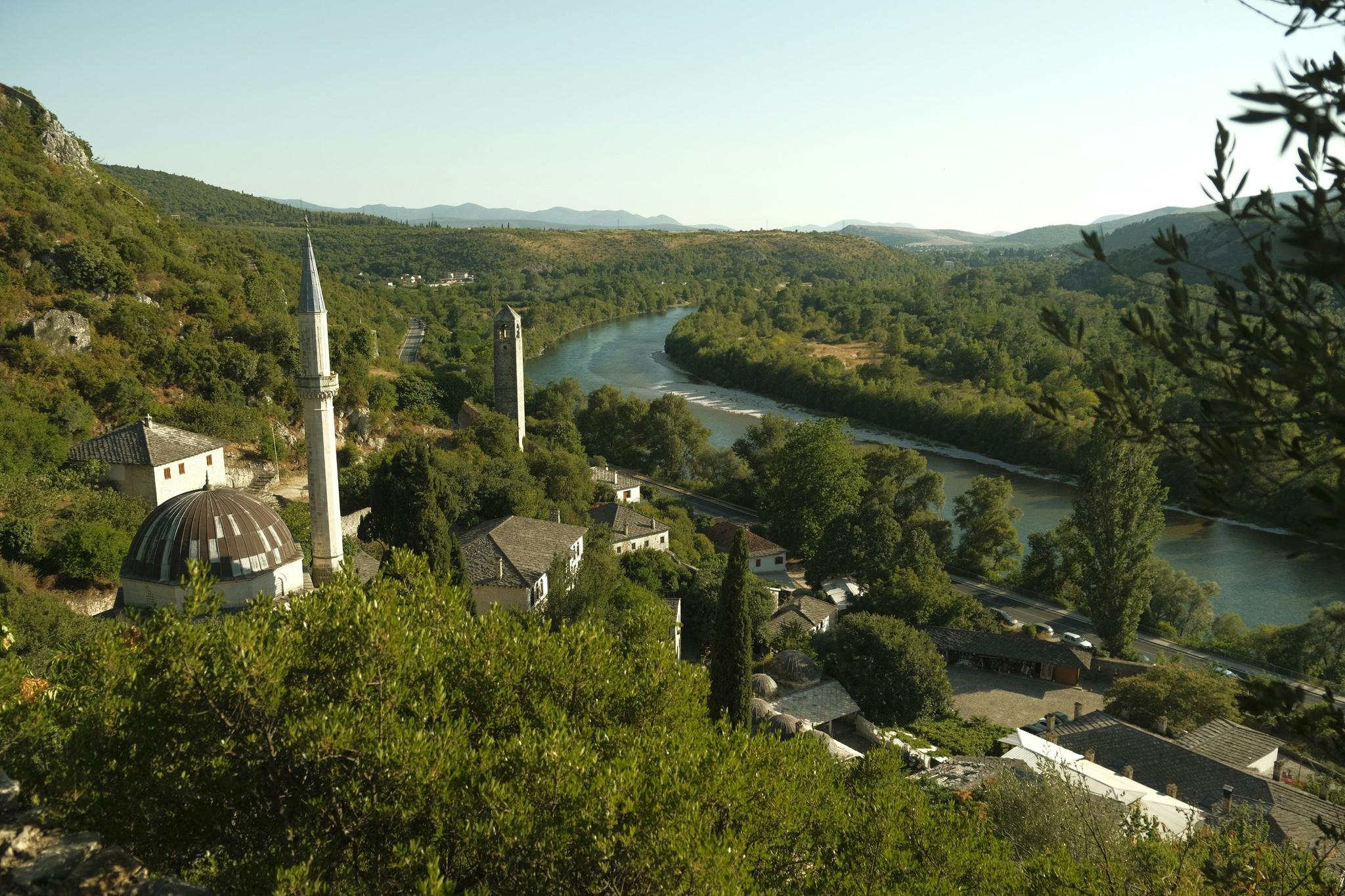
Climb through Počitelj at sunset
Počitelj stacks up a hillside above the Neretva about 30 km south of Mostar. The village was fortified between 1463 and 1471 and stayed Ottoman until 1878, and today it's a National Monument on the UNESCO Tentative List. The climb up its stone lanes is the visit, so come late in the day and walk to the tower for sunset over the river. Buses pass on the main road below, but a car or tour is far easier, and it fits neatly into one loop with Blagaj and Kravica.
Swim below Kravica waterfall
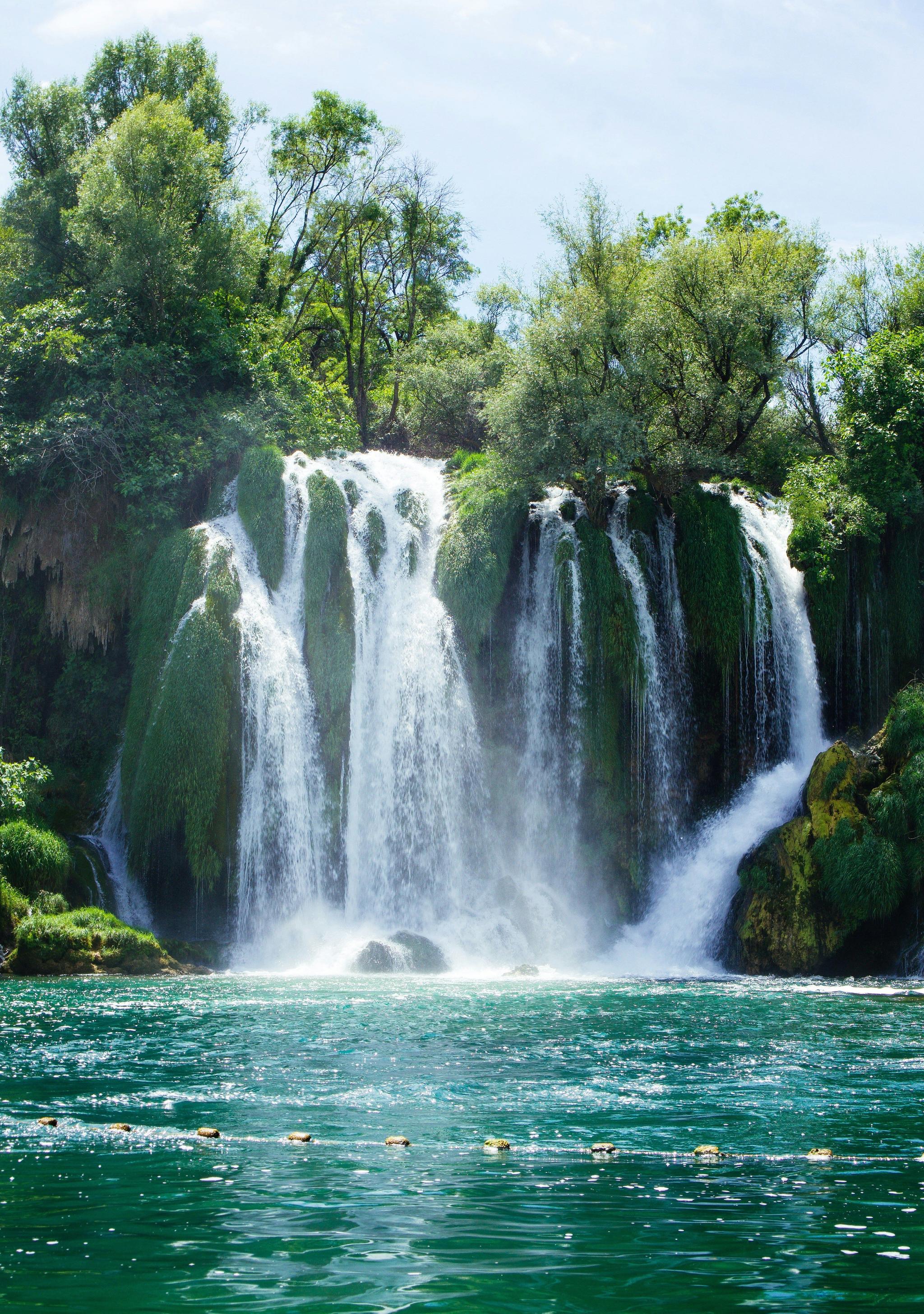
Kravica sits near Ljubuški, about 40 km from Mostar, and in summer people swim below the falls at their own risk. Entry is 20 KM for adults in 2026, free for under-7s, and opening runs from 7am to 10pm between June and September, closing at 5pm in winter. July and August afternoons are packed. Go first thing in the morning, or in May or late September. You need a car, taxi or tour, and it pairs well with Počitelj on the same day.
Break the journey in Jajce
Jajce was the capital of the medieval Kingdom of Bosnia, and its Pliva waterfall, around 20 m high, drops right in the town centre. A small town holds a lot, from the Pliva watermills (mlinčići) and the catacombs to a Mithraeum from the 2nd to 4th century and the AVNOJ museum, where the second AVNOJ session met on 29 November 1943. Jajce is on UNESCO's Tentative List, not the World Heritage List, whatever older guides say. It's 3 h 30 to 3 h 45 by bus from Sarajevo. Use it to break the long drive to Bihać, with Travnik on the way.
Raft and walk in Una National Park
Una National Park is Bosnia's answer to Plitvice, with far fewer people. Entry to Štrbački buk costs from 8 KM in winter to 20 KM in July and August, and upstream, Martin Brod has travertine cascades on the UNESCO Tentative List. Between March and October you can raft about 15 km below Štrbački buk in 3 to 4 hours with a licensed skipper, paying the park's river fee on top of the operator's price. Bihać is 6 h 30 or more from Sarajevo by bus, so this works best by car or coming from Croatia, since Plitvice is about an hour away.
Drink local wine in Trebinje
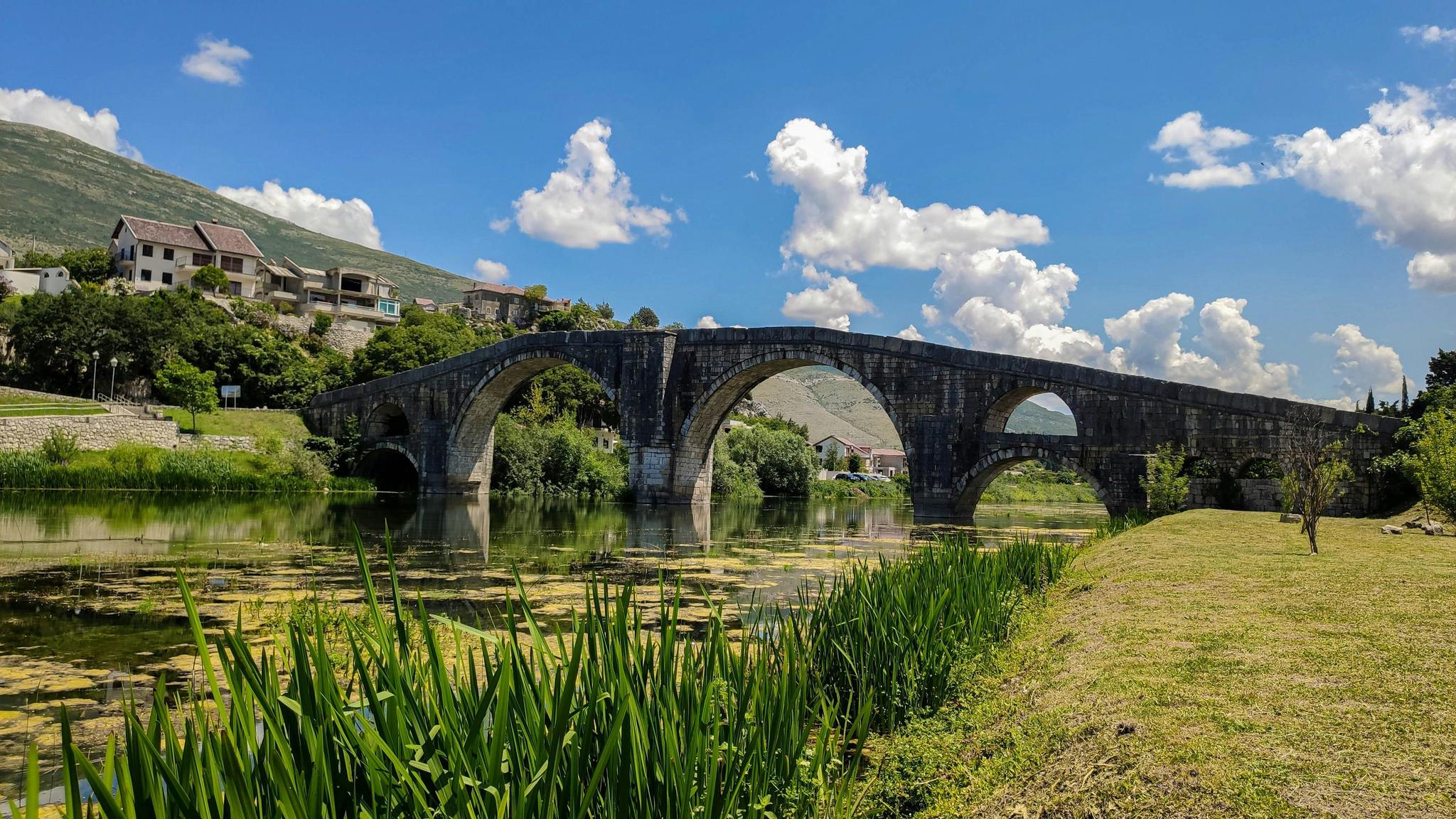
Trebinje is about 30 km from Dubrovnik, and we think it's wasted as a day trip. Its old town is shaded by plane trees, the Arslanagić Bridge dates from 1574, and the Hercegovačka Gračanica monastery was completed in 2000. Tvrdoš monastery has made wine since the 15th century and still runs a winery, while Vukoje and Anđelić are two more cellars to try. Stay a night and taste without one eye on the border queue. From Sarajevo the bus takes about 5 hours.
Cross the bridge in Višegrad
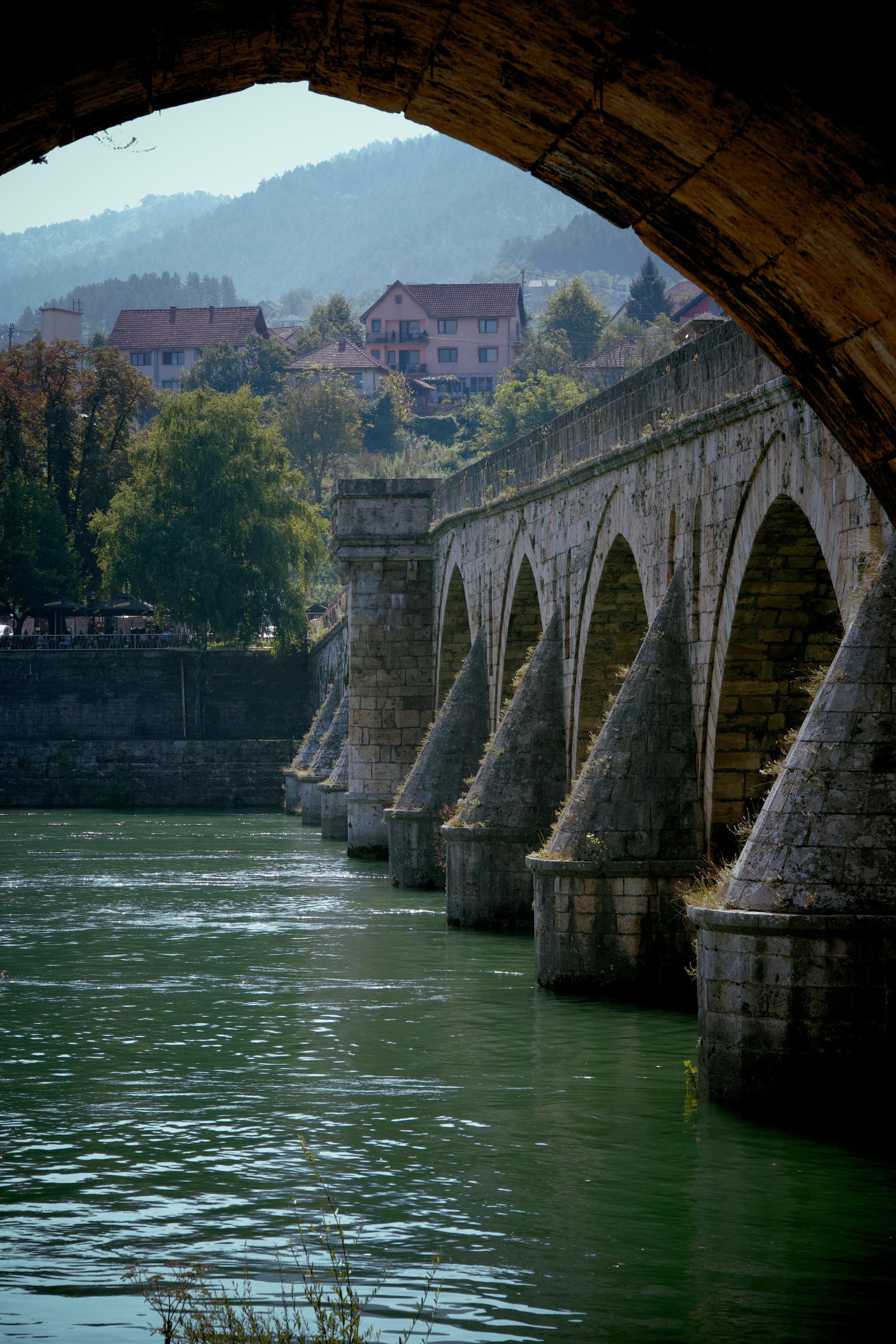
Read Ivo Andrić's The Bridge on the Drina before you come. The 1945 novel is set around the Mehmed Paša Sokolović Bridge, built between 1571 and 1577 by Mimar Sinan, 179.5 m long with 11 arches and a UNESCO World Heritage Site since 2007. Andrić won the Nobel Prize in Literature in 1961, and the town also has Andrićgrad, a newly built stone town. Buses run from Sarajevo, so check times at the station, and by car Višegrad pairs well with Sutjeska National Park further south.
Go underground at Tito's bunker in Konjic
ARK D-0 took from 1953 to 1979 to build and cost USD $4.6 billion. Inside are about 6,500 m² and over 100 rooms, designed to keep 350 people going for six months, and art biennials held there between 2011 and 2019 left over 50 artworks behind. It still belongs to the Ministry of Defence, so you can only visit on a guided tour booked ahead. Konjic itself has an Ottoman stone bridge and is the base for Neretva rafting. Cold War paranoia beside an emerald river makes one of the stranger half-days in the Balkans.
Hike to Lukomir in the Bjelašnica highlands
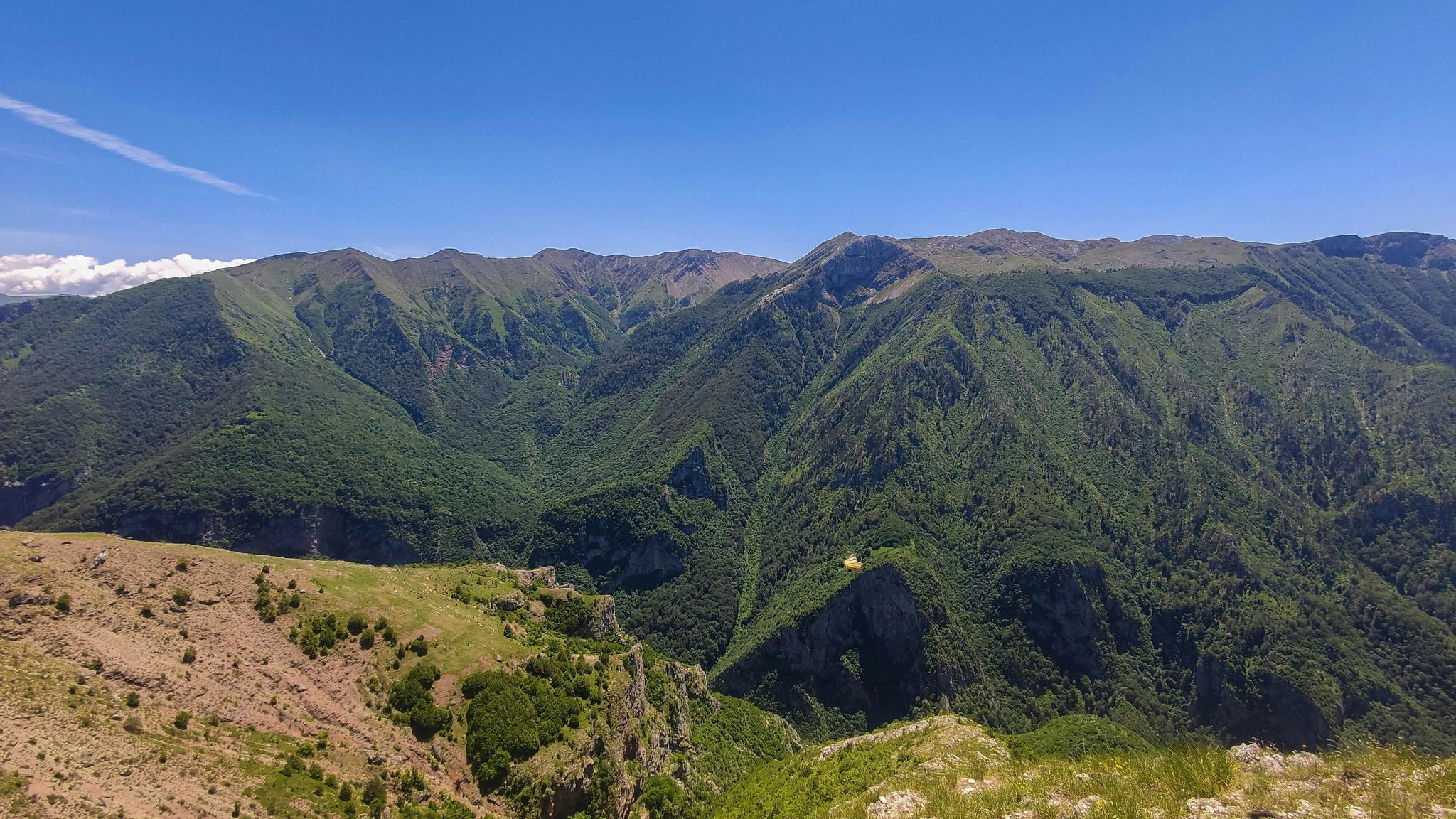
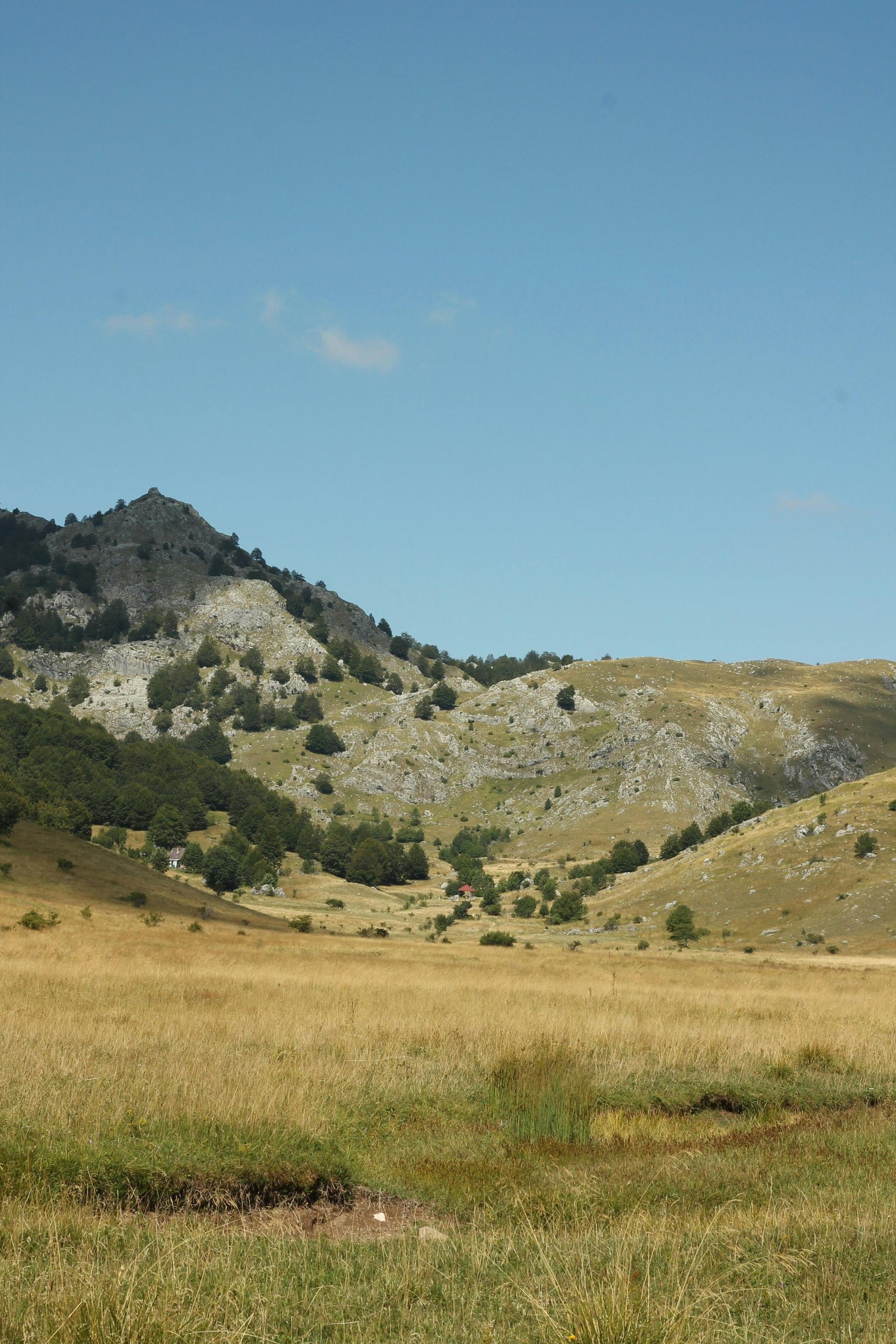
Lukomir is the highest village in the country at 1,495 m, and the most remote-feeling place you can still do as a day trip from Sarajevo, about 50 km away. Only 13 people lived there at the 2013 census. The village is a National Monument, there are medieval stećci nearby, and it sits on the rim of the Rakitnica canyon. Snow closes the road in winter, so go between late spring and autumn, and walk only on marked trails or with a local guide.
Bosnia and Herzegovina itinerary ideas for your trip
The first route leans on buses and the train, the second on a hire car. The shorter one also works in reverse from Dubrovnik.
5 to 7 day Bosnia and Herzegovina itinerary
- Day 1-2: Sarajevo, with Baščaršija, the War Childhood Museum, the Tunnel Museum by taxi and the Trebević cable car.
- Day 3: Morning train to Mostar and the bridge at sunset.
- Day 4: Blagaj, Počitelj and Kravica by tour or taxi from Mostar.
- Day 5-6: Bus to Trebinje (about 5 hours from Sarajevo, check current times) for Tvrdoš and a night of wine, then on to Dubrovnik or back to Sarajevo.
- Day 7: Optional day tour to Lukomir, or to Konjic and Tito's bunker.
10 to 14 day Bosnia and Herzegovina itinerary
- Day 1-2: Sarajevo.
- Day 3: Lukomir via Bjelašnica.
- Day 4-5: Višegrad, then Sutjeska National Park for Perućica forest and a guided climb of Maglić.
- Day 6: Trebinje and its wineries.
- Day 7: Stolac and the Radimlja stećci, Počitelj and Blagaj, ending in Mostar.
- Day 8: Kravica in the morning, Čitluk wineries in the afternoon.
- Day 9: Konjic for the bunker, plus Neretva rafting in summer.
- Day 10: Travnik to Jajce.
- Day 11-12: Martin Brod and Una National Park.
- Day 13-14: Drive back to Sarajevo, or cross into Croatia via Plitvice.
To shuffle these days, add a ski stop or swap Sutjeska for a second night in Mostar, build your own version of the route in the Guided app.
Fun things to do in Bosnia and Herzegovina
The rivers are the reason we'd come back, and most of the best days here are spent on or beside one.
Raft the Neretva or the Una
The Neretva near Konjic gives you about 18 km of grade II to IV water, with full-day trips from about 100 KM. On the Una, rafting runs from March to October with a licensed skipper. Spring brings the highest water, so go then if you want it rough.
Walk the Bjelašnica highland villages
The plateau above Sarajevo links Lukomir and Umoljani with paths along the Rakitnica canyon rim. Stick to the marked routes or hire a local guide.
Ski Jahorina or Bjelašnica
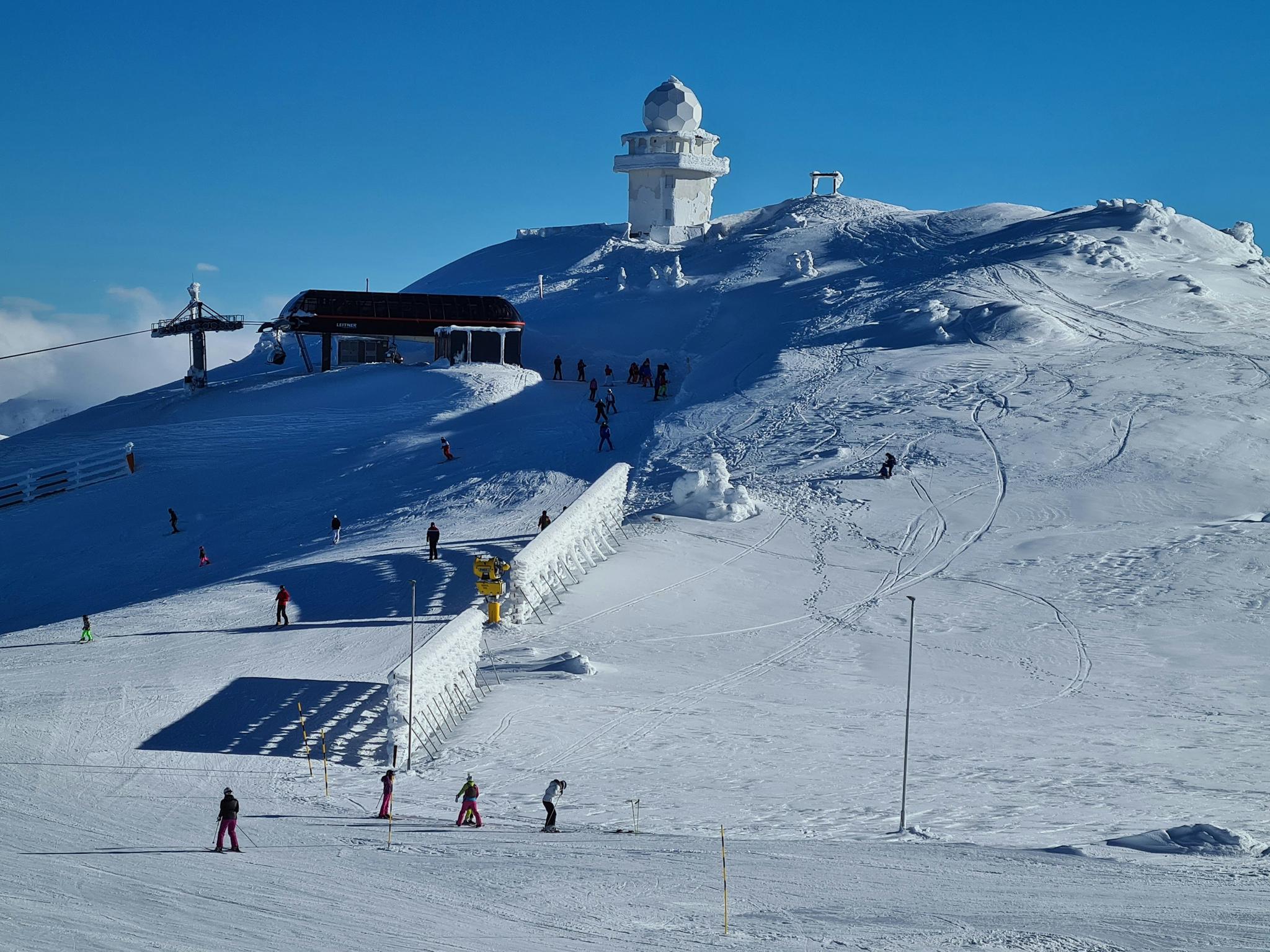
Both mountains were 1984 Winter Olympic venues and both sit close to Sarajevo. A Jahorina adult day pass cost 73 KM to 86 KM in 2025/26, and a Bjelašnica day pass is about 50 KM for 2026/27, card only since the resort went cashless. For Olympic slopes, we think that's some of the best-value skiing in Europe.
Slow down over Bosnian coffee
Bosnian coffee arrives in a copper džezva and is poured into a small fildžan cup, with a sugar cube and a piece of rahat lokum on the side. Unlike Turkish coffee, the grounds go into water that's already boiling. A cup costs 2 KM to 4 KM, and the point is to take 20 to 30 minutes over it.
Taste Herzegovina wine
Herzegovina has more than 30 wineries. Žilavka is the local white, and Blatina is a red that can't pollinate itself and needs a partner variety planted nearby, which earned it the nickname "empty barrel". Tastings cost about 20 KM to 80 KM and the season runs from Easter to October. Stay in Mostar or Trebinje and spread the cellars over two afternoons.
When to go to Bosnia and Herzegovina?
Sarajevo sits in a valley, with average highs of 28 °C in July and August, January nights below freezing and about 22 days of snow a year. Mostar averages highs of 33 °C in summer, days near 40 °C happen, and the national record of 46.2 °C was set there in 1901. Our pick is autumn, for the harvest and quieter roads.
- Spring (April to May): high rivers for rafting and comfortable days in Mostar, with Catholic Easter in late March and Orthodox Easter in early May in 2027.
- Summer (June to August): Baščaršija Nights runs all July and the Sarajevo Film Festival is in mid-August. Mostar's traditional dives are in late July, when the town is at its hottest.
- Autumn (September to October): grape harvest and autumn colour with fewer crowds, though rain picks up in Herzegovina from late September.
- Winter (December to March): skiing and a cheap, snowy Sarajevo, but check air quality before planning long days outdoors in Sarajevo from December to February, and expect the highland villages to be hard to reach.
Did you know you can create your own itinerary?
Now that you know what to see in Bosnia and Herzegovina and where to stay, you can start creating your own trip. Do you want two slow nights in Mostar's old town, or more time on the Una and the Olympic mountains above Sarajevo? It's all up to you. You can easily create your own trip in the Guided app for free, or use trips shared by others.
Where to stay in Bosnia and Herzegovina?
Split your nights between Sarajevo and Mostar and you've covered the essentials. A hostel dorm in either costs 20 KM to 35 KM, a mid-range hotel or pansion about 100 KM to 175 KM, and boutique places in Mostar about 155 KM to 255 KM.
Baščaršija and Stari Grad, Sarajevo
Stay here on a first visit if you want to walk everywhere. The bazaar and the Latin Bridge are on your doorstep, though cafés on the main lanes charge a little more than those a few streets back.
Marijin Dvor and Ciglane, Sarajevo
This Austro-Hungarian and modern centre lies about 2 km west of the old town, on the tram line and noticeably quieter at night. It suits longer stays.
Mostar old town
There's no better place to wake up in the country. Once the day-trippers leave, the lanes around the bridge are yours, and you can be on Stari Most before breakfast.
Trebinje
A small, relaxed base for wineries and an easy hop from Dubrovnik, with mid-range rooms from about 80 KM to 125 KM.
Jajce or Bihać
For the northwest you need at least one night up here. Jajce works as a single stop on the way to the Una, while Bihać puts you close to Štrbački buk and the rafting.
Getting around when visiting Bosnia and Herzegovina
There's no continuous motorway from Sarajevo to the coast, so expect two-lane mountain roads. Wizz Air and Ryanair fly to Sarajevo, Tuzla and Banja Luka, so check routes before you book, though many visitors fly into Dubrovnik or Split and cross by bus. From Sarajevo airport, the Centrotrans shuttle to Baščaršija costs 5 KM.
Take the train from Sarajevo to Mostar
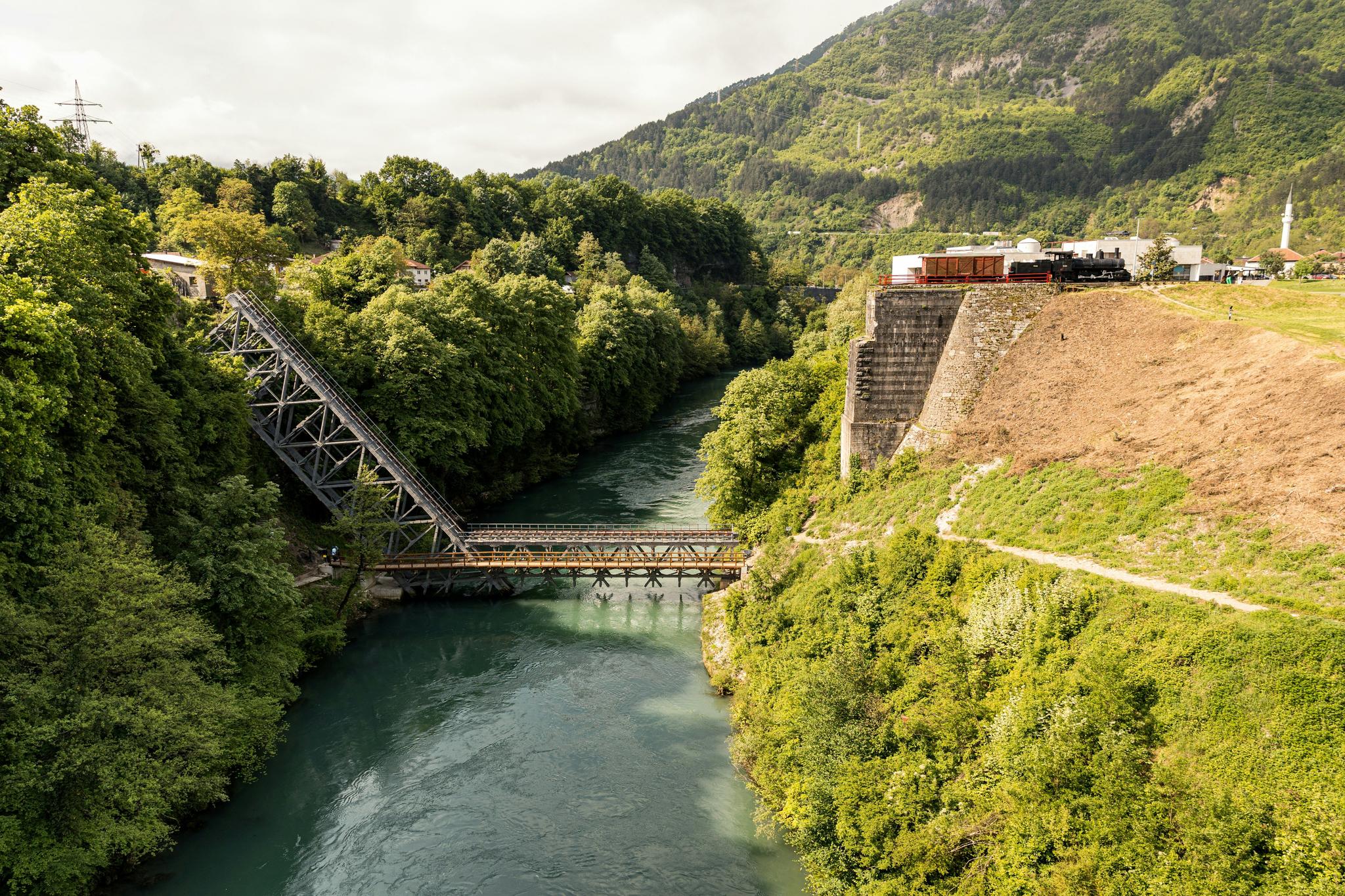
The Sarajevo-Mostar line, run by ŽFBH, reopened to passengers in February 2025 after floods in October 2024, and the ride through the Neretva gorge is widely rated one of the most scenic in the Balkans. There are two trains a day each way, morning and late afternoon, taking about 2 hours with a stop at Konjic. Buy tickets at the station. There are no trains to Belgrade or Zagreb.
Use buses for everything else
Buses cover the whole country. Sarajevo to Mostar has 14 or more departures a day from about 17 KM, and Centrotrans and Globtour run Mostar to Dubrovnik in about 3 h 25. Sarajevo has two bus stations. The main one, next to the railway station, serves the Federation, Croatia and Western Europe, while Istočno Sarajevo (Lukavica) serves Republika Srpska, Serbia and Montenegro. Book on GetByBus or at the counter.
Use trams and taxi apps in Sarajevo
KJKP GRAS runs Sarajevo's trams. A single costs 2.20 KM from the driver or through the Javni prijevoz app, and a day ticket is 7.10 KM. There's no Uber or Bolt, so use the mojTaxi app or Sarajevo Taxi (1515), and carry cash because street taxis rarely take cards. Some drivers won't cross the boundary between the Federation and Republika Srpska.
Hire a car for Herzegovina and the national parks
Outside the Sarajevo to Mostar corridor a car makes life much easier, above all for Kravica and Sutjeska. Keep dipped headlights on all year and fit winter tyres from mid-November to mid-April. The UK FCDO says you need a 1968 International Driving Permit to rent.
Food and drinks you should try when visiting Bosnia and Herzegovina
What should you order first? Ćevapi, then work through the bakery counter, because food here is cheap enough to eat out every meal. A sit-down lunch with soup, a main and a drink costs about 16 KM to 27 KM. Tipping isn't obligatory, but people round up in cafés and leave about 10% in restaurants.
Ćevapi
Small grilled sausages of minced meat, served in somun flatbread with raw onion, with kajmak as an extra. Order a petka (five) or a desetka (ten). A desetka costs about 10 KM, and Željo and Hodžić in Baščaršija are two of the best-known names.
Burek and pita
Ask for burek and you'll get meat, because in Bosnia that's the only filling that counts. The cheese version is sirnica, spinach is zeljanica and potato is krompiruša, at about 3 KM to 6 KM a portion. Go in the morning while it's warm.
Bosanski lonac and begova čorba
Bosanski lonac is a slow pot of meat and vegetables, and begova čorba is a soup of chicken and okra. Finish with tufahija, a poached apple stuffed with walnuts.
Sarajevsko pivo and rakija
Sarajevska pivara has brewed since 1864, and a half-litre of draught costs 4 KM to 6 KM. Rakija, often šljivovica, comes in small glasses for about 4 KM to 6 KM. A glass of Herzegovina wine in Mostar is about 5 KM, and we'd take a cold Žilavka over beer on a hot afternoon.
Culture and local habits you'll notice when visiting Bosnia and Herzegovina
Bosnia and Herzegovina has three constituent peoples. At the 2013 census, Bosniaks made up 50.1% of the population, Serbs 30.8% and Croats 15.4%. Bosnian, Croatian and Serbian are mutually intelligible, written in Latin and Cyrillic script. Don't ask people which group they belong to, and let your hosts bring up the war if they want to.
At home, hosts traditionally serve three coffees, the dočekuša to welcome you, the razgovoruša for conversation and the sikteruša, which means it's time to go. You'll hear "Bujrum" (welcome) at the door, shoes come off inside, and hosts often insist on paying.
Looking for more unique places, trips and activities?
Subscribe to our Guided Newsletter for more travel inspiration.
Costs of a holiday to Bosnia and Herzegovina
Is Bosnia and Herzegovina cheap? By European standards, yes. Its cost of living sits about a quarter below neighbouring Croatia and a little below Serbia and Montenegro, and further afield it's around 30% cheaper than Slovenia and a touch cheaper than Albania. Dinner with wine runs about 30 KM to 45 KM here, against €35 to €60 in Dubrovnik. The convertible mark (KM) is pegged at €1 = 1.95583 KM, and only Mostar's old town in high summer feels priced for visitors.
Food & Drink

Coffee
2 KM – 4 KM
Lunch
10 KM – 25 KM
Beer
4 KM – 6 KM
Accommodation
Hotels
100 KM – 175 KM
Airbnb
150 KM – 175 KM
Hostel dorm
20 KM – 35 KM
Transport
Intercity bus
17 KM – 65 KM
Public Transport
2.20 KM – 7.10 KM
Car Rental
25 KM – 40 KM
Attractions
Museums
4 KM – 15 KM
Big Attractions
20 KM – 30 KM
Theatre
12 KM – 20 KM
Practical tips for visiting Bosnia and Herzegovina
The UK FCDO doesn't advise against travel to any part of Bosnia and Herzegovina, and the US State Department rates it Level 2, exercise increased caution. A few rules differ from the EU countries around it.
✔ Check entry rules and get stamped in and out
Many nationalities, including the UK, EU and US, can visit visa-free for up to 90 days in any 6 months. The country is outside the EU and Schengen, so days here don't count toward your Schengen 90/180, but EES applies when you cross back into Croatia, including on the coast road through Neum. Get stamped in and out. Hotels register you with the police automatically, and in a private rental you should ask your host to register you promptly. Check GOV.UK entry requirements or the Service for Foreigners' Affairs before you travel.
✔ Carry convertible marks and some cash
The convertible mark (KM) is the only legal tender. Most hotels and restaurants take cards, but bakeries and taxis want cash, and so does the Tunnel Museum. Spend your marks before you leave, as they're hard to exchange abroad.
✔ Stay on paved roads and marked trails
At the end of 2024, about 1.6% of the country was still recorded as mine-hazardous, a legacy of the 1992 to 1995 war. Most of it is rural, such as former front lines, road verges, abandoned buildings and woods. Stay on paved roads and marked trails, hire a guide for anything off-trail, and download BHMAC's BH Mine Suspected Areas app if you hike. In Sarajevo, watch for pickpockets and don't leave a car on Trebević. Politics can be tense, and protests are infrequent and usually peaceful, but avoid demonstrations. The emergency number is 112.
✔ Sort insurance and your phone plan
EHIC and GHIC cards aren't valid here, so take travel insurance that includes medical evacuation. Bosnia and Herzegovina isn't part of EU roaming either, so check your provider's rates or buy a local SIM or eSIM.
✔ Dress modestly in mosques and take your time
Dress modestly at religious sites and take your shoes off in mosques and homes. If someone invites you for coffee, say yes and don't rush it.
Fun facts about Bosnia and Herzegovina
We think the trivia here beats most of Europe's, and this is our shortlist.
- Sarajevo hosted the 1984 Winter Olympics, and the mascot was Vučko the wolf.
- The assassination that set off the First World War happened at Sarajevo's Latin Bridge on 28 June 1914.
- The Sarajevo Film Festival began during the siege, in 1995.
- The coastline is only about 20 km long, all of it around Neum.
- The country has five UNESCO World Heritage Sites, most recently Vjetrenica Cave in 2024.
- Sarajevo's Eternal Flame has burned since 6 April 1946.
The Latin Bridge, the Olympic bobsleigh track and the Tunnel Museum all fit into one long day in Sarajevo, which is a good reason to give the capital at least two.
Ready to map out your trip to Bosnia and Herzegovina?
We hope this Bosnia and Herzegovina travel guide has given you a clear starting point for your trip. Stay tuned for more inspiration, itineraries and practical tips to help you shape your perfect holiday to Bosnia and Herzegovina. And don't forget to check out our Guided app, where you can create your own trip or use trips shared by other travellers for free.
FAQS about visiting Bosnia and Herzegovina
How many days do you need in Bosnia and Herzegovina?
Three days covers Sarajevo and Mostar. Five to seven days adds Blagaj, Počitelj, Kravica and Trebinje or a highland day, and 10 to 14 days with a car opens up the northwest, from Jajce to the Una, plus Sutjeska in the southeast. In the Guided app, you can build your own route and see how many stops fit.
What is the best part of Bosnia and Herzegovina to visit?
Sarajevo is the best single place for history and food. Herzegovina wins for summer and wine, and nature lovers should head for Una or Sutjeska.
What is Bosnia and Herzegovina known for?
Mostar's Stari Most, Sarajevo's Baščaršija, the 1984 Winter Olympics and the 1914 assassination. The war of the 1990s is part of the story too, told at places such as the Tunnel Museum and the Srebrenica Memorial Centre, which is open 8am to 4pm and should be booked through its online form.
Can you travel around Bosnia and Herzegovina without a car?
Yes, for the main route. Trains and frequent buses link Sarajevo with Mostar via Konjic, and buses also reach Jajce and Trebinje. Kravica and the Bjelašnica highlands are easier with a car or tour, and Sutjeska needs a car.
Is Bosnia and Herzegovina expensive?
No. A coffee costs 2 KM to 4 KM and a hostel bed 20 KM to 35 KM. Add about 3 KM per person per night in tourist tax.
Is Bosnia and Herzegovina safe to visit?
The UK FCDO doesn't advise against travel to any part of the country, and the US State Department rates it Level 2 because of terrorism and landmines. Stay on paved roads and marked trails, as a small share of mostly rural land is still suspected of being mined.
Is Bosnia and Herzegovina in the EU, and can you pay in euros?
No. It's been an EU candidate since 15 December 2022 but isn't in the EU or Schengen. The convertible mark (KM) is pegged to the euro, and euros are often accepted in tourist areas at a rough rate with change in KM.
Can you visit Mostar on a day trip from Dubrovnik or Split?
Yes. It's about 3 hours each way from Dubrovnik and a little more from Split. Bring your passport and allow time for EES checks back into Croatia.
Plan your trip to Bosnia and Herzegovina in Guided.
Save the places you find, then let Guided lay out the days, the map and the details.
More in Europe
All destinations AlbaniaAlbania pairs a turquoise Ionian coast with Ottoman stone towns and wild mountains.
 AndorraAndorra is a tiny Pyrenean country known for ski slopes, Romanesque churches and hiking valleys.
 AustriaAustria is a beautiful alpine country known for its mountains, music, and imperial charm.
 BelgiumBelgium is known for medieval canal cities, beer, chocolate and the forested Ardennes.