


At 7:30pm on Tuesday 26 January 2027, a rocket will go up over Lerwick Town Hall. On that signal, almost 1,000 costumed guizers will set off through the streets with flaming torches, following a replica Viking longship they plan to burn. By then the short Shetland afternoon will be long gone.
We think the short days are the best-kept secret of Scotland in winter. Edinburgh's Hogmanay takes over the capital for four days from 29 December. A month later, Burns Night and Up Helly Aa fall on back-to-back nights, Monday 25 and Tuesday 26 January. That's a lot of fire and music packed into the weeks most people write off as too dark to travel.
Off-season travel is having a moment, and more people are swapping summer crowds for colder, quieter trips. A Scottish January rewards that choice with torchlit processions and a haggis that gets a poem recited at it before anyone eats it. Below is what happens at each event, followed by the practical side of the trip, from how much daylight you'll really get to whether the A9 will be open.
Edinburgh's Hogmanay, 29 December to 1 January
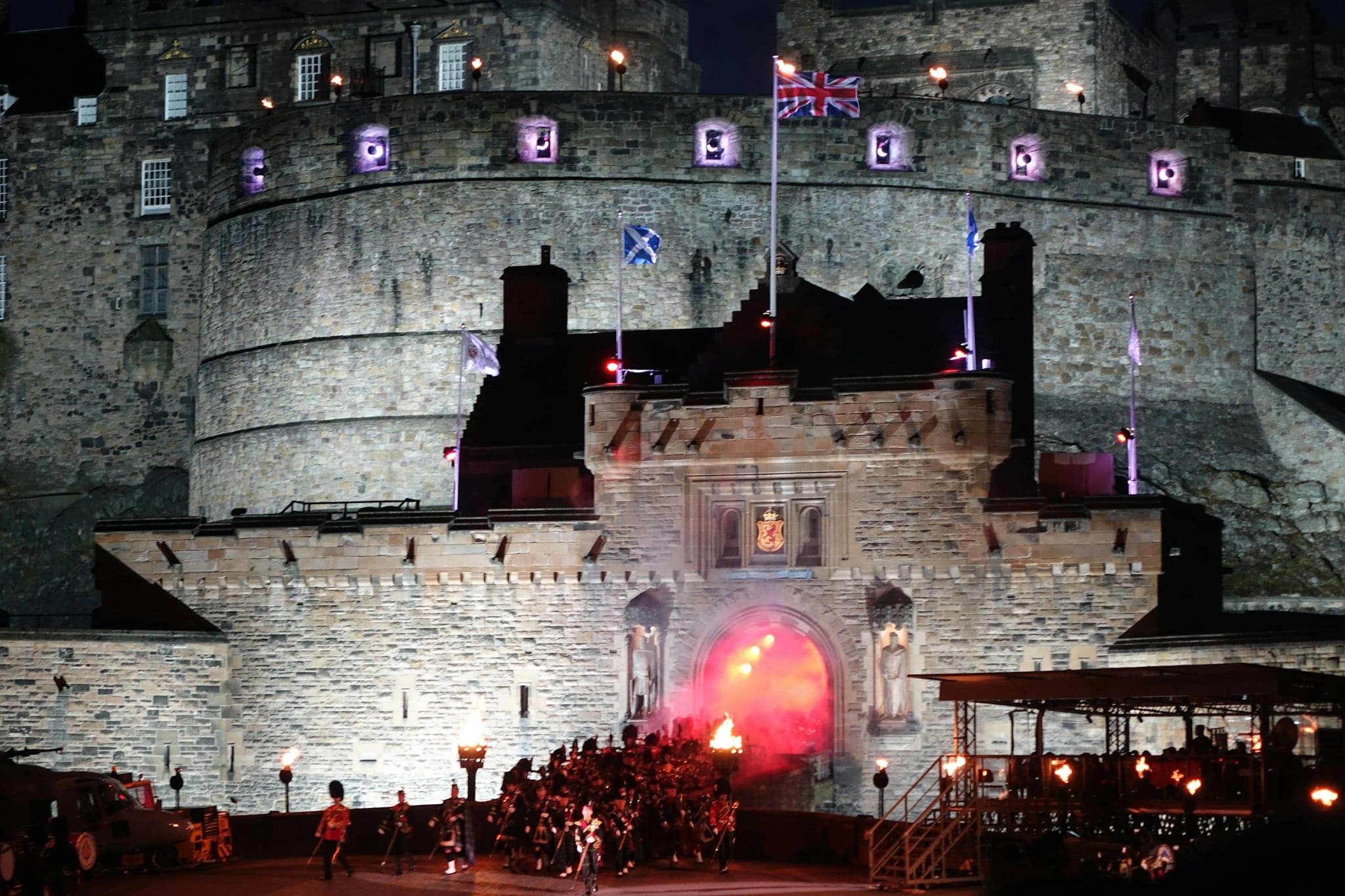
We'd say the best night of Edinburgh's Hogmanay is the first one, so get there by the 29th. That's the night of the Torchlight Procession. It starts at the Meadows and winds through the Old Town with fire performers, street theatre, pipe bands and drummers.
The 30th is quieter. The Night Afore Concert puts Scottish music on the Ross Bandstand in Princes Street Gardens, with Edinburgh Castle as the backdrop.
Hogmanay Eve, 31 December
The 31st splits into several events running in parallel, and you'll need to pick one. Families can start with the Bairns' Hogmanay Ceilidh Club in the afternoon. Later there's the evening Hogmanay Ceilidh Club, which has two dancefloors, and a Candlelit Concert at St Giles' Cathedral for anyone who wants a calmer night. The Concert in the Gardens is the big-name ticket. Past headliners include Pulp, Pet Shop Boys, Wet Leg and Paolo Nutini.
Then there's the Street Party on Princes Street. Around 45,000 people pack in for it, and it builds to the Midnight Moment countdown. Everyone should do the Street Party once. If you've done it before, we'd head to the Ceilidh Club instead. Dancing something like a Strip the Willow with strangers is a better way to see in the year than standing shoulder to shoulder on Princes Street.
New Year's Day moves at a slower pace. The First Footin' culture trail puts on free performances in pubs, cafes and landmark buildings around the city centre. Sprogmanay is a family afternoon of arts and crafts that finishes with a Family Ceilidh.
No prices or on-sale dates have been published yet for this winter's programme. For now, the official Hogmanay site sends visitors to its newsletter signup.
Burns Night, 25 January
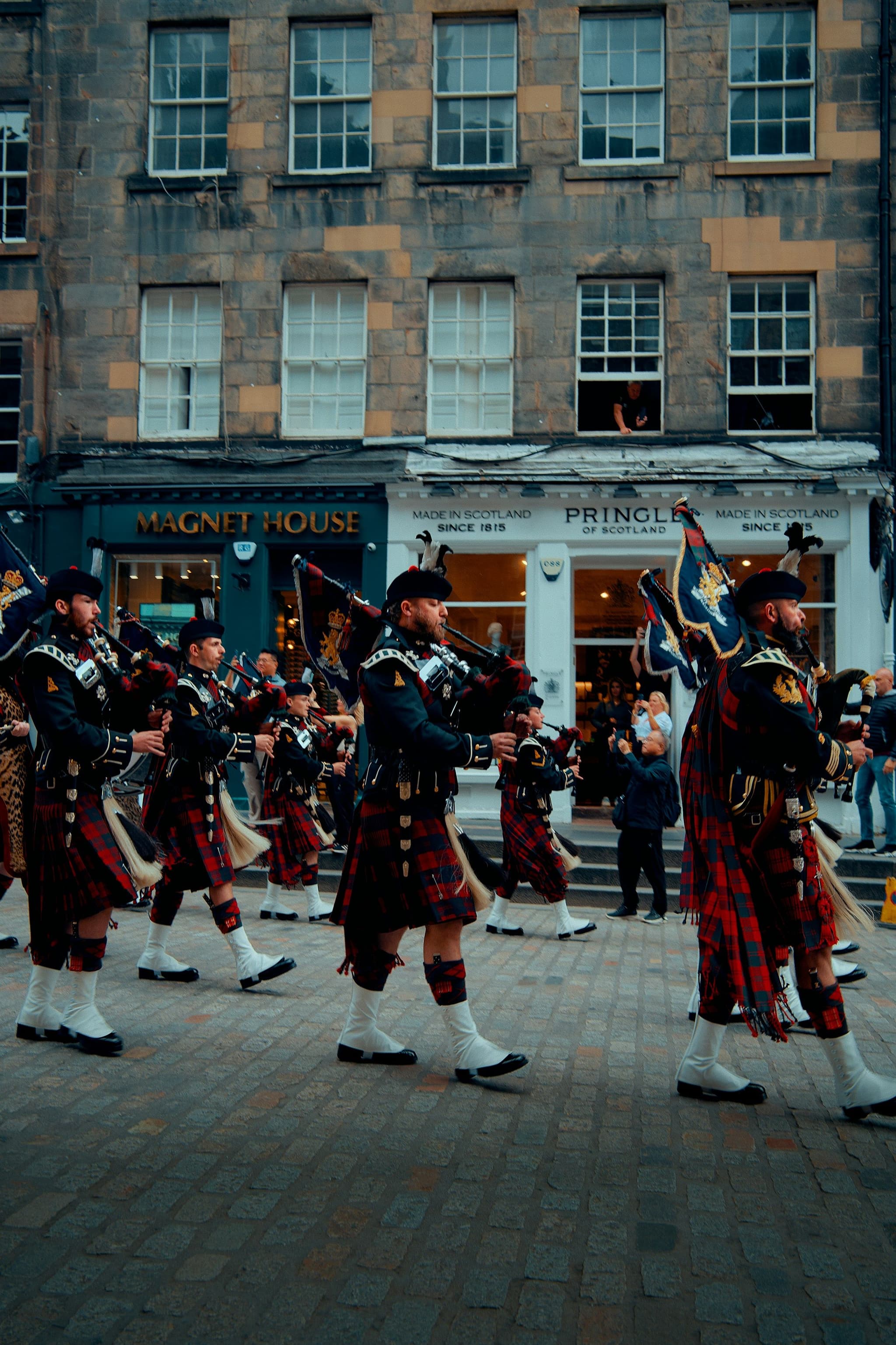
What actually happens at a Burns supper? Someone pipes in a haggis, someone recites a poem over it, and then everyone eats it with neeps and tatties.
The date never moves. Robert Burns was born on 25 January 1759, and his birthday is celebrated on that date every year. In 2027 it's a Monday, the night before Up Helly Aa. The evening opens with the Selkirk Grace. The haggis is piped in and the “Address to a Haggis” is recited over it.
After the meal come the toasts. The Immortal Memory honours Burns himself, and the Toast to the Lassies gets a reply. There's more poetry and song through the night, and it closes with everyone singing “Auld Lang Syne.”
People hold Burns suppers at home and at public, ticketed events across Scotland and beyond. Visitors should go to a ticketed supper. A plate of haggis on a pub menu gives you the food, but a full supper gives you the whole running order, and the Immortal Memory is the part worth hearing done properly.
Up Helly Aa, Lerwick, 26 January
Lerwick's Up Helly Aa is always held on the last Tuesday in January. In 2027 that falls on 26 January, the day after Burns Night. Lerwick's isn't the only one, either: up to 11 smaller “country” Up Helly Aa festivals take place in other Shetland parishes between January and March.
The festival is led by the Guizer Jarl, the year's chief guizer, who takes a name from Norse legend. Only one person is elected Jarl each year, and you need 15 years on the organising committee to be eligible.
The march and the galley
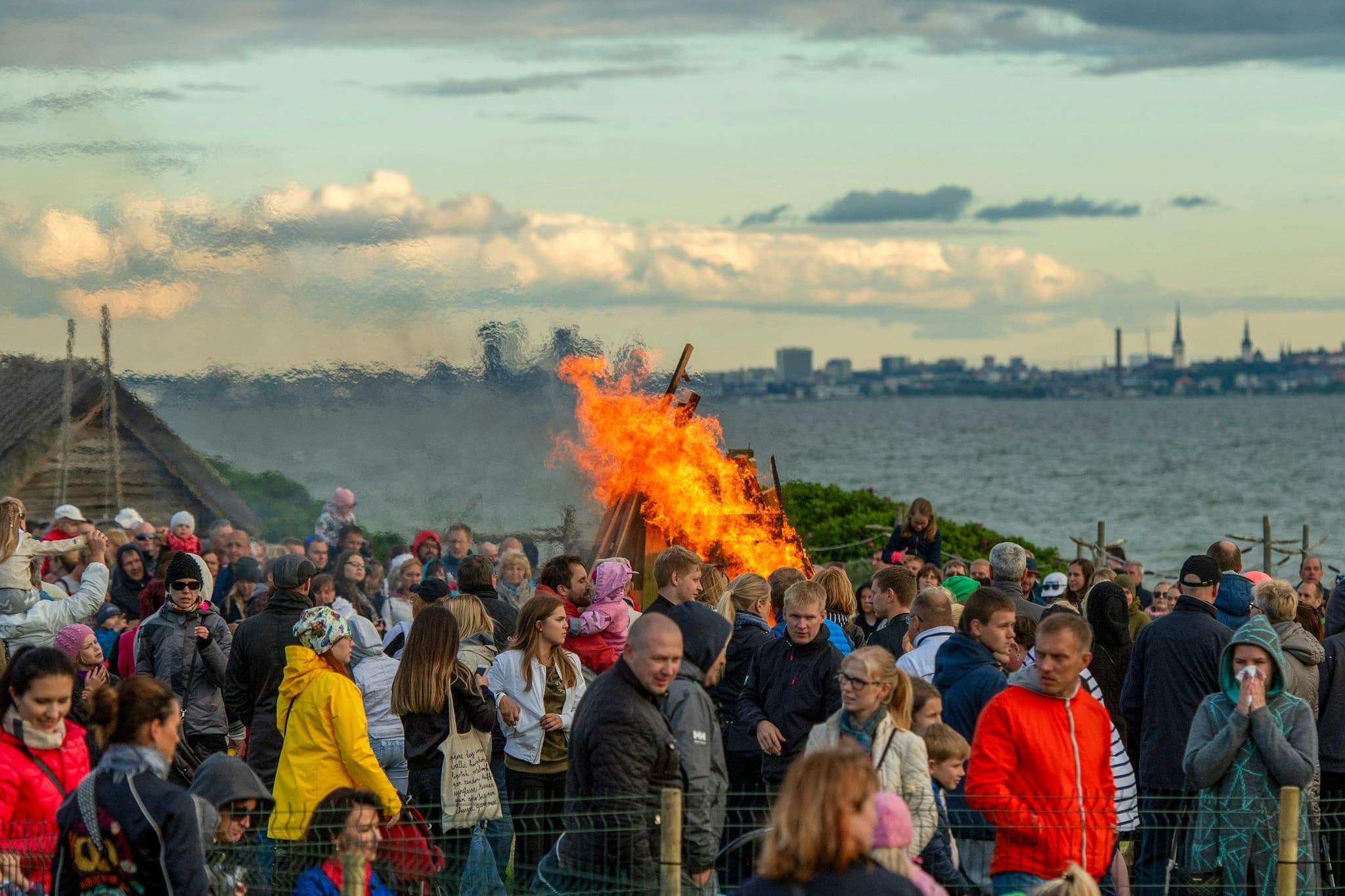
The day opens with a public march in the morning. The main event starts at 7:30pm, when the rocket goes up over the Town Hall. Almost 1,000 guizers, split into more than 40 squads, march with their torches behind the Jarl, who leads from a replica Viking longship known as the galley.
The procession hauls the galley to a central burning site, where the torchbearers gather round it. They sing the Up Helly Aa song and then throw their torches into the galley. More than 5,000 spectators usually turn out to watch. This is the part to plan the whole trip around, and it's worth getting to the burning site early for a clear view.
The halls after dark
After the burning, the squads spend the night touring about a dozen local halls, putting on skits and dances for the hostesses at each one. Most of the halls are private parties. The Town Hall is the exception. It sells late-night tickets to the public in limited numbers, usually released toward the end of the year before the festival. The following night, 27 January, is Hop Night, with more dances.
Guided tip: For January 2027, the Town Hall tickets should be released over the final weeks of 2026. If you're already planning the trip, start watching for them now.
How much daylight you actually get
Eight hours of daylight is plenty, as long as you plan around it. The 2027 sunrise and sunset times for Edinburgh look like this.
- 1 January: sunrise 8:44am, sunset 3:49pm
- 16 January: sunrise 8:33am, sunset 4:13pm
- 31 January: sunrise 8:10am, sunset 4:43pm
That puts Burns Night and Up Helly Aa at around 8:15am sunrise and 4:35pm sunset in Edinburgh, a little over eight hours of light. The days get noticeably longer through January. Even when it still feels like deep winter, the afternoons are stretching by the 25th.
Shetland is darker. Lerwick sits at 60°08'N, about 200km off Scotland's north coast. That's further north than St Petersburg and three of the four Nordic mainland capitals, and level with Anchorage in Alaska. The shortest day there gives 5 hours 49 minutes of daylight. The January average is around seven hours, rising from the solstice's not-quite-six. None of that matters for Up Helly Aa, since everything you've come to see happens after dark. It matters a great deal if you're driving.
If short winter days aren't your idea of a holiday, our guide to the best time to visit the UK covers the rest of the year.
Driving the Highlands in winter
The A9 and the A82 are the two Highland roads most exposed to winter weather. The A9 climbs to its highest point at the Pass of Drumochter. The A82 runs through Glencoe, past exposed stretches like Altnafeadh. Snow and stranded vehicles have closed both roads completely during past storms. One documented case is the A9 at Drumochter during Storm Gerrit in December 2023.
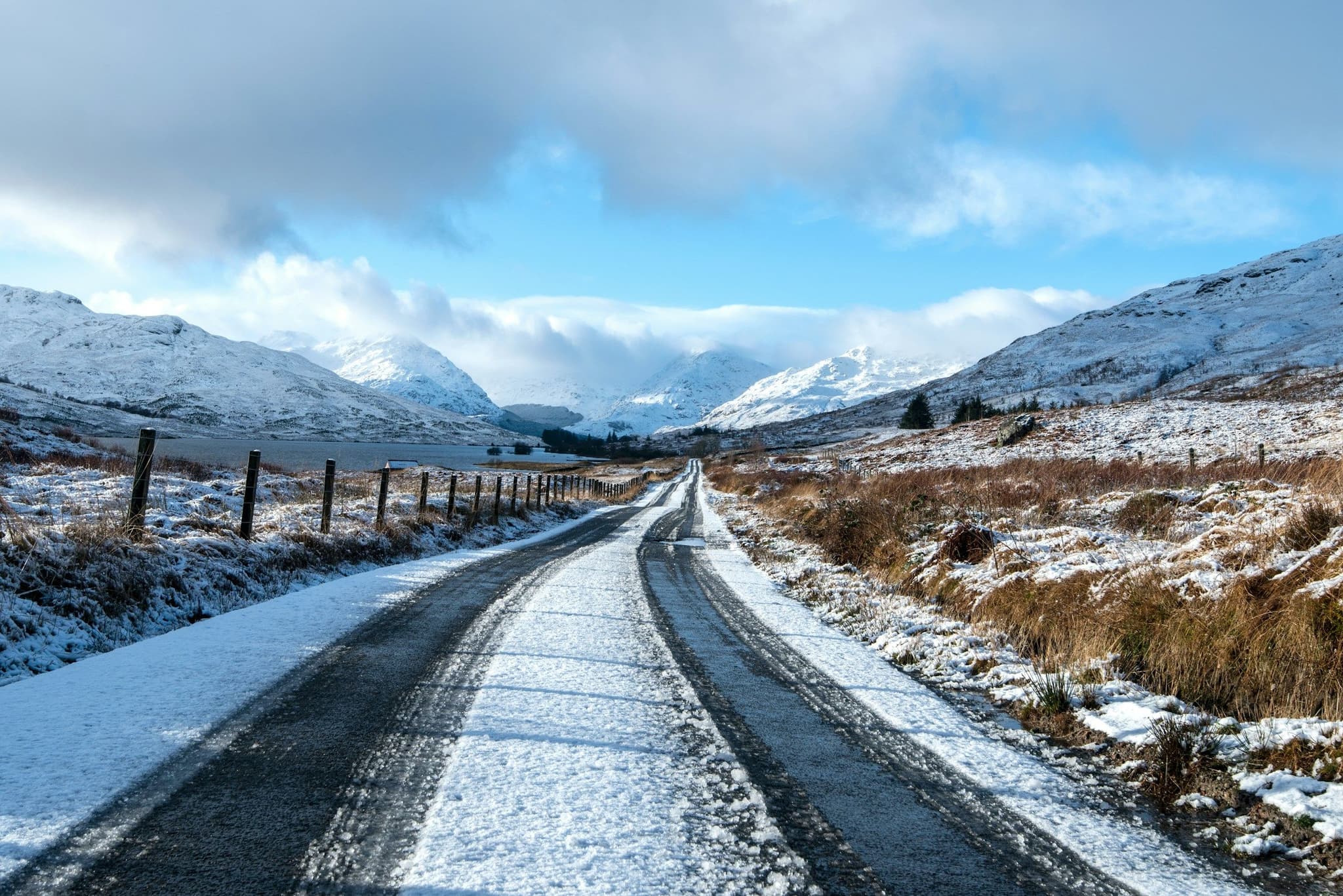
BEAR Scotland runs the trunk roads. It issues yellow and amber snow-and-ice warnings and sends out gritters, 29 of them during one Highlands-wide warning. When conditions are at their worst, police can advise people not to travel at all. If the A9 has an amber warning on the day you planned to drive, we'd move the drive by a day rather than try to push through.
Snow gates are something else. They're physical barriers that are closed outright in heavy snow, and they exist on two minor ski-access roads, not on the A9 or A82. One is on the A93 at the Spittal of Glenshee and the other is on the A939 at the Lecht. When one of these high routes is gated shut, there's usually a lower road you can take instead.
Before you set off, check Traffic Scotland and the ski-centre webcams. Carry a shovel and a blanket. Remote roads often have single-track sections with passing places. Allow more time than your route planner suggests, especially on terrain like the roads around Ballater and Bridge of Gairn. Keep your driving within daylight hours, which in late January is roughly 8:15am to 4:35pm.
Guided tip: Fill up whenever you get the chance. Rural petrol stations are few and far between, and not all of them are open 24 hours.
If the Highlands leave you wanting a longer loop, our UK road trip guide covers routes beyond this one.
Getting to Shetland for Up Helly Aa
Ferry or plane? For Up Helly Aa, we'd take the ferry.
The overnight ferry from Aberdeen
NorthLink Ferries sails from Aberdeen to Lerwick about seven times a week, which means a sailing most days. Boats leave in the evening at 5pm or 7pm and arrive at 7:30am the next morning, so in practice it's an overnight crossing. Depending on the day, the trip takes between 12 hours 30 minutes and 14 hours 30 minutes; the longer sailings are typically the ones that call at Kirkwall in Orkney on the way.
There are two sister ships, the Hjaltland and the Hrossey. Each has 100 cabins, 50 of them two-berth outside cabins and 50 four-berth inside cabins. On board there's a cafeteria, bar, restaurant, lounge, cinema and shop. Book a cabin. Arriving rested on festival morning is worth far more than the money you'd save sleeping in a lounge seat.
Flying with Loganair
If the ferry doesn't fit your schedule, flying is the alternative. Loganair is the only scheduled airline serving Sumburgh Airport. Flights from Aberdeen take about an hour, with up to three a day. From Edinburgh it's about an hour and a half, with up to two a day. Glasgow has one flight a day, also about an hour and a half. There are year-round routes from Inverness and Kirkwall too. The seasonal routes from Belfast City, Manchester, Dundee, London Heathrow and Bergen mostly stop by late October. By the time Up Helly Aa comes round, that leaves Aberdeen, Edinburgh, Glasgow or Inverness as your realistic starting points.
Sumburgh has a real reputation for weather disruption, fog in particular. It's a risk you should plan around, so don't book a flight that lands on the day of the festival.
Guided tip: To do Burns Night and Up Helly Aa on the same trip, look for an evening sailing that lands you in Lerwick the morning before Burns Night. NorthLink runs most days but not quite every day, so check the timetable rather than assuming a fixed pattern. Look for a Burns supper once you're there if one's running, or mark the night your own way. Either way you'll wake up in town on festival day with no travel left to worry about.
Things to know before you go
- Hogmanay tickets. Prices and on-sale dates for 29 December to 1 January haven't been announced. Sign up for the official newsletter to hear first.
- Up Helly Aa Town Hall tickets. They're limited and usually released toward the end of the year before. Most of the other halls are private.
- Hop Night. The festival carries on with more dances the night after the burning, so don't book your ferry home for the morning after Up Helly Aa.
- Daylight. Expect around eight hours in Edinburgh by late January and noticeably less in Shetland. Plan driving days to fit inside it.
- Weather buffers. High roads and Sumburgh flights can both be disrupted. Leave a spare day on either side of anything you can't move.
How to plan a Scotland winter trip around all three
We'd treat this as two trips. Hogmanay and Up Helly Aa are four weeks apart, and few people want to spend the gap waiting in the cold.
The first trip is Edinburgh from the 29th, so you catch the Torchlight Procession, and through to the First Footin' trail on New Year's Day. The second trip starts in Aberdeen. Take whichever evening sailing lands you in Lerwick the day before Burns Night, then do your Burns supper, Up Helly Aa and Hop Night on consecutive nights before sailing back. Book the ferry cabin and keep an eye out for the Town Hall tickets first. Once those two are confirmed, the rest of the itinerary is easy to plan around them.
Guided's trip planner app can help you line up dates for the ferry, flights and hotels once you've picked your window.


